



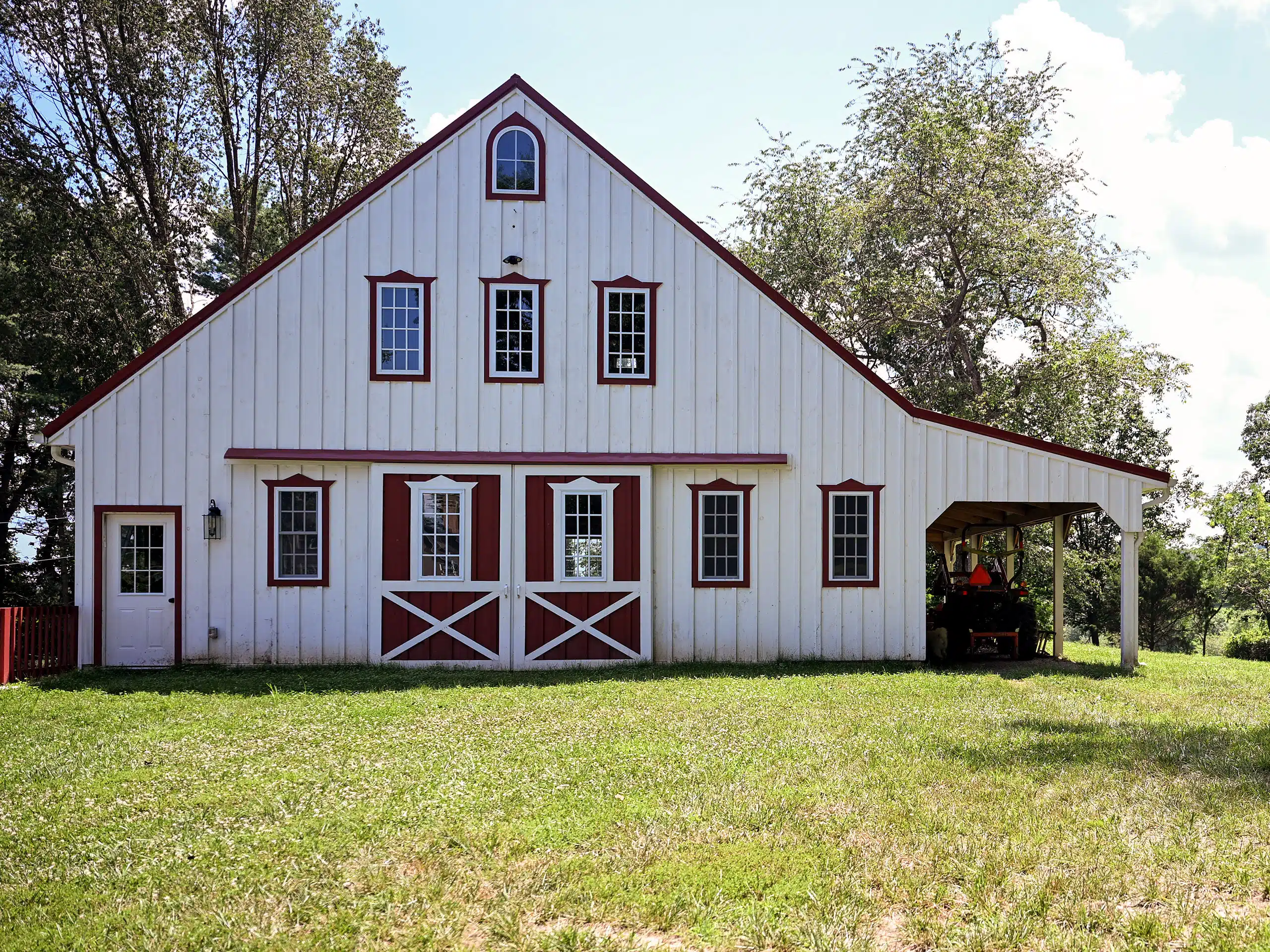
With a 4-week-old infant strapped to her, Lee Shields leads her brood of six behind her house and down a hill toward two chicken coops and a sheep pasture. Lee operates a “hobby farm” in Lovettsville, which she and her husband, Michael, affectionately call “Shieldshyre Farm.”
Small farms — also called hobby farms — like the Shields’ are a growing trend among families in rural areas of the diocese. Hobby farms allow families to homestead on a smaller scale, and even provide them with a business opportunity to sell produce and livestock. A 2022 survey of 4,000 homesteaders, conducted by Homesteaders of America, found that 40% of respondents began homesteading within the last three years.
The Shields, parishioners of St. Francis de Sales Church in Purcellville, began farming in 2019 as an educational tool. “We got into it for the kids, primarily to give them a sense of the responsibility of taking care of animals and the garden,” Lee said, “but also to have an idea of where your food comes from and raising it responsibly.”
At Shieldshyre the family raises chickens, sheep, and bees, and tends a garden. “Henry is in charge of the sheep and Elliott is in charge of the chickens,” said Lee. But all the children help. “My favorite thing is the reward of what you’re doing. So, it takes a lot of work, but what you get out of it is great,” said Henry, 13.
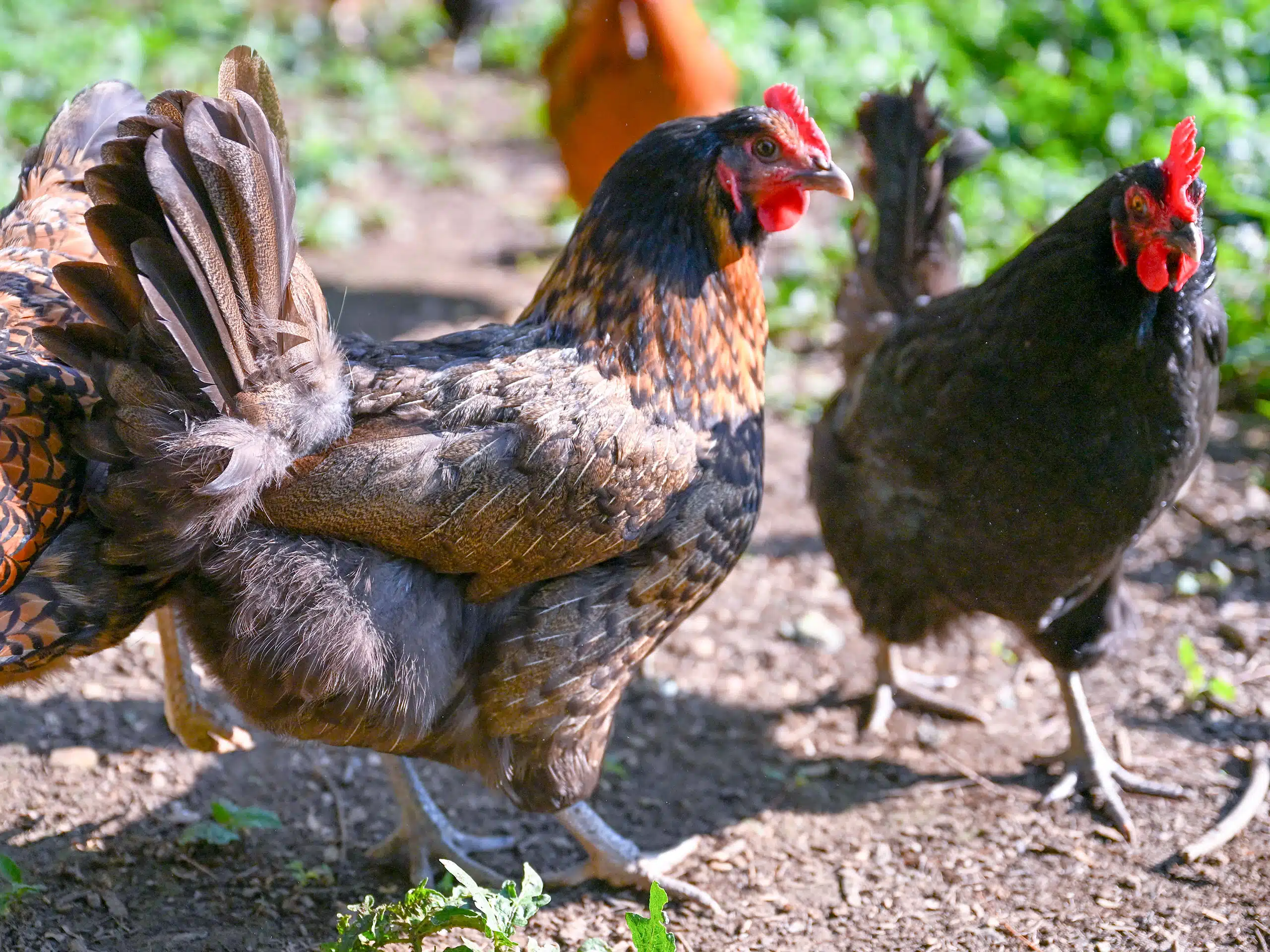
Farm chores start at 8 a.m. with the chickens. Elliott, 10, fills the feeders and water trays in two coops, with a little help from Dominic, 2, and Miriam, 4, who hold the hose steady. Elliott then opens the doors to the chickens’ roosting box. In a cacophony of clucking, the chickens and roosters rush from their coop and flock around the feeder. During the day, the Shields let the chickens roam about an enclosed pasture.
“Chickens are not very smart, but they are very routine bound,” Lee said, watching the chickens pick at the weeds in the pasture.
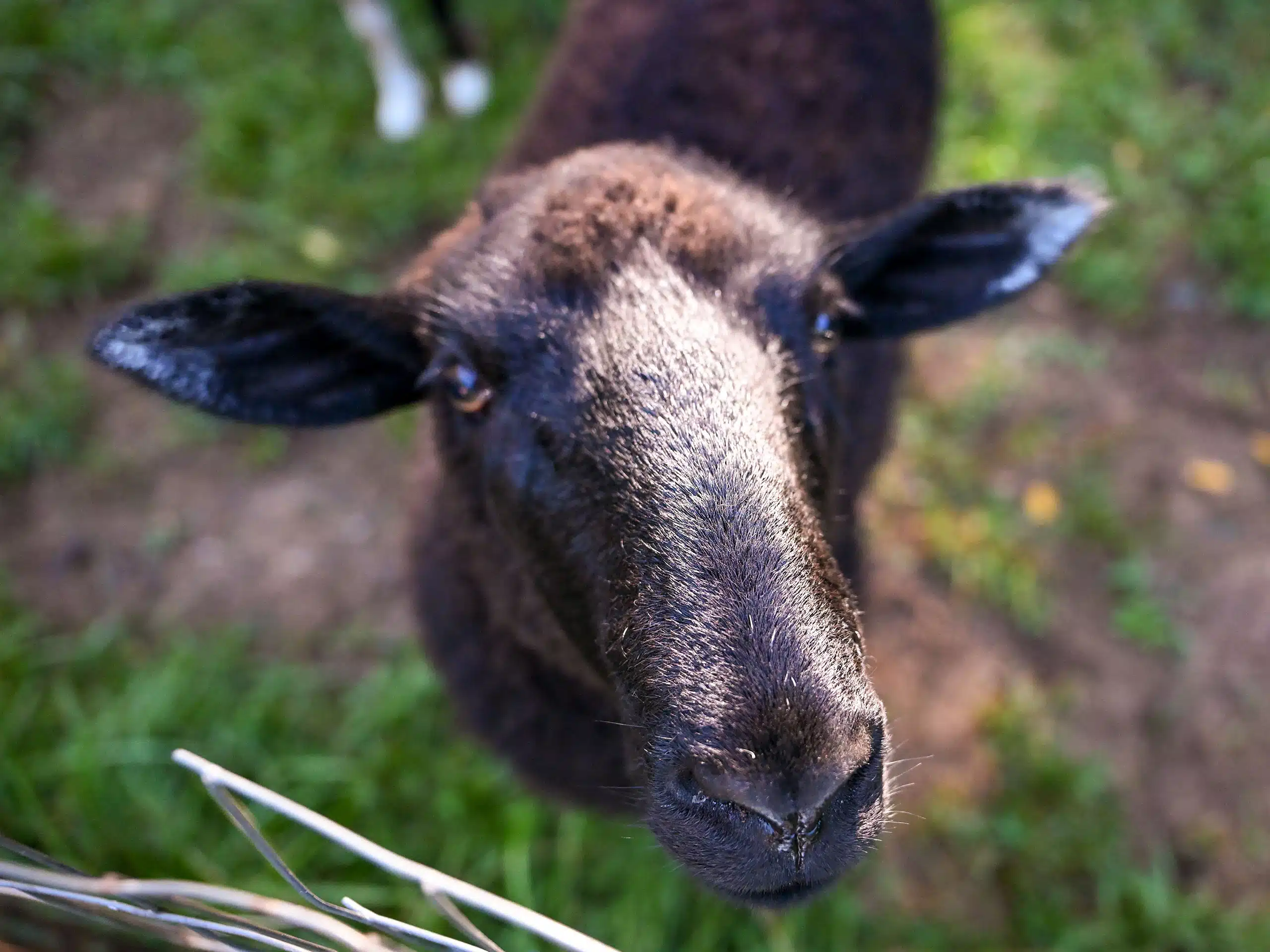
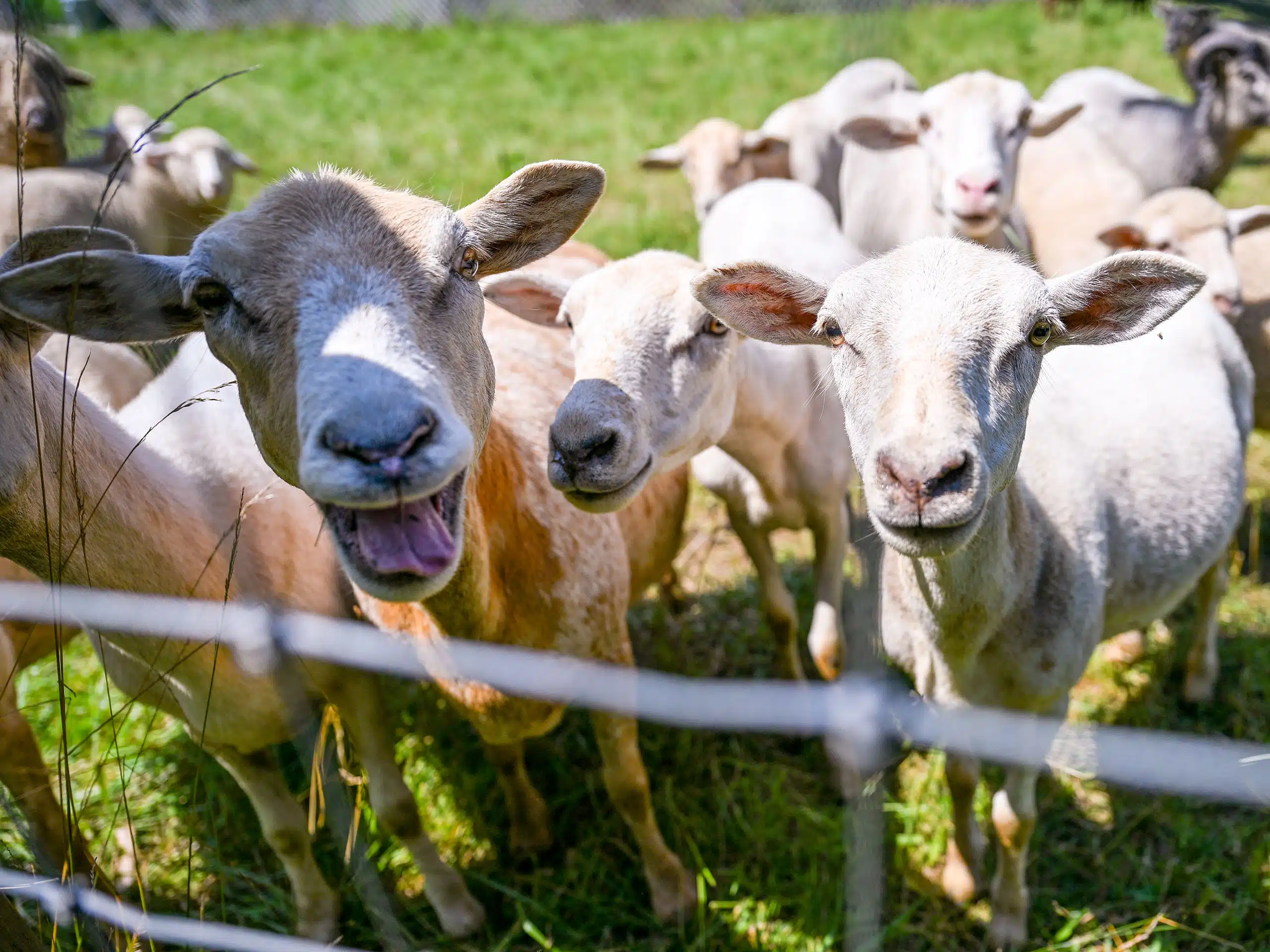
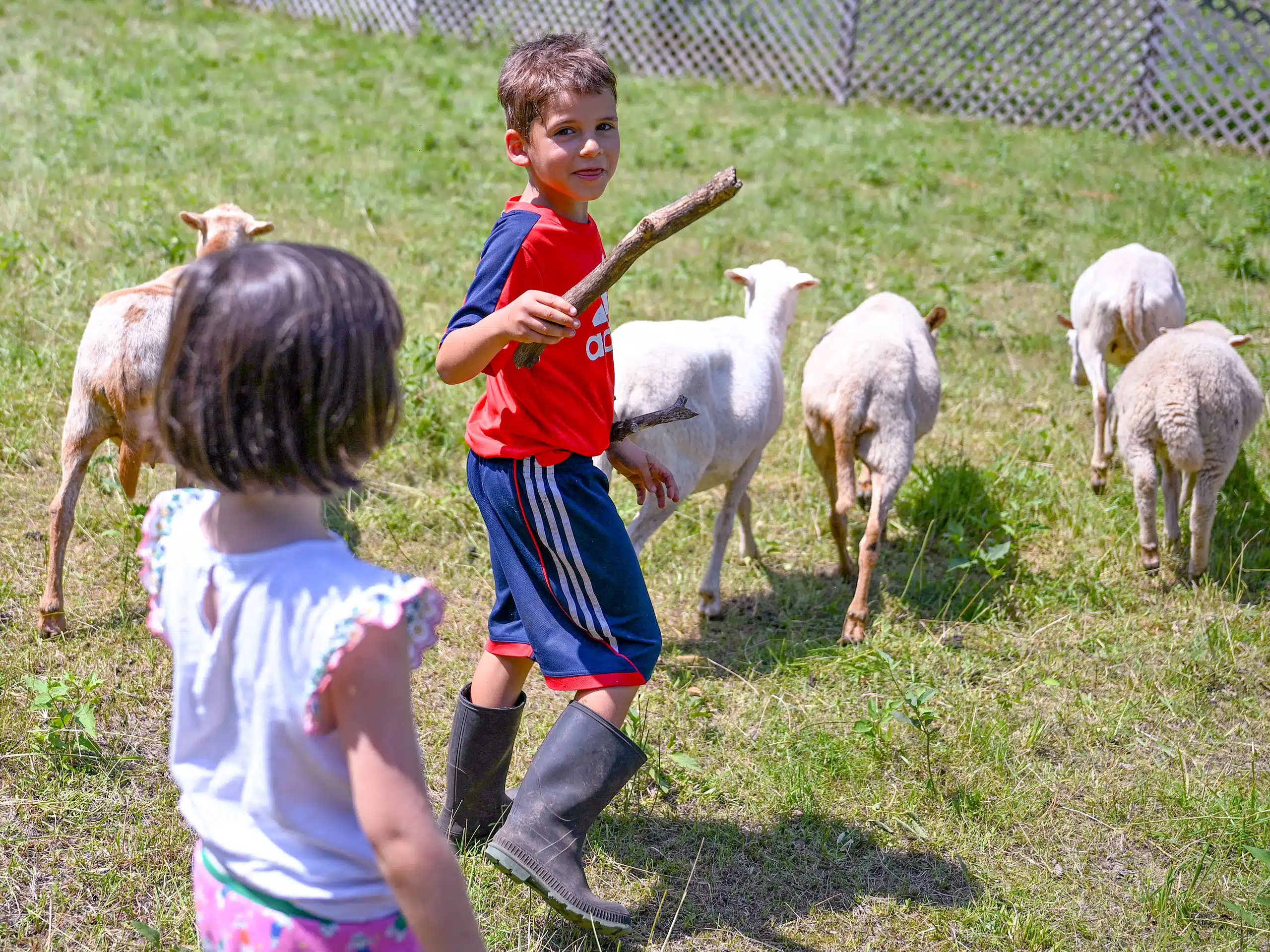
At the sheep pastures, Henry assists his younger siblings in pouring feed into troughs. The Shields own 11 sheep, including one ram. The family sells the young male sheep for meat, with the exception of Elliott’s pet sheep, Mattimeo. The Shields have bred some of their young female ewes, but the matriarch of the flock is 8-year-old “Big Mama.”
“She’s our original ewe,” Lee said.
The Shields also use hobby farming to tend to the family’s spiritual lives, in addition to their sheep. Lee adds that the family frequently draws comparisons to Christ’s parables on sheep and shepherds.
“When my dad asks me to go feed the sheep, I’m like, ‘What you need to say is, “Henry, feed my sheep,’ ” Henry joked, referencing John 21:17.
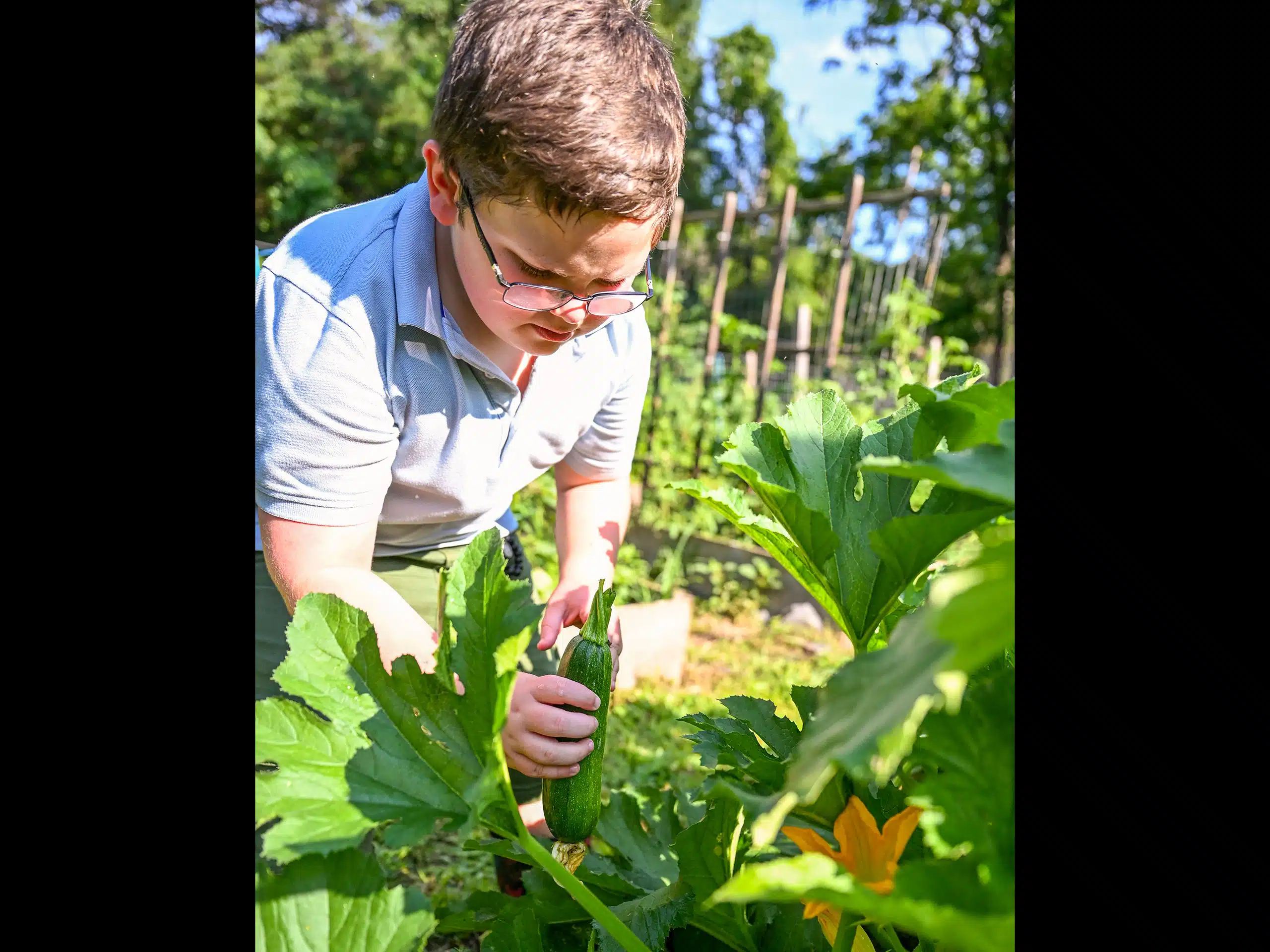
The family’s garden boasts a variety of crops, including tomatoes, zucchini, peppers, pumpkins and melons. While the Shields eat much of their produce in the summer months, “we try to do some canning as the summer progresses, so we can save things for fall and winter,” Lee said.
One misconception about hobby farming is that it saves cash, according to Lee. “I think a lot of people think you homestead to try and save money, and that’s really not the way it works,” she said. “The whole hobby farm, homestead thing, is about having healthy food, and it is expensive.”
It’s not always sunshine and rainbows. “The other thing that’s hard in homesteading is loss,” she said, adding that lambing season is often the riskiest. “And we’ve had a few losses, and they do hit really hard.”
Another challenge of running a hobby farm is balancing farm work with a full-time career. Anna Anderson and her husband, Ryan, president of the Ethics and Public Policy Center in Washington, tend their 30-acre hobby farm in Lucketts, even while Ryan balances an hour-plus commute to Washington.
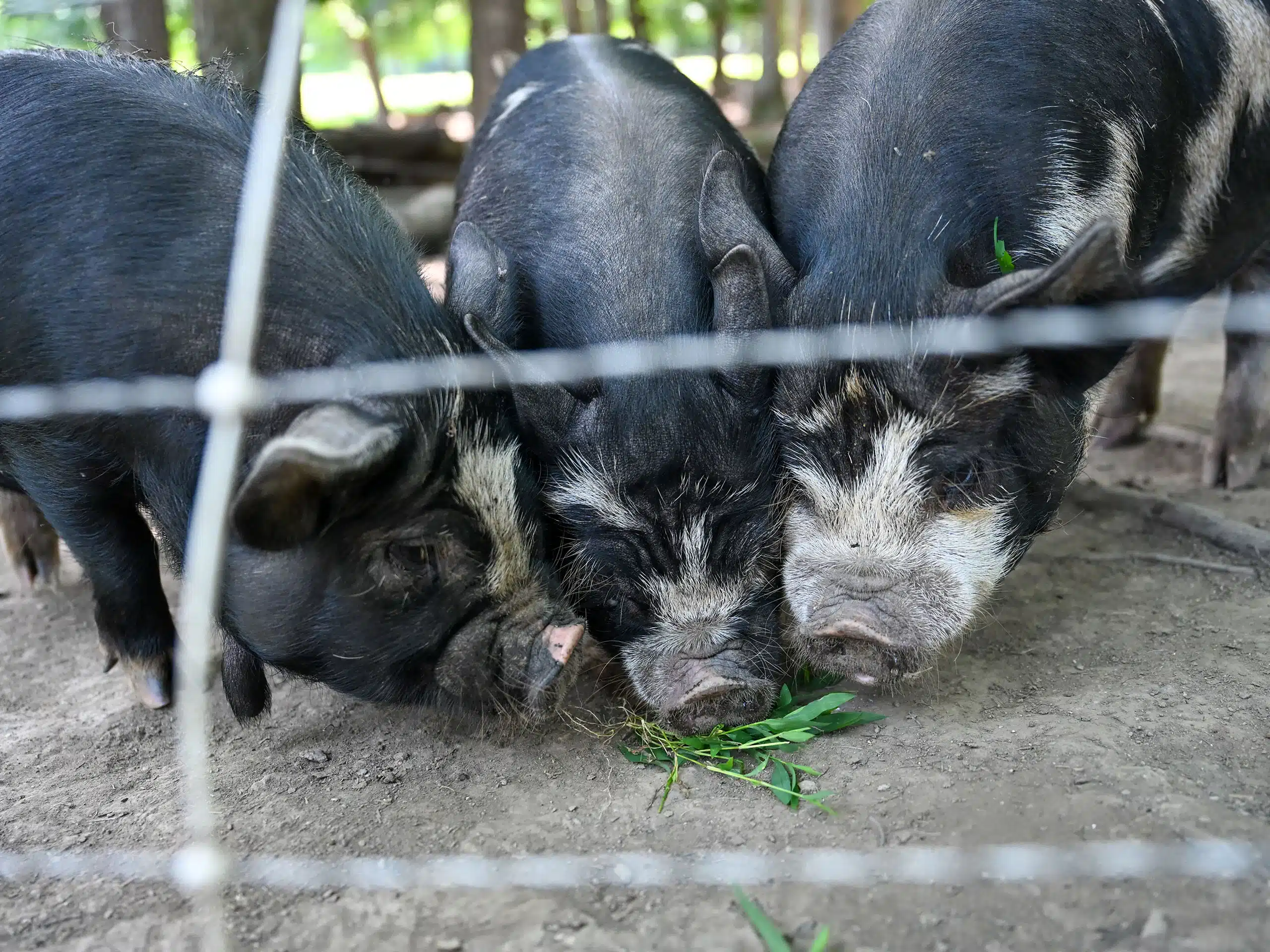
The couple, parishioners of St. John the Apostle Church in Leesburg, has five children aged 6 and under, including newborn Wolfgang. They keep more than 10 types of animals, including cows, goats, sheep and pigs. The Andersons’ farm prioritizes livestock, which they use for dairy, meat or as pets. They also practice sustainability through using as many parts of their livestock as possible. Over the years, Anna has learned how to butcher and even tan the hides of certain animals.
“It definitely is rewarding being able to have your own meat,” she said.
The family started out with chickens, followed by goats. “And then it just snowballed,” Ryan said. “Once we started having kids, I think we were more intentional about it.”
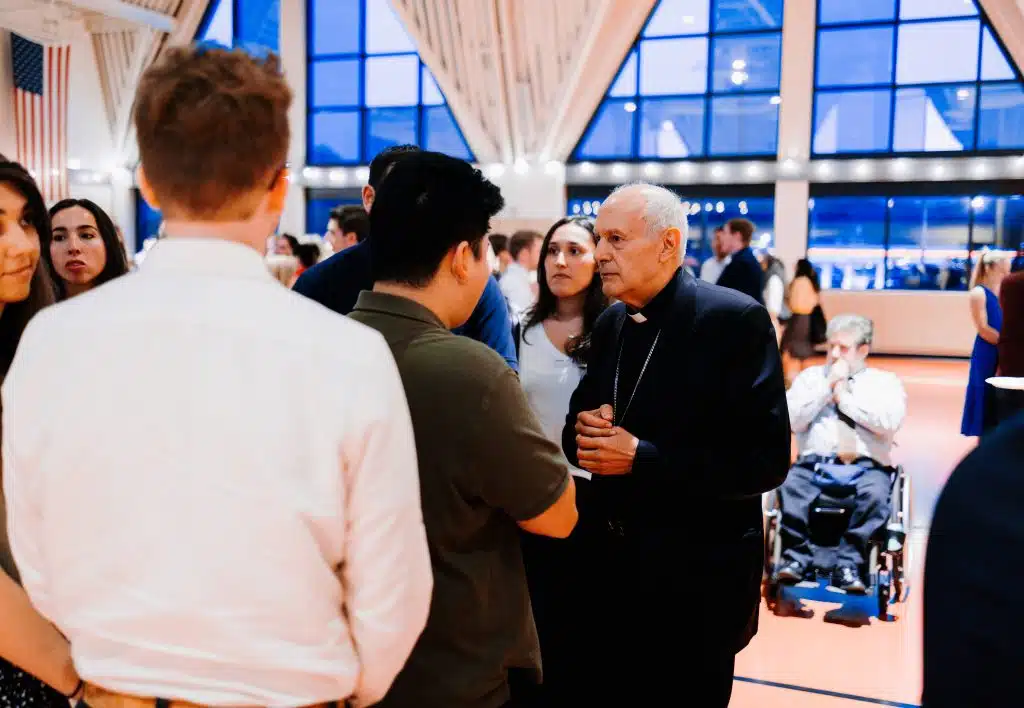
Father Edouard B. Guilloux, parochial vicar of St. Stephen Martyr Church in Middleburg and St. Katharine Drexel Mission in Haymarket, has visited the Andersons’ farm on several occasions. “Many families turn to farming, gardening, or just keeping chickens as a way to get in touch with God’s work and with the fundamental vocation of man to govern and care for the earth,” he said.
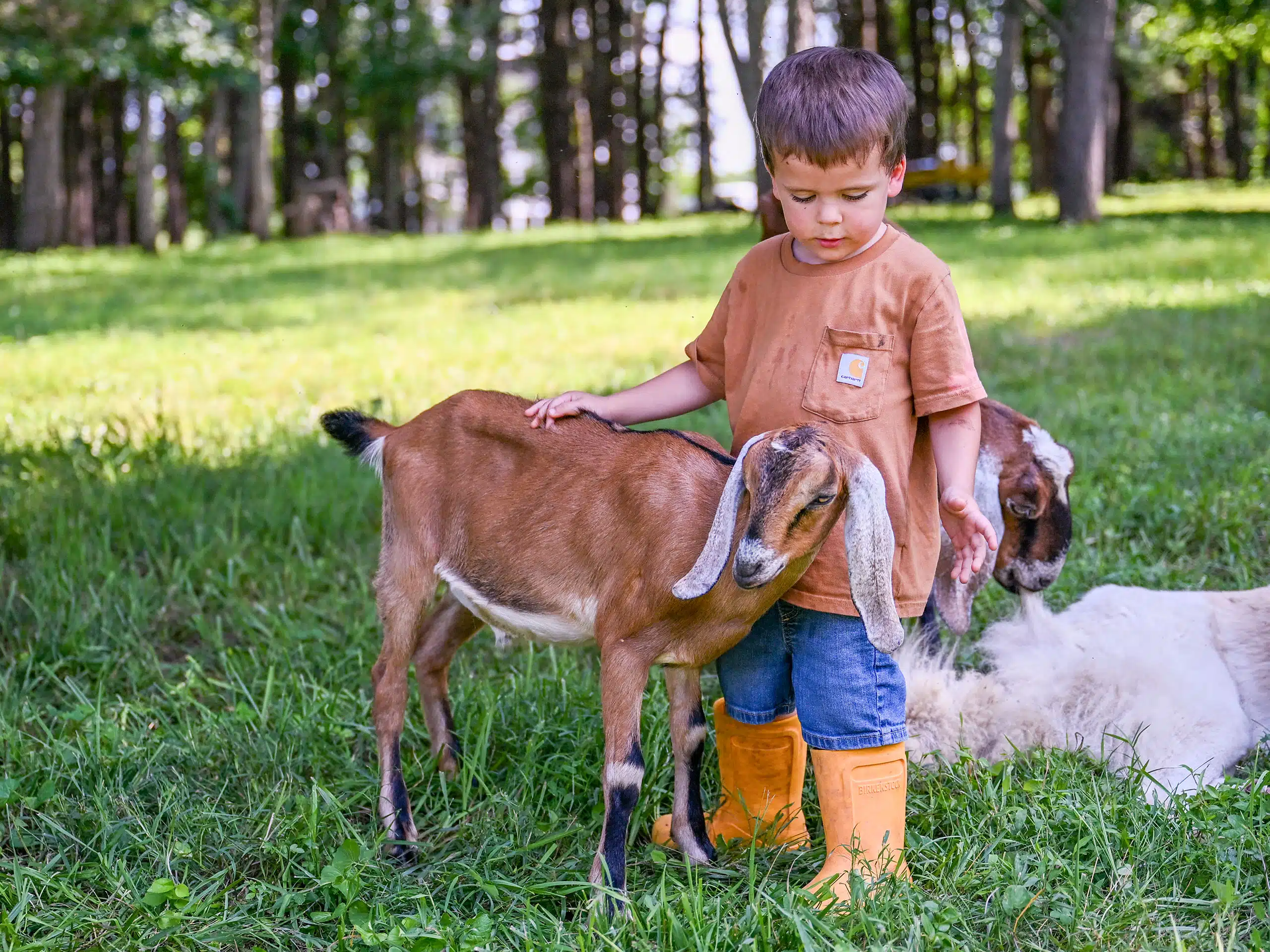
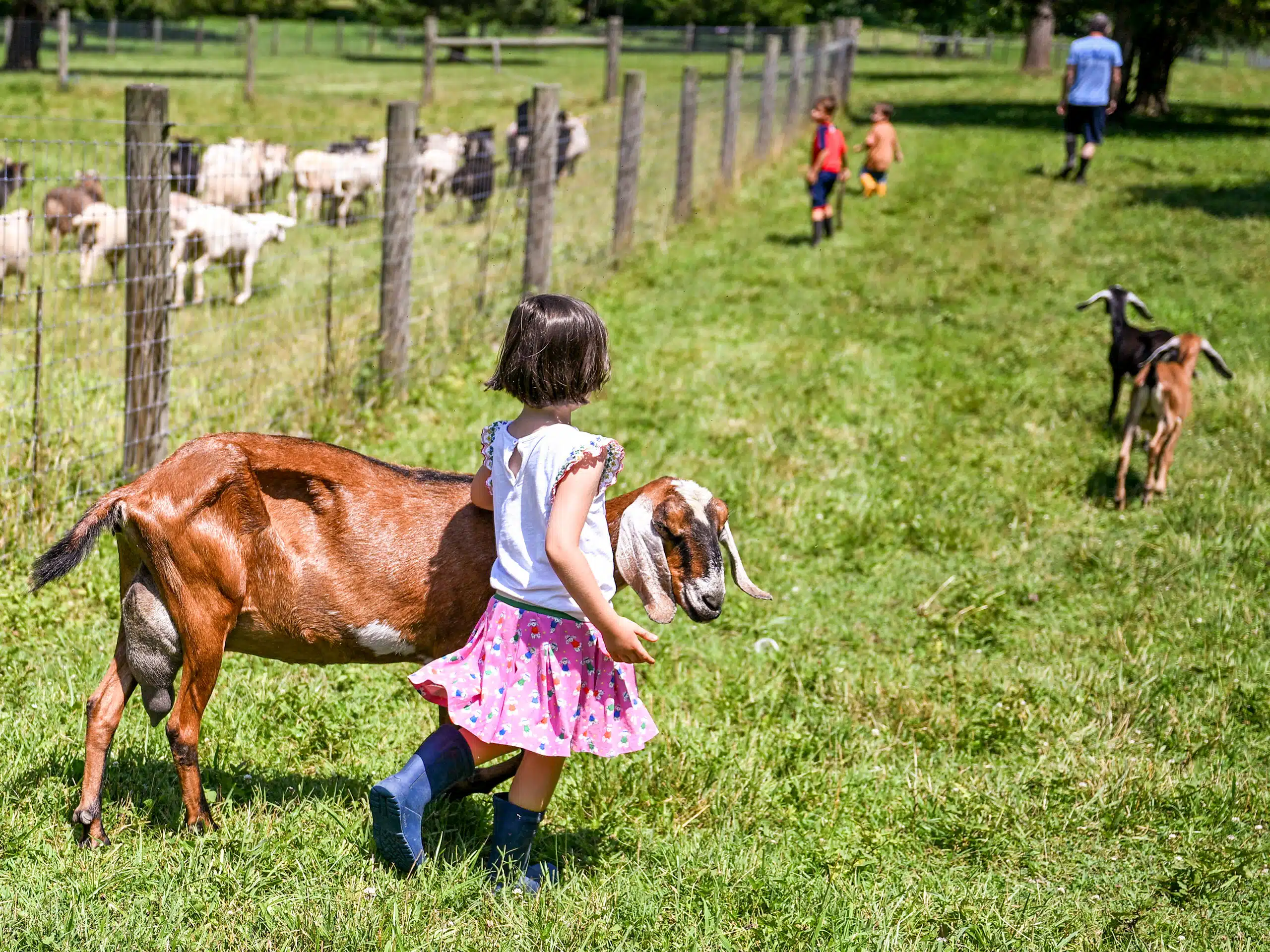
Behind the Andersons’ home is a pasture with a little menagerie of farm animals: ducks, geese, a pasture dog, a cow and her calf, and a goat and her two kids — which Edith, 5, named Jane and John. According to Anna, keeping different animals together is a strategic choice. “It also helps with parasite control, because certain animals have susceptibility to one thing or another,” she said.
In an adjacent pasture are Anna’s favorite farm animals, the sheep. As Jack, 6, chases the lambs around the enclosure, Otto, 3, gently pets one of the ewes. The Andersons say that raising kids on a hobby farm teaches them responsibility — particularly the serious responsibility of caring for a creature’s life. Father Guilloux agrees.
“Farming on any scale teaches many valuable lessons,” he said. “In addition to the obvious ones, like hard work and perseverance, being involved with cycles of life and death can impart a greater respect for all created things and a deeper appreciation for what it takes for meat to show up on the table.”
Father Guilloux added that helping facilitate the “cycle of life” has given him profound spiritual revelations as well. “My experience slaughtering a lamb specifically led to a greater understanding of the countless Scripture passages that rely on that theme,” he said.
While the Andersons manage the farm as a couple, Anna added that it’s helped them find their own niches. “I generally care more for the animals. I do a lot of the medical care, the milking, a lot of the butchering … and then food preparation,” she said. “He cares a lot more for the landscape, (and) does the grass and hay.”
Caring for a hobby farm the size of the Andersons’ takes about 20-30 hours every week, according to the couple. “When you’re doing chicken chores, rabbit chores, feeding the pigs, feeding the dogs, moving the temporary fencing, mowing … It’s a part-time job,” Ryan said.
Turning that part-time job into an educational opportunity for the children takes time, too. “Undoubtedly it would be quicker if we just did them on our own, but it gives us common activities with the kids,” Ryan said.
And 30 acres of land is no small feat. In addition to the enclosures and pastures, the family owns a small pond with fish.
But the Andersons and Shields are in agreement. While there is always more work to do, the educational and nutritional outcomes are far worth it.
“It’s just fun, chaotic life,” Lee said. “It’s constant activity and constant work, but it’s really joyful work.”