

What will happen at Jesus’ Second Coming?
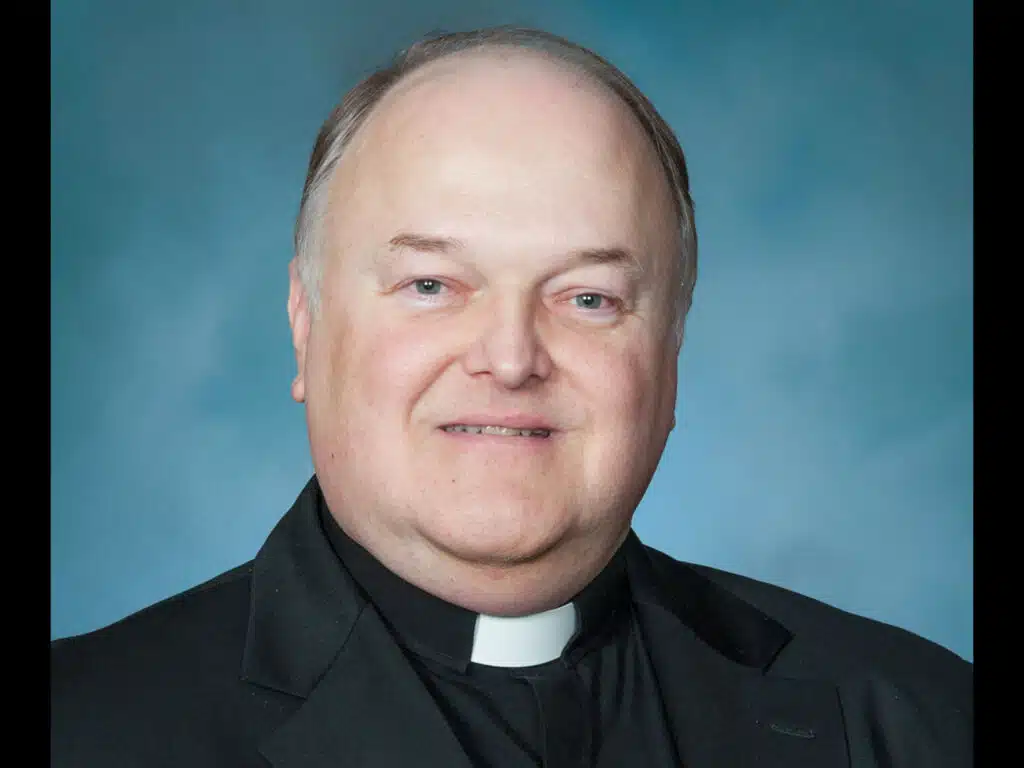
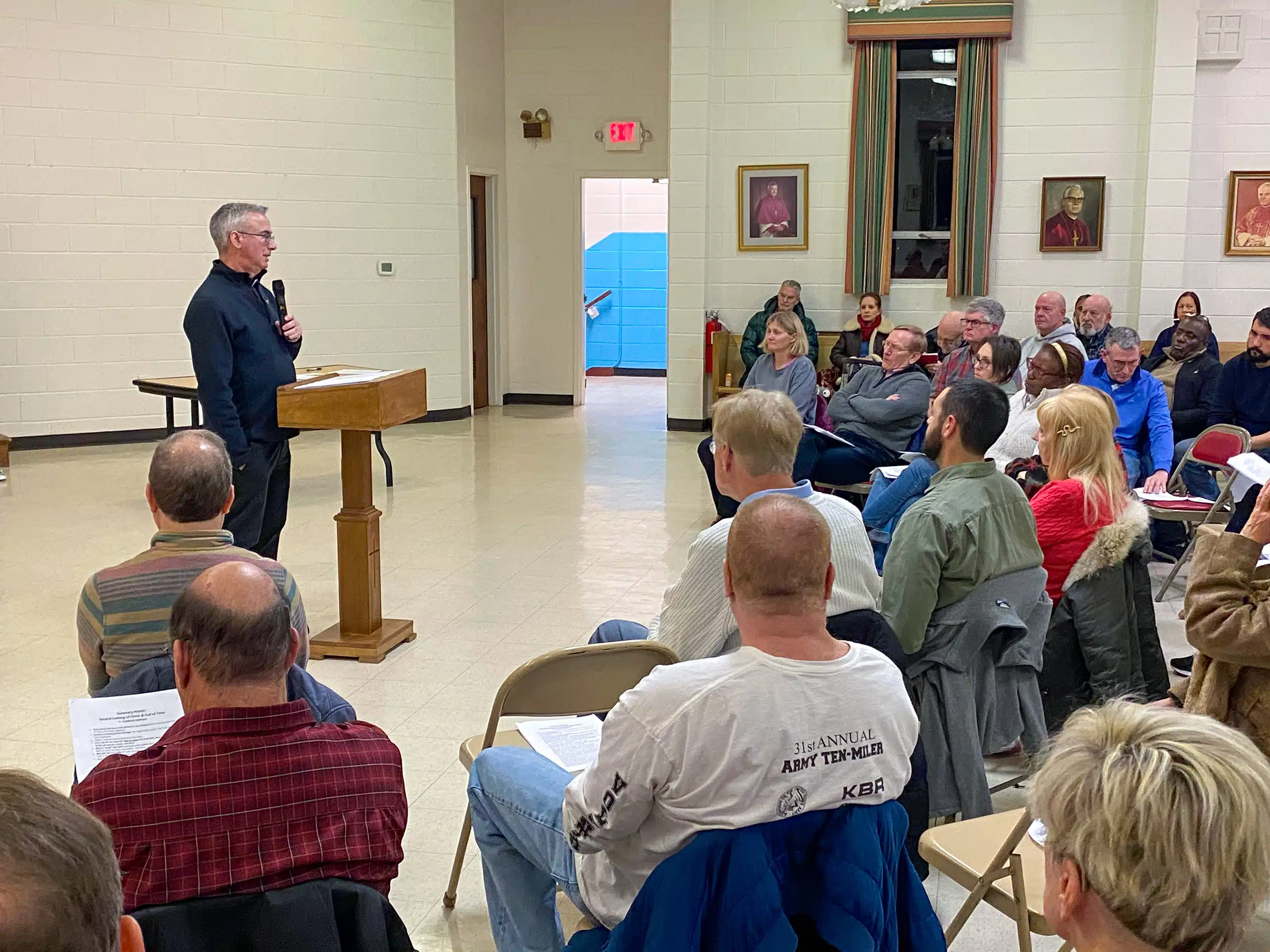
Father Frederick H. Edlefsen, pastor, offered a deep dive into the topic at Our Lady of Lourdes Church in Arlington Dec. 9. Some 100 people attended the evening talk, setting aside Christmas errands and braving biting winds and plunging temperatures. The Knights of Columbus furnished pizza and refreshments.
For 75 minutes, Father Edlefsen walked the audience through passages on the end of time from Scripture, the Catechism of the Catholic Church, and other theological works. What follows is a summary of his remarks and question-and-answer session.
What happens when we die? Each individual receives their particular judgment, defined by the catechism as “eternal retribution in his immortal soul at the very moment of his death, in a particular judgment that refers his life to Christ: either entrance into the blessedness of heaven — through a purification or immediately — or immediate and everlasting damnation.”
Father Edlefsen described death as a temporary dissolution or separation of our whole person. “The soul longs for the body and the body longs for the soul, and that longing will be fulfilled again after death at the resurrection of the dead when Christ comes again at the end of time,” he said, adding that Christ gave us a “sneak preview” of this in his Resurrection.
Who’s going to rise? Everyone. The dead will hear Christ’s voice and rise to judgment (Jn 5:28-29). “Those who have done good, to the resurrection of life, and those who have done evil to the resurrection of the judgment,” Father Edlefsen said.
“Your whole life is an open book at the final judgment in the Second Coming of Christ,” he said. “There is nothing to hide.”
At that time, the full impact of each human life will be revealed, both the reverberating echoes of good works and the lasting harm from evil. Even what he described as the providential purposes of evil will become known.
How do we prepare for this? Jesus tells us in Matthew 25 during his discourse on helping “the least brothers of mine,” Father Edlefsen said, and the final judgment of the nations and separation of the sheep from the goats.
“When Christ comes again, what we did in time matters. How we treated our brothers and sisters matters,” he said. He also urged the audience to embrace the spiritual humility of Mary’s Magnificat (Lk 1:46).
What is the resurrected body like? All range of health ailments will fall away, Father Edlefsen said, quoting the 12th-century theologian Honorius of Auton who wrote about the seven attributes or glories of the resurrected body (beauty, swiftness, strength, freedom, delight, health and immortality) and soul (wisdom, friendship, harmony, power, honor, security and joy).
Will the New Jerusalem be familiar? “Look at the world we live in now. It’s there. It will be purified,” Father Edlefsen said. He suggested that it’s better to think of the world as transformed rather than new or recreated. Now, it is scarred by sin. When renewed, it is purified, perfected, and God will be its light.
“(The earth) is so redone and so beautiful that it’s one that we don’t recognize, and then we do,” he said, comparing it to the Gospel passages in which Mary Magdalene and the Apostles don’t immediately recognize the resurrected Jesus. “What it’s like is closer than you think. Look around you. Ask the Holy Spirit to see through the misshapen aspects of our world, the destruction we have wrought by sin.”
“We are co-creators, partners with God, subcontractors in building the heavenly city,” Father Edlefsen said. “You’re building that city with the life you live right here and now. The heavenly city, although it comes from God, will partly be our work. What you do here matters. It has eternal impact. Don’t give up. Don’t get discouraged. Take courage.”
Schweers can be reached at [email protected].
Find out more
To learn more, Father Edlefsen recommended the catechism, particularly paragraphs 675-77; “Gaudium et spes,” (“Joy and hope”) from the Second Vatican Council; and a dozen other works including “Land of the Living,” by Msgr. James T. O’Connor.