During the day, uniformed students studying at their socially
distanced desks fill the classrooms at St. Ambrose School in Annandale. But at
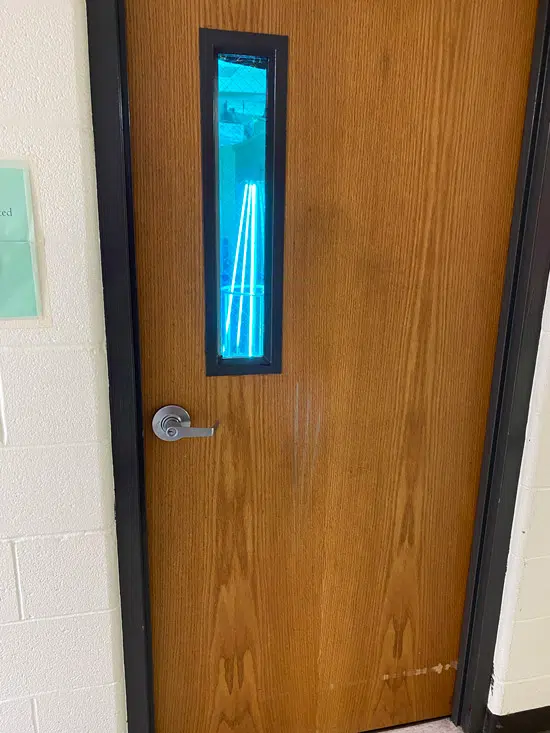
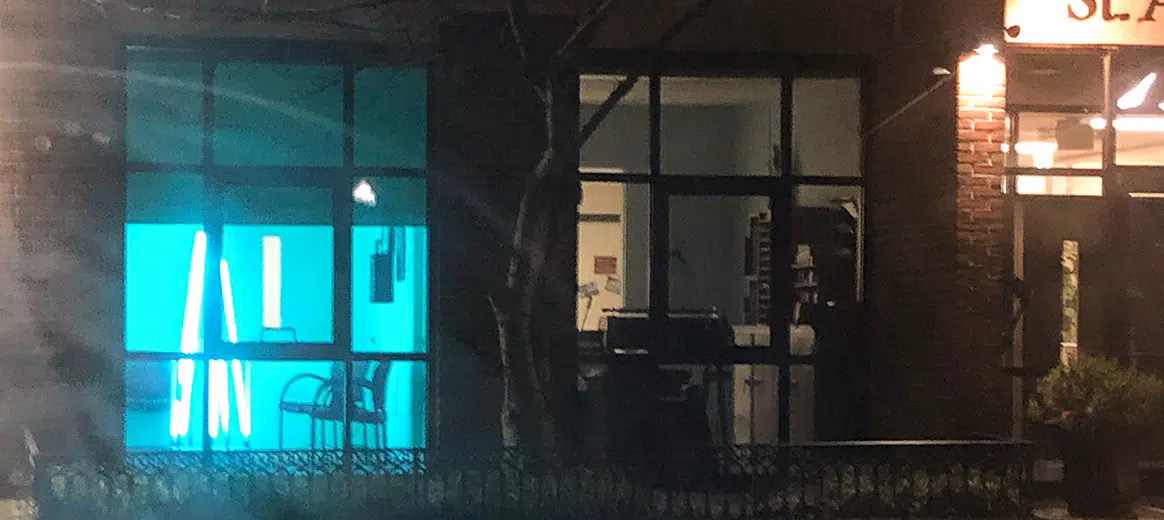
night, the school looks more like a sci-fi scene as something resembling an
extraterrestrial lifeform moves through the empty building, radiating an eerie
blue light that can be seen through the closed windows of the deserted
classrooms. But far from being an alien threat, this mysterious presence is
keeping the school sanitized.
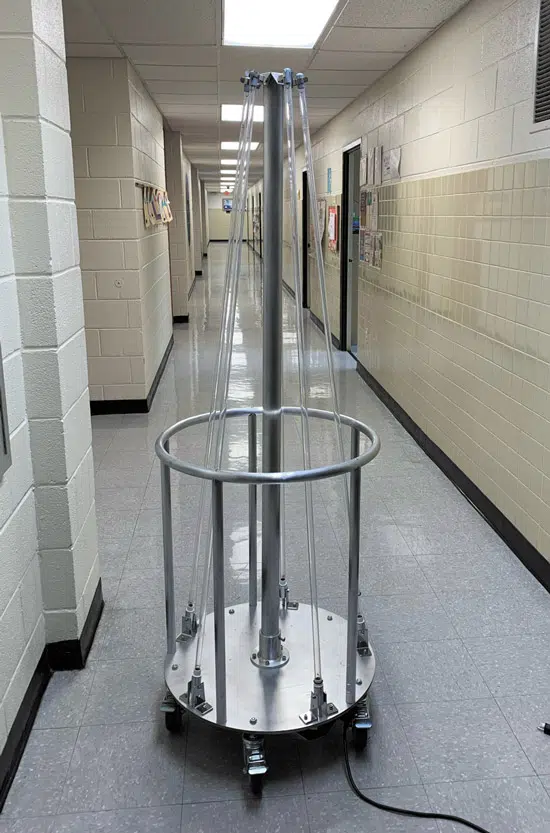
The spectral lighting comes from a mobile unit that emits
ultraviolet — c-spectrum light, a powerful energy that inactivates pathogens in
the air and on surfaces. This remedial in-room decontamination system, or RIDS,
is part of the nightly sanitization plan implemented by the school to prevent
the spread of the coronavirus. To faculty and staff, the RIDS unit is referred
to simply as “the tower.”
After cleaning each room, maintenance staff rolls in the tower,
which resembles the crow’s nest of a ship with its barrel-like base encircling
a slim pole. Five tubes running from the base to the top of the pole radiate
the UV-C light.
Warning signs are placed outside the room about to be sterilized,
and the blinds are drawn to prevent exposure to the harsh rays. The staff then
departs and remotely activates the unit through a mobile app. The device runs
for about 10 minutes, though most germs can be killed in five, according to a
document posted on the school’s website.
“Anything the light touches, it kills that virus or that
bacteria,” said Carla Yaglou, business manager at St. Ambrose Church and
School.
The tower is one of two UV-C radiation methods the school
invested in last summer as preparation for student reentry in the fall. The
second was installing fixtures that emit UV-C lighting downstream of the air
filters in the building ventilation system. The technology can run 24 hours a
day and neutralizes germs, preventing contaminated air from being circulated
throughout the building.
Yaglou said the school was fortunate it ordered the $6,000-worth
of UV-C equipment in early June, because by late summer the demand was much
higher. St. Ambrose is the only school in Virginia currently using UV-C
technology, as far as Yaglou and Principal Maria Tejada know.
Tejada, who joined the school as principal heading into the
2020-21 school year, was apprehensive at first as she planned for the return of
students ranging from preschool to eighth grade.
“When I was researching and writing my reentry plan, I did it
with a lot of hesitation because I didn’t know if opening the schools was going
to be a good thing for the students and my faculty and staff,” she said. “So,
it was a lot of stress.”
The school implemented “strict policies and procedures,”
according to Tejada, which were outlined in a reentry plan released last
August. Precautions included wearing masks, social distancing, daily
health assessments and temperature checks, and the UV-C radiation. In addition,
the school hired a part-time maintenance employee to clean throughout the day.
Tejada estimates the school to be 99 percent in person — of the
198 students, only three high-risk students are fully online. Other students
have the option to distance learn temporarily if they need to quarantine or are
waiting for a doctor’s clearance to return to the classroom. The school also
grew, from around 170 last year to just under 200 this year.
St. Ambrose has had three COVID-19 cases, all of which were
identified off the school’s premises and didn’t contribute to spread, Tejada
said.
She said the plan has been successful and proved the school can
safely be open. “We can do it and we can do it well,” she said. “I think our
little school has proved that we can educate the child. We can help them be in
school because their mental health is as important as academics.”
And even though COVID-19 cases in Fairfax County are high, Tejada
believes the school will stay open with the measures put in place.
“Our teachers want to be here and they have the same vision that
I had, that we needed to open the school for (the students),” she said.
“Because at the end of the day, that’s our mission, we’re here for them — the
students.”
Bartlett can be reached at
[email protected].