Each conversation you have can show you only a portion of
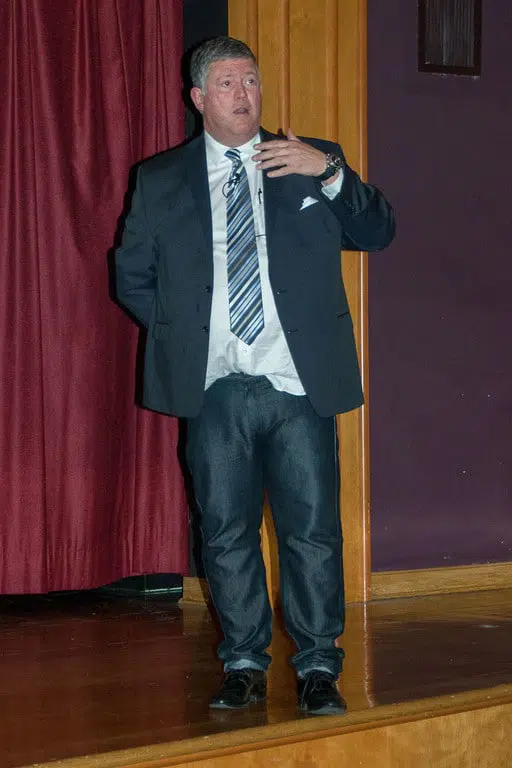
reality, said Armando Trull, a reporter for National Public
Radio. But in his 20 years of reporting, cultivating
friendships with sources and conducting interviews on and off
the record, Trull has been able to create a fairly clear
picture of the reality of his subject: El Salvador. At
Marymount University in Arlington April 1, he presented his
take on the complex problems facing the country.
Unintended consequences of war
The gang crisis traces its origin to the Salvadoran Civil War
that began in 1979, said Trull. The Salvadoran government,
supported by the U.S. military, fought against the leftist
guerillas supported by Russia, China and Cuba.
Many atrocities were committed, said Trull, in large part by
the government. Seventy-five thousand people were killed, and
8,000 went missing. Many refugee children were sent to the
United States to live in Los Angeles – a city with its own
share of ethnic gangs.
“(Central American gangs) began as a response for
disconnected, dispossessed, poor children to defend
themselves in a country that was not their own, and to
survive,” he said. After the war ended, many of the
Salvadorans who had been arrested in the United States were
deported back to their native country. Some brought their
gang affiliations with them.
With no strong central government or police force, gang
members took over their old neighborhoods. Though today some
areas are still relatively untouched by gang influence, Trull
believes that may change. “A gang member told me, ‘We are
like a cancer – we grow,’ ” said Trull.
In the resulting turmoil, thousands have left El Salvador
looking for a better life. Once again, gang connections came
with some of them. Central American gangs have spread all
over the United States, including in Northern Virginia.
An atmosphere of fear
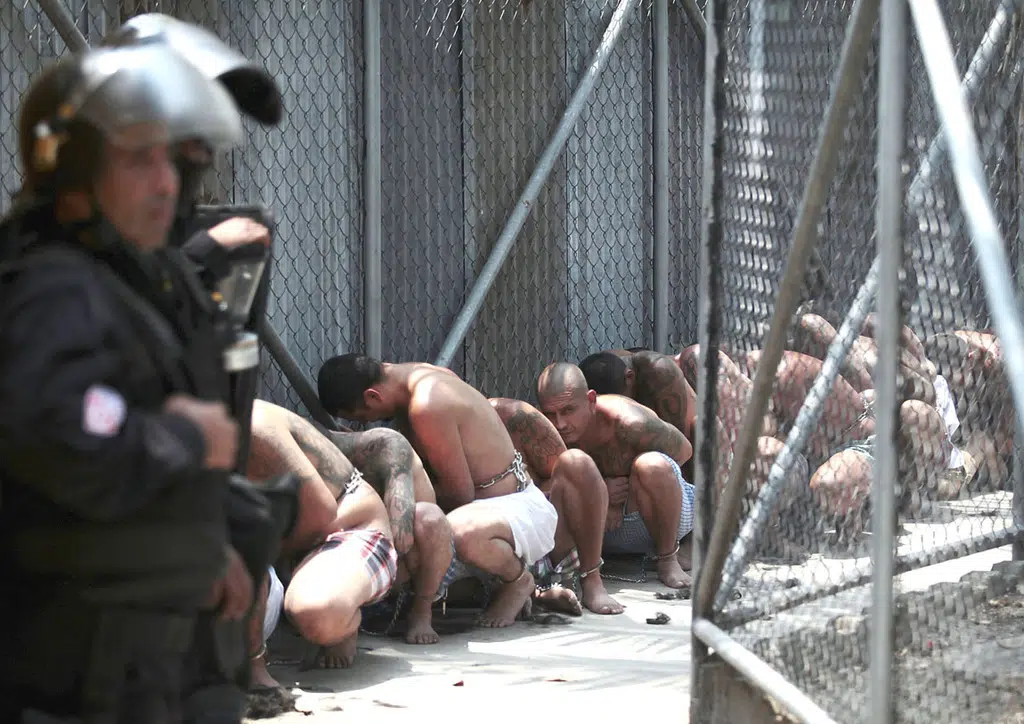
In the Central American country of 6 million people, roughly
70,000 are in gangs, such as MS-13 or Barrio 18, Trull said.
The high gang population creates an atmosphere of violence,
extortion, kidnapping, sexual assault and fear.
In the first two months of 2016, 1,399 Salvadorans were
killed, he said. Around 60 percent of the victims were
involved in gangs; the remaining were civilians.
Trull believes Salvadoran authorities are accepting of the
high number of gang deaths. In his opinion, this devaluing of
life is at the heart of the conflict.
“What you have in El Salvador is a culture of death,” he
said. “It doesn’t mean you necessarily promote that. It means
you live with death. You see it on your streets, and you
begin to develop a (different) way of looking at death.”
The Salvadoran government has taken a hard line against gang
members, but Trull fears the situation will not improve
unless a dialogue occurs between the two. “You can’t kill or
jail half a million people,” he said. “I want things to get
better in Central America, but there has to be a political
willingness from the entire Salvadoran society, and it’s
still too divided.”
Di Mauro can be reached at [email protected] or on
Twitter @zoeydimauro.