In “Laudato Si’,” his encyclical on climate change
issued June 18, Pope Francis cites St. Francis of Assisi’s
“The Canticle of the Creatures,” a 13th-century hymn in which
earth is likened to “a sister with whom we share our life and
a beautiful mother who opens her arms to embrace us.”
“This sister now cries out to us because of the harm we have
inflicted on her by our irresponsible use and abuse of the
goods with which God has endowed her,” Pope Francis writes.
“We have come to see ourselves as her lords and masters,
entitled to plunder her at will. The violence present in our
hearts, wounded by sin, is also reflected in the symptoms of
sickness evident in the soil, in the water, in the air and in
all forms of life.”
The letter calls upon the world to transform how climate
change affects the poor and degrades God’s creation.
“In some ways, (the papal encyclical) is nothing new and
simply builds on Catholic social teaching,” said Father Gerry
Creedon, pastor of Holy Family Church in Dale City. “Climate
change impacts people, but people also impact climate
change.”
But not everybody agrees.
Father Creedon received an email from one of his parishioners
stating that by writing “Laudato Si’,” “the pope’s
treading in dangerous waters.”
“The minority share that view, but they are vocal,” Father
Creedon said. “They interpret reality as political or
economic. Sometimes they are more influenced by their
political party than the party of Jesus Christ.”
Many local parishes make efforts toward environmental
stewardship as described in “Laudato Si’,” but
securing funding and keeping volunteers involved is an
ongoing struggle.
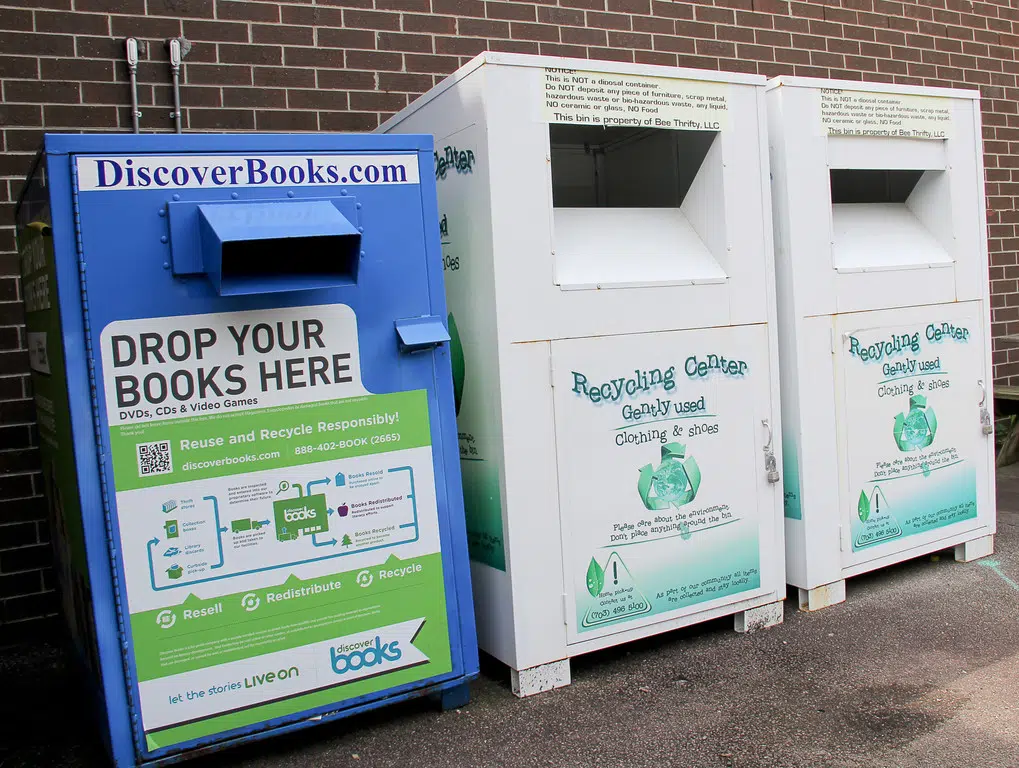
Paula Kane, who heads Holy Family’s recycling program,
manages three donation boxes for the parish. Two of these
boxes are used to collect old clothes, while the third is
used to collect old books and other media. The companies that
own the boxes pay Holy Family by the pound and find new uses
for the items locally and in developing countries.
Kane said that Holy Family once maintained a garden, but
since the volunteer heading that project moved to Texas a
year ago, the garden has been left untended.
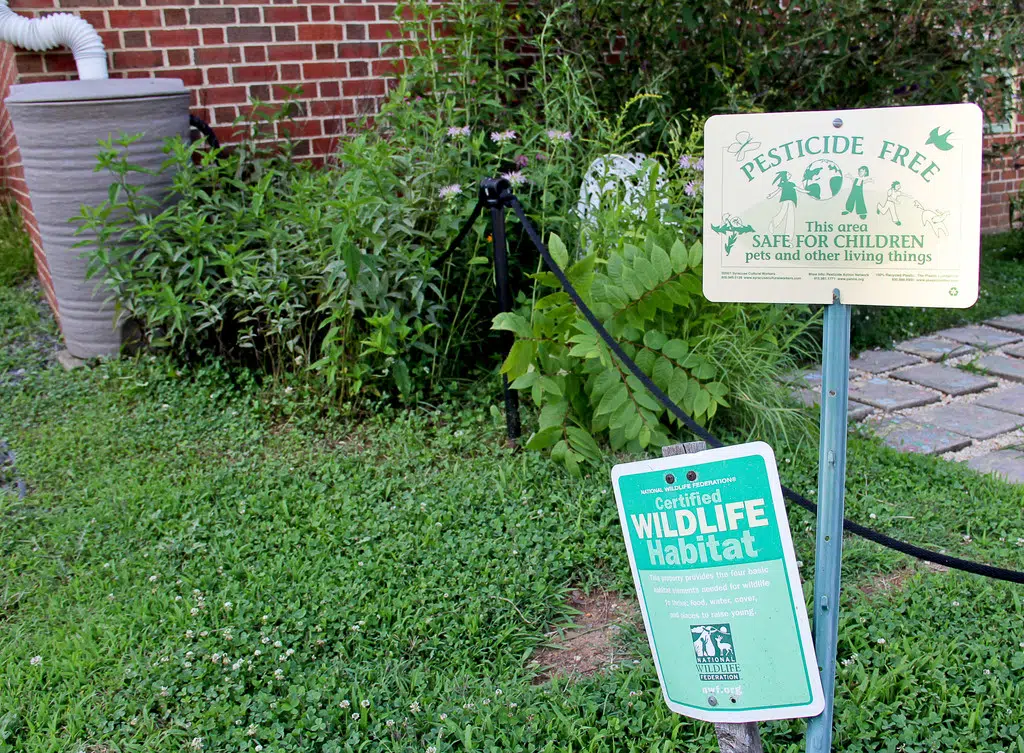
Meanwhile, the garden at St. Ann School in Arlington is
flourishing. Certified a wildlife habitat by the National
Wildlife Foundation, the garden is pesticide-free and
features a rain barrel. It also includes a box that is part
of the national Little Free Library program, which encourages
St. Ann students to recycle old books.
Similarly, St. Ambrose School in Annandale uses crop
rotation, irrigation and other sustainable technologies to
grow fruits, vegetables and flowers.
Thérèse Bermpohl, director of the diocesan
Office for Family Life, said, “Parents can speak to their
children of ‘a Father who creates and who alone owns the
world’ (“Laudato Si’,” p. 75). All things come from
God to show His goodness. God then entered His created world
and became man. In this light, children will see that
creation can be used, but never abused.”
Environmental efforts are even costlier at the diocesan
scale. According to John Amarantides, facilities manager in
the diocesan Office of Planning, Construction and Facilities,
the cost associated with achieving state and national
Leadership in Energy & Environmental Design, or LEED,
certification requirements is “very difficult to meet.” He
said a well system alone can cost $800,000.
Amarantides, a civil engineer by training, said, “I can’t
very well go to a parish and say, ‘You’re going to be green
this week.'”
He said that his office implements what green measures it
can, project by project, depending on the budget. This can
mean building an underground storage facility for rainfall or
installing LEDs to cut down on electricity use.
Father Creedon believes the majority of local Catholics see
the environment as the “responsibility of humanity” and that
the encyclical will “start a conversation.”
“I’m not a scientist, but I can read the tea leaves,” he
said.
Find out more
To read the full text of “Laudato Si’,” go to bit.ly/EncyclicalPDF. To
learn more about the diocesan Peace and Justice Commission,
go to arlingtondiocese.org/peace/index.aspx.
Stoddard can be reached at [email protected].