Black Catholic history is both inseparable from and essential to the history of Catholicism in the United States.
Since the birth of the nation, Black Catholics helped build parish communities and have passed down the faith to their children. Yet for centuries, they faced prejudice and racial discrimination, even in the pews of their own parishes. Today, their struggles and triumphs are woven into the fabric of Catholic parishes, institutions and communities throughout the greater Washington area, and have inspired the faith journeys of two saints-to-be.
Black parishioners formed a significant portion of the original parishioners of the Basilica of St. Mary in Alexandria, founded as St. Mary Church in 1795. According to the basilica’s history book, “Brick Chapel to Basilica,” many were free persons who lived and worked in Alexandria; however, many others were enslaved by wealthy landowners, who often saw that those who they enslaved were baptized and raised in the Catholic faith.
From the start, Black parishioners were treated as second-class citizens. Even after the Civil War, Jim Crow laws ruled Virginia, and Black parishioners were forced to sit in the side wings or the balcony, or stand in the aisles, according to Princess McEvilley, historian of St. Joseph Church in Alexandria, the first historically Black Catholic parish in Virginia. “They would stand in the aisles or wherever, with hopes of receiving Communion,” she said.
Black parishioners began discussing the possibility of founding a Black Catholic mission in the 1890s, but it wasn’t until 1913 when Thomas Blair, a Black parishioner and sexton at St. Mary, raised the idea with the pastor, Father Henry J. Cutler. The parish then contacted Richmond Bishop Denis J. O’Connell, and the approval was almost immediate.
Patronage of the parish came from high, and saintly, places. St. Katharine Drexel donated $8,000 in March 1915 and even visited the church in its infancy. McEvilley said that today, the parish often refers to its “saintly foundation.”
The church foundation was laid in 1915, and the following year, the parish’s first Mass was celebrated by Josephite Father Charles Hannigan, who had long ministered to Black Catholics in Alexandria. But Blair, the old sexton, did not enjoy the fruits of his labor for long; he died only two weeks after the new church opened. He was buried in St. Mary’s cemetery, and is now known as “the father of St. Joseph’s,” according to McEvilley.
Not all Black Catholics joined the fledgling parish. Some still had an attachment to St. Mary’s and remained there, but many came to St. Joseph, including white parishioners. One prominent parishioner was John Parker, the great-great-great grandfather of Christian Bentley, St. Joseph’s communications director. Parker was born in slavery and freed after the Union Army’s 1861 occupation of Alexandria. A founding parishioner, he taught for decades at the Snowden School for Boys, one of the first public schools for African American children in Alexandria. Today, Alexandria’s historic Parker-Gray District is named after him.
In the early years, St. Joseph’s parishioners made do with little. The parish school opened in the church basement in October 1916 where students were taught by the Oblate Sisters of Providence, a religious order for Black women founded by Venerable Mother Mary Lange. Until the rectory was built in 1921, the pastor lived in the church sacristy, his bed tucked in a corner. In 1931, the school moved from the parish hall to a standalone building, which is still used today for religious education.
Over the decades, the parish community weathered historic events, including the Great Depression and World War II. “The community worked together,” McEvilley said. “Nobody went hungry.”
During the Civil Rights Movement of the 1960s, one pastor, Father Henry Harper, assisted with peace efforts and volunteered with the NAACP. But for the most part, “our parishioners lived out their faith in civic life and with human dignity in Alexandria,” Bentley said.
In the 1970s after Vatican II, there were significant changes at St. Joseph’s, including more opportunities to bring Black culture into liturgy. In 1976, the parish launched its Gospel Choir, which McEvilley said is today “a prominent fixture at St. Joseph’s.” Around this time, Bentley’s great aunt Thelma Lucas worked to establish Black Catholic ministries for the Arlington diocese. This was a huge step forward for diocesan Black Catholics, Bentley said. “Enculturation is so important in liturgy, because the goal is to reach the heart and bring everyone to the eucharistic table,” he said. “There is a vernacular that (a) community understands, and when you use that, that’s what reaches the heart.”
Today, St. Joseph is a diverse parish, with parishioners of many races and nationalities, but its roots in Black Catholic culture are still visible. “We recognize our culture,” McEvilley said. “We are an authentically, unapologetically Black Catholic church.”
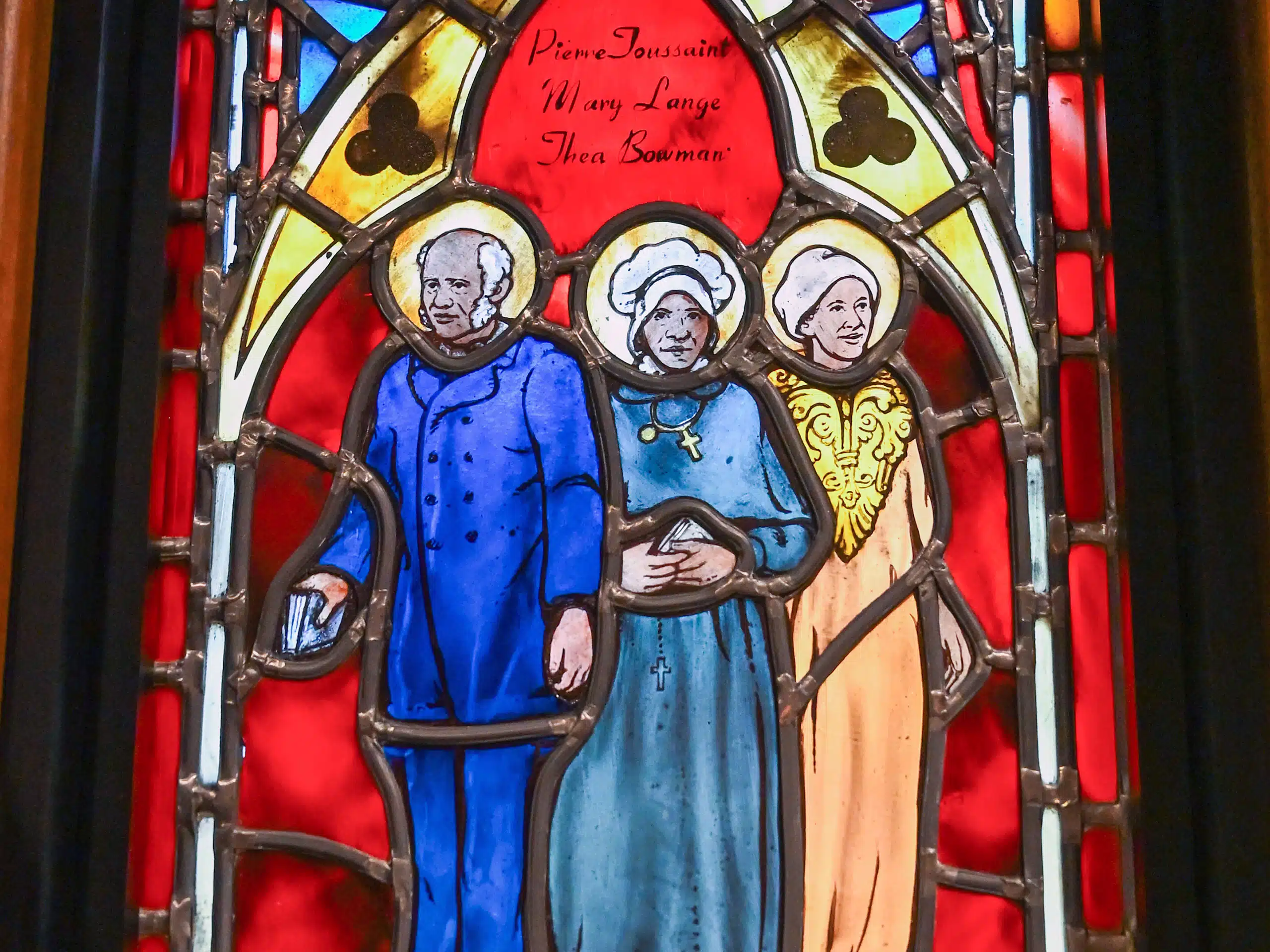
St. Katharine Drexel is not the only saint who touched the lives of St. Joseph’s parishioners. Venerable Mother Mary Lange, who founded the religious order that taught at St. Joseph School, is one of the “saintly six” Black men and women whose causes for canonization are under review.
An immigrant to the U.S., Mother Lange was devoted to teaching Black children in Baltimore. With the support of Sulpician Father James Hector Joubert, she founded a school for Black girls in June 1828. Around this time, she approached Father Joubert with a request to start a religious order for Black women, who at the time were barred from entering religious orders. She was granted permission by Archbishop James Whitfield, and July 2, 1829, she and three other women made their initial vows.
But at the time, Maryland was a slaveholding state, and the sisters were not exempt from discrimination, according to Oblate Sister of Providence Rita Michelle Proctor. After Father Joubert died in 1843, Mother Lange “was even told with her sisters to disband, to go do housework, that they were not worthy to wear the habit of a religious,” said Sister Rita Michelle. “It was racism in its finest form. But she didn’t. She kept going on.”
As founder and superior of the order, Mother Lange educated and nurtured her schoolchildren, gave shelter to the elderly, and nursed the sick, most notably during the cholera epidemic of the early 1930s. Over the decades she served as the order’s superior general and novice mistress, and as a domestic at St. Mary’s Seminary in Baltimore.
Mother Lange died Feb. 3, 1882. Little is known of what she said throughout her life, but several of her sayings included “My soul wishes to do the will of God” and “Hasten to the Blessed Sacrament.”
Today, the Oblate Sisters are a small but mighty force of 37 and are dedicated to “service to others” through education, parish ministry and nursing. “Mother Lange’s legacy that we try to live out is that we are called to be women of service,” Sister Rita Michelle said. “We try to look at the signs of the times and determine what God is asking of us as Oblates.”
Pope Francis declared Mother Lange “venerable” June 22, 2023, moving her cause for canonization forward. “We were delighted,” Sister Rita Michelle said.
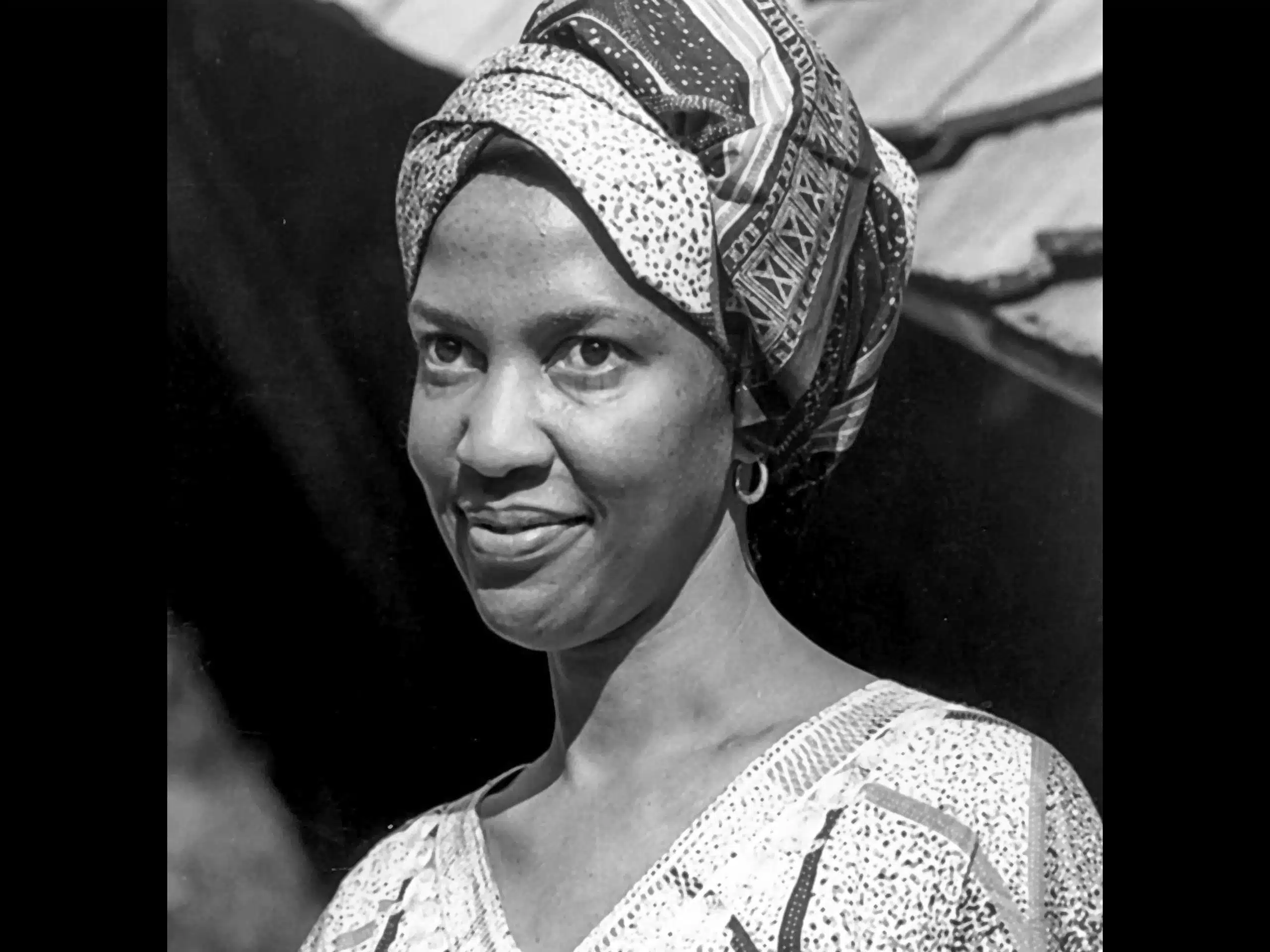
Another saint-to-be, Servant of God Sister Thea Bowman, strove for greater inclusivity of Black students at The Catholic University of America in Washington, and encouraged Black Catholics to live their culture and faith boldly.
A member of the Franciscan Sisters of Perpetual Adoration, Sister Bowman earned both a master’s (1969) and doctorate (1972) in English from Catholic U. Living in Washington during the Civil Rights movement, she experienced Black culture in a new way, according to Catholic U. law professor Veryl Miles. “It was a very heightened period of Black awareness — our history and our culture,” she said. “She just really soaked it all up being here in Washington, and it just had such an amazing influence on her life, helping in the formation of her voice.”
Shortly after Martin Luther King Jr.’s assassination in 1968, Sister Bowman spoke at the neighboring Howard University, one of the country’s Historically Black Colleges and Universities. She taught Catholic U.’s first Black literature course and welcomed students from the university’s newly established “Partnership Program” that provided scholarships to Black students in the metropolitan area. One such student was Ronny Lancaster, a member of the class of ’73, who studied under Sister Bowman.
Lancaster said that he experienced a culture shock when he arrived on Catholic U.’s predominantly white campus. “We were not used to being in an all-white environment,” he said. “Growing up in D.C., we went to Black schools, we lived in Black neighborhoods.” At the time, many areas of Washington were still segregated, and when the group of 30 students arrived at Catholic U., they experienced racial tensions and even discrimination on campus. But Lancaster and the other students pushed forward, particularly with the guidance and support of several professors. One of them was Sister Bowman.
Lancaster said that just being in the room with Sister Bowman, he could tell that she was “an extraordinary person.”
“She was a most interesting combination of talents and gifts and blessings. She was forceful and kind. She was bold, courageous and modest,” he said. “She was an extraordinary teacher.”
And Sister Bowman was not afraid to bring her love of music to the classroom. “One of the things that Sister Thea would do was spontaneously break into song,” Lancaster remembered. “It was kind of unnerving in a sense, because you wanted to ask, ‘Is this okay?’ I mean, here we are, Black students in this white university.” But Sister Bowman’s demonstration of her faith and culture through song resonated with him. “Here I am, 53 years … past that class, and I can still call to mind how engaging and how fulfilling that class was.”
Sister Bowman eventually returned to her hometown of Canton, Miss., to care for her aging parents in the late 1970s but faced tragedies in 1984: Her parents both died, and she was diagnosed with breast cancer. Regardless, she persevered, sharing her joy and the Gospel through a busy speaking schedule. Dressed in a dashiki, traditional African garb, she addressed the U.S. Conference of Catholic Bishops at their June 1989 meeting, delivering her famous speech, “What does it mean to be Black and Catholic?”
Months later, she died in her childhood home March 30, 1990. But her legacy of faith left Catholics with “a universal message of love,” according to Miles. Today, Catholic U. honors its saintly alumna through the Sister Thea Bowman Initiative, headed by Miles, who organizes events and activities that reflect the diversity of the university community.
“She was an American story,” Miles said of Sister Bowman. “But she was so open and so energized to learn about other people, other cultures, their situations, and how we as members of the human family need to be more understanding.”