As the nation celebrates its 250th anniversary, few could forget the many visits from the church’s last three popes — Pope Francis, Pope Benedict XVI and Pope John Paul II — and the invaluable contributions they made to the church in the U.S., and the U.S. government.
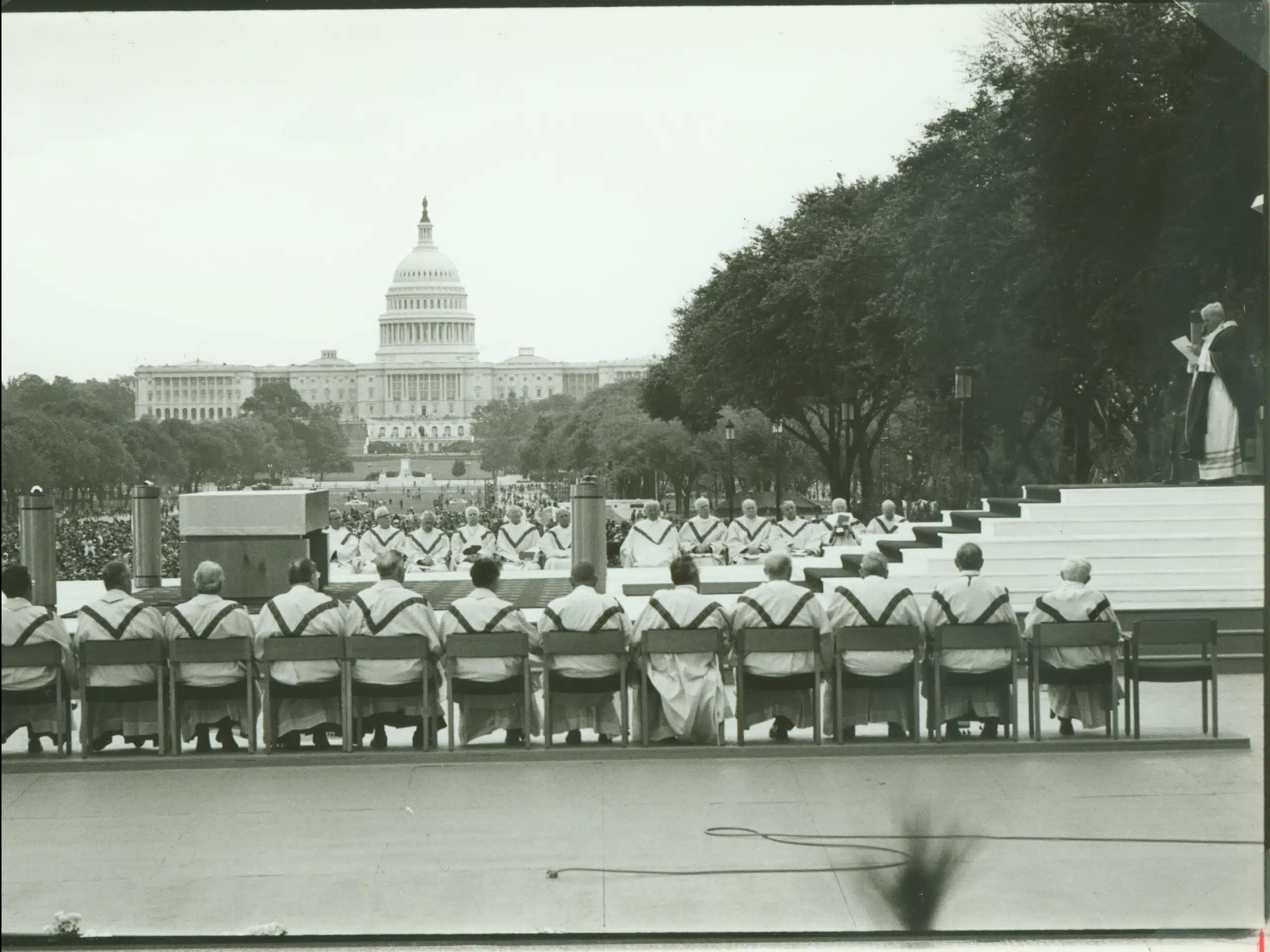
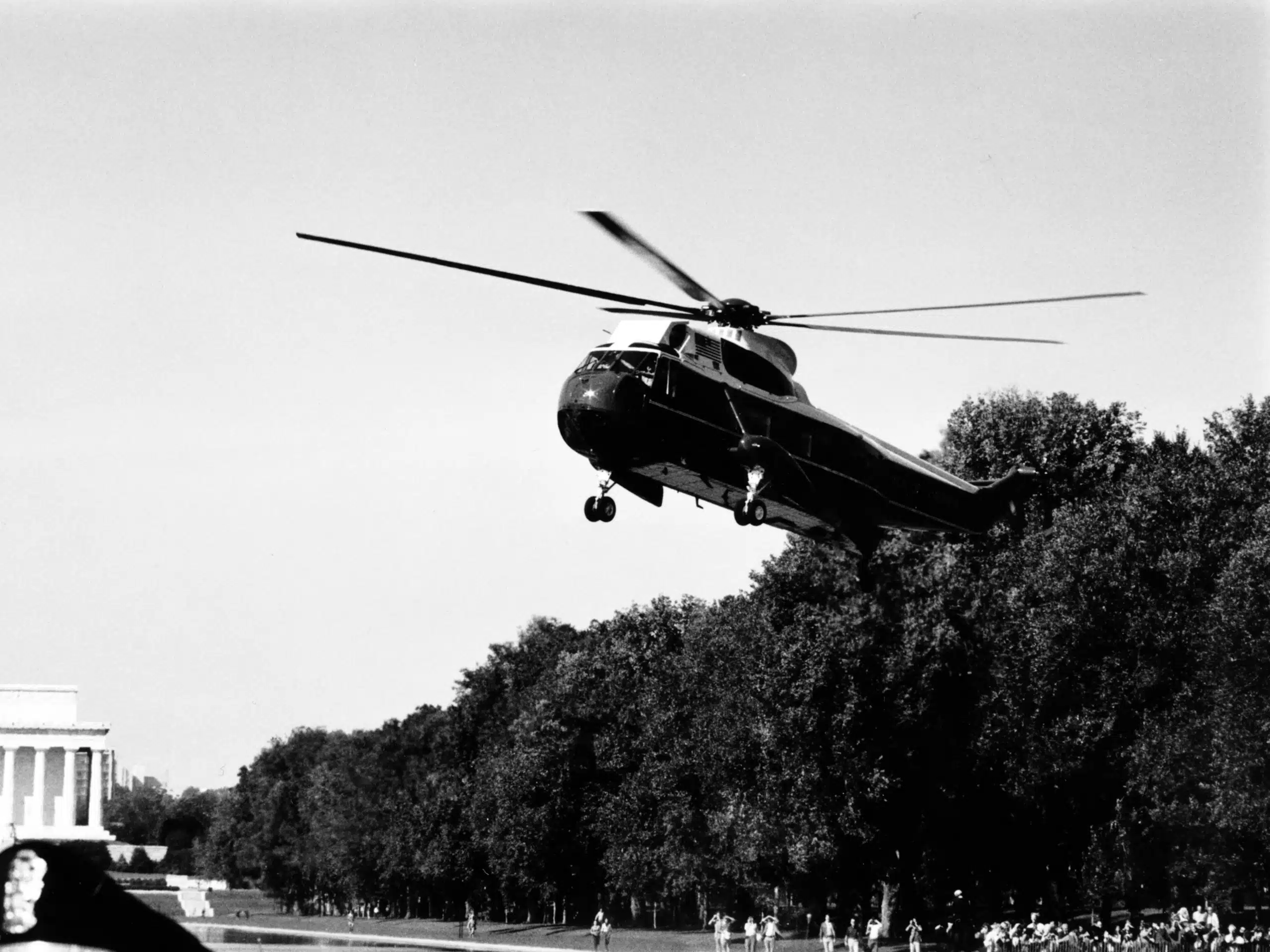
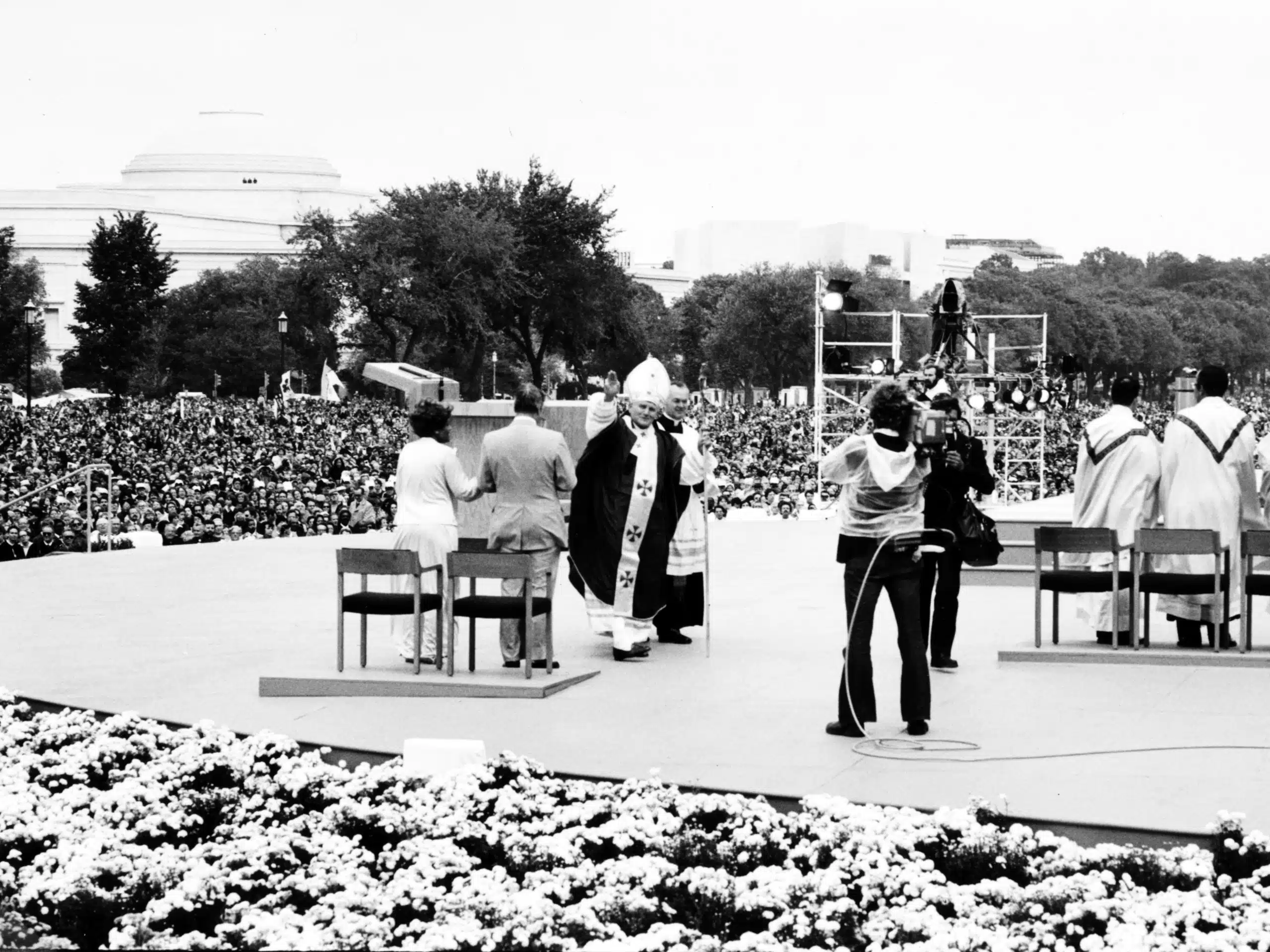
Pope John Paul II racked up many frequent flier miles to the U.S., visiting the country seven times over the course of his 26-year pontificate. His first visit Oct. 1-9, 1979, was a lengthy one, touring six U.S. cities, ending in Washington. During his stay in the nation’s capital, he met with President Jimmy Carter, marking the first time a pope stepped foot in the White House.
The highlight of the 1979 trip was a large farewell Mass on the National Mall, which the pope concelebrated with 20 U.S. bishops and archbishops, including Bishop Thomas J. Welsh, the first bishop of the Arlington diocese. The pope affirmed the dignity of life and the protection of the unborn, and called for increased care of the sick and elderly, as well as an end to discrimination and racism. “I do not hesitate to proclaim before you and before the world that all human life — from the moment of conception and through all subsequent stages — is sacred, because human life is created in the image and likeness of God. Nothing surpasses the greatness or dignity of a human person,” he said.
The altar from the Mass on the Mall now adorns the sanctuary of St. Bernadette Church in Springfield.
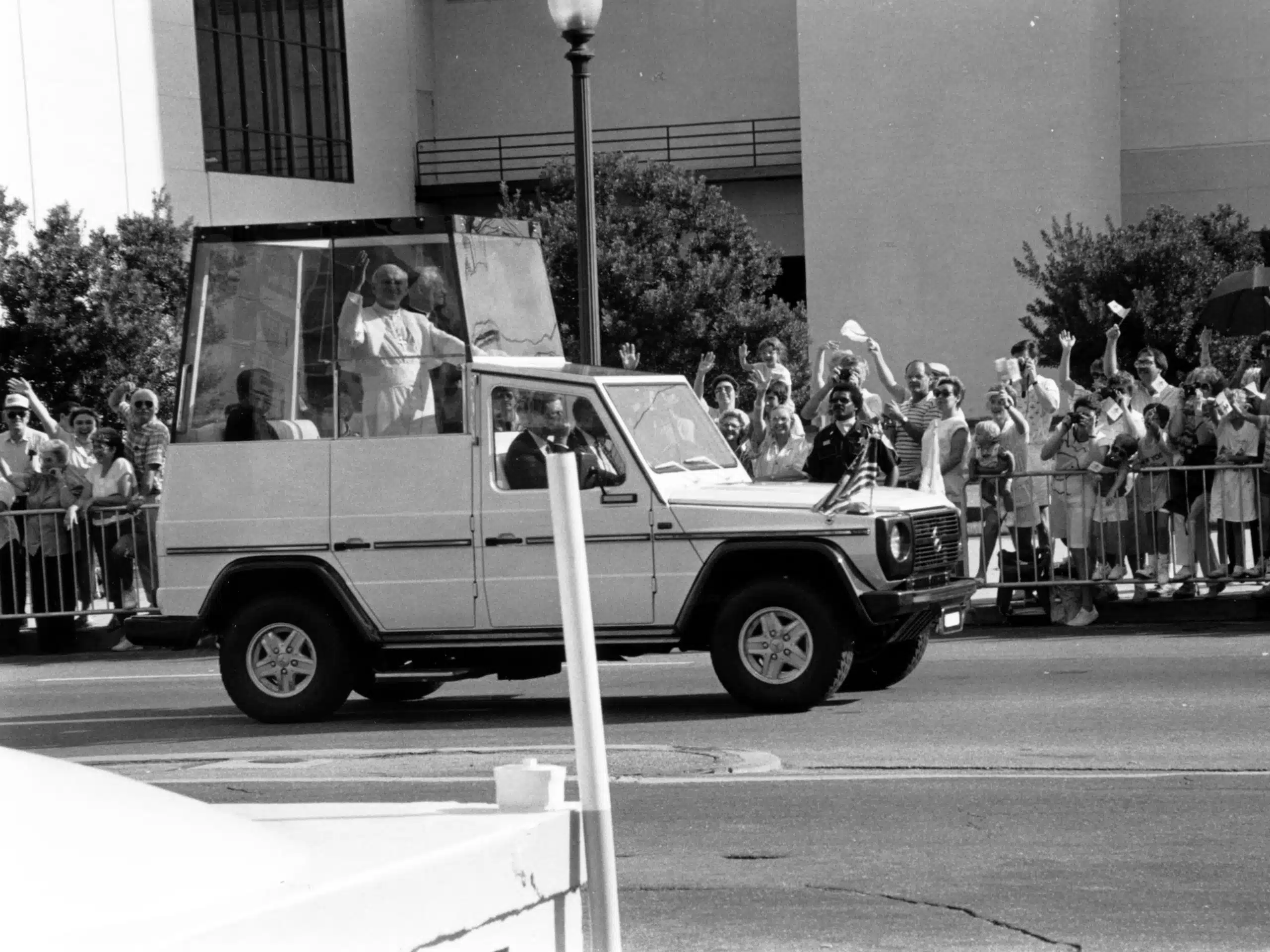
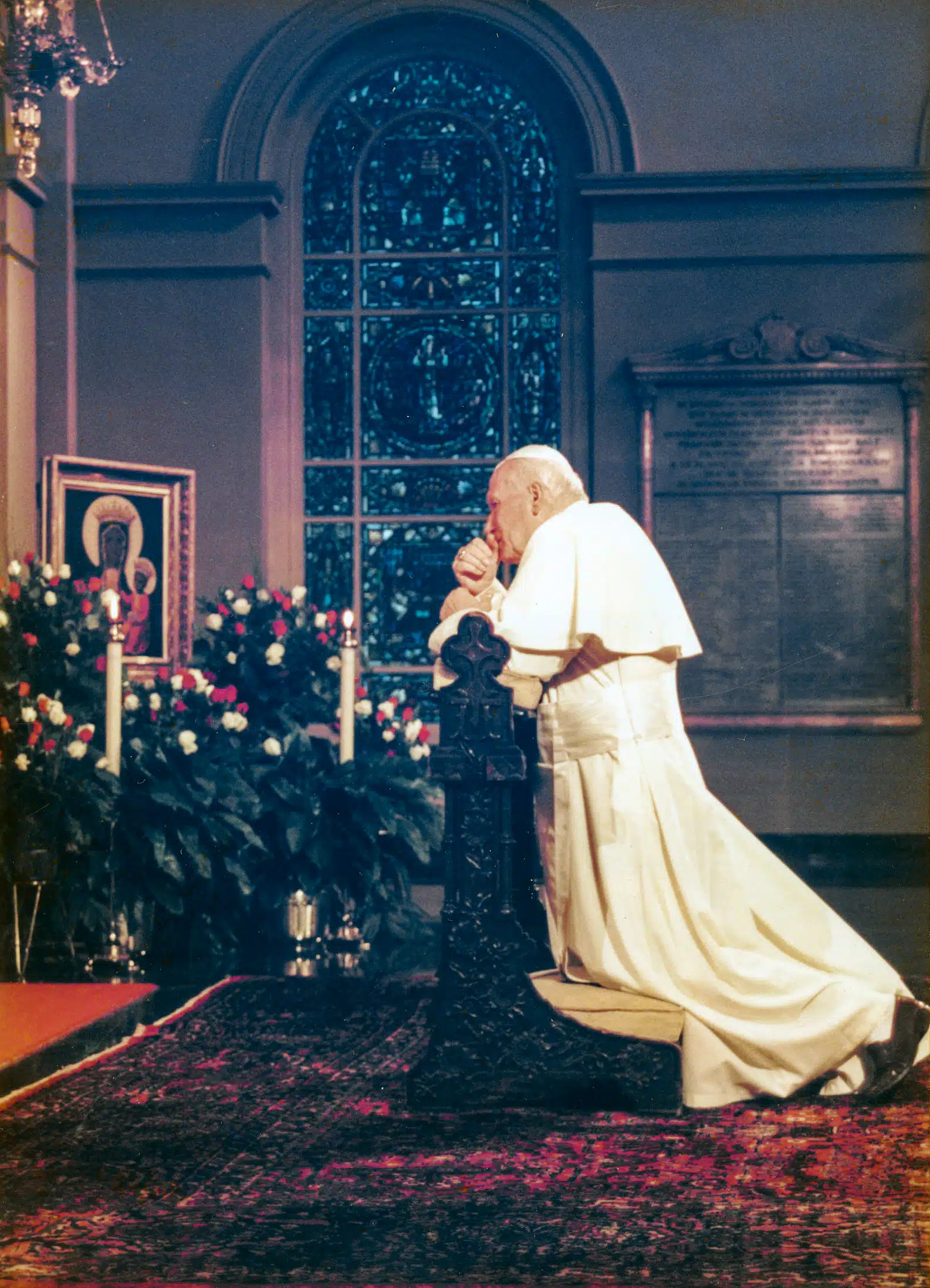
Pope John Paul II made a second tour of the U.S. in September 1987, visiting the West Coast for the first time. His trip featured a stop in New Orleans, where Michael F. Flach, then-editor of the Catholic Herald, documented the pope’s visit to the historic St. Louis Cathedral in the French Quarter. The pope later rode down Canal Street in his popemobile, greeting the faithful. In Los Angeles, he entrusted the U.S. to Mary at the end of a Mass at Dodger Stadium Sept. 16. That same day, he instructed U.S. bishops to remain steadfast to church teachings that were “unpopular,” in secular culture, including church teaching on abortion, marriage and divorce, and sexual morality.
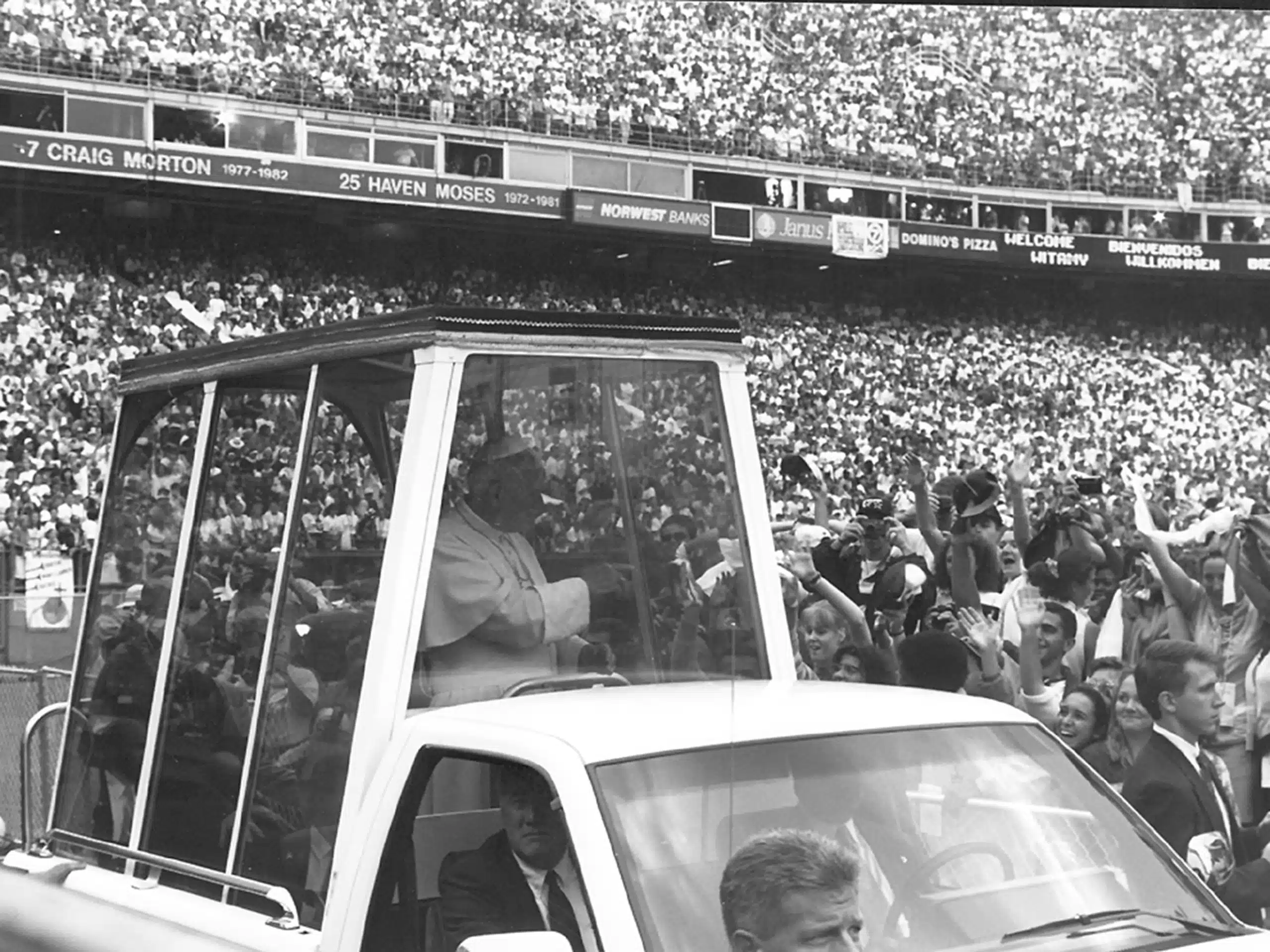
In 1993, he united American youths from coast to coast in Denver at World Youth Day. Managing Editor Ann M. Augherton gave daily updates on the events of the week, “which many hailed as a Catholic Woodstock,” she wrote in the Aug. 19 issue of the Herald. Shortly before the welcome Mass at Mile High Stadium, a group of diocesan youths greeted the pope as he descended from one of four helicopters: “Pope John Paul II, we love you.” He turned and waved at the group, which caused a flood of “happy tears.”
The pope also met with President Bill Clinton, saying later that the two discussed “the principal concerns of the world situation at this moment, the inalienable dignity of a human being and the rights which flow from that dignity.”
Just two years later, the Holy Father returned Oct. 4-8, 1995. In Baltimore, he celebrated Mass at Camden Yards, with some 1,300 Arlington parishioners worshipping in the stands. The Herald sent Augherton, a reporter and a photographer to cover the visit. Later, he made a quiet visit to the Basilica of the National Shrine of the Assumption of the Blessed Virgin Mary, the nation’s first Catholic cathedral.
In New York, he addressed the United Nations in honor of the organization’s 50th anniversary, urging leaders to “rise more and more above the cold status of an administrative institution and to become a moral center where all nations of the world feel at home and develop a shared awareness of being, as it were, a ‘family of nations.’ ”
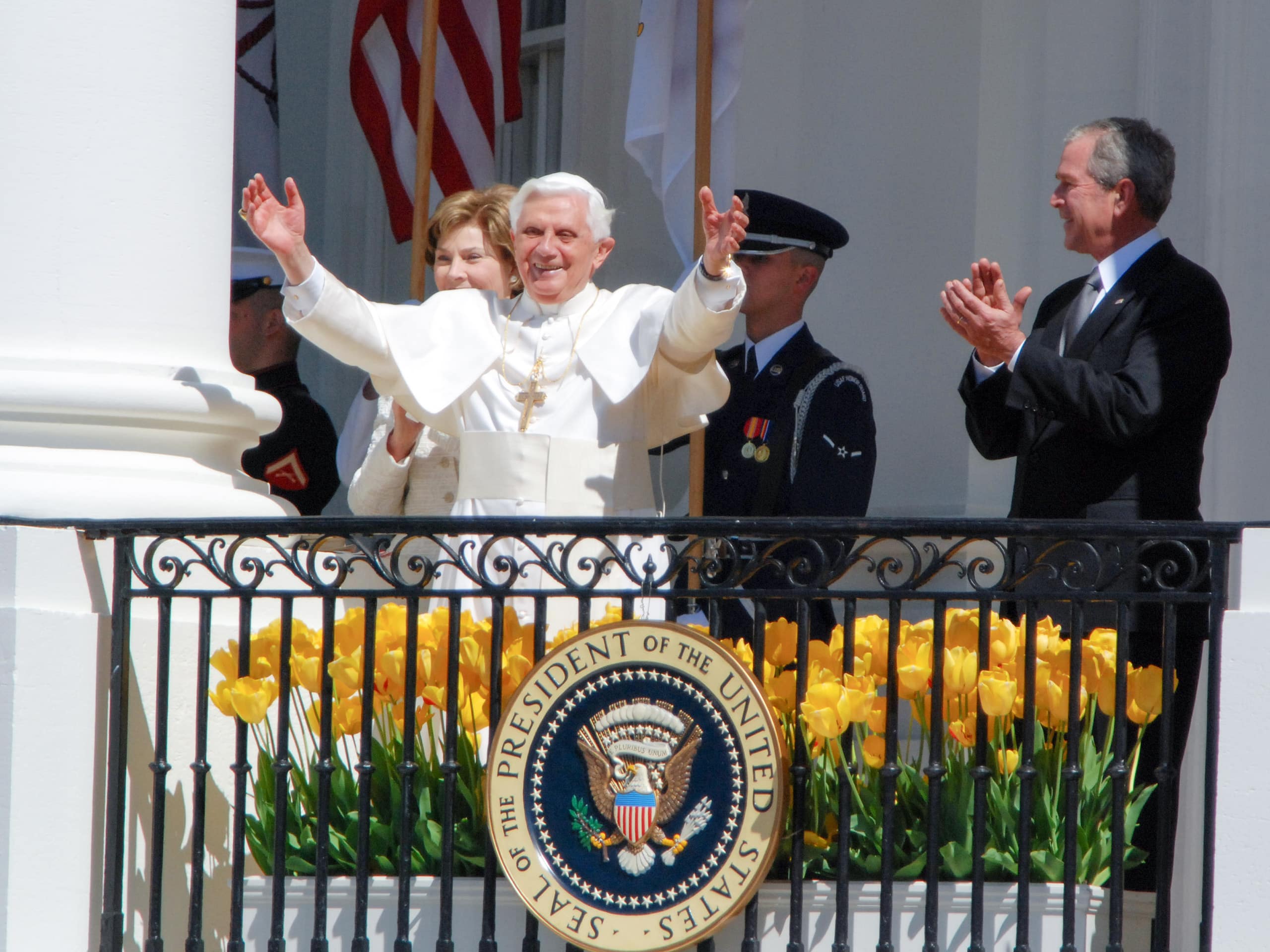
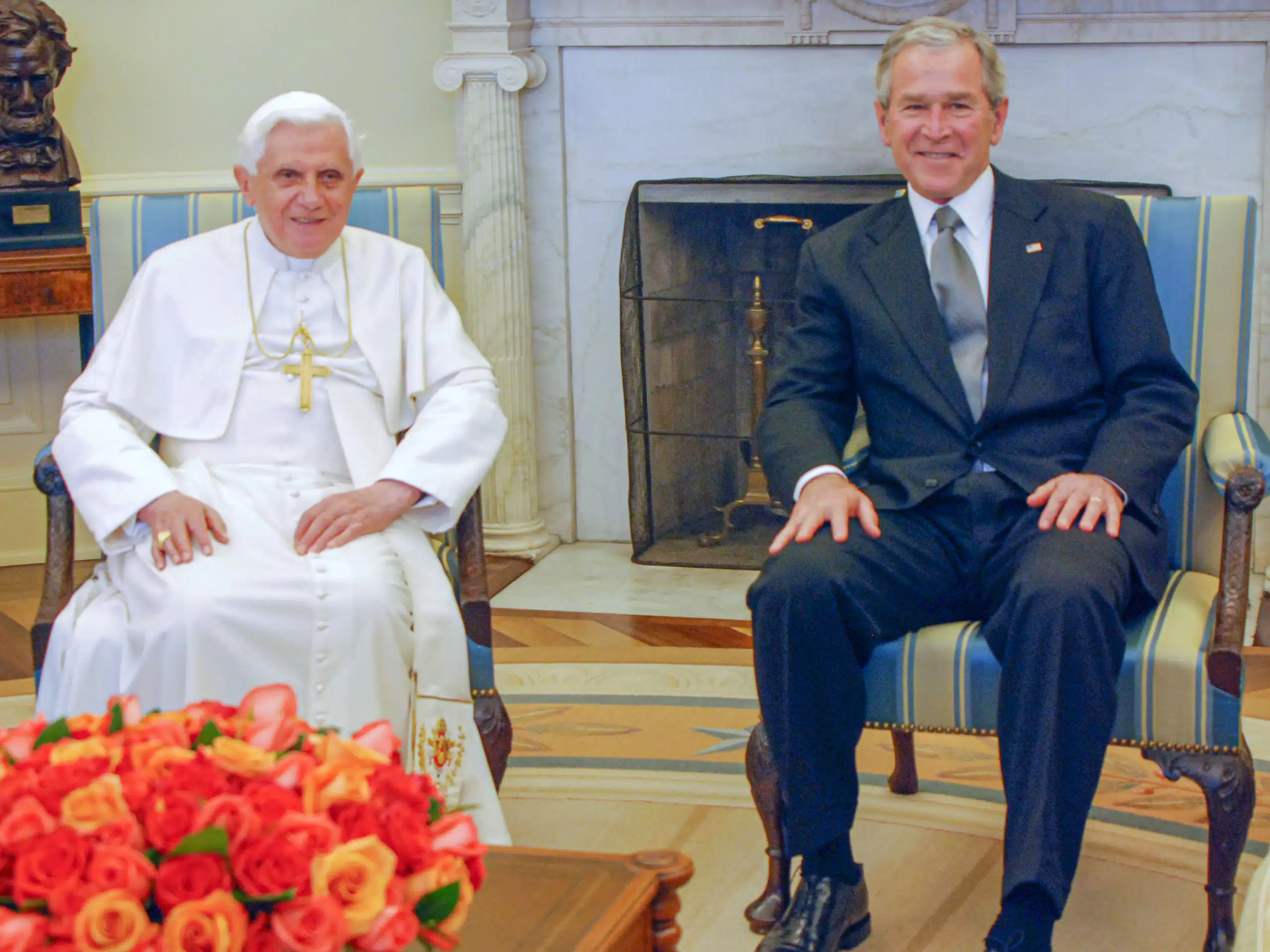
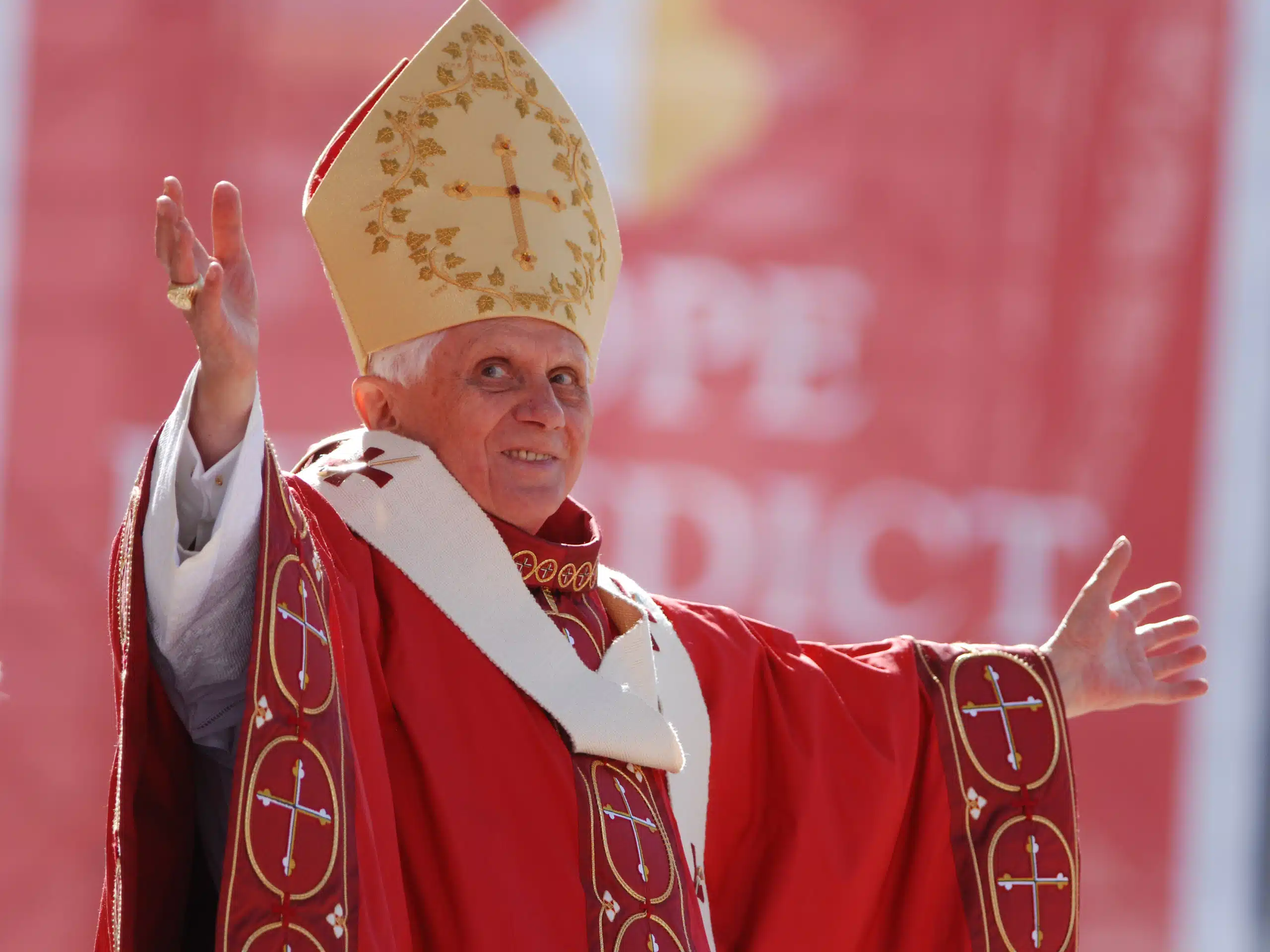
Pope Benedict XVI made his first and only visit to the U.S. April 15-20, 2008. His packed itinerary included a visit to the U.N. and meetings with President George W. Bush, Catholic educators, and the U.S. bishops. He even celebrated his 81st birthday with a visit to the White House. Many of Pope Benedict’s messages to the U.S. addressed the clergy sexual abuse crisis. He challenged U.S. bishops to promote healing among their flocks and encouraged lay Catholics in turn to love their priests.
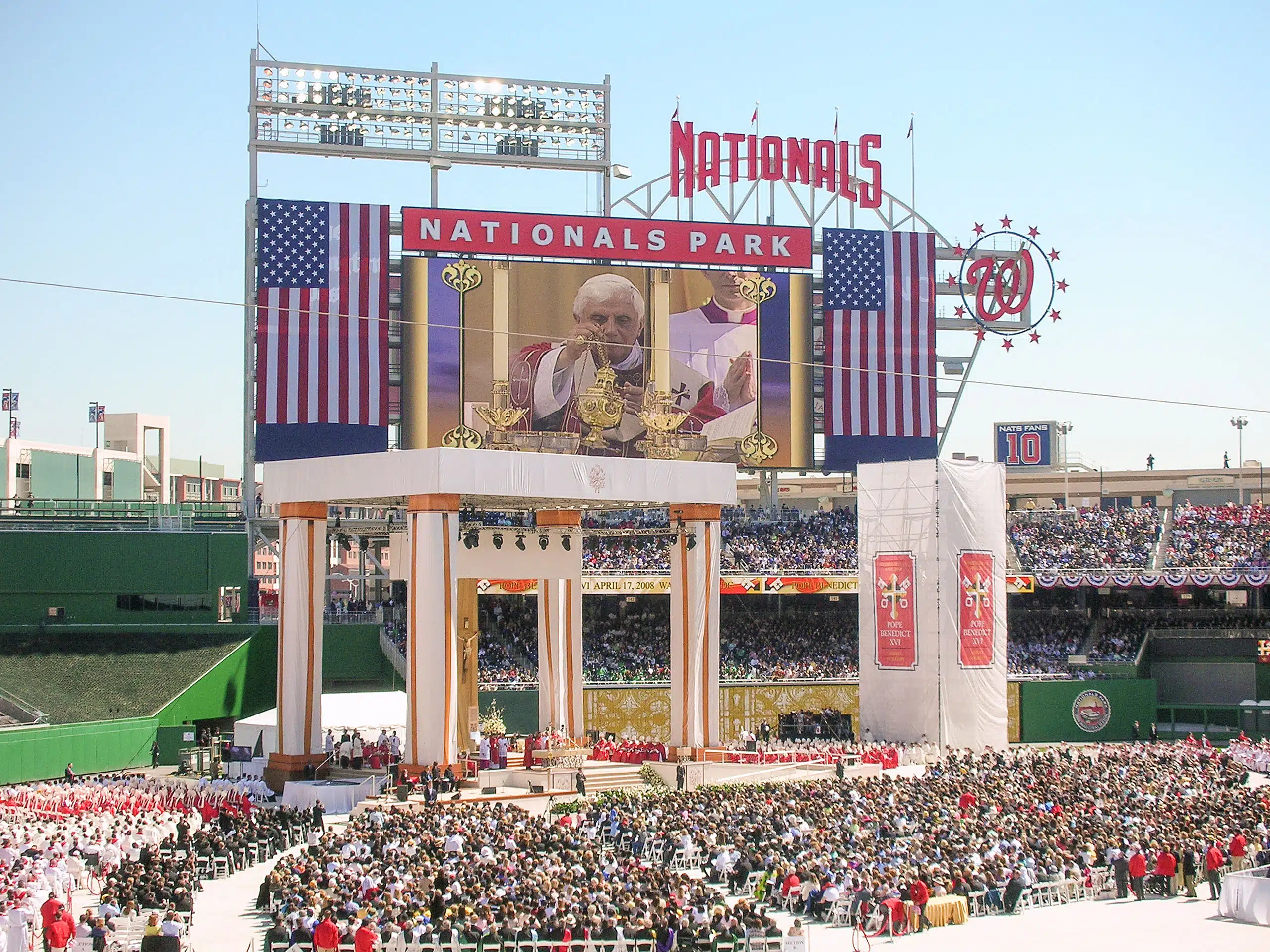
He celebrated a packed Mass at Nationals Park, riding around the stadium in his popemobile prior to the liturgy. At the end of Mass, he even blessed the cornerstone and tabernacle that would one day adorn St. John Paul the Great Catholic High School in Potomac Shores. Once again, he spoke about the sex abuse scandal in his homily: “No words of mine could describe the pain and harm inflicted by such abuse. It is important that those who have suffered be given loving pastoral attention.” He encouraged the worshippers, “Do what you can to foster healing and reconciliation, and to assist those who have been hurt.”
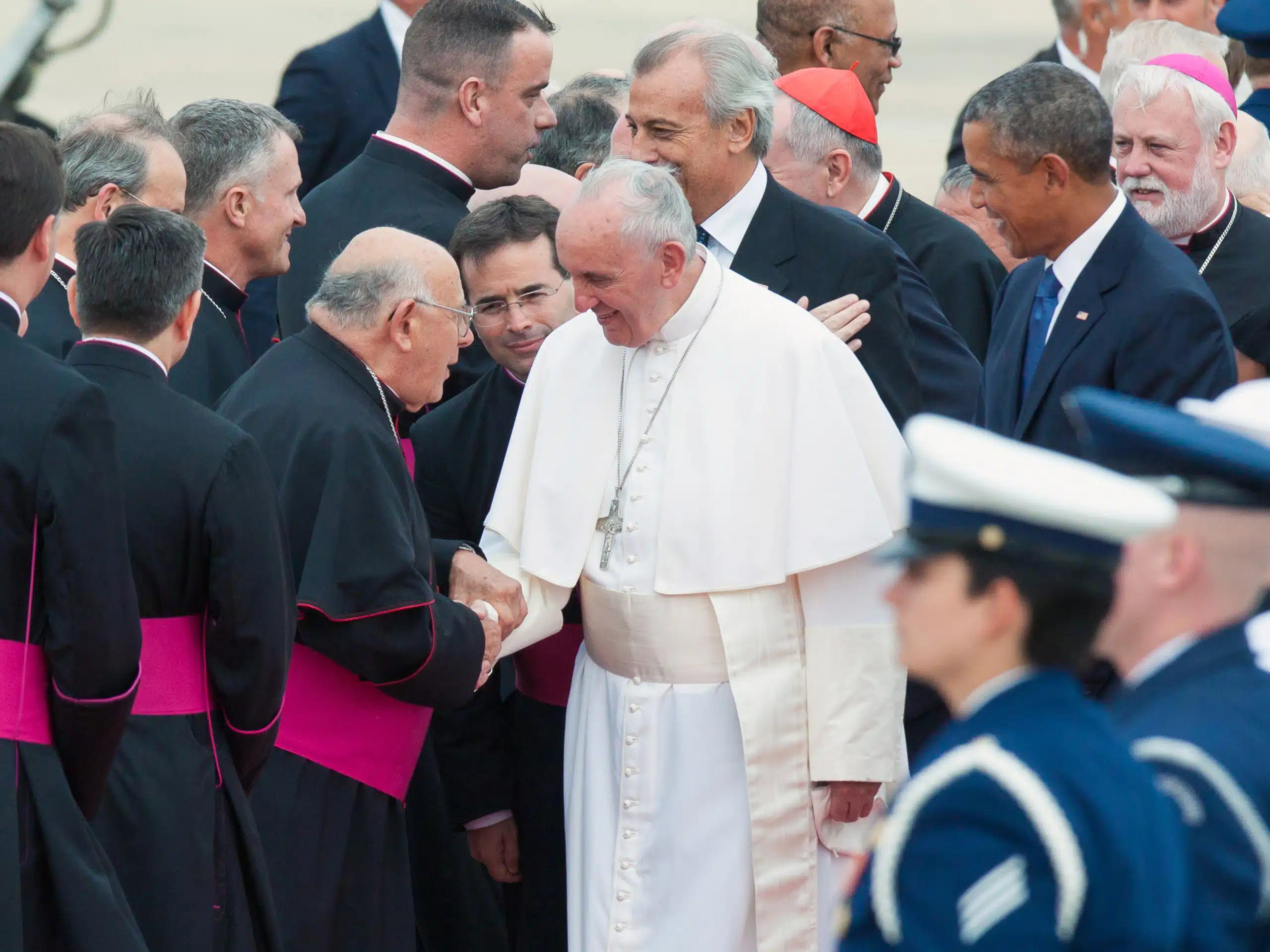
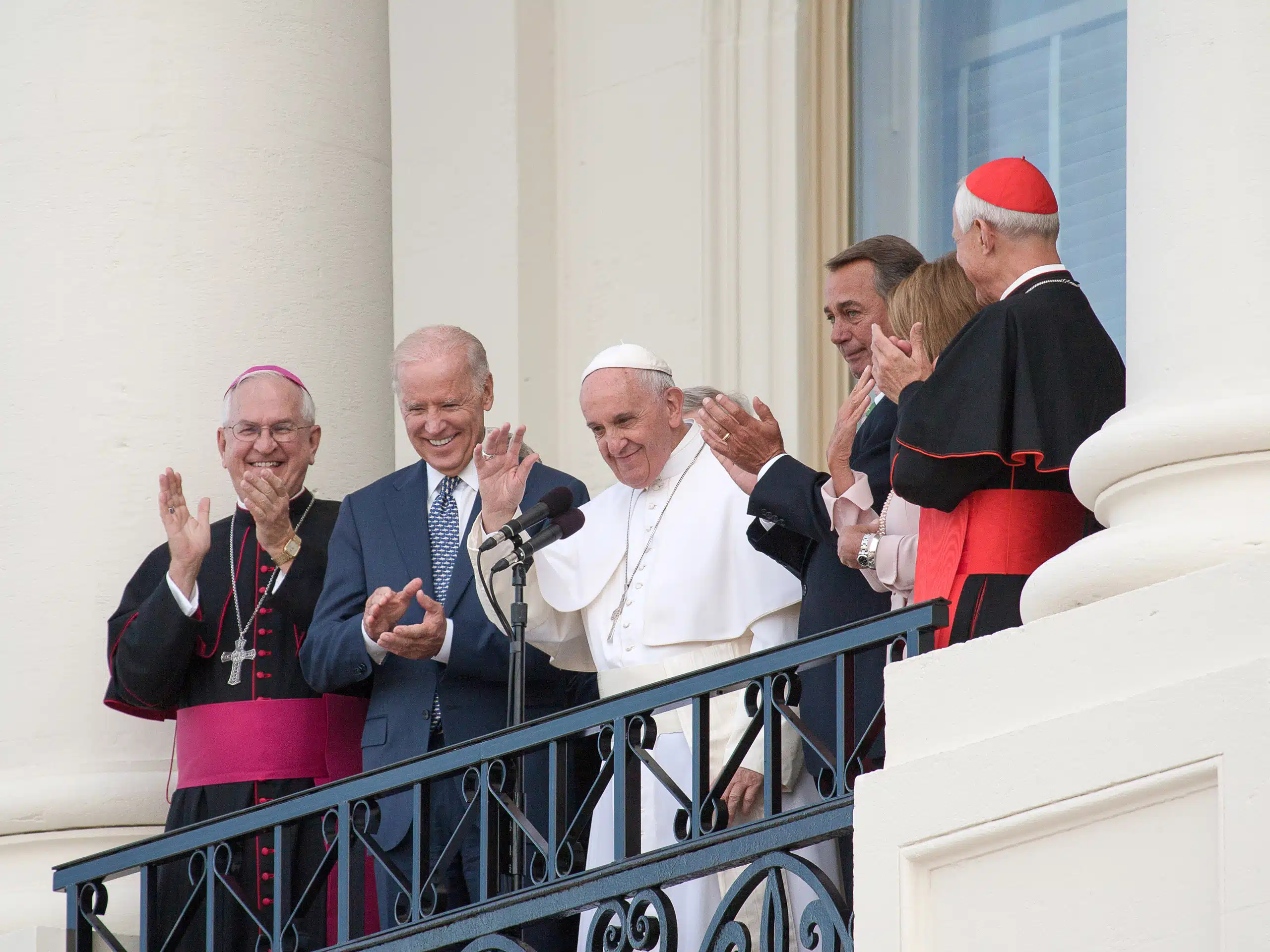
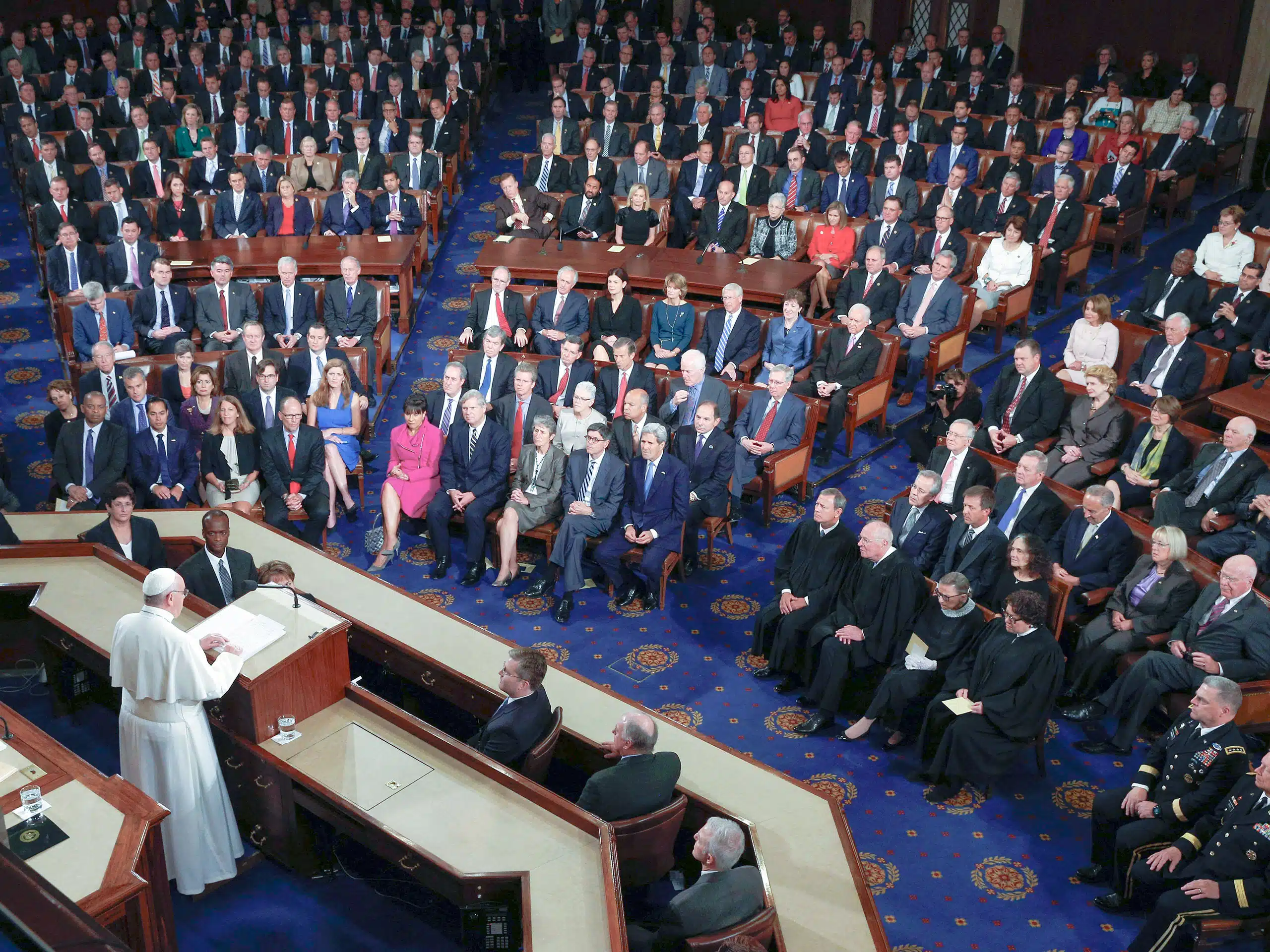
The first pontiff born in the Americas, Pope Francis paid the U.S. a visit Sept. 22-27, 2015. It was a busy time for Herald staffers during his two-day itinerary in Washington. He met with President Barack Obama, U.S. bishops at St. Matthew Cathedral, and celebrated the canonization Mass of St. Junipero Serra at the Basilica of the National Shrine of the Immaculate Conception Sept. 23. Sept. 24, he addressed a joint session of Congress, producing the memorable image of him speaking from the well of the U.S. House of Representatives in front of then-Vice President Joe Biden and House Speaker John Boehner, both Catholics. Before leaving town, he visited St. Patrick Church to meet with clients of Catholic Charities and participated in a parade through downtown Washington, even stopping to bless and kiss the baby boy of Iris and Rigoberto Chavez, parishioners of All Saints Catholic Church in Manassas.
Pope Francis then set off for New York, where he met with religious orders at St. Patrick’s Cathedral and addressed the U.N. In Philadelphia, he presided over the Festival of Families, where diocesan-born bluegrass singer Marie Miller performed before the pope. He also spoke off-the-cuff to tens of thousands of pilgrims on the challenges and blessings of families, where he famously said, “Families have difficulties. Families — we quarrel, sometimes plates can fly.” He added, “but those difficulties are overcome with love.”
From kissing babies to meeting with the homeless and imprisoned, Pope Francis’ first and only visit to the U.S. established him among American Catholics as the “pope of the people.”