The year was 1976, and Lucille Maloney was in the hospital,
suffering heavy blood loss after a miscarriage. Feeling
woozy, she was placed in a recovery room with some 30 other
women. Though in a daze, it didn’t take her long to realize
that these women were recovering not from miscarriages but
abortions.
“There I was having lost my baby and they had all aborted
theirs,” said Maloney. “It was just an eye opener, and (my
husband and I) started marching as a result.”
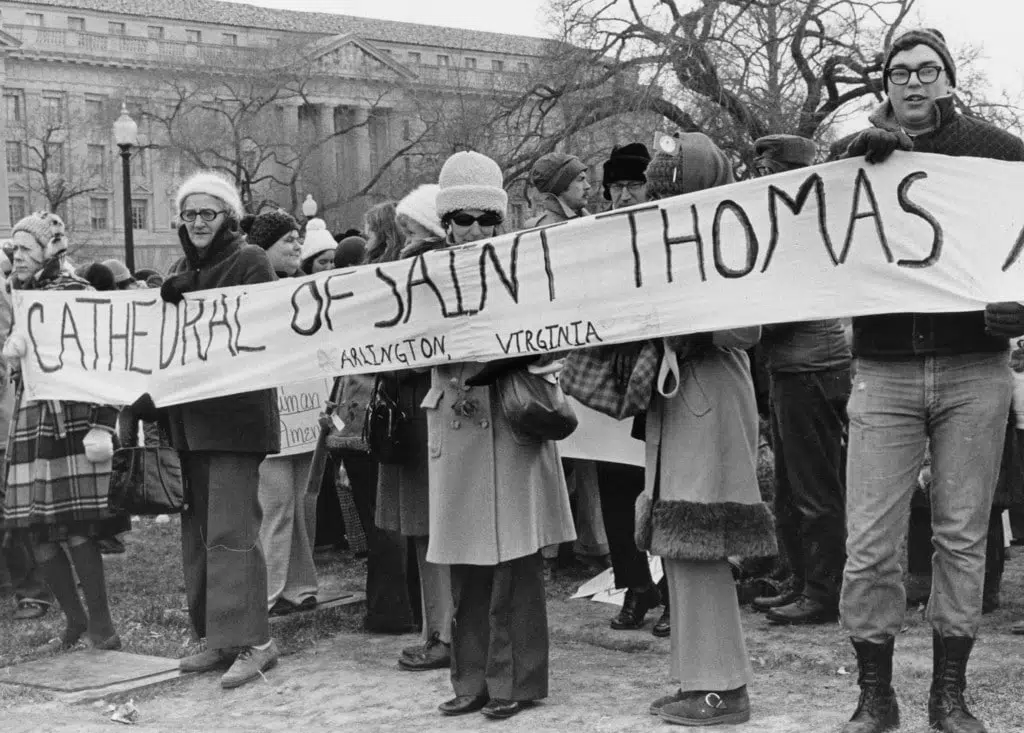
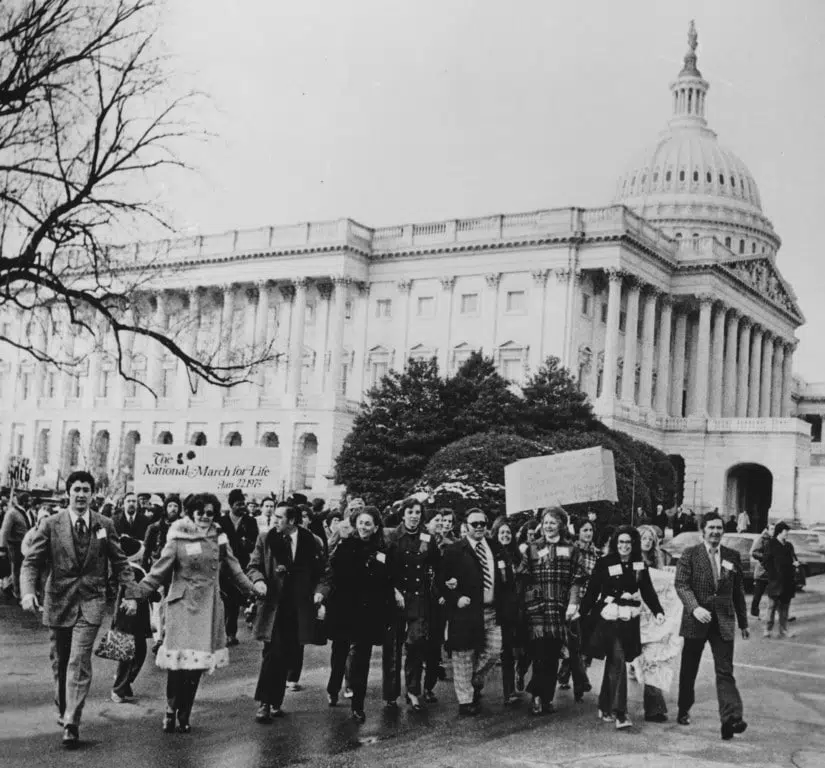
This year, just like the past 42 years, thousands of people
will descend on the nation’s capital Jan. 22 to protest
abortion on the anniversary of its legalization: the Supreme
Court decision Roe v. Wade. Today the march is known for its
abundance of young people, and many participants may not have
been born when the first March for Life took place in 1974.
Others, like Maloney, have seen the giant celebration of life
grow since its humble beginnings.
Longtime March for Lifer and parishioner of St. James Church
in Falls Church, Margaret Whitehead gave birth to two of her
four boys in the late 1960s and early 1970s. At that time,
she and her husband Kenneth were living in Maryland, where
even before Roe v. Wade, the state legislature passed a bill
allowing abortion, which was vetoed by the governor.
“I was feeding my baby when they passed their abortion law
and I just wept,” said Whitehead. “When you have a baby you
know how original they are. You just can’t accept that
they’re expendable,” she said. After Roe v. Wade, Whitehead,
her husband or one of her four sons have made it to every
march.
Although the march was not as organized in its inception,
Whitehead believes its phenomenal success is one of the most
amazing grassroots movements of the age.
“The march is so important because it brings so many people
together. Even though it isn’t widely reported, our elected
officials can’t help but notice. It’s important to let people
know we haven’t gone away,” said Whitehead.
Up until about five years ago, Mary and Maurie Stevens were
in charge of organizing the March for Life bus for St. Philip
Church in Falls Church. Each year they would publicize a
month beforehand, placing signup sheets and a collage of
March for Life pictures in the back of church. On the morning
of the march, they wore matching scarves to be spotted easily
and carried a large St. Philip banner.
“We never lost anybody; the Blessed Mother always heard our
prayers,” said Mary.
Each year at the march they would listen to the speeches of
politicians, ministers and pro-life activists. “(March for
Life founder) Nellie Gray spoke every year until she passed
on,” said Maurie. “It was amazing to see the diversity down
there of religions and races, every nationality and faith.”
The Stevens saw the progression of the march’s starting point
from the White House Ellipse to the Washington Monument to
the National Mall. As the marching began, their parish priest
would lead the rosary. Without fail, they would run into old
friends or see buses from Mary’s home town of Louisville,
Ky., or even members of an all-boys school wearing hats of
his patron, St. Maurice.
Maloney always was encouraged by the friendly crowd. “People
were always trading buttons and pushing someone else’s babies
up the hill,” she said.
Though Maurie is saddened that there’s still a reason to
march, he feels the march consistently has been a celebration
of life.
“From the beginning, the March for Life has always been very
warm, despite the weather,” he said.
Di Mauro can be reached at [email protected] or on
Twitter @zoeydimauro.