

A life without technology and the noise of the modern world may sound strange to most. For the 13 Trappist monks at Holy Cross Abbey in Berryville, it’s silence that makes them “countercultural,” according to Brother Mary John Blaschik.
“From the outside, they probably think that we do nothing. But it’s from that ‘nothing’ that we are saving the world,” he said. “That’s what we do: we pray. Prayer is the most powerful thing anyone can do.”
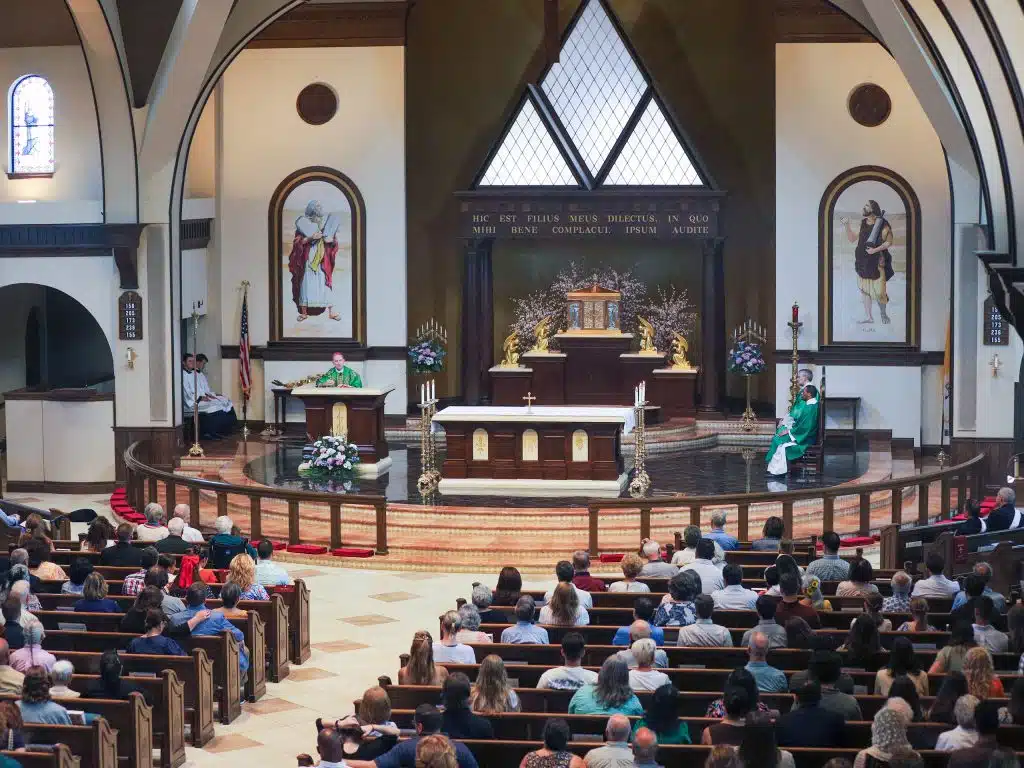
Residing on land once prospected by George Washington and fought over during the Civil War, the monks today live a quiet life devoted to work and prayer. Monks from St. Joseph’s Abbey in Spencer, Mass., sojourned to the Cool Spring property Nov. 18, 1950, and the order has lived in isolation from the world ever since.
Stretching back centuries, the Trappist order first emerged in Egypt in the early fourth century and gradually spread to Europe, eventually making its way to the United States. As Cistercians of the Strict Observance, Trappist monks make a profession of stability — or “conversatio morum,” Latin for “the changing of life” — which requires they remain at one monastery for the rest of their lives.
Novice Brother Patrick Keay said that through his quiet life of prayer, he thrills in “searching for the face of God.”
“When we get up in the morning, we pray to God, and he orders our life. And this is such a beautiful way of life,” he said.
Life as a Trappist monk embraces the mundane, said novice Brother Aelred Stewart. “Trappist life is ordinary, obscure and laborious: period. It’s nothing fancy; it’s not about having visions; it’s not about ecstasy. It’s about paying attention to the presence of God.”
A typical day in the life of a Trappist monk begins early and revolves around the Liturgy of the Hours. Rising at 3 a.m., the monks pray Vigils at 3:30 a.m. For the next few hours, they meditate and pray lectio divina, a prayerful reading of Scripture. Brother Aelred prefers to take his meditation outdoors with a morning stroll just before 5 a.m. At 7 a.m., the monks chant Lauds, a morning prayer, and attend morning Mass.
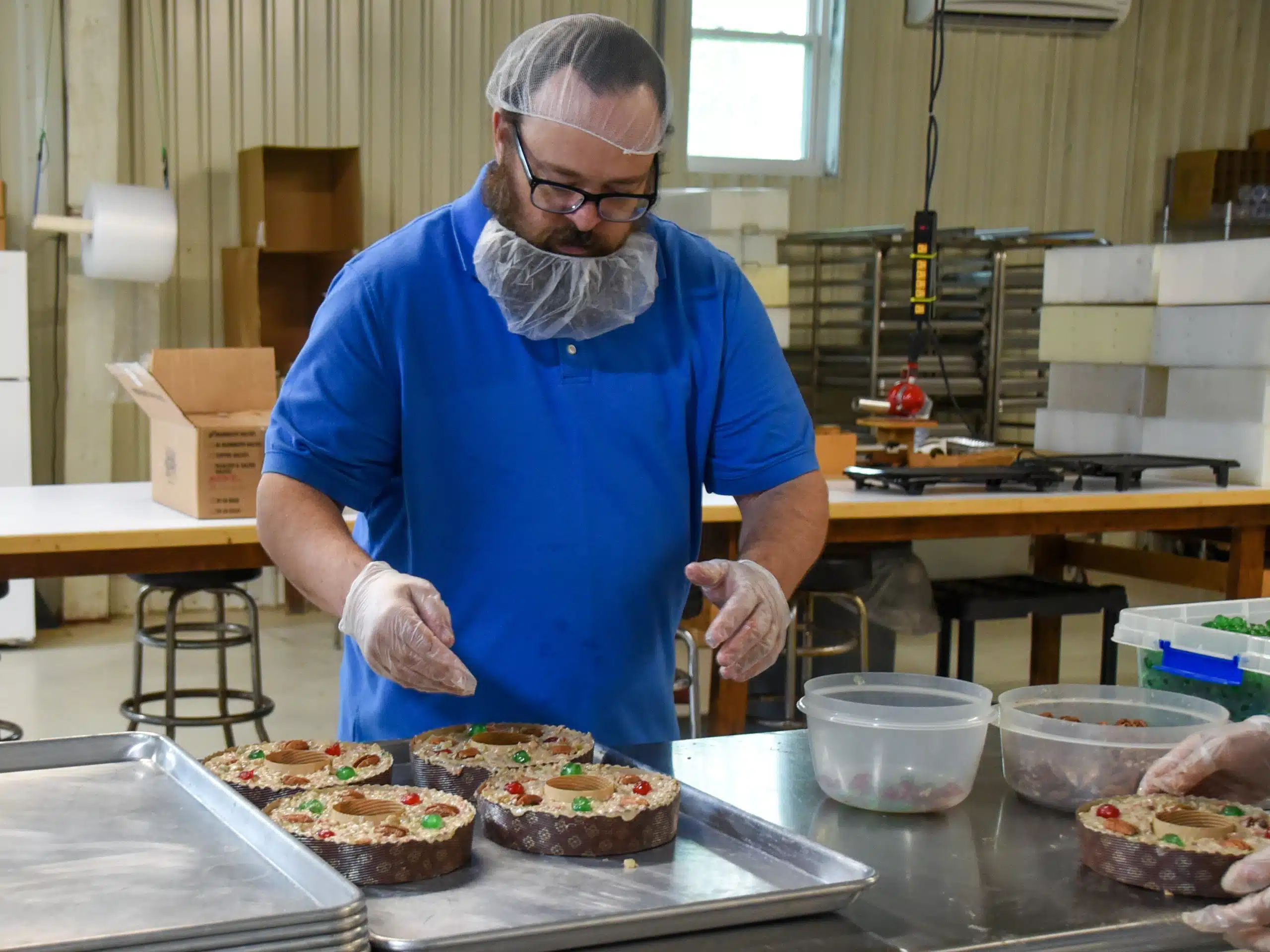
They then work their various jobs to support the monastery because, as Brother John said, “under the rule of St. Benedict, it’s ‘prayer and work.’ ” Many bake fruitcakes or mix creamed honey, both of which are sold to support the monks’ needs.
At noon, they pray Sext, the sixth hour prayer, followed by a brief lunch. In the afternoon, the monks rest, pray None, the ninth hour prayer, and spend several hours either working or taking formation classes.
In the evening, they pray Vespers at 5:30 p.m., followed by a light dinner and time in their rooms. Praying Compline, the final prayer liturgy, concludes the day, and Abbott Joseph Wittstock blesses the monks before they retire by 8 p.m. During the night, the monks observe Grand Silence, or total silence until morning prayer.
While the monks do a variety of jobs to run the monastery, preparing and selling creamed honey and fruitcakes are vital for supporting the monks’ basic needs. The monks prepare creamed honey by filtering raw honey, infusing it with flavorings and crystallizing it into a spread. Producing honey has always been a Trappist occupation, said Brother Efrain Sosa, the abbey’s vocations director.
As Brother Patrick, Father Paul Duong Van Hoang, Brother John and volunteer Corey Kinna used a cake depositor to prepare fruitcakes in the bakery, Brother Efrain pointed to large metal troughs used years ago by the monks to mix fruitcake batter by hand. “It was amazing; you didn’t have to go to the gym,” Brother Efrain joked.
Today, with the help of modern bakery equipment, the monks produce 150-200 cakes per day, which they coat with brandy and age for several months before selling.
The monks come from many walks of life. Brother John’s path to monasticism was not an easy one. “I started discerning when my alcoholism took over from my workaholism, which led me to prison,” he said. “At prison, I wanted to learn how to pray like an adult, so I asked the Catholic nun who was running the (prison) ministry, and she gave me several books.”
After reading several books by famous Trappists, he “became more and more interested. And there was something telling me this was my call.”
He left prison in 2011 a changed man and traveled to the Abbey of Gethsemani in Trappist, Ky. After he arrived, he learned that he was too old to enter that abbey. He traveled to Holy Cross Abbey, which allows older men to enter formation. He formally entered in 2017 and made his final vows this summer. “Everything is changed, and nothing has changed,” he said. “It is a more inclusive feeling, but at the same time… it’s the same Lord.”
Brother Aelred’s entrance into the Cistercians likewise came later in life. He first felt the call in college, “but as a young man, it scared me — the commitment.” But he remained close to the monks at St. Joseph’s Abbey.
After a long career in social work, he experienced burnout while working in isolation during the pandemic. After much prayer, he decided to leave his career and come to Holy Cross Abbey to discern, and he never left. As a second-year novice, he will make his first profession Aug.15.
For many men discerning vocations, monasticism might not be the first vocation that comes to mind. But for those men who do consider monastic life, “be prepared for the greatest adventure of your life,” Brother Patrick said. “And not just in your mortal life, but also in your interior life, your eternal life. There’s so much to life that opens up, that unfolds here.”
“There’s an old adage: ‘The habit does not make the monk,’ ” Brother Aelred said. Yet, by growing in brotherhood and nurturing his interior life in relationship with God, life is far from ordinary, and “every day is spectacular.”