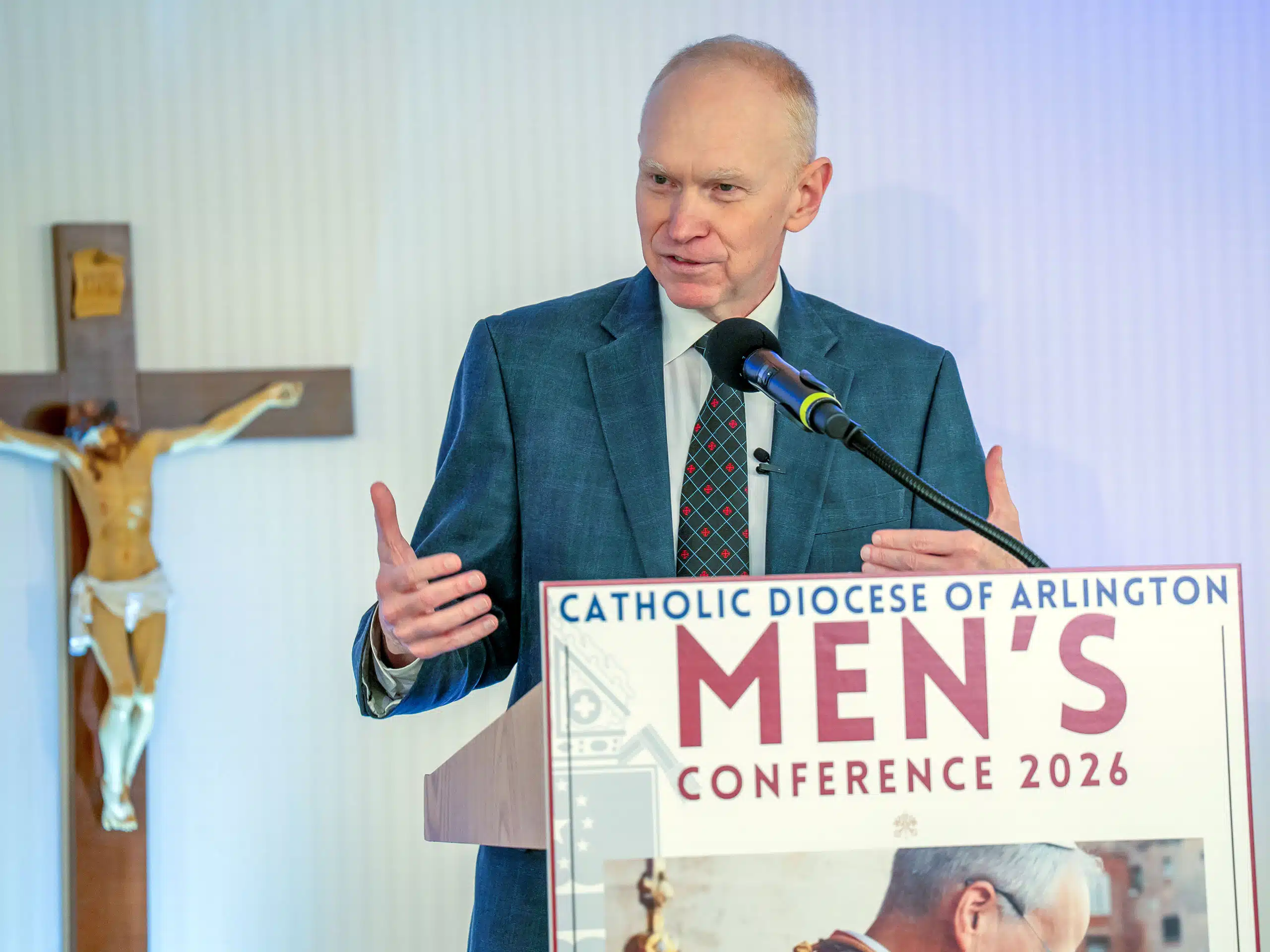
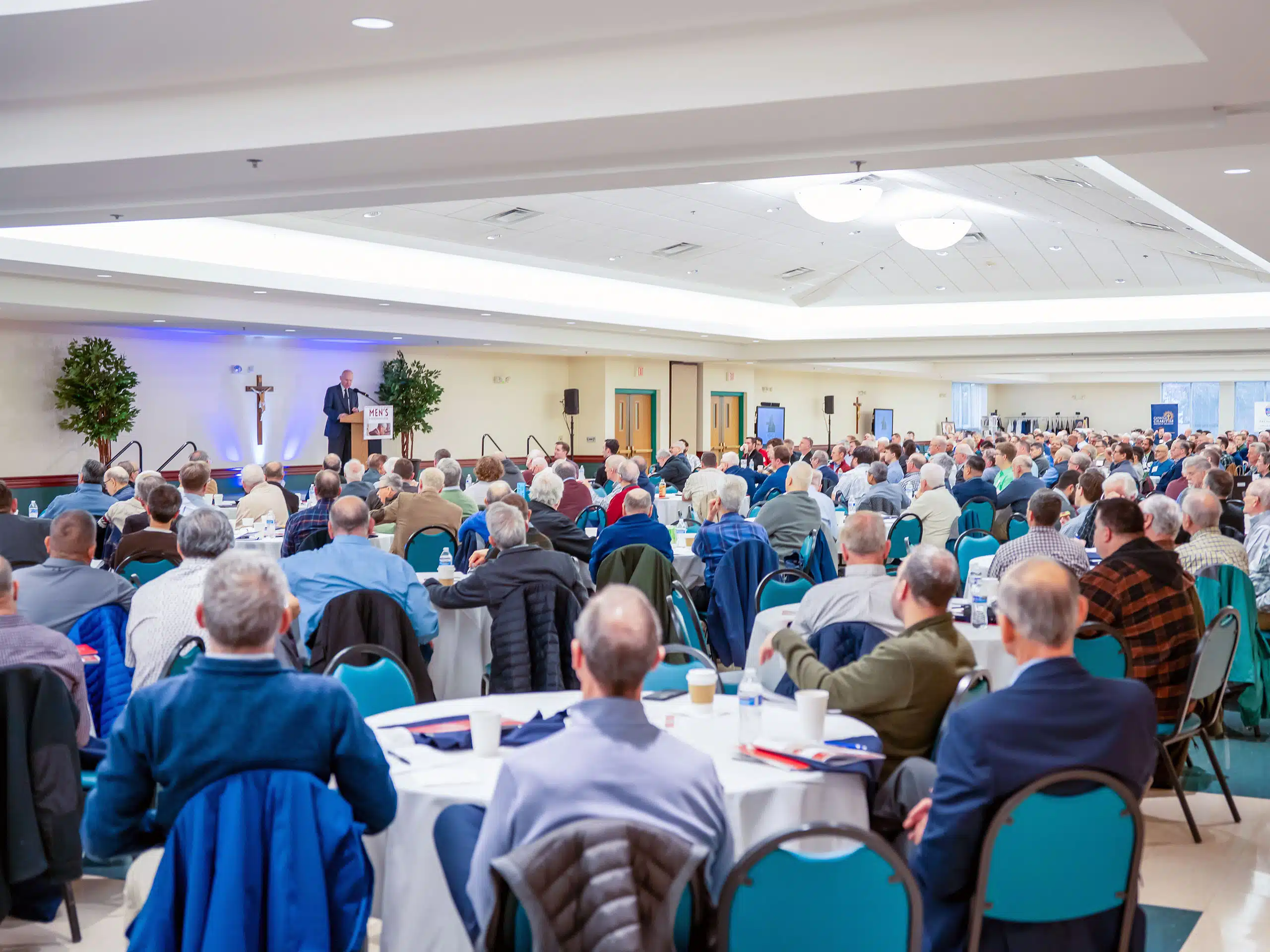

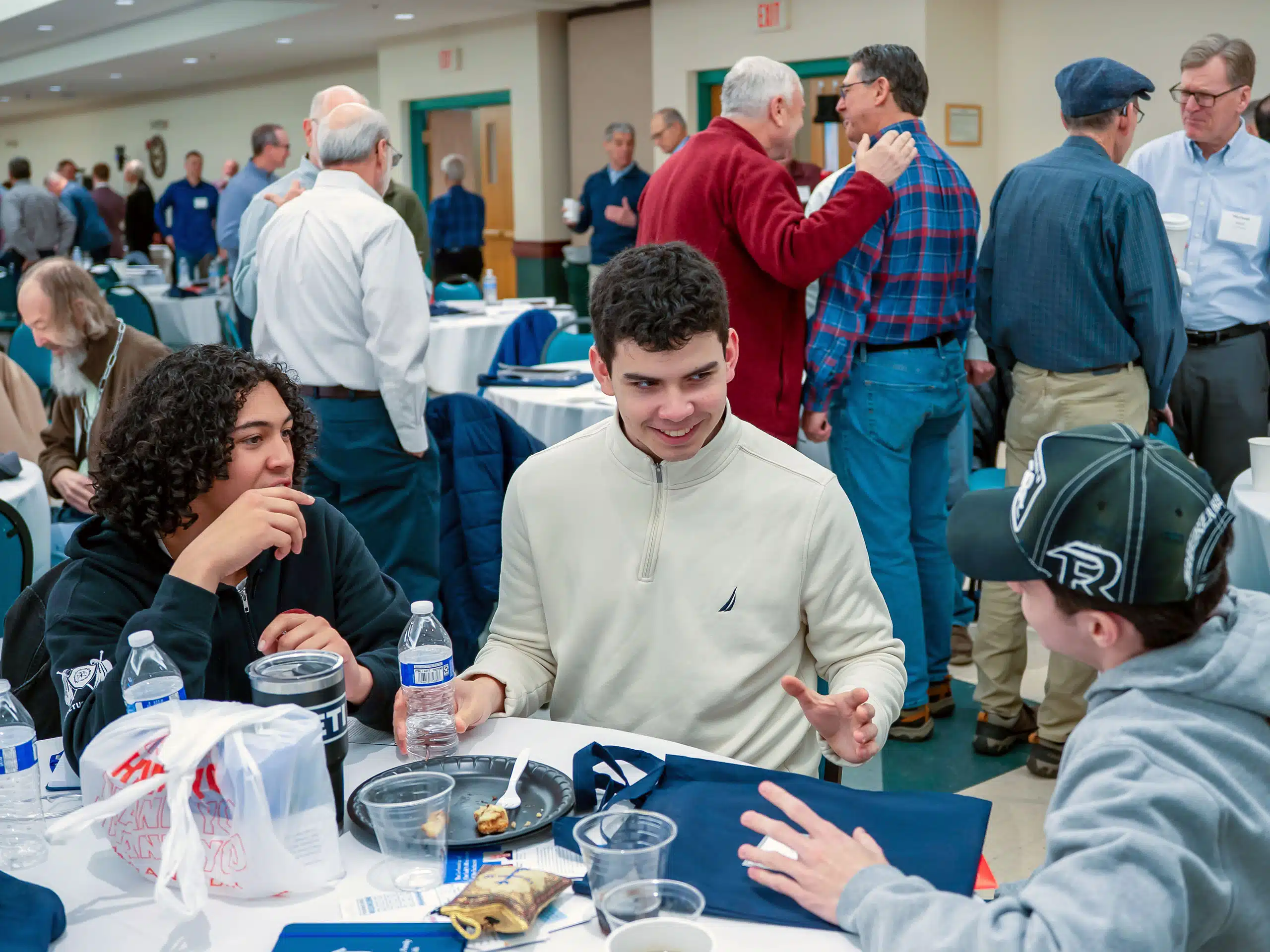
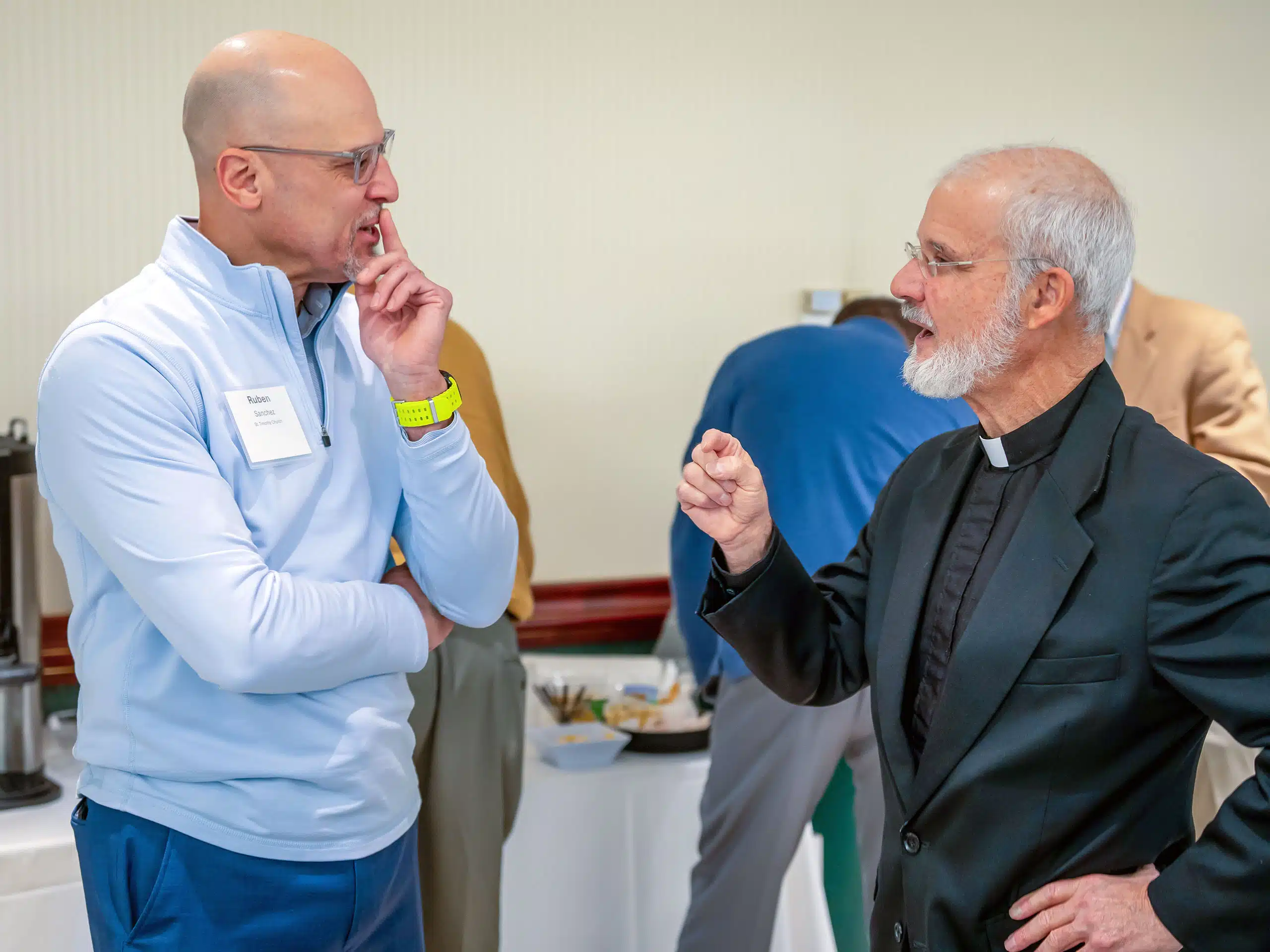
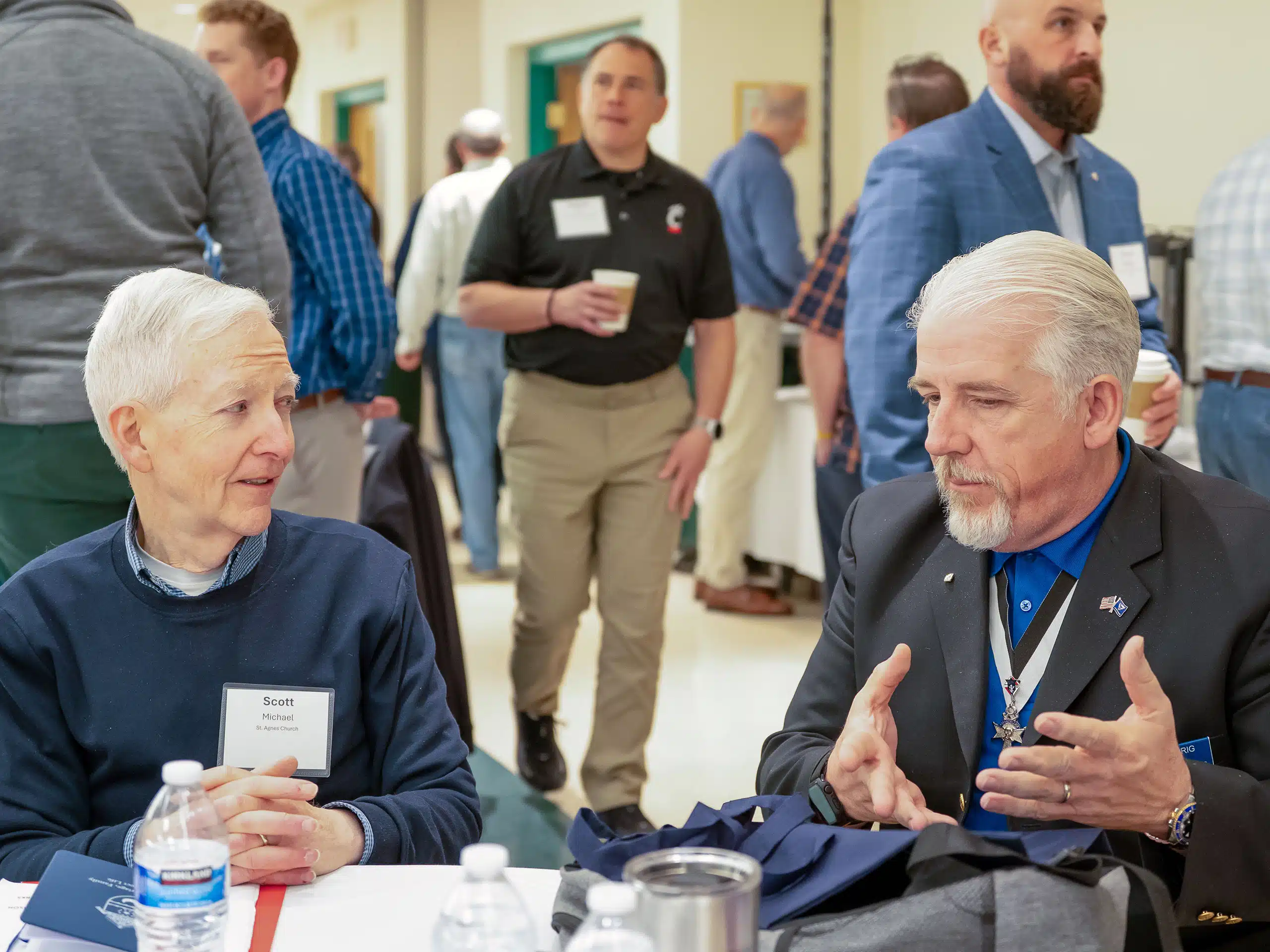
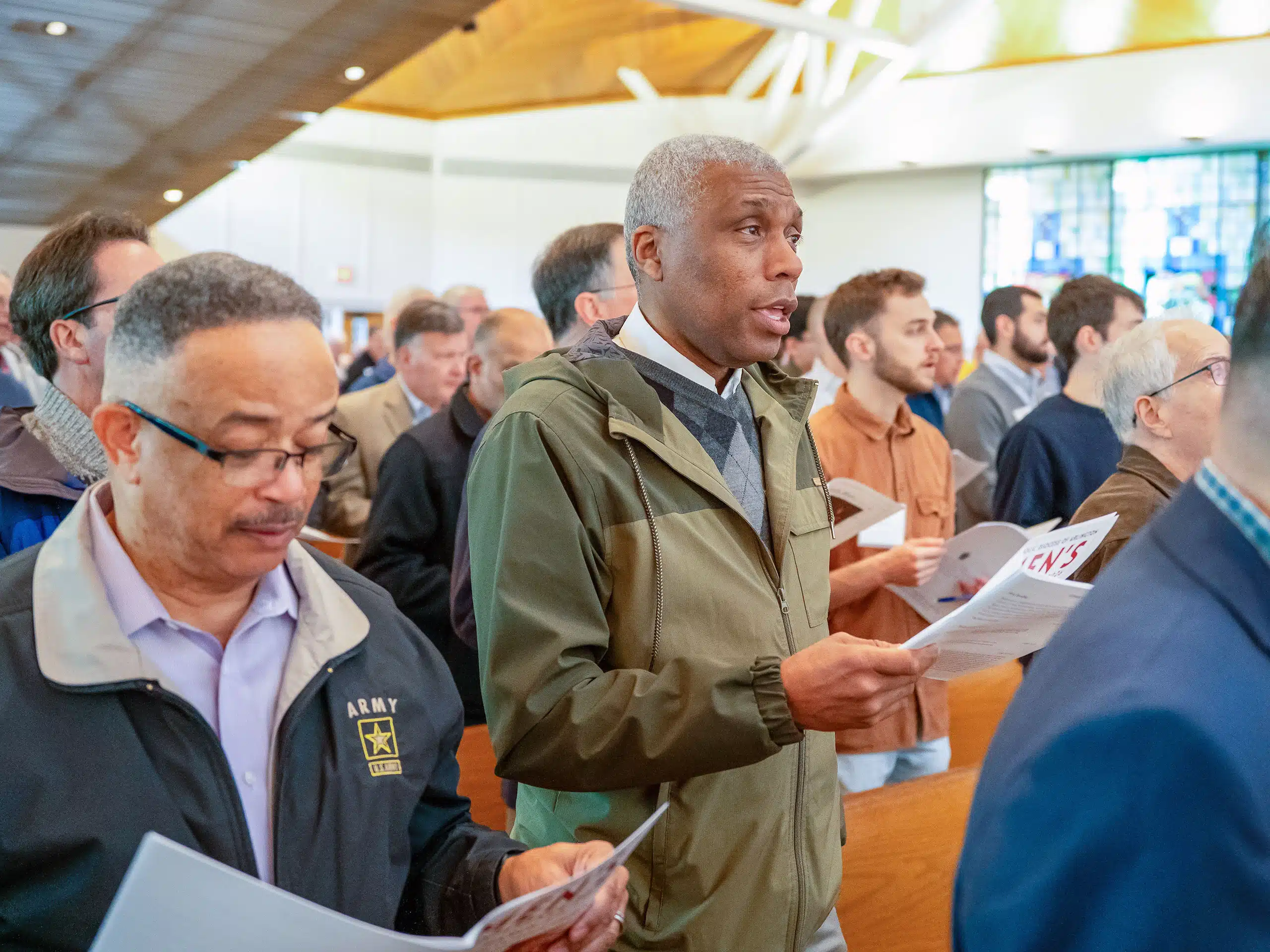
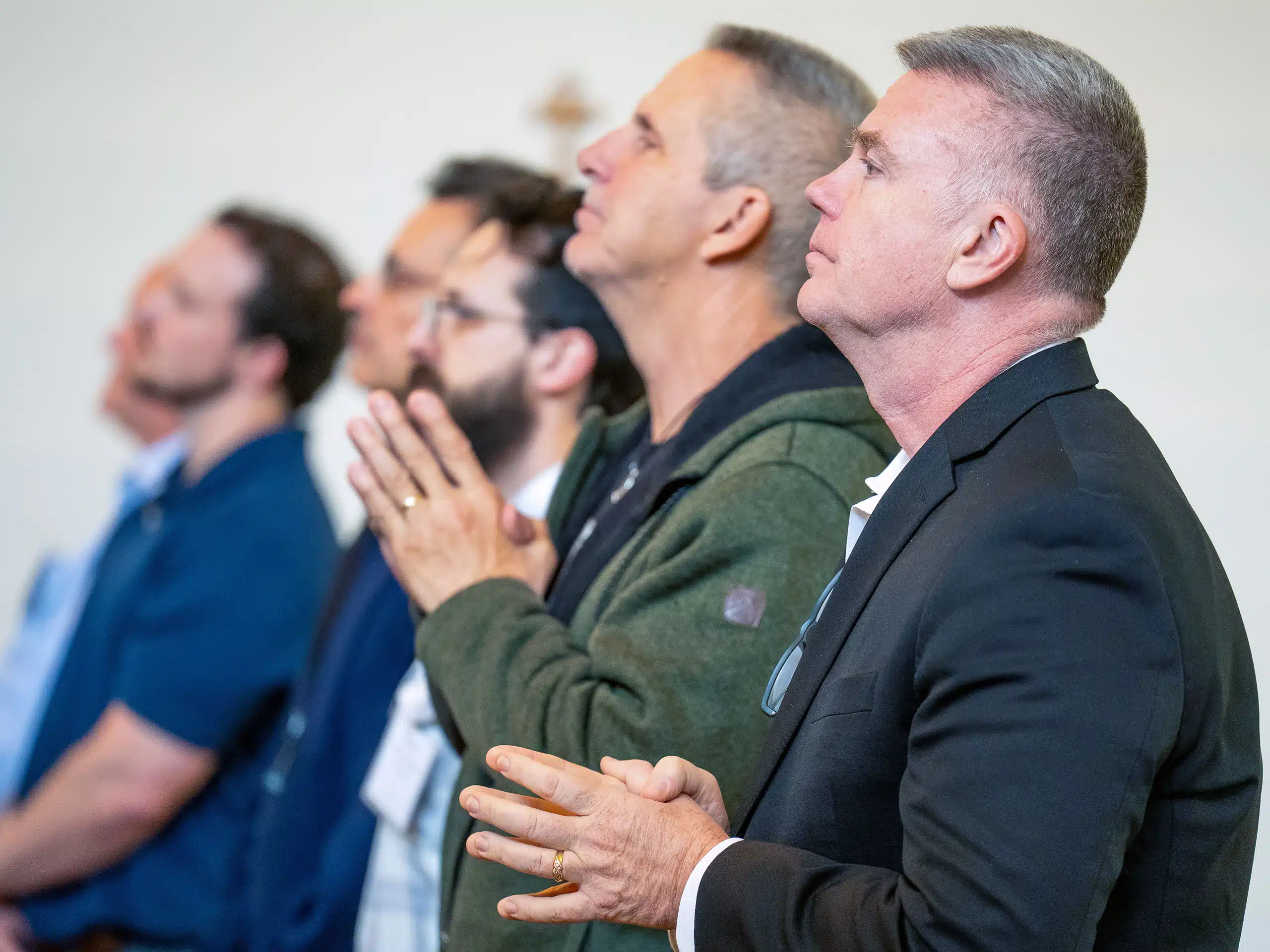
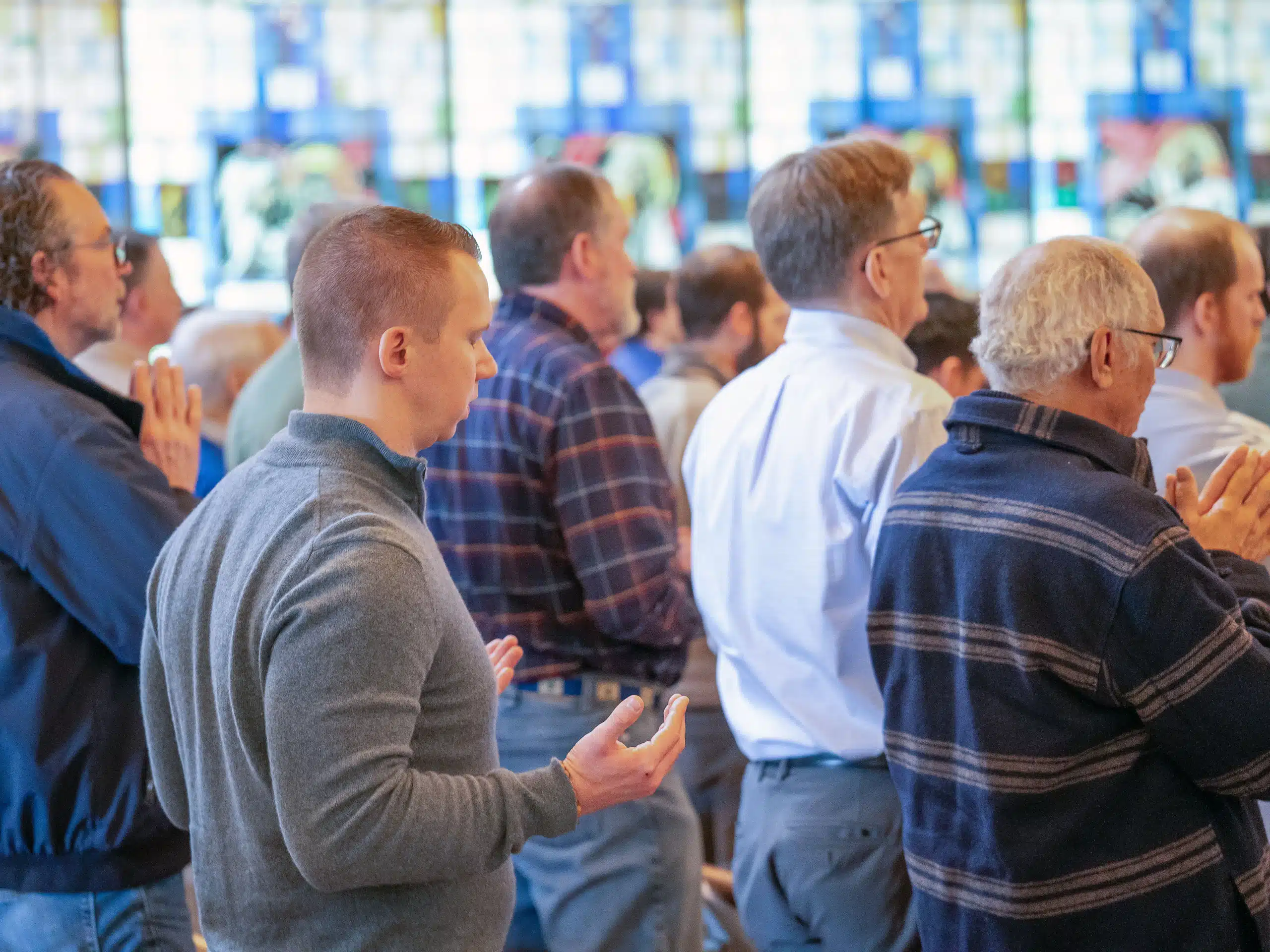
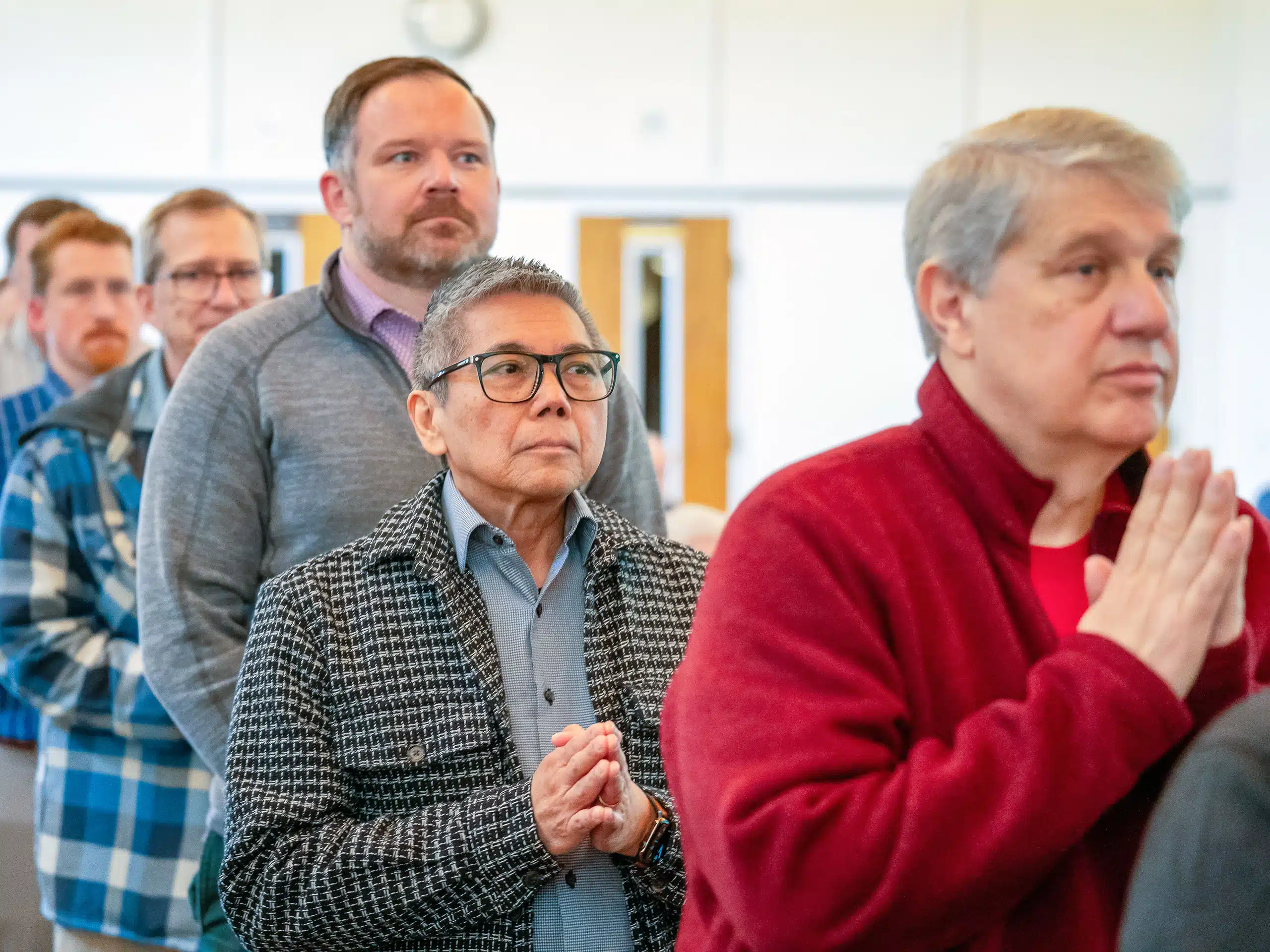
The heroic lives of five of the greatest American Catholics were highlighted at the diocesan men’s conference at St. Joseph Church in Herndon March 7.
“We live and pray and work as successors and sons of spiritual and intellectual giants,” said speaker Matthew Bunson, vice president and editorial director of EWTN News and author of the “Encyclopedia of U.S. Catholic History.”
As America celebrates its 250th anniversary, Bunson urged the 400 men in attendance to reflect “on these exceptional lives” — Charles Carroll, Archbishop John Carroll, St. Junipero Serra, St. Frances Cabrini and Archbishop Fulton Sheen — “to embrace the lessons of those heroic figures for our own lives as Catholics,” he said.
Bunson emphasized that “from the founding of the English colony of Virginia in 1607, Catholics were not just unwelcome, but it was essentially illegal to practice the Catholic faith,” he said. “Catholics in Virginia could not own a house, a horse, or any type of firearm making life, of course, all but impossible at a time when hunting was a primary means of survival. Outside the small towns, few priests were able to penetrate this brutal wall of anti-Catholic hate.”
Despite anti-Catholic prejudice in Maryland, Charles Carroll became a passionate supporter of American independence, and the only Catholic to sign the Declaration of Independence. “When warned that signing the Declaration might cost him literally everything he had, he reportedly added his address in Carrollton beside his name, saying ‘the English cannot mistake me now, and they will know,’ ” said Bunson, while pointing out that 25,000 Catholics fought in the war “despite long years of intolerance.”
Charles Carroll may be better known today, but “he was ultimately eclipsed by one of his own relatives — the towering figure of John Carroll,” said Bunson.
In a fascinating tidbit of history, Bunson noted that Pope Pius VI appointed Carroll to lead the Catholic Church in America as Superior of Missions in 1784 upon the recommendation of Benjamin Franklin. “He took open credit for the appointment,” said Bunson.
Carroll became the first American bishop serving Baltimore in 1789, then archbishop when it was elevated to an archdiocese in 1808. “The trajectory of American Catholicism belongs to John Carroll’s indispensable role as its organizational cornerstone,” said Bunson. “He founded Georgetown University, the nation’s first Catholic college and advocated for religious freedom, influencing the church’s adaptation to democracy.”
Bunson also credited Franciscan friar St. Junipero Serra as one of the founding fathers of Catholicism in America, who “transformed vast frontiers into centers of Christian life” in 18th century California.
“It is estimated that Father Serra personally baptized as many as 6,000 natives,” said Bunson. “He also succeeded in protecting them from the many abuses of the Spanish military. At one point, he walked 1,800 miles to Mexico City to convince the Spanish viceroy to enact a new bill of rights for the native peoples. This bill of rights was drafted more than 150 years before the United States government would issue a similar declaration.”
St. Frances Cabrini, who became a naturalized American citizen in 1909, focused “on the sprawling slums of the United States, and she started clinics, schools, hospitals, and care institutions,” said Bunson. “Thanks to her, generations of Italians and other immigrant families were able to find a permanent home in America to thrive as Catholics and as Americans. In effect, mother Cabrini was a powerful architect for countless American Catholics finding the American dream.”
In the 20th century, Father Fulton J. Sheen, later bishop of Rochester and titular archbishop of Newport,Wales, “became the living embodiment of how the church was directly shaping American culture,” said Bunson. As host of the TV show “Life is Worth Living” in the 1950s, Archbishop Sheen was “a source of immense pride to American Catholics and even found a wide following among Protestants who embraced his moral message.”
“Fulton Sheen brought Catholicism into American living rooms, making faith accessible amid the prosperity of World War II’s aftermath,” said Bunson. “Sheen’s media apostolate mirrored earlier missionaries proving Catholicism’s compatibility with American freedom while urging heroic virtue.”
Participating in the conference was special for Carl Baumann, a parishioner of St. Timothy Church in Chantilly, who attended with his dad. “It’s my first time attending the conference in 10 years and just seeing all the men here and hearing this presentation about the fathers of our faith in America, is wonderful,” he said.
“This was pertinent to me because my family comes from Italian heritage,” said Tyler Delhees of St. Charles Borromeo Church in Arlington. “When he talked about mother Cabrini it reminded me to reflect on the freedom I have today which is a result of what she pushed for.”
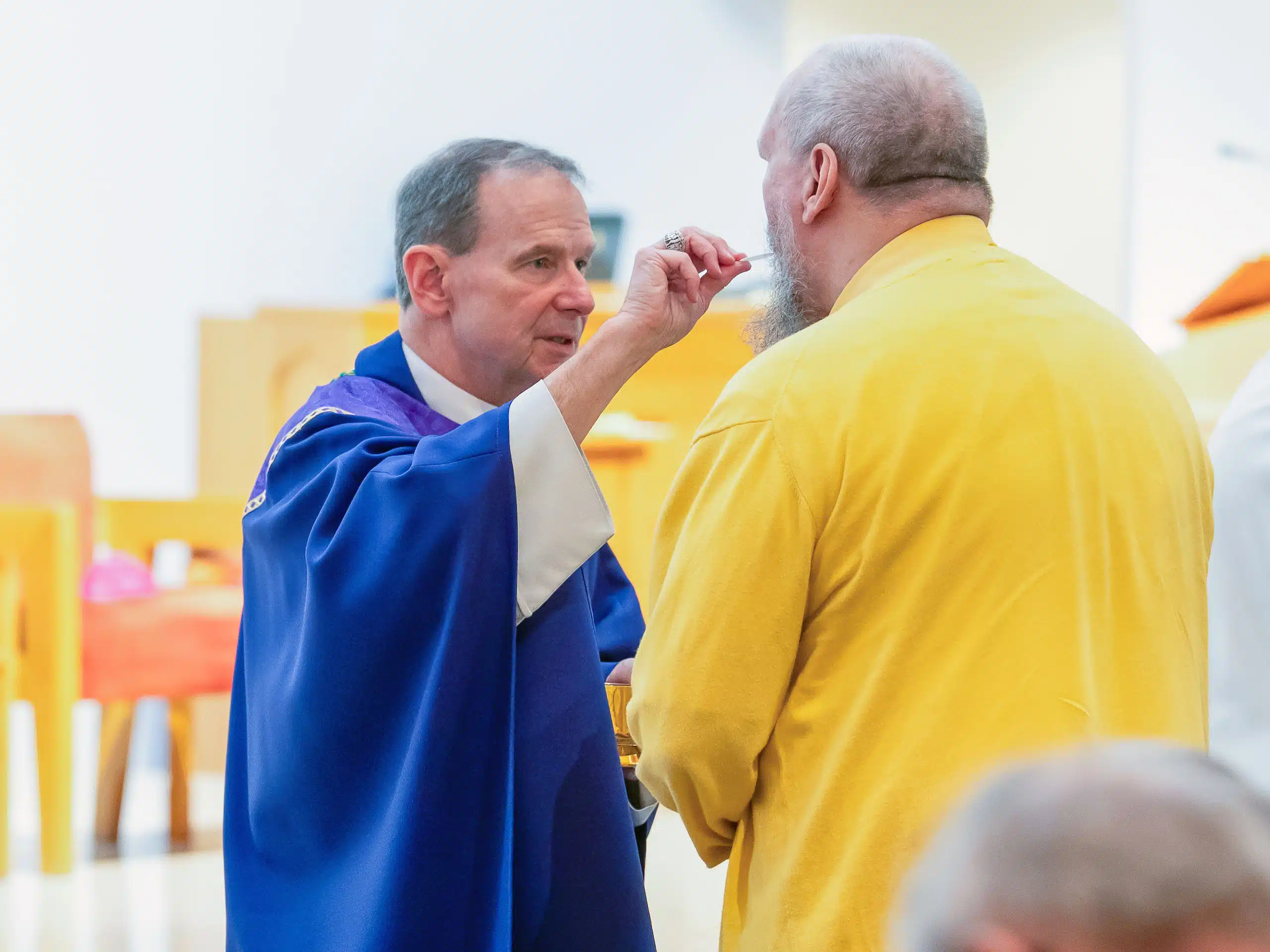
Bishop Michael F. Burbidge celebrated Mass and exhorted the men in his homily to strive to be an instrument of mercy as exemplified by the father in the parable of the prodigal son. “This sacred season is a call, with God’s grace, to convey contrition and a sincere apology to anyone you have hurt by your words, actions, or by the lack of affection, attention, and quality time you have given to them,” said Bishop Burbidge. By apologizing, “you take the first step in restoring and healing any fractured relationship in your life. In doing so, you are the instrument of the Lord’s mercy,” he said.
Bunson also challenged the men with two questions: “First, how are you an heir — a son of faith to each of the remarkable figures we have met this morning? We can ask ourselves, ‘Am I a worthy heir?’ Second, in thinking about your own family lineage, your family, long or short in the United States, how is it a part of the great American Catholic story?”