Struggling with mental illness — depression, mania or any form it
takes — can make one feel alone in the midst of a crowd.
Young adults in the Diocese of Arlington have a place to turn for
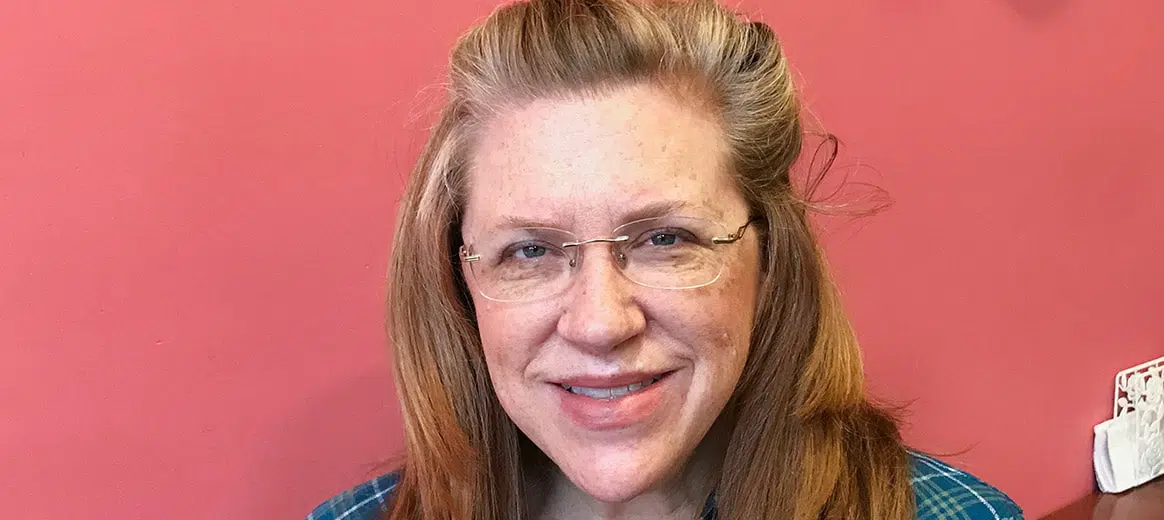
support in the new Labré Community at the Basilica of St. Mary in Alexandria. Parishioner
Kirsten Marie Obadal started the group to let young adults know they are not
alone.
“I began to think it is necessary to have a model of mental
health recovery that reflected the Catholic understanding of the human person,”
she said.
Father Edward C. Hathaway, rector, said it’s important to support
all who are suffering from illnesses.
“One way we can do that is through the Labré Community,” he said.
“I hope people are able to come and support the events we have for the sake of
all God’s children, but in a particular way for those who suffer from illnesses
of the mind.”
Obadal is no stranger to those illnesses.
“I have lived experience with mental illness and I don’t mind
saying so,” she said of her chronic major depression. “I think the more we can
bring these things out into the open and not regard it as a source of shame, we
can bust through the stigma that prevents so many people from getting the
recovery they need.”
A mental health awareness breakfast will be held at St. Mary Jan.
6. The cider and donuts event will introduce young adults to the Labré
Community and there will be fellowship and prayer.
A day of prayer, scheduled for March 16, will begin with Mass,
and Father Kevin Barnekow, a priest in residence at the basilica, will give a
presentation on suffering.
Obadal said secular psychology doesn’t know what to do with the
topic of suffering. “If you can’t embrace suffering, pretty soon you fall into
self-pity,” she said. “Once you fall into self-pity you are walking a downward
slope toward self-harm. Suicide is a big issue for young adults with mental
illness.”
Obadal said secular models recognize the role of faith is
important in continued recovery. “As a Catholic, I have realized faith is not
only important, it is essential,” she said. “For young people to be in mental
health recovery, they need to have a place and source of hope in their lives.
If we place our hope in a person or a thing, sooner or later we are going to be
disappointed. The only true hope is in our risen Lord.”
Obadal is training to be a peer support specialist. Peer support
doesn’t replace therapy or other interventions. “It works in tandem with all of
these things,” she said. “Recovery is different for everyone, but a peer
support specialist can be a companion or coach on your journey to recovery.”
Peer supporters are required to demonstrate one year of recovery
to be a role model of recovery. For certification in Virginia, specialists need
to have completed 500 supervised hours in the three years prior to applying for
certification, and receive 75-90 hours of training.
Obadal started a Facebook group — The Labre Community: Spiritual
Support in Mental Health Recovery — as an intercessory prayer community to
communicate with others and coordinate future events.
“What I seek is the support and companionship and prayer
intercession of Catholics who experience mental illness who also are in this
geographic area,” she said. “I know we can support each other in our recovery
with prayer, and I look forward to meeting them at these events.”
Find out more
Contact Kirsten Marie Obadal at [email protected]
or join the Facebook group: The Labre Community: Spiritual Support in Mental
Health Recovery.