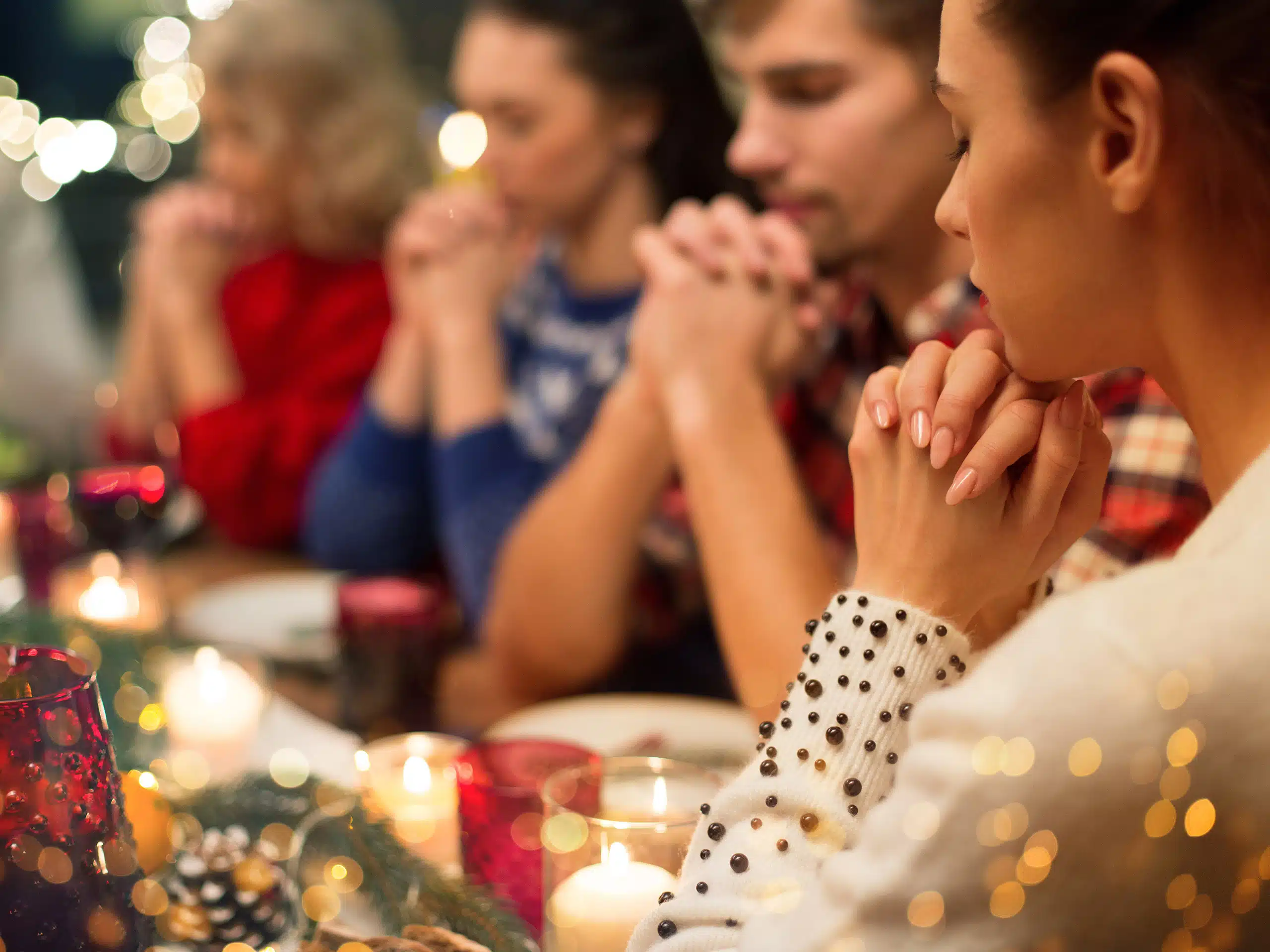
As the Christmas season quickly approaches, you may hear festive, homey classics such as “The Most Wonderful Time of Year” or “(There’s No Place Like) Home for the Holidays.” But for many families, uniting for the holidays may be a source of stress or anxiety. A diocesan psychologist and ministry leaders share words of consolation and advice for families struggling with dysfunction.
The American Psychiatric Association reported in 2024 that 28% of Americans experienced more holiday-related stress than they had felt in 2023. “A few of the top stressors identified were affording holiday gifts (46%), grieving a loss/missing a loved one (47%), and dealing with challenging family dynamics (35%),” the report stated.
Amid this stress, any pre-existing issues or tensions in families rise to the surface during holiday get-togethers, according to Frank Moncher, psychologist and chair of the diocesan Mental Health Council. “There’s this expectation that we’re going to be together as a family, and the hope is always that everyone’s going to get along,” he said. “So, what happens in families is an intensification of whatever underlying issues may always be there.”
Moncher said that “intensification” may be linked to holiday high expectations. During this festive season, family members may feel more sensitive to any triggering topics or relationship dynamics. To fend off potential fights or tension, emotionally prepare yourself ahead of time, Moncher said. “Having a proactive approach, where you recognize that you might feel triggered or bothered by a particular other person in the family and things they say — you’re prepared to figure out how to deflect or ignore it rather than engage it.”
The holidays are not the time to tackle dysfunctional family dynamics, particularly when it comes to touchy subjects such as politics, he said. “The reality is, typically people are not going to have productive conversations over the holiday dinner table where they’re going to resolve their differences,” he added. In addition to planning subtle ways to deflect tension, identify in advance subjects of conversations that will bring the family together, rather than divide, he said. Focusing on any young grandchildren, nieces or nephews is one easy way to start.
For other families, the holidays may be emotionally fraught following the death of a beloved family member or close friend. Striking a balance between grieving a loved one and celebrating the holiday can be difficult to navigate, Moncher said, but it is important to not remain in denial of your grief. He offered a reminder to hope, that family members may be in heaven and “the relationship we have with that person is unbroken — it’s just in a different form.” For some families, taking the space to share a memory of the departed family member may be helpful, he said.
Sometimes Catholics may feel unsure on how to navigate situations in which a family member is living a lifestyle incompatible with Catholic teaching, such as cohabitating or being in a same-sex relationship. “The general principle is to try to stay in relationship with the loved one, even if you don’t agree with their choices,” Moncher said. At the same time, this does not mean that families should show support of their loved one’s lifestyle or affirm a relationship that is incompatible with Catholic belief on marriage, he said: “Instead, it is important to model Christian virtue through living a joyful, charitable response in the uncomfortable situation, mindful of the need to have some boundaries around what children may observe.”
For families with divorced parents or grandparents, celebrating the holidays may look different from the norm, according to Alex Wolfe, assistant director of programs and development at Life-Giving Wounds, a ministry for adults whose parents have divorced. “We often hear people express difficulties in setting and maintaining healthy boundaries with parents,” he said.
Many adult children of divorce (ACOD) are often forced to pick between parents for the holidays, which may lead to guilt on the adult child’s part and hurt feelings, he said. “There is no simple fix to situations like this.”
When it comes to planning the holidays as an ACOD, Wolfe’s advice is to establish boundaries with parents, and “envision healthy and holy responses ahead of time, and communicate your expectations to your family members.” Forming friendships with fellow ACODs may be helpful, as “having a friend that you can call in a moment of tension is a huge relief.” Lastly, scheduling enjoyable plans in January — such as signing up for a retreat — can give you something to anticipate, Wolfe said.
Most importantly, keep Christ centered in your life, which will help you remain stable in turbulent environments, Wolfe said. “Remember to keep Christ first, even ahead of family. Stay focused on the Holy Family and invite Jesus, Mary and Joseph into the stable of your heart. If tensions arise, don’t be afraid to step out, re-center yourself, then re-enter,” he said. “Fill yourself to the brim with graces from the sacraments. For example, go to adoration and confession just before going to visit family and immediately afterward.”
Ashley McCall, a parishioner of the Basilica of St. Mary in Alexandria and a small group leader with Life-Giving Wounds, shared her own experience navigating the holidays amid family dysfunction. Three weeks before she left for college in 1996, her parents told her they were separating. “It was a very shocking development,” McCall said. “So, when I came home for the holidays … I didn’t actually have a home to come back to.”
McCall has been married to her husband, Jake, for nearly 24 years, and with five children, she said she feels strongly about “creating a really grounded sense of home and tradition, particularly around the holidays.” She added that while she incorporates her parents into the holidays, maintaining boundaries over the years is essential. “We tend to incorporate my mom into a lot of our family traditions and events on the holidays,” she said. She said that while her mom has been open to occasionally including her dad in holiday events, “sometimes it’s just not really the right call.”
Instead, McCall said she makes plans with her dad during the two weeks after Christmas. “The way we’ve shared it with our kids is that the Christmas celebration is ongoing. So, this is a great way to continue to see family and celebrate with them, but still have our traditions and keep things comfortable for us at our own house.”
It may be easy to feel anxious or even pessimistic about our families’ circumstances, but according to Moncher, this is an opportunity to draw nearer to Christ, the “reason for the season.” “We know that nothing happens outside of God’s awareness,” he said. “That doesn’t mean things happening are good, but we know that he can bring good out of them.”
Find out more
For Life-Giving Wounds, go to lifegivingwounds.org.