Pulling into a parking spot at Tall Timbers Marina in St.
Mary’s County, Md., March 27, Michael Clark was looking
forward to spending a peaceful weekend with his wife. But
what initially started as a “minivacation” quickly became an
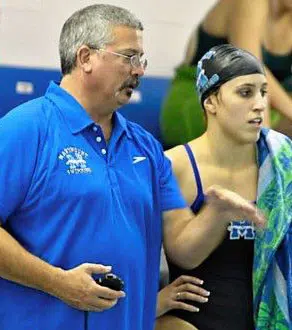
emergency when the varsity swim coach at Marymount University
in Arlington realized a woman had fallen into the water.
Although Clark had noticed Valerie Dieudonne getting out of a
nearby car, he initially ignored the sound of a “thump and a
splash,” believing that the woman had dropped something into
the water. It was only when he began walking down the dock
and saw what looked like a garbage bag floating beneath the
waves he realized the woman’s life was on the line.
While Clark did not know Dieudonne, he didn’t think twice
about jumping into the 40-degree water to use his more than
30 years of experience as a lifeguard to help the unconscious
woman.
“I was not scared for me, I was scared for Valerie,” Clark
said. “I figured she was only in the water for a minute, but
I didn’t know if she had hit her head … so I wanted to
be cautious about moving her.”
After using a spinal injury management technique to turn
Dieudonne onto her back, he began administering rescue
breaths and yelling for help. Eventually, Clark attracted the
attention of his wife, who immediately called 911 and ran to
the nearby Sailing Center of Chesapeake to get help from the
center’s 14- to 18-year old students.
“The students … were tremendous,” Clark said. “When
they realized there was an emergency, two of them came
running and got in the water with me to support Valerie while
I continued to try to get her to breathe.”
With the help of the students, Clark got Dieudonne strapped
to a backboard and lifted out of the water onto the dock, a
feat that would have been almost impossible alone.
Clark later learned that the center did not have the
financial resources to provide CPR and first aid courses for
their students. Clark and his wife made a donation to the
center to ensure that students could be CPR-certified.
In a press release from Marymount, Dieudonne expressed her
appreciation to Clark.
“If it hadn’t been for him, I wouldn’t be here now,”
Dieudonne said. “Words can’t even begin to describe how
grateful I am.”
Recognizing that an accident around water can be deadly for
individuals who don’t know how to swim, Clark is proud that
Marymount will debut new drowning prevention programs and
initiatives this fall.
Hoping to counteract the second leading cause of
unintentional death in the United States for children under
14, Marymount has created Future Saints, a swim program for
children from low-income families who are unable to afford
swim lessons.
In addition, the university is creating the Clark Aquatic
Foundation, a nonprofit organization that will provide
funding for swim lessons, competitive swimming opportunities
and lifeguard training.
Although he doesn’t like to think of himself as a hero, Clark
does believe that he was lucky enough to be in the right
place at the right time.
“I have a set of skills that most people don’t have,” Clark
said. “A lot of little things happened that put me in that
position at the exact moment that saved Valerie’s life.”
Willis can be reached at [email protected].