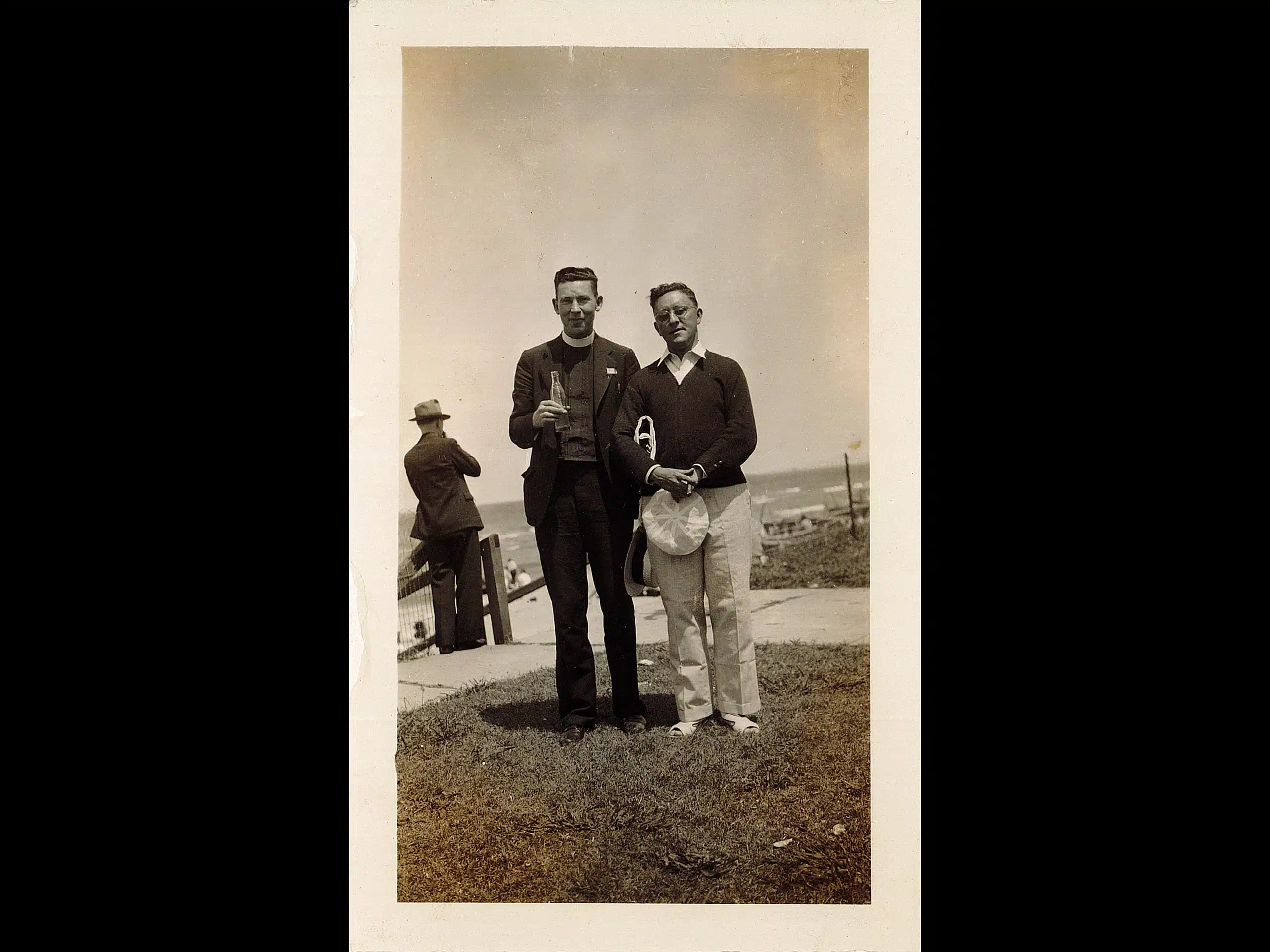
As summer comes to a close, many families look back over the last two months and wonder, “Where did the time go?” Many across the Arlington diocese spent their summers visiting family and friends, attending parish events, swimming at the pool, or sending their kids to summer camps and Vacation Bible Schools.
But how did Catholics in Northern Virginia spend their summers decades or even more than a century ago? These diocesan parishes may just have an idea.
Basilica of St. Mary, Alexandria
The Basilica of St. Mary, originally founded as St. Mary Church in 1795, is the oldest parish in the diocese. Predating both the diocese and air conditioning, the St. Mary parish community sought refreshing summertime activities to escape sweltering Alexandria summers, according to basilica archivist Kitty Guy.
“Alexandria is hot in the summer, and for the most part, parishioners seemed to go to the beach,” Guy said.
During the late 1800s, parishioners would enjoy brief visits to the banks of the Potomac River, including the popular Dyke Marsh beach south of Alexandria near Belle View.
Guy said that during the Civil War, parishioners planned an excursion to an amusement park across the Potomac River. But parishioners needed written permission to leave Alexandria and pass through a military blockade. They found a sympathetic ally in Gen. John Potts Slough, a Union general who allowed the parishioners to pass through the blockade and enjoy a day away from both humidity and heat of war.
Guy added that after the parish lyceum was constructed in 1888, it quickly became the gathering grounds for oyster roasts, clam bakes and other seafood feasts. All the seafood was locally caught.
In the 1910-30s, parish groups — such as the men’s Young Catholic Friends group, Catholic Daughters, Knights of Columbus, Catholic Students Mission Crusade, and men’s and ladies’ social groups, known as sodalities — planned parish excursions. The Catholic Students Mission Crusade, known as the Crusaders, would often go on picnics or visit another Crusader chapter.
“They met up and stayed with Crusaders from the Norfolk chapter and later reciprocated the hospitality when the Norfolk members came up to Alexandria,” Guy said.
St. James Church, Falls Church
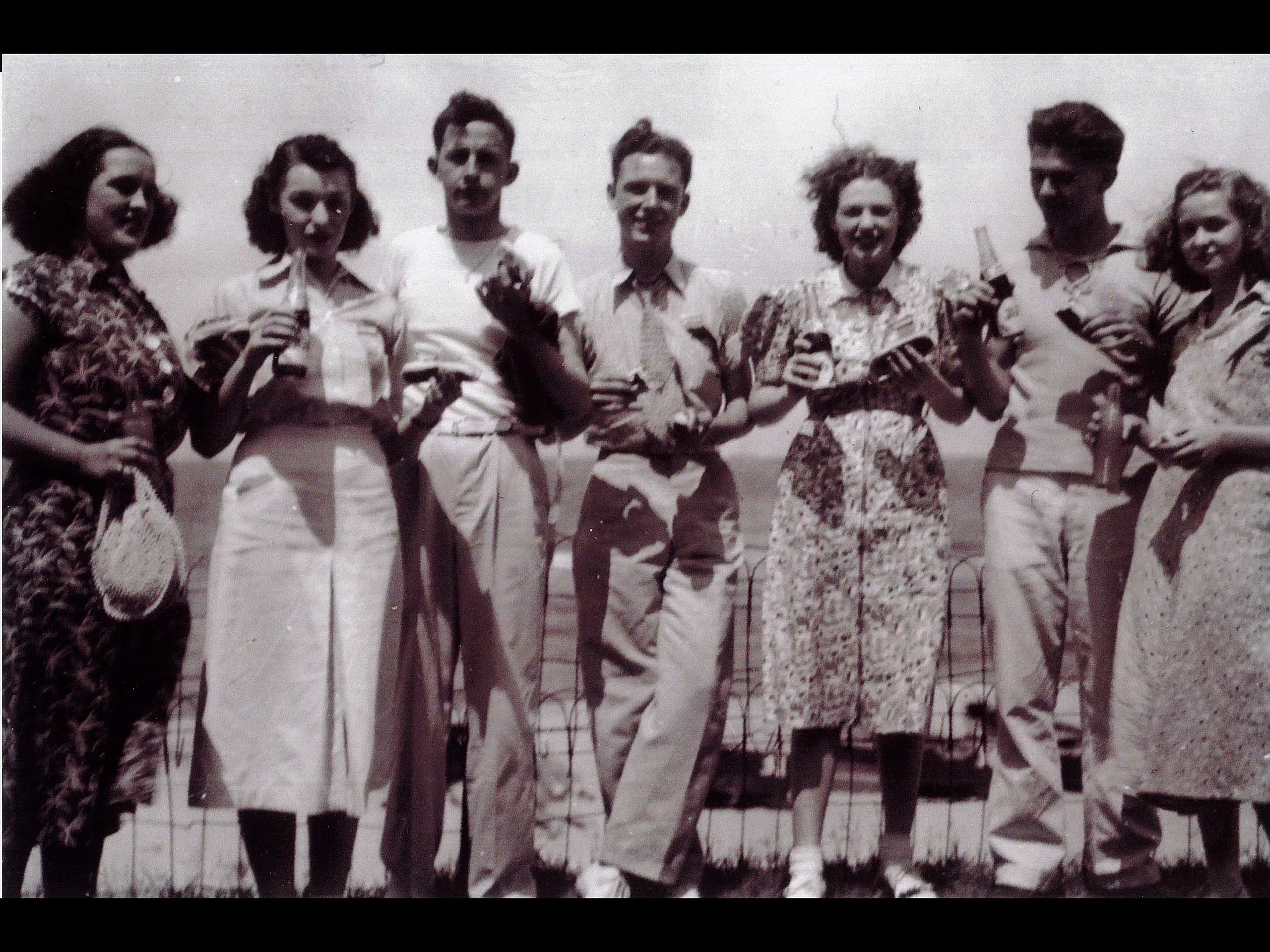
Only a few decades later, the youth dances of the 1940s and ’50s were in full swing, and parishes were no exception.
Lucille Greer Maloney, a parishioner of St. James, recalled that in the ’50s, parishioners received special instructions for worshipping in the warmer months. At the beginning of summer, Maloney said, “The Bishop of Richmond sent up a letter to be read in all Masses excusing men from wearing neckties and suit coats.”
But the humidity couldn’t keep the youths of St. James from dancing the night away.
“We had the best CYO teen dances, from every Friday night, and they went on all summer,” Maloney said.
Admission was 25 cents, which would give each attendee a ticket to purchase a Coke. “They played records,” Maloney remembered. “They would always have a dance contest. And everybody would stand around and watch the two or three couples that were really good.”
The only requirement was that all attendees be Catholic, and the priests wouldn’t hesitate to verify a teen’s religious affiliation.
“If the priest was suspicious of a child (not) being a Catholic, he would ask them to say the Our Father, and if they didn’t stop in time, it would be a ‘no,’ ” Maloney remembered with a laugh.
Multiple local parishes joined in on the fun. “It used to be one dance with all the Catholic parishes, at least through my time, and it was wonderful,” Maloney said.
Reminiscing on the past can make you appreciate moments in the present — especially air conditioning. “Compared to life nowadays, it was pretty tame, but it was our life and it was a happy time,” Maloney said. “I still have my friends from back then. That’s just such a gift.”