

What do you envision when you think of St. Nicholas? Some may picture the popular figure of Santa Claus, taken from the Dutch name for St. Nicholas, “Sinterklaas.” History buffs may remember that he became bishop of Myra in Asia Minor and had a penchant for gift giving.
For the Byzantine-Ruthenian Rite of the Eastern Catholic Church, St. Nicholas is one of its most venerated saints. And at Epiphany of Our Lord Byzantine Catholic Church in Annandale parishioners recently venerated a rare relic of the fourth-century saint on the eve of his feast day. Only 11 relics of St. Nicholas are located in the U.S.
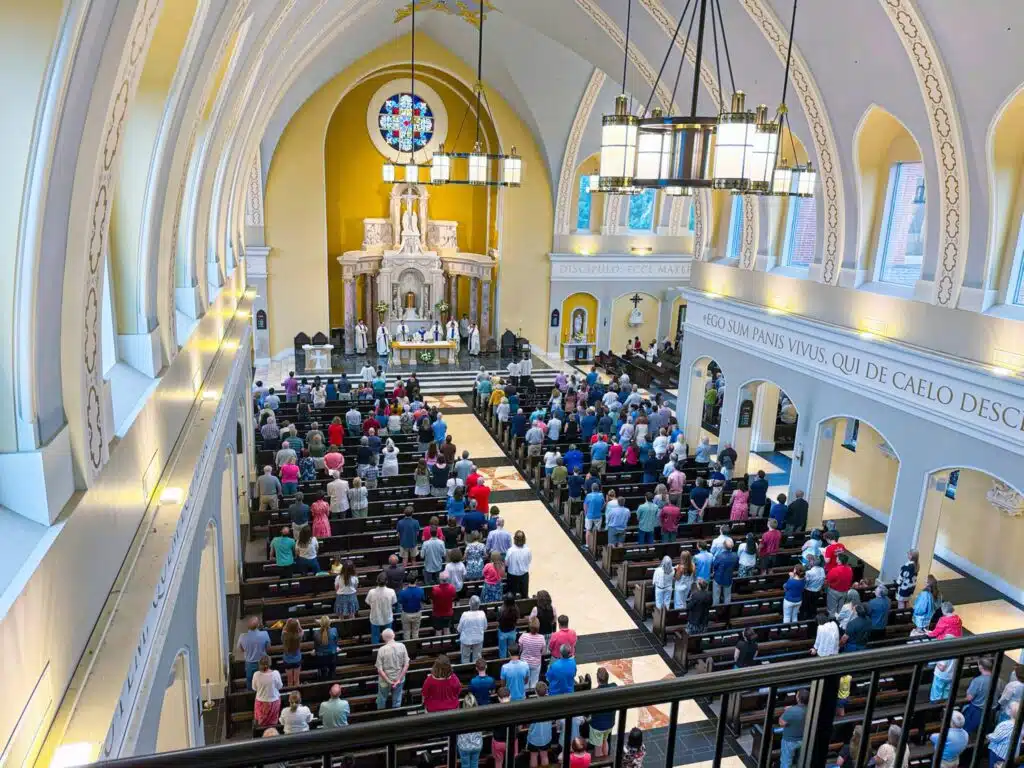
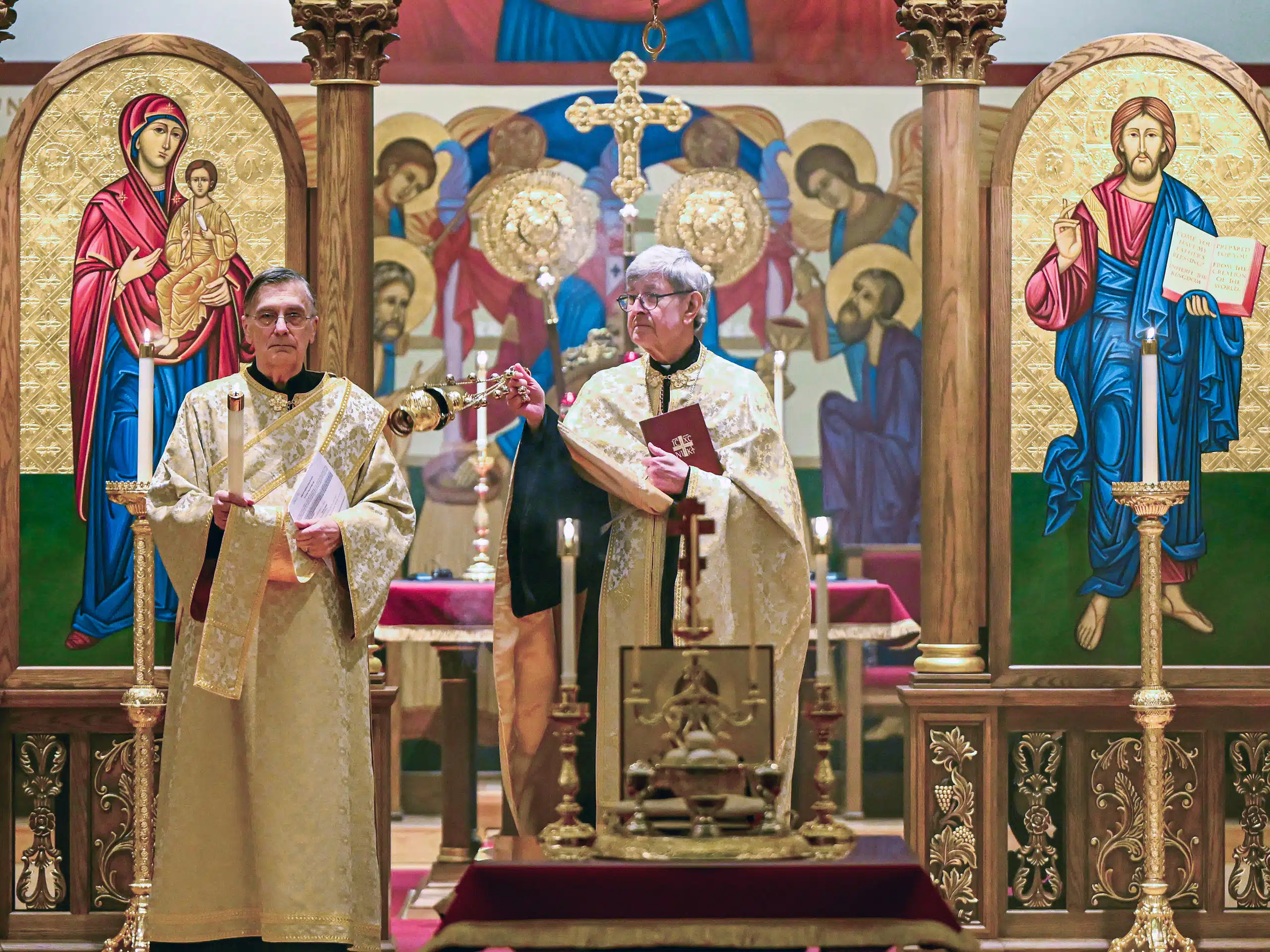
At the Great Vespers liturgy Dec. 5, parishioners reverently chanted prayers in anticipation of the beloved saint’s Dec. 6 feast day. At the front of the sanctuary, a small tetrapod — Greek for a “four-footed” table — bore an icon of St. Nicholas, candles, and small vessels of bread, wheat, wine, and olive oil. During the liturgy, Father John G. Basarab, pastor, blessed the vessels, the contents of which would be distributed to parishioners at the conclusion of the feast day celebrations Dec. 7.
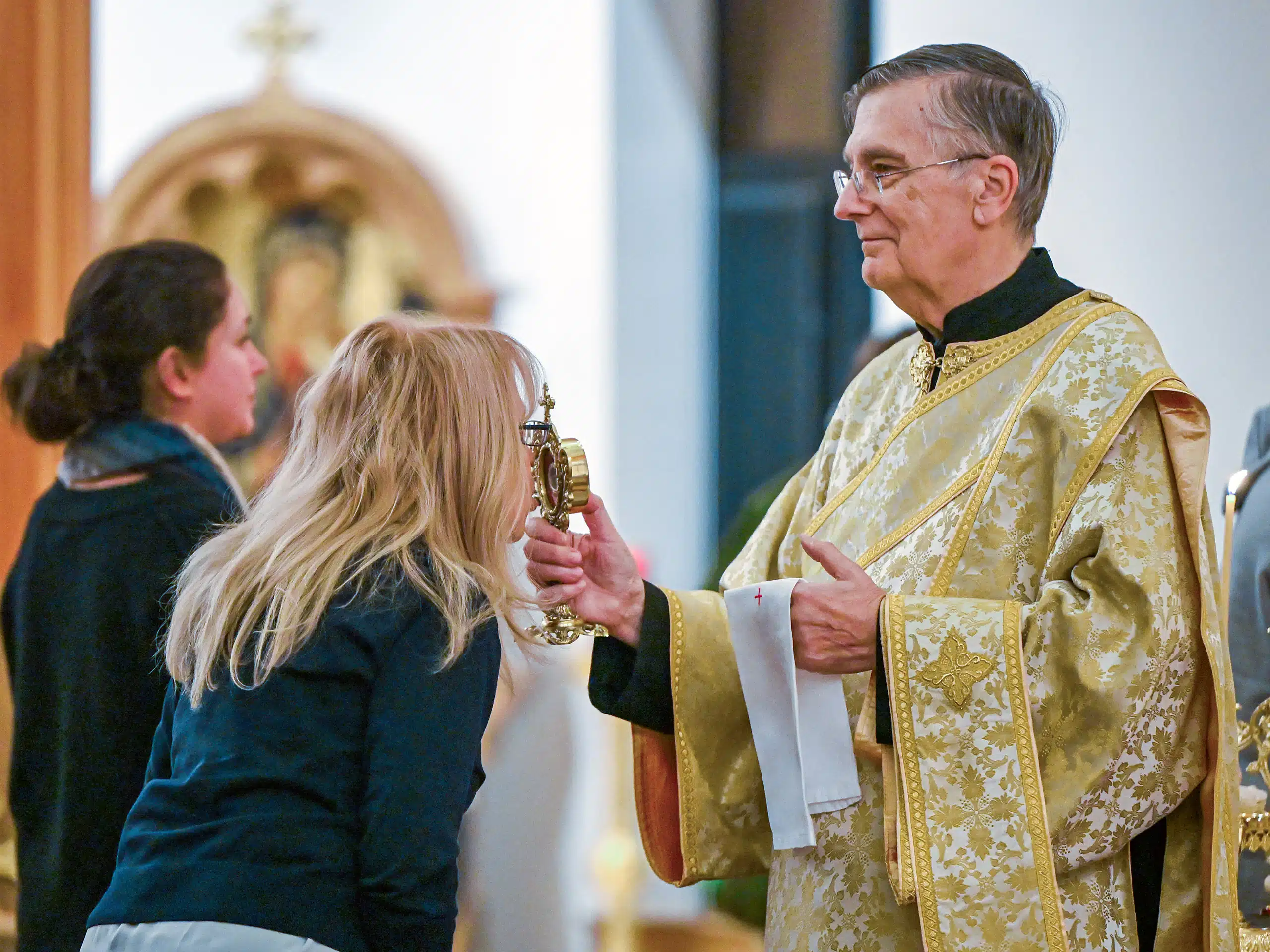
Near the end of Great Vespers, parishioners had the opportunity to venerate the relic up close at the front of the church. Deacon Elmer Pekarik brought forth a small reliquary containing a bone fragment of St. Nicholas. Father Basarab joined him bearing a small bottle of liquid and a brush. One by one, parishioners venerated the relic of St. Nicholas with a touch or a kiss. Father Basarab then took the brush, dipped it into the liquid, and anointed the forehead of each parishioner with the sign of the cross.
The liquid, Deacon Pekarik told the Catholic Herald, is a sweet-smelling, diluted oil secreted from the tomb of St. Nicholas in the Basilica di San Nicola in Bari, Italy. The oil is also called the “Manna of St. Nicholas.”
St. Nicholas is popularly known for his charitable deeds — such as throwing three bags of gold into the house of an impoverished man whose daughters could not afford a wedding dowry — but Deacon Pekarik said he holds a greater significance for Ruthenians. “He’s also the patron saint of the Byzantine Catholic Church,” he said. He gestured to the sanctuary’s icon screen, or “iconostasis,” which bore a large icon of St. Nicholas next to an icon of Mary and the child Jesus. “So, for us, this is a very elevated and important feast day.”
The celebrations continued through Dec. 7. “We’ll have a dinner. The children, a lot of times, put on a play about St. Nicholas,” he said.
Parishioner and head usher Joe Barron said he’s been participating in the Dec. 5 Great Vespers since he was a child and prays for St. Nicholas’ intercession daily. “He’s a pretty significant figure for me. I always include him in all my daily prayers and evening prayers,” he said. “For me, it’s almost like the unofficial start — or perhaps even the official start — of the Christmas season.”