It’s no secret that Americans’ political anxiety is at an all-time high. A May report from the American Psychiatric Association found that 73 percent of American adults are experiencing anxiety over the upcoming 2024 U.S. presidential election. Three diocesan priests are hoping to decrease that anxiety through Catholic social doctrine and discussion.
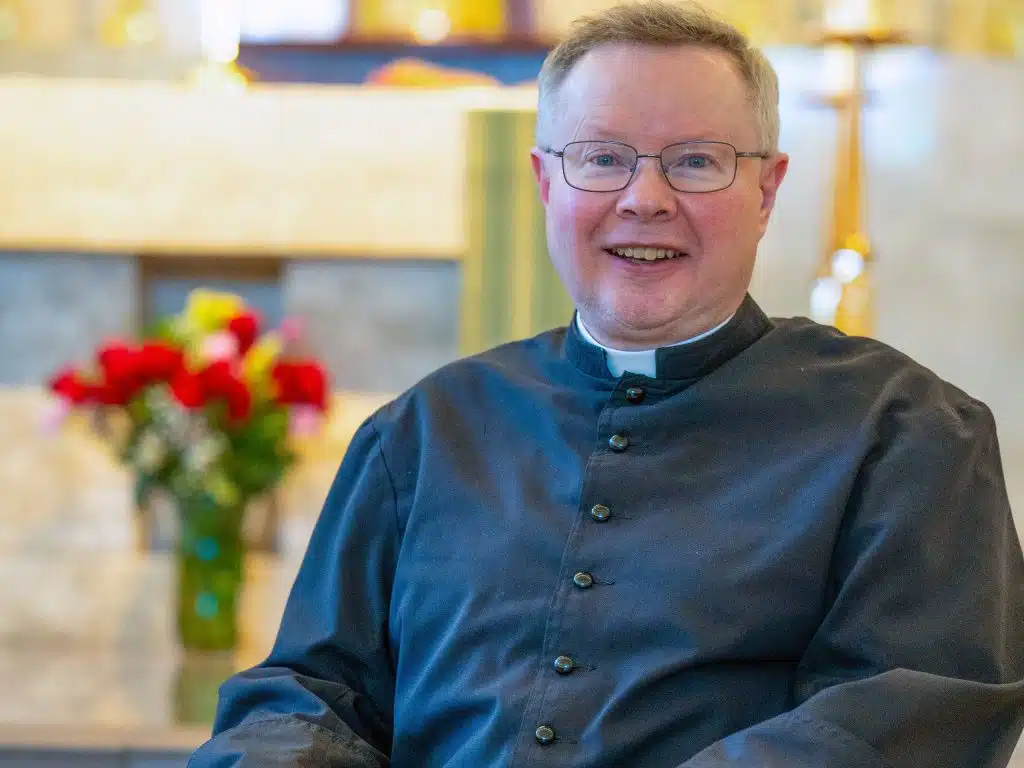
Father Michael T. Nugent, parochial vicar of St. Ambrose Church in Annandale — together with Father Andrew W. Clark, parochial vicar of Blessed Sacrament Church in Alexandria, and Father Joseph M. Rampino, in residence at Blessed Sacrament — launched a speaker series: “God and Caesar: Summer Sessions on Catholic Social Doctrine.”
“Many people are angry, anxious, fearful or just exhausted with politics. And the truth is that our faith offers us a certain detached serenity from matters of economics and politics because we are waiting for the coming of the kingdom,” Father Nugent said.
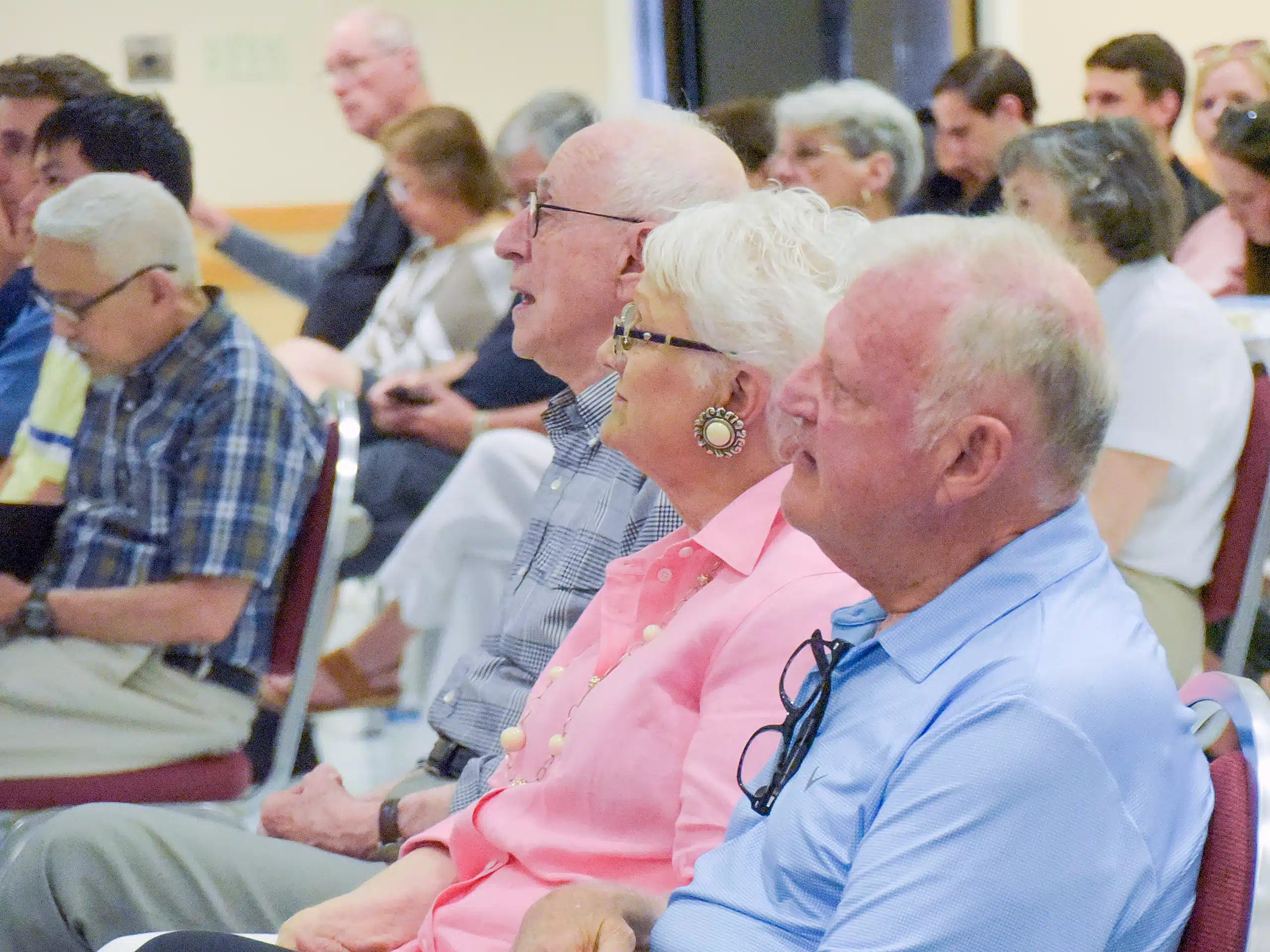
The series features four talks on Monday evenings June 24-July 8. The talks address different aspects of Catholic social doctrine, including government, economics, religious freedom and principles that build a virtuous society.
“We are all living in the echo chamber of the modern media, and its narratives and explanations for the political life. And the great gift of our faith is that we can consider these questions of government in a different lens,” Father Nugent said. “So, rather than having a tactical conversation about specific issues or specific candidates, I thought it would be helpful to speak broadly about the principles that inform how our church and our faith approach questions of government and economics,” he said.
The series’ second talk, delivered by Father Rampino June 24, addressed the historic question of the church’s relationship with “Caesar,” or civil authority.
Through the writings of Sts. Athanasius, Ambrose and Augustine, Father Rampino described the early church’s evolving relationship with civic authority. He said the church initially viewed the Roman emperor Constantine as its earthly savior, due to his support of Christianity after years of persecution. As Constantine’s descendants fell prey to corruption and heresy, the church developed an uneasy, but accommodating, relationship with civic authority. And eventually, after Rome was burned by the invading Visigoths in 410, St. Augustine rebuked Christians mourning the fall of Christian Rome, instructing them to take their eyes off of human political authority and instead focus on their citizenship in heaven.
Today, we fall prey to the same cycle of faulty relationships with civic authority, Father Rampino said.
“There’s always a temptation to look at any potential ally to the Christian faith as another savior,” he said. “There is always a temptation to think that success for the church is when civic authority respects and obeys the church. There is a temptation to think of that as our primary mission, to bring the civic world to heel.”
While we should always perform our civic duty responsibly and appropriately interact with civil authority, or “Caesars,” Father Rampino said, “In the end only Christ is stable and certain … Caesars will always come and go. Christ only remains.”
At the end of the day, it’s important to “put politics in its place and remember that it’s not the most important thing in life,” Father Nugent said.
Find out more
To attend, go to bit.ly/3VTEpg3.