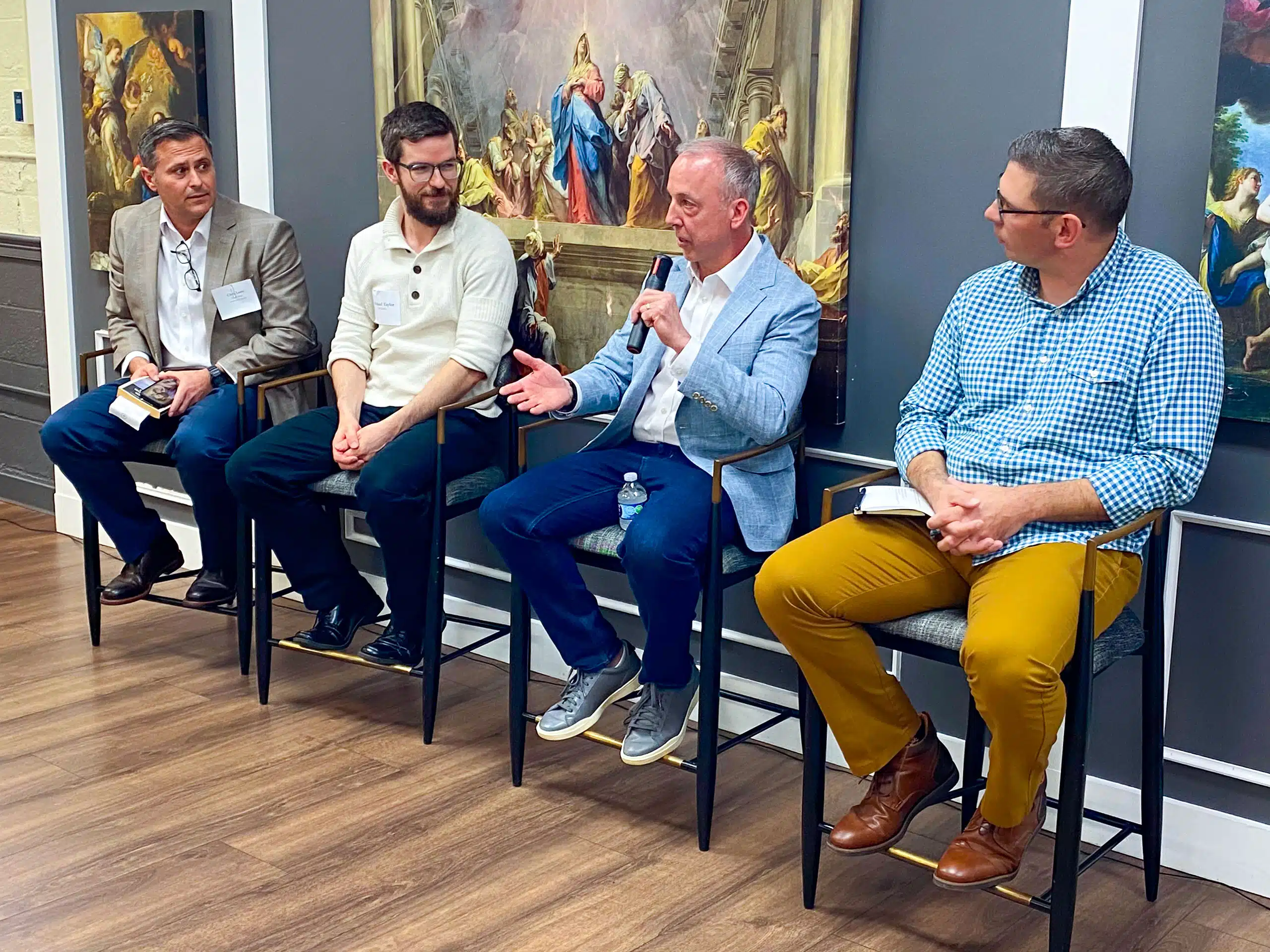
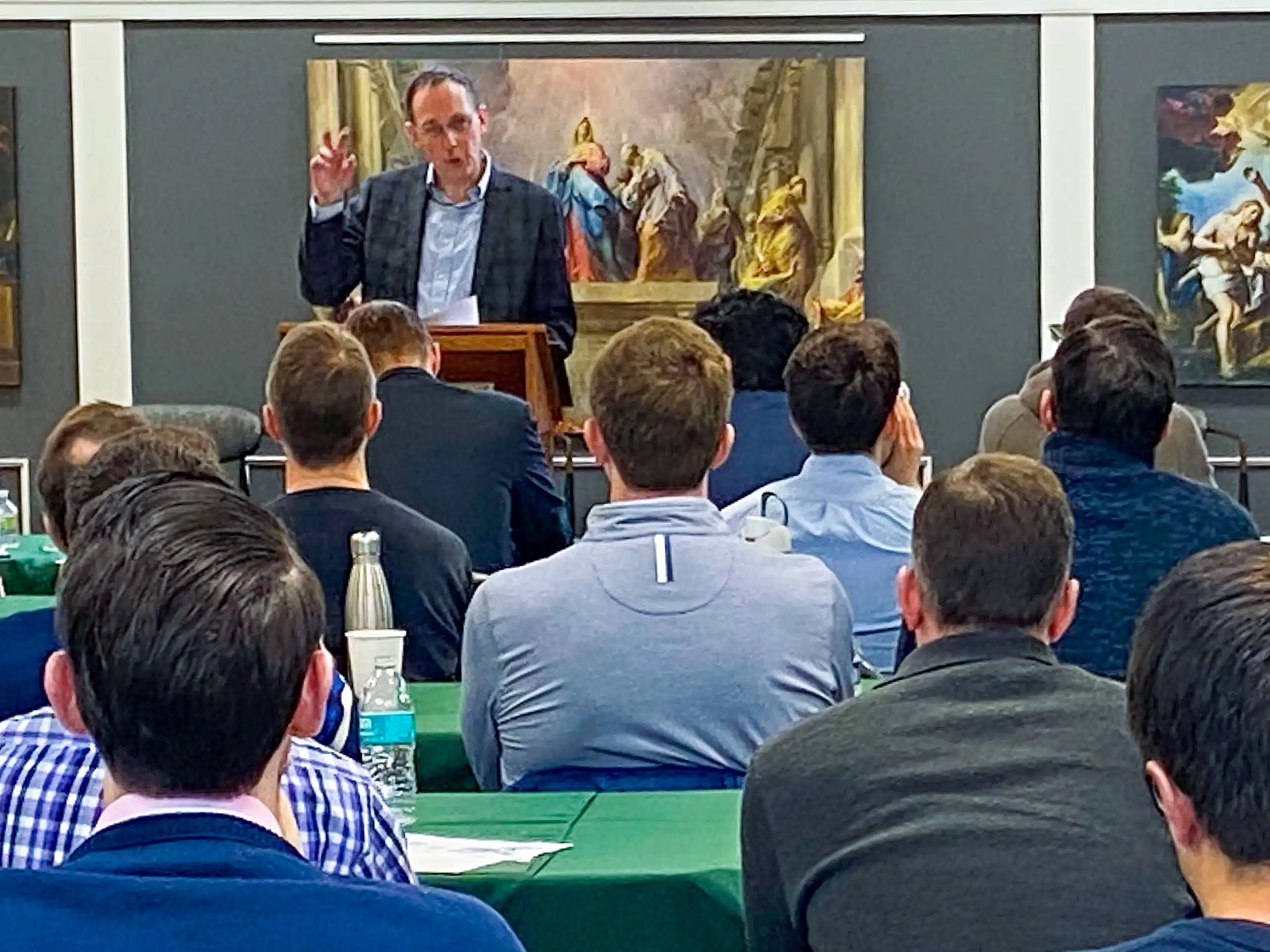
More than 50 dads turned out for the third annual Fierce Fatherhood conference at St. Rita School in Alexandria March 21 for fellowship and renewal in their vocation as parents, with inspiration provided by three speakers and a roundtable conversation with parish fathers.
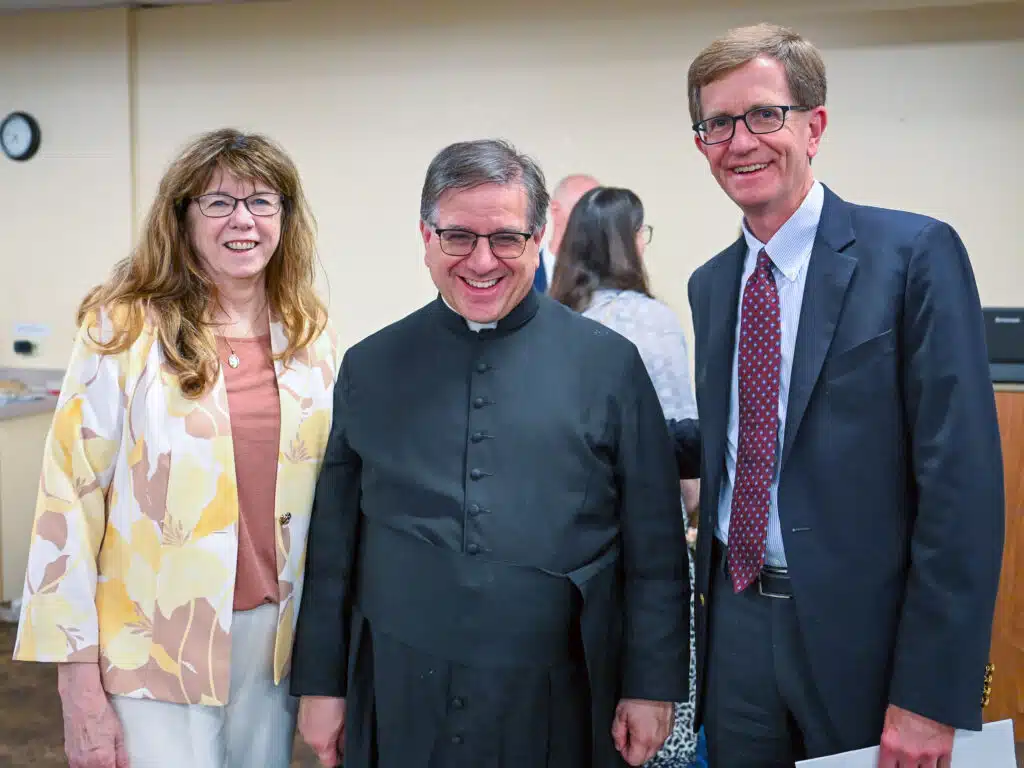
Father Christopher P. Christensen, pastor, greeted attendees who settled in for talks by Andrew Abela, founding dean of the Busch School of Business at The Catholic University of America in Washington; Joshua Hochschild, professor of philosophy at Mount St. Mary’s University in Emmitsburg, Md.; and Father Mark Mannion, assistant chaplain of the Catholic Information Center in Washington.
Abela advised fathers to embrace a gentle firmness in their approach, looking for ways to harness anger into something constructive. He is the author of “Superhabits,” a framework for life based on St. Thomas Aquinas’ “Treatise on the Virtues.” Abela walked attendees through a color-coded, circular “Anatomy of Virtue” handout, reminiscent of the periodic table, which mapped 46 virtues to the corresponding vices they guard against.
Hochschild, author of “A Mind at Peace,” addressed the perils that too much screen time can present to young souls in formation. He said that during talks he delivers to teen students, he holds up a smartphone and says that the device can steal one’s soul. No one in the audience pushes back, he said, but instead listen and seek help and guidance to navigate tech.
Mobile devices are designed to distract, Hochschild said, and are more likely to weaken senses than heighten them. He recalled the adage regarding digital media companies that if the product is free, the user is the product. He pointed out a rising prevalence of anxiety and depression in conjunction with the rise of smartphones.
“We are still coming to terms with the implications of this on the spiritual life,” he said. Fathers should teach their children to pray, he said, which then helps virtues fall into place.
Father Mannion, who joined the CIC in Washington last summer, framed his remarks around St. Paul’s exhortation to Christians to live as children of God who “received a spirit of adoption, through which we cry, ‘Abba, Father!’ ” and as “joint heirs with Christ, if only we suffer with him so that we may also be glorified with him” (Rom 8:14-17). Dads must teach children entrusted to their care how to love and to develop the same filial relationship with God that St. Paul describes.
The sacraments, particularly the Eucharist and confession, are some of the greatest tools in a father’s toolbox, Father Mannion said. He recommended “He Knows Not How,” a 2020 book by Opus Dei Father Julio Diéguez, inspired by the Gospel passage about man’s patient cooperation with God’s plan concerning the growth of scattered seeds (Mk 4:27).
One father asked for advice on keeping children Catholic as they grow into adults, or bringing them back to the church.
“Materialism has sharp teeth,” Father Mannion said, lamenting how in a few decades in Ireland it undercut centuries of faith built during British rule.
Ultimately, he said, it comes down to winning people over with friendship and the attractiveness of a life built on the sacraments, noting he has seen “enormous conversions” in the last 10 years.
“Love. Be there,” Father Mannion said. “Serve with love and with good deeds.”
Schweers can be reached at [email protected].