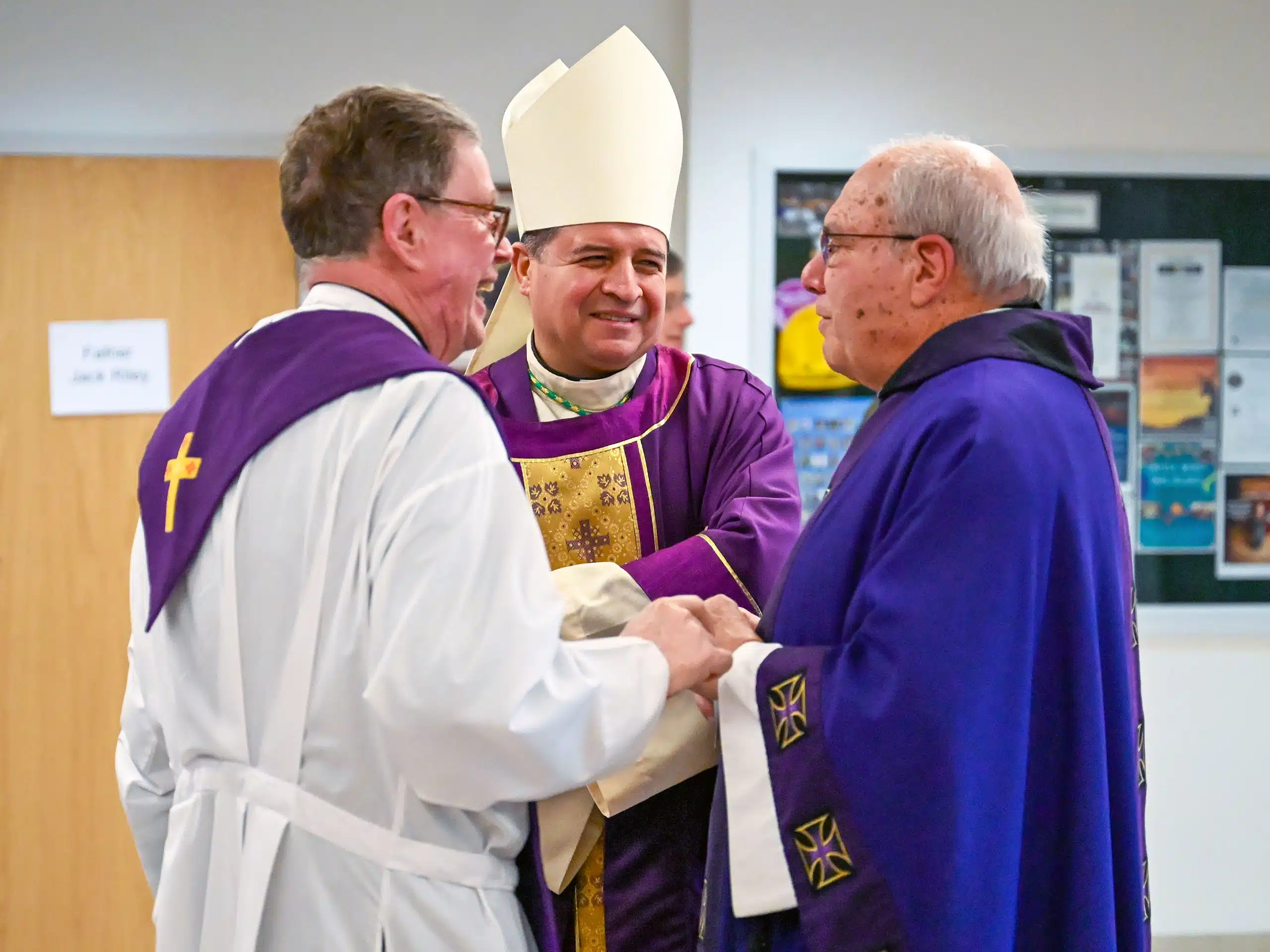
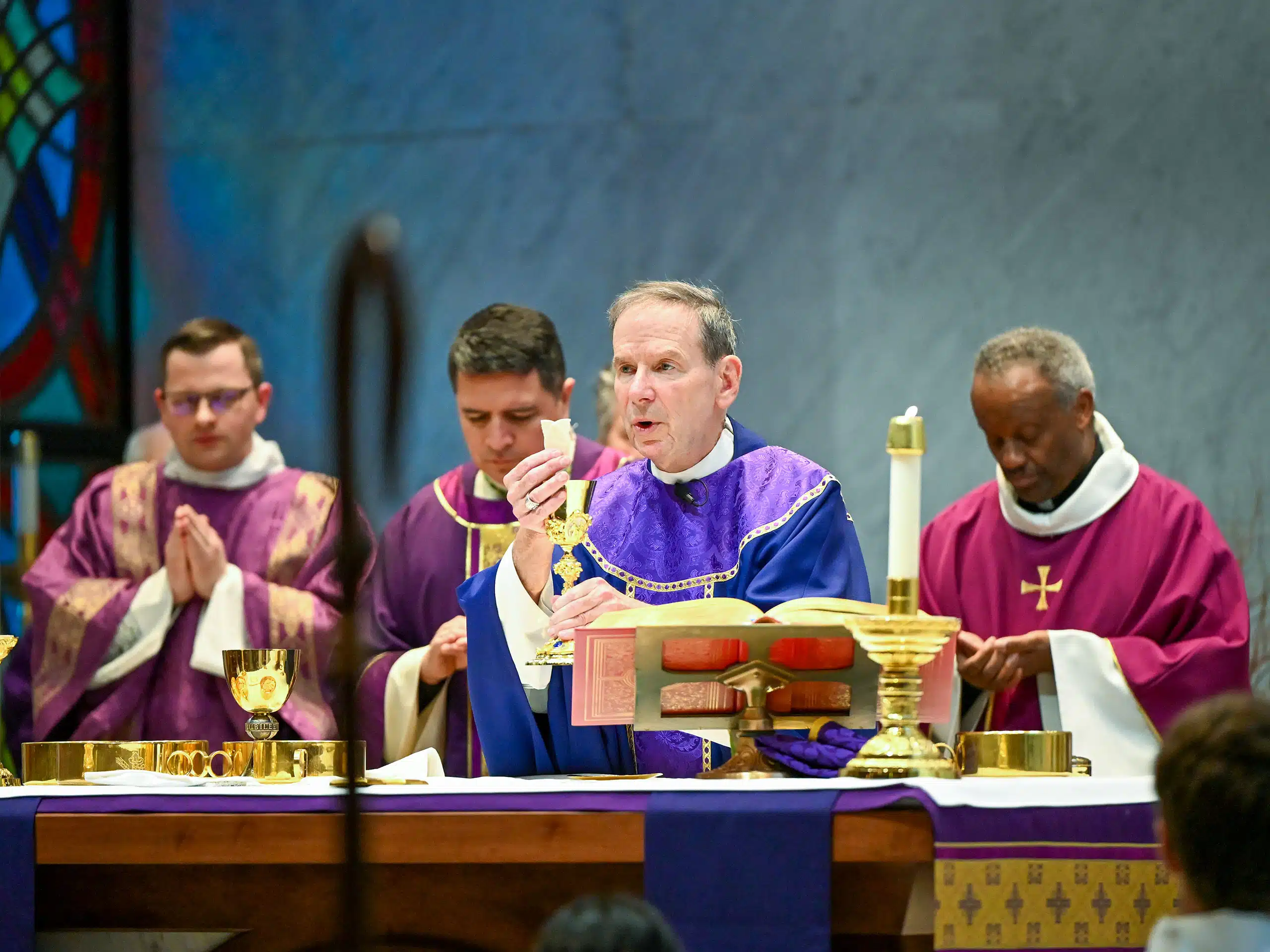
Neither an empty seat nor parking space was to be seen at the opening Mass for the Peace and Justice Conference at Nativity Catholic Church in Burke March 7.
The theme of the 2026 conference was “Immigration and the Church’s Prophetic Voice.” The conference comes amid recent violence and mass deportations carried out by U.S. Immigration and Customs Enforcement officials. In January, ICE agents in Minneapolis fatally shot American citizens Renee Good and Alex Pretti, sparking waves of protests throughout the country.
In his homily, Bishop Michael F. Burbidge highlighted the trials encountered by migrants and immigrants, “who have left their homeland, often out of fear, hardship, conflict, violence, in search of a better life for their families, and yet their difficulties continue.” He encouraged the faithful to “unite in prayer for our elected officials,” that they may “develop a comprehensive immigration plan that honors the laws of our land and respects the dignity that belongs to every person as a child of God.” He emphasized, “We can do both. With his grace, we must do both.”
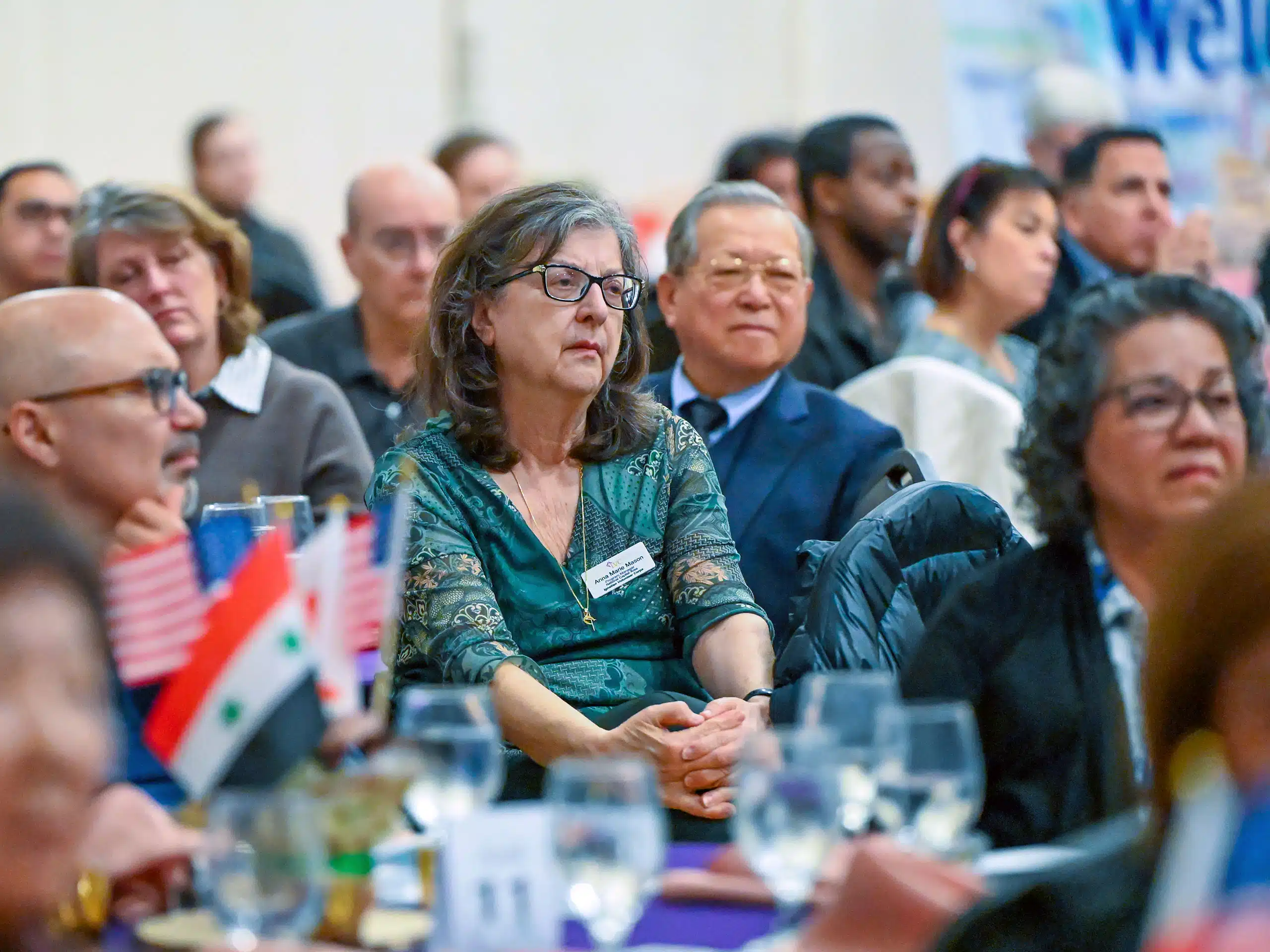
Conference attendees gathered in the parish’s Father Martin Center for a dinner and a talk by keynote speaker Bishop Evelio Menjivar-Ayala, auxiliary bishop of Washington.
Many attendees said they signed up out of concern over recent violent and extreme immigration enforcement tactics. Others came seeking clarification on church teaching. Lee Raney, a parishioner of St. Elizabeth Ann Seton Church in Lake Ridge, said he came with a desire to “hear what the bishop has to say and get a feel for what the church says on all this.” He echoed Bishop Burbidge’s statements on immigration. “We need to respect the laws of the country, but at the same time respect the human dignity of the person — so, trying to find that balance and pray for our politicians.”
Olga Sullivan, a parishioner of Nativity, said that the crackdown on undocumented immigrants hits close to home. “I am Hispanic myself, and I’m very concerned about our immigrant population,” she said. “I personally worked with the Hispanic community interpreting for Fairfax County for many years for the schools, and I’ve seen that population hiding and worried and anxious. So yeah, it hurts.”
Bishop Menjivar-Ayala didn’t mince words when it came to recent immigration enforcement practices.
“We know that the law fulfils its true vocation when it safeguards the common good through proportionality and justice. But when the law loses its human face and is applied arbitrarily, it becomes this fear,” he said. “So, faced with this reality, we, the bishops of the United States, have raised our voices in conscience to stand with our immigrant brothers and sisters and to defend their God-given dignity.”
The USCCB issued a special statement last November, expressing concerns over the “indiscriminate mass deportation of people.” Bishop Menjivar-Ayala said the bishops took a stand due to multiple issues with current immigration enforcement: conducting surprise raids on homes and schools, weaponizing fear, profiling every undocumented person as a criminal, separating families, creating barriers that impede legal due process, and disregarding freedom of worship by establishing an ICE presence outside of churches.
“Treating every undocumented immigrant as a dangerous criminal is ethically false,” Bishop Menjivar-Ayala said. “This is part of a dangerous and false narrative.”
He affirmed that “we applaud the administration and law enforcement’s effort to keep criminal aliens and citizens alike out of our streets and communities,” but added that “being undocumented is not a crime in itself; it is an administrative offense.”
Even when people attempt to go through the legal process, ICE still carries out arrests, he said. “We have seen many people that have been detained while leaving court hearings, though their cases might still be pending.” He added that certain laws penalizing those who transport undocumented persons to church or the hospital “is, in effect, a denial of charity and an infringement on the free exercise of one’s religion.”
People have the right to migrate to another country, he said, referencing Pope John XXIII. “Wherever there is conflict, there are going to be people (forced) to migrate. So, just think of what is happening in Iran, Gaza, Ukraine, Sudan and other places. What follows during and after wars is mass migration.”
Countries have the right to maintain their borders and regulate migration, however, they do not have the right to deny people their basic human rights or violate their God-given human dignity, he said: “No one is a problem to be eliminated.”
The plot twist came when Bishop Menjivar-Ayala gave his own background. “I was a stranger, actually undocumented, and you welcomed me,” he said. To those in the audience who were immigrants or children of immigrants, “I want to say to you on behalf of the church, you are not alone,” he said. “Continue to raise your peaceful voices and organize to defend your rights. Participate in your parish and faith community, because there you will find a family and a home.”
The evening concluded with a Q&A, in which people texted questions for Bishop Menjivar-Ayala and Bishop Burbidge to answer. One question came from a high school teacher who believes that several of her students disappeared from her class due to deportations. She asked how Catholics should respond to immigrants who are afraid. Bishop Menjivar-Ayala affirmed the need for Catholics to accompany such people amid their fear: “We need to be a church that walks with people.”