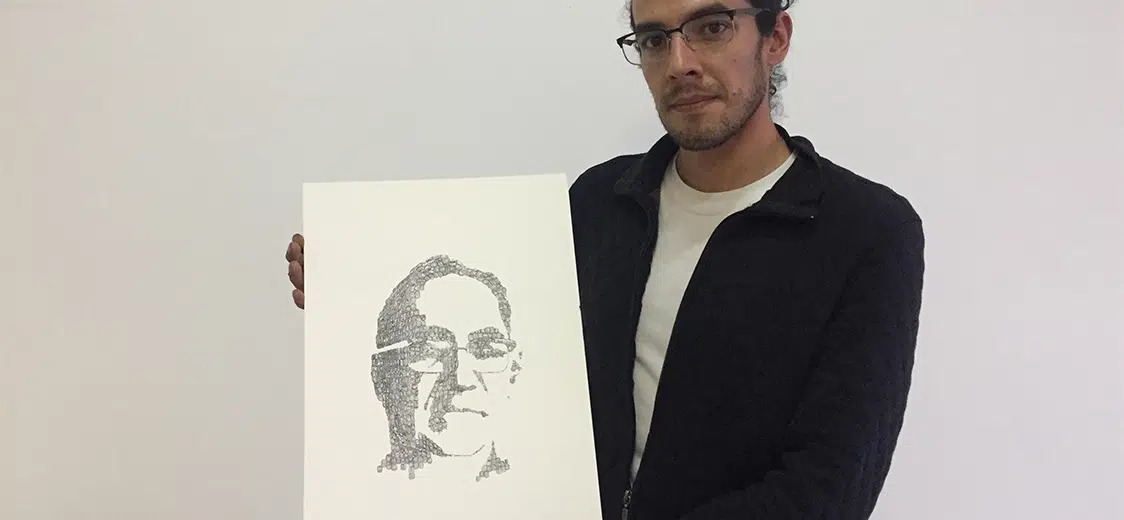
Gerardo José Granados, 34, a Salvadoran who attended the Church of the Nativity in Burke and currently teaches illustration in Barcelona, Spain,
received exciting news via a late night text message from his mother back in
Arlington.
“My mom just told me that my artwork is on its way to Pope
Francis,” Granados said.
His mother, Carmen Ivonne Roca de Granados, works for the
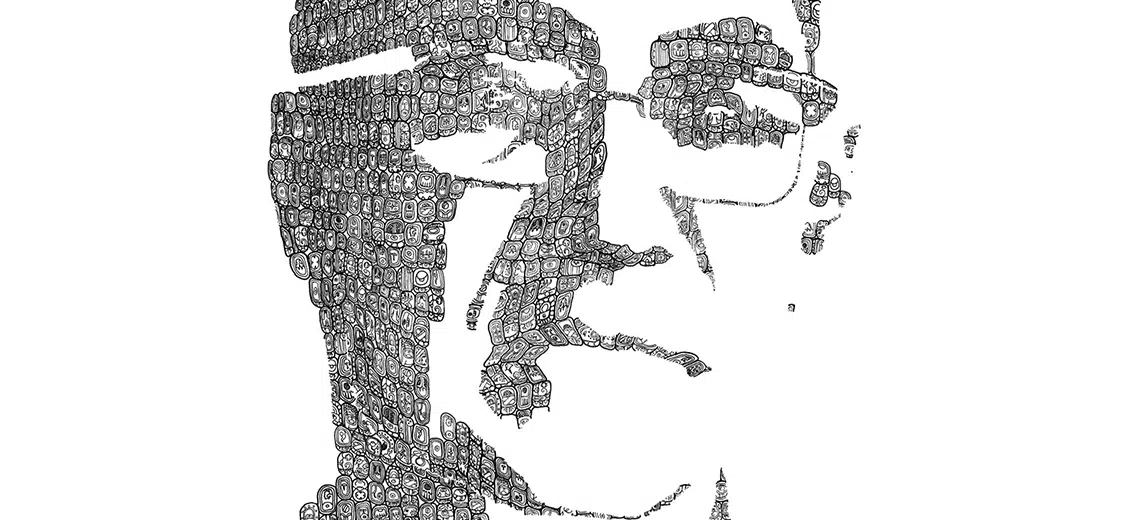
diocesan Spanish Apostolate, and she sent a print of his illustration of
Archbishop Óscar Romero as a gift to Pope Francis after being reassured by
Salvadoran Cardinal Gregorio Rosa Chávez that it was under consideration for the late archbishop’s
canonization ceremony, which is likely to be held in Rome at the end of October.
On March 24, 1980, Archbishop Romero was assassinated while
celebrating Mass.
Granados credits his parents and his older brother, Josedgardo
Granados, who is also a visual artist, for providing direction and support.
“My parents give me nothing but support,” Granados said in
reaction to the news. “And my brother always helps me to articulate my artistic
vision.”
Granados’ early childhood in El Salvador seared memories of
violence caused by the country’s bloody civil war, but his mother’s deep
respect for Archbishop Romero — she transcribed his homilies before his
assassination — caused the artist to reflect on the martyred Salvadoran prelate
as a tangible witness of hope for his people.
“So many Salvadorans continue to suffer and it gives me peace
knowing that they will always have Monseñor Romero to turn to in times of
need,” Granados said.
His mother also reflected on Archbishop Romero’s example,
especially his words of solidarity for those who were suffering.
“Back when I was young, I worked for a university newspaper,” Roca
de Granados said. “Every Monday, I transcribed Monseñor Romero’s homilies and
he was always defending the defenseless: the poor; that is why he was killed.”
El Salvador’s tumultuous past is also a creative wellspring for
Granados.
“My childhood during that time is an endless fount of inspiration
for my art,” Granados said.
As for the reason for his family moving to the United States in 1991, Granados was very much aware of the struggles in El Salvador: “car
bombs exploded and dead bodies were routinely dumped in the trash bins outside
of each house.”
His mother has other memories, too. Her brother, René Roca, was
serving as a soldier when he was killed outside of her father’s house. Death
threats started flooding in via late night telephone calls after her husband
tried to find out why her brother was killed.
“I told my husband, I already lost one loved one and I cannot
stand to lose you, too,” she said.
Bombs were going off throughout San Salvador and burning buses
were scattered throughout it. In one incident, a car filled with piñatas on their
street exploded with a piece of shrapnel tearing through the leg of the
designated neighborhood guard.
“I knew it was time to go,” Roca de Granados said.
Her husband, and Granados’ father, José Edgardo Granados, was an
early recipient of Temporary Protected Status, or TPS. Now a U.S. citizen, he
has taught Spanish at St. Louis School in Alexandria for 8 years.
Cardinal Chávez, who was elevated to cardinal in June 2017 at a ceremony in
Rome which the Granados family attended, spoke with Roca de Granados after an
April 12 panel discussion with Bishop Michael F. Burbidge and other Salvadoran
prelates at the Cathedral of St. Thomas More regarding Temporary Protected
Status, or TPS, for Salvadoran immigrants.
The cardinal said that Granados’ illustration, which includes
Mayan symbols for days, months and years superimposed on the outline of
Archbishop Romero’s profile, was in the running for use in the canonization
ceremony.
“I’m so proud because my son has not lost his love for our
country and culture,” Roca de Granados said. “And he used his art to capture Monseñor
Romero and his defense of the poor.”