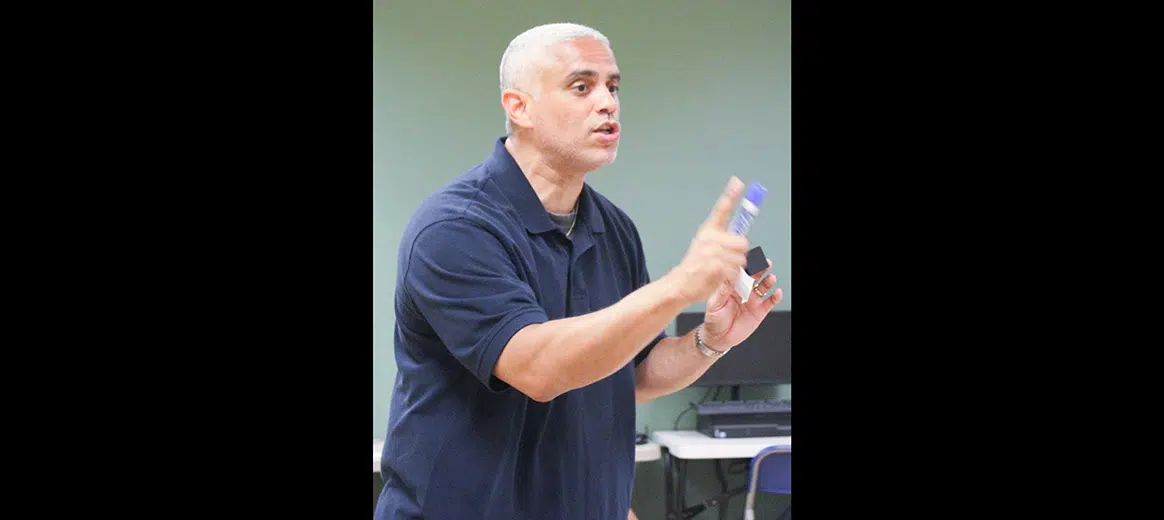
Hassan Moore believes Americans today are great users of
technology, but when it comes to understanding and creating technology, we’re
falling short.
“We used to be a world leader in technological progress, but we
stopped making things a long time ago in America,” said Moore, a native of New
Orleans, who has taught physics, engineering, computer programming and math.
Moore joins the faculty at Saint John Paul the Great Catholic
High School in Potomac Shores as chairman of a new STEM department this fall.
The school is known for its world-class bioethics program, and
now Moore will work with the current science and math departments to “assist in
injecting technology and engineering” into the curriculum. “We’re looking at
the fullness of STEM,” he said.
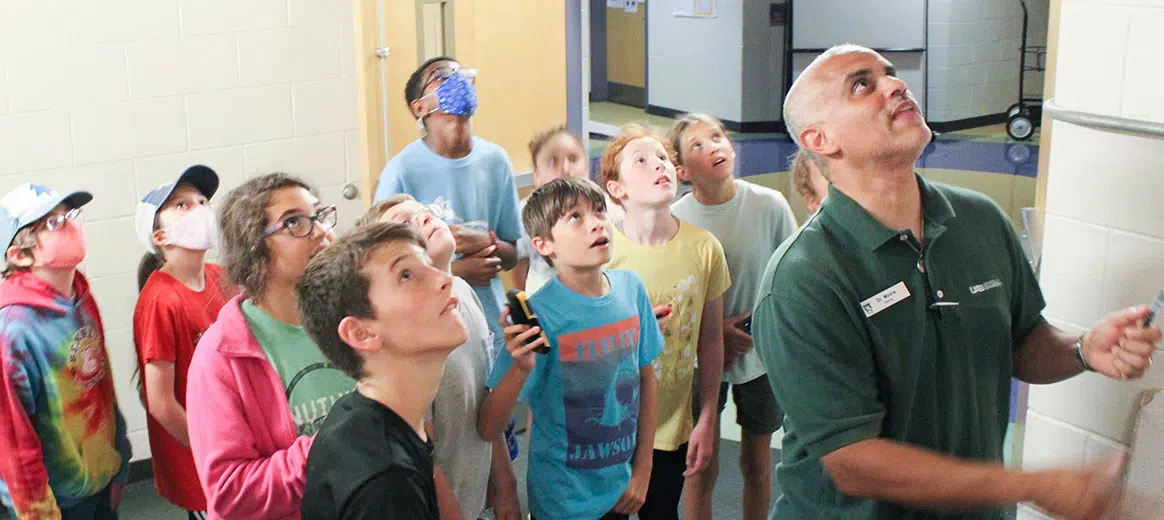
Moore said he wants students to think about “how do you know what
you know, and how well do you know it?” That involves using computational
models, such as Galileo’s law of free fall, which he introduced over the summer
to students in fifth through eighth grades at a new STEM Camp, aimed at getting
middle school students interested in the STEM fields. “Then when they come to
John Paul, we can build on that,” he said.
He will teach introductory computer programming, and next year
plans to add robotics. “You have to know how to program first,” he said. “A
robot is just a dumb chunk of parts until you tell it what to do, and that’s
where the coding comes in.”
Students in the STEM program also will develop software and
create apps to fulfill market needs, he said, always “guided by ethical
behavior in the things we create.”
Moore said he’s had a basic curiosity about the world since he
was a child. “I always wanted to know how everything works,” and always took
things apart to find out “how it all goes back together.”
He earned a doctorate in atmospheric physics from Howard
University in Washington and a master’s in curriculum and instruction from
Xavier University of Louisiana in New Orleans. His bachelor’s in physics is
from Dillard University in New Orleans.
After earning his doctorate, he taught at Johnson C. Smith
University in Charlotte, N.C., for two years before moving to the University of
Alabama at Birmingham, where he worked for 10 years and became an associate
professor. He also chaired the K-12 Science Textbook Adoption Committee for the
state of Alabama.
Moore, his wife, Laurie, and their son, Ethan, returned to this
area in 2017 to be near family. He previously taught at John Paul the Great in
2018-19.
When his students learn about STEM subjects, he wants them to
gain an understanding of “this is how a scientist works, this is how an
engineer works,” Moore said.