In the earliest verses of Genesis, God proclaims that it is not good for man to be alone. Yet throughout the country, loneliness is growing as adults, teens and children increasingly look for community on their cell phones rather than in their neighborhoods.
That digital connectivity is just a shadow of the in-person interaction that humans really crave, said Father Christopher P. Christensen, pastor of St. Rita Church in Alexandria. “Technology facilitates aloneness,” he said. “It facilitates a kind of solitary existence that is fundamentally unhealthy and not according to the image of God in which we are created.”
To help parish families limit unhealthy technology use and find more in-person fellowship, the school community is launching “The Real Presence Collective: An Incarnational Approach to Friendship, Families, and the Good Life.” The collective consists of a pledge that parents will not give personal, internet-capable devices or social media accounts to their children while they are at St. Rita School. The school, meanwhile, commits to providing more opportunities for families to socialize without the distractions of technology.
“It isn’t as though St. Rita is advocating that we all sit by candlelight and talk through carrier pigeons,” said Adria Tayrani, one of the parents spearheading the collective. “It’s about the reality that we as a society have allowed technology to become our master instead of having that primary relationship be the one with God. What we need to do as a school community is teach our children through our own example to take control of technology in order that it aids our lives, always being subordinate to us.”
The idea for the collective began when teachers and administrators began to notice the harmful effects technology was having on the students. Children as young as kindergarteners were showing more signs of anxiety and depression. Teachers had to discipline students for using cell phones during school hours. They had to mediate when one student posted something negative about another online. Even if the post occurred after school hours, the chatter about the comment would inevitably make its way into the classroom.
Technology also made it more difficult for the children to learn, said Christine Hanley, one of the teachers spearheading the collective. “They’re just so used to having immediate gratification and having stimulation constantly. They’re little and their brains are being wired this way,” she said. “It’s scary when you’re trying to read a classical piece of literature and the majority of your class isn’t able to enjoy it because they don’t know how to just sit in the quieter moments and to wait for the payoff.”
So the school sent out a survey to see how well parents understood the dangers of internet use in children. The survey showed parents didn’t fully understand the risks, but that they were eager to learn and to work together to limit technology use within the St. Rita community.
“If you’re on an island as the only family with no phone for your kid, that makes the kid-to-parent pressure a lot stronger,” said Father Christensen. “Part of the idea was to make sure parents had the support of other parents — they really wanted that.”
After months of discussion, the school community launched the Real Presence Collective; the name references Christ’s bodily presence in the world. So far 18 families have signed the voluntary pledge, said Tayrani, though she believes many more will formally commit as the school year begins. She feels grateful for the administration’s leadership on this tricky issue. “I’m a working parent and so of course it’s much easier for me to plant (my son) in front of a TV than to arrange a play date or extracurricular,” she said. “It’s been tremendously helpful that the school had the vision to recognize this was a problem.”
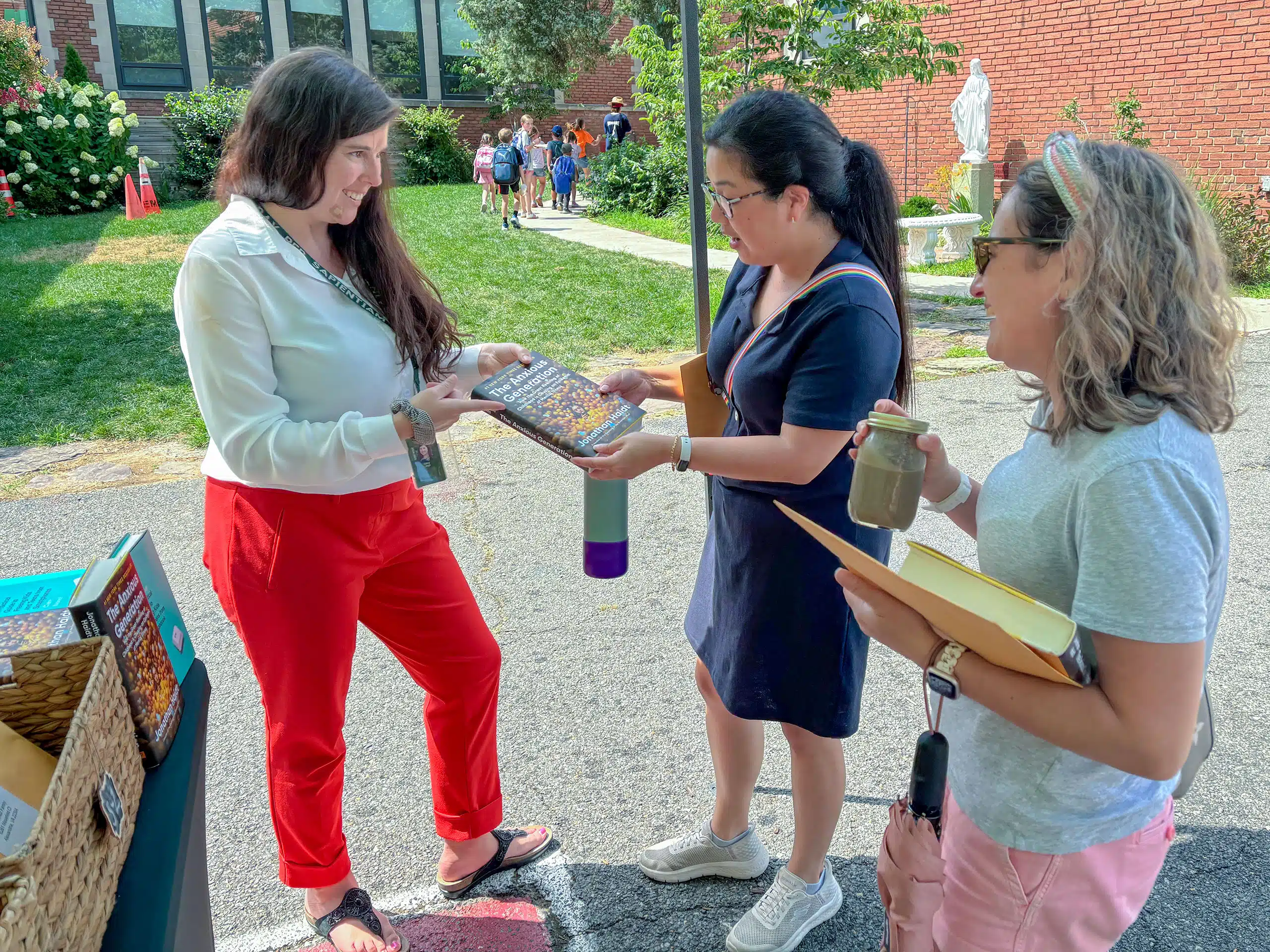
This summer, the collective hosted a book club where kindergarten through third grade students read Pinocchio with their parents. “We all got together twice and we had dinner, we prayed — because Father Christensen has challenged us to pray a decade of the rosary (during events) — and then we got into discussion on the book,” said Tayrani. “That was just a beautiful thing.” Parents and teachers also read “The Anxious Generation” by Jonathan Haidt.
The collective is working on more in-person programming for the fall with the goal of creating strong relationships and fewer tech-induced problems. “We have a bunch of really excited parents, excited faculty, even our kids … they recognize what’s happening around them,” said Hanley. “Next year we’re going to see some pretty awesome benefits coming out of this.”
Maraist is a freelancer from Reston.