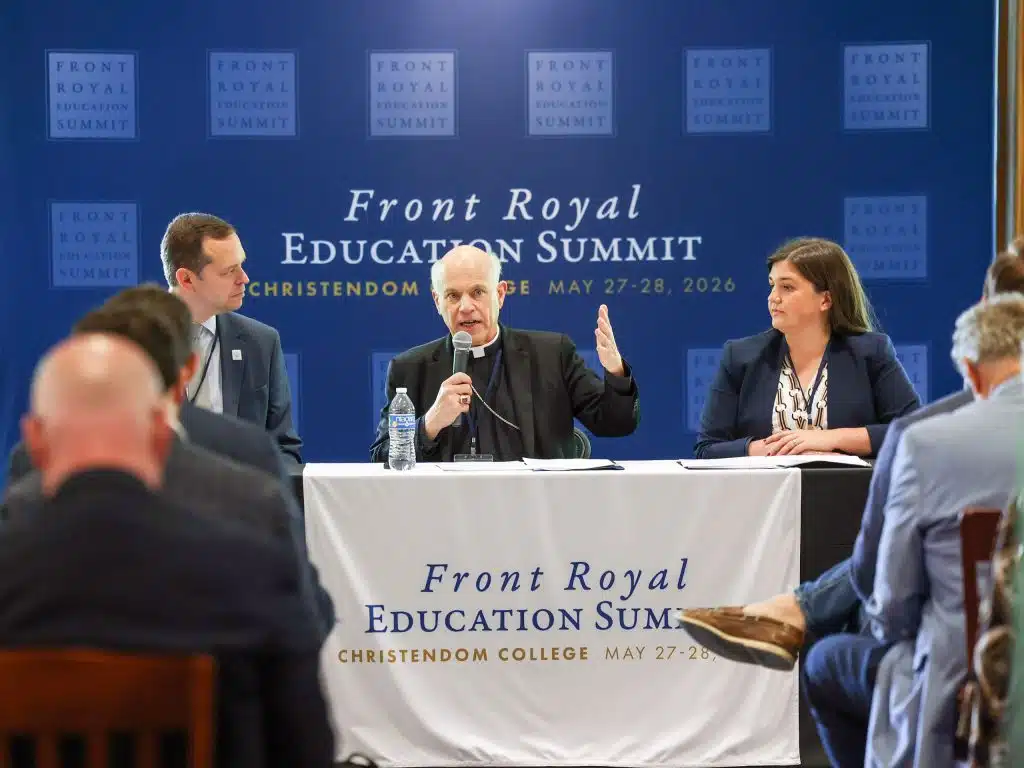
Don’t let the bravado fool you. Even though high school students can exhibit an air of confidence and that everything is in control, “They are never too old to hear, ‘I’m proud of you,’ ” Bishop Michael F. Burbidge said Jan. 12 at a meeting of the DJO Dads Club at Bishop O’Connell High School in Arlington.
While Bishop Burbidge speaks passionately about Catholic education, he admitted it was something of an acquired taste. Two years after his ordination, he was reassigned from serving as parochial vicar of St. Bernard Church in Philadelphia to instead teach at his alma mater on the other side of town: Cardinal O’Hara High School.
“I wasn’t happy,” he recalled, “because I really did not want to teach back then.”
Although it was an adjustment, “I fell in love with teaching, and I loved that assignment.” More faculty appointments followed and he earned two graduate degrees in education.
Visiting diocesan schools regularly is among his most cherished duties as leader of the Arlington diocese. So, what does he hear on the campus circuit?
“They love their schools,” Bishop Burbidge said of the students he speaks with. “I know you’re making sacrifices to send them here, so thank you for that.”
They also demonstrate a “great concern for others,” as evidenced through an impressive array of service projects as well as efforts at inclusion, such as the Options program geared toward accommodating students with special needs.
Mounting pressure, however, is another theme he noticed among students. Compared with previous generations, such as their parents, today’s high school students experience “a great level of stress and anxiety. It’s very real. And it’s more so now during this pandemic.”
Principal reasons for this are the large expectations and demands that students face academically, at home, at work, in sports and extracurricular activities. Busy schedules compound the problem.
“They’re worried about the future. They want everything figured out, clearly and definitively,” he said.
It’s important for parents to be mindful of that, he said, and focus is on alleviating pressure — rather than adding to it. Communicating well is instrumental and he offered practical recommendations.
First, solicit students’ ideas and opinions. The thoughtful feedback and ideas that students offer when asked during school visits are striking, Bishop Burbidge said.
“Sometimes we think it’s our duty only to teach them. Actually, we can learn from them.”
Second, ask questions that are conducive to open-ended responses, rather than terse, one-word answers. For example, “Tell me about your day, what was your greatest success?” or, “What’s weighing you down?”
He warned that one common trap for parents to fall into is to quickly find fault or identify shortcomings, even with the best of intentions.
“Because we love them so much, it’s so easy for us to challenge them, to point out to them where they’re not where they need to be,” he said. “But that should be rare compared to the amount of times we’re recognizing and helping them to see their goodness and their gifts and their talents.”
Schweers can be reached at [email protected].