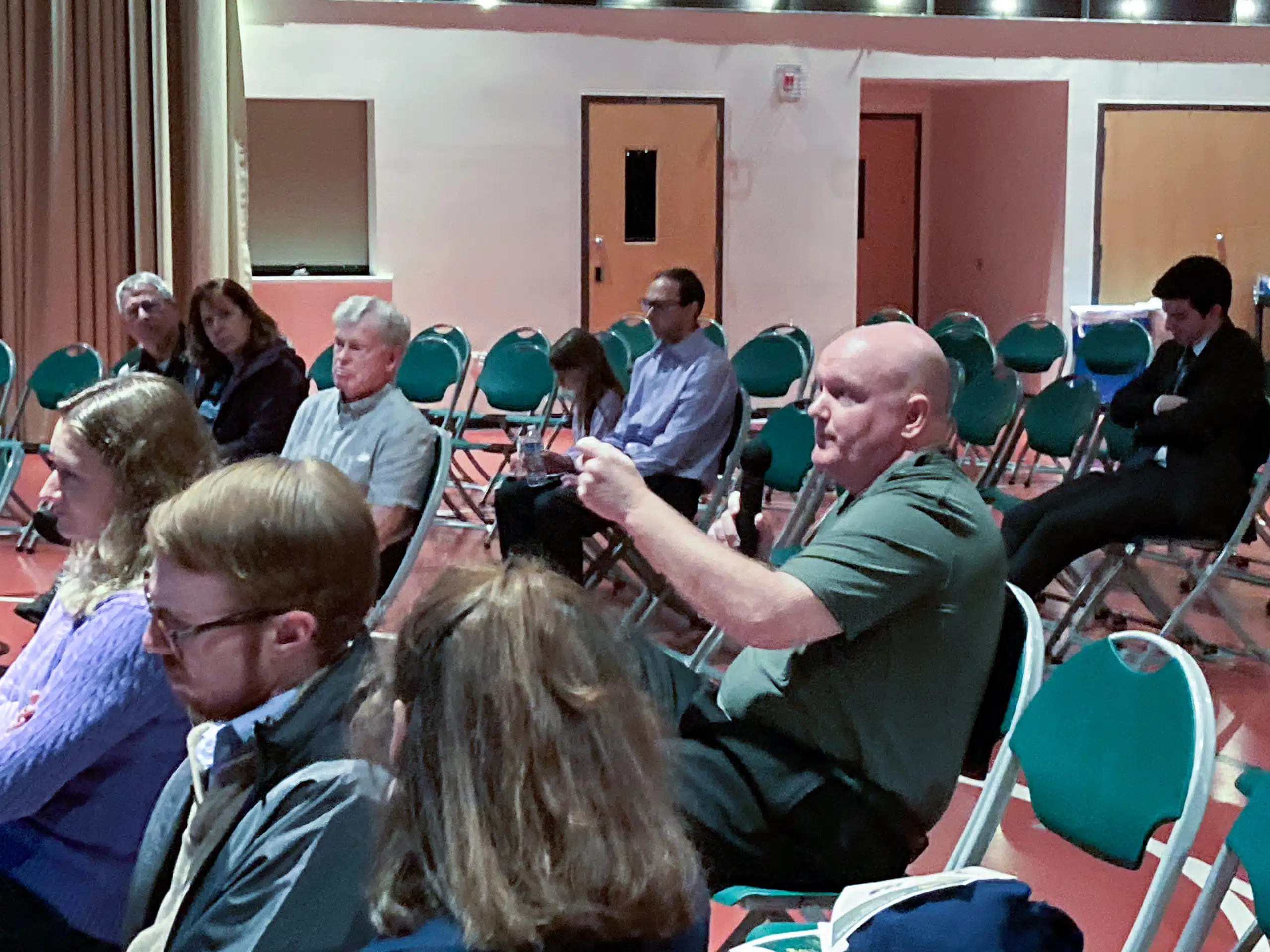
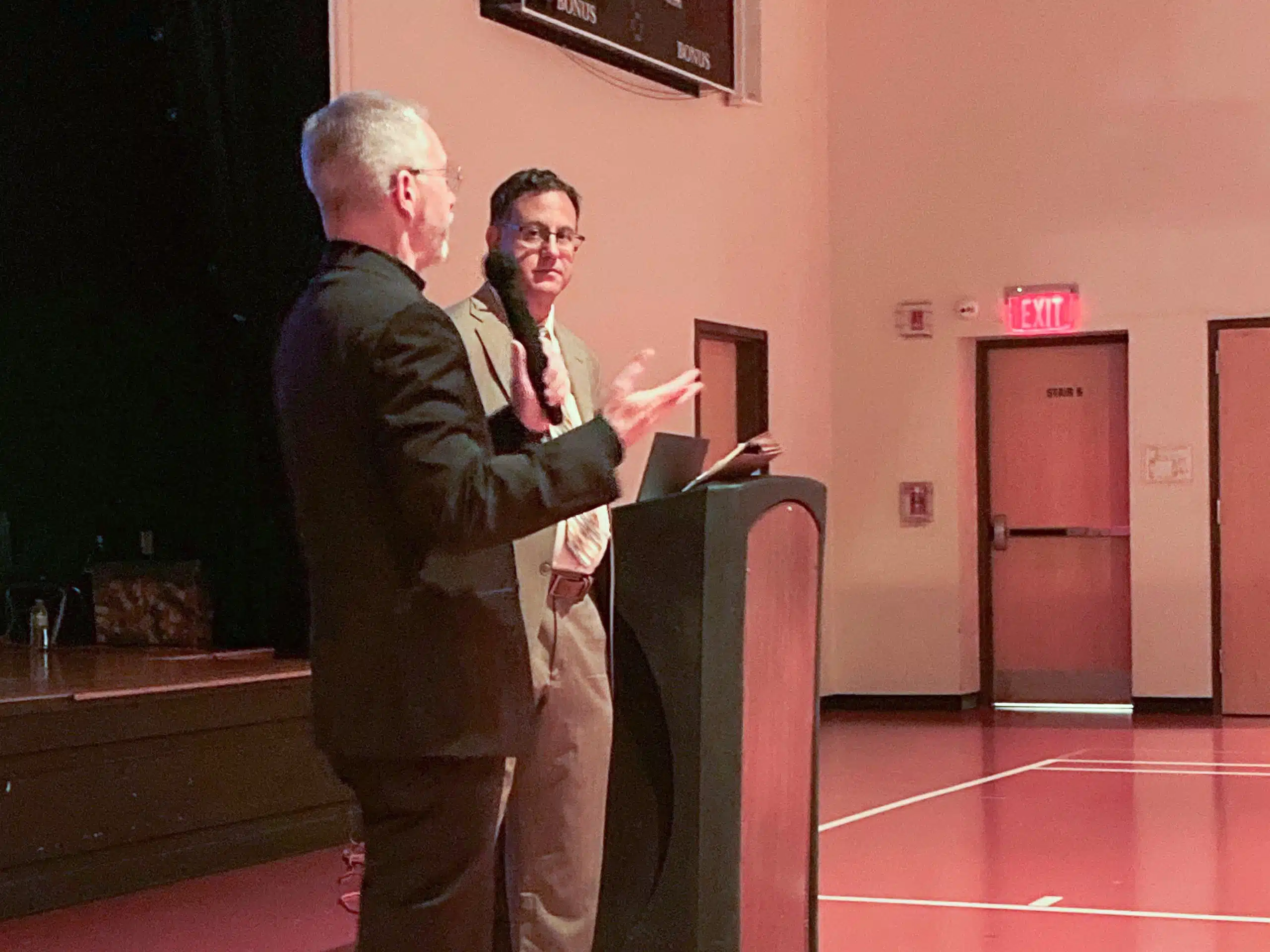
VCC Executive Director Caruso details the bishops’ handbook for the upcoming election.
As election season heats up, the Virginia Catholic Conference is reminding the commonwealth’s Catholics that they have an obligation to participate in political life.
“We have an obligation to help shape the moral character of society for the common good,” said Jeff Caruso, executive director of the VCC, the legislative advocacy arm of both Virginia bishops — Arlington Bishop Michael F. Burbidge and Richmond Bishop Barry C. Knestout.
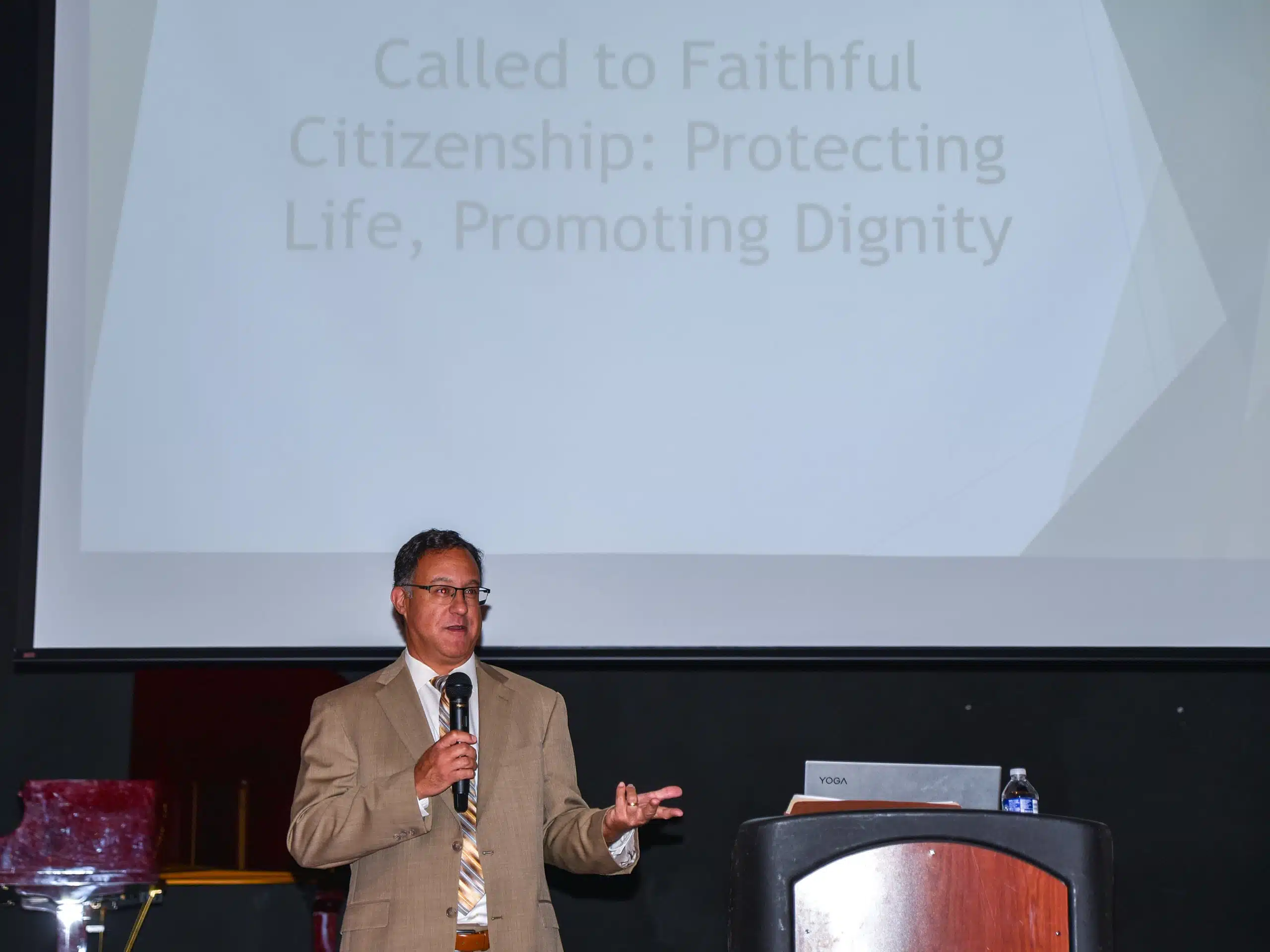
Caruso addressed a group at St. Charles Borromeo Church in Arlington Sept. 28 on “Called to Faithful Citizenship: Protecting Life, Promoting Dignity.” He quoted extensively from the Forming Consciences for Faithful Citizenship document released by the U.S. bishops in 2007, which has been updated and revised several times since then. The document is a handbook of sorts to help Catholics consider the church’s policy priorities prior to voting.
“What does the outside world tell us sometimes? They might say, well keep your beliefs to yourself, or more pointedly, they might say keep your beliefs inside the church,” Caruso said.
“That’s not what Faithful Citizenship has to say at all, it says just the opposite.” Quoting from it, Caruso emphasized, “The obligation to participate in political life is rooted in our baptismal commitment to follow Jesus Christ and to bear Christian witness in all we do.
“So, it’s not something that’s optional; it’s actually part of our baptism. To me, that’s always one of the most interesting points, it goes all the way back to baptism when we took on this call to love God and neighbor. (It’s an) obligation to participate in shaping the moral character of society.”
Caruso pointed out that in order to be faithful citizens, “we first have to form our conscience and then follow it.” He called it a two-step process and a lifelong task. “Our work is never done when it comes to conscience formation.”
He said Faithful Citizenship explains the need to study Scripture and church teaching; examine facts and background information to apply church teaching to a specific situation; and then reflect prayerfully to discern the will of God. “We must have a willingness to go through this to seek the truth,” he said.
The four principles that should guide involvement, taken from the compendium of the social doctrine of the church, are the dignity of the human person, subsidiarity, the common good and solidarity.
“These provide a moral framework for decisions to be made in public life,” he said.
“It’s really important that we understand the principles first … and not form ourselves on isolated issues,” Caruso said. “If we form ourselves on the principles and then apply them to the issues, we see there is a consistent moral framework, the issues are interconnected and while the issues change, the principles do not. So, you’ve got timeless truths of the Catholic faith you can apply to whatever the contemporary issues of the day are.”
Caruso said the dignity of the human person is the bedrock principle that informs everything else. Faithful Citizenship says respect for dignity of every person is the core of Catholic moral and social teaching.
With subsidiarity, Caruso said, “The human person is sacred and social. That’s a key point to remember. Full human development takes place in relationship with others; the first fundamental unit of society is in the family. Every person and every association have the right and duty to participate in shaping society for common good.”
Caruso said the common good can only be fostered if human rights are protected and basic responsibilities are met, the right to life being the “most fundamental right, and makes all other rights possible.”
Solidarity means one human family, all equal in dignity and rights. “We are our brothers’ and sisters’ keepers. We have a responsibility to all,” he said. Preferential option, or concern, for the poor would apply to the unborn child, elderly and terminally ill, persons with disabilities, etc., he said.
One of the key quotes in Faithful Citizenship for Caruso is “a basic moral test for any society is how it treats those who are most vulnerable.”
“How do we treat the unborn child, the pregnant woman in a crisis pregnancy, the person on death row, the terminally ill person, the newcomer to our country? All these individuals may have particular vulnerabilities,” he said.
Caruso said Catholics have an obligation to both do good and avoid evil. He identified intrinsically evil actions — “abortion, euthanasia, assisted suicide, human cloning, destructive research on embryos, genocide, racism, treating the poor as disposable and redefining marriage to deny its essential meaning” — as having a special claim on Catholics’ consciences and actions.
Abortion is the preeminent priority, according to the bishops, “because it attacks life itself,” takes place with the sanctuary of the family and because of the number of lives destroyed. Caruso quoted a statistic from a year ago that more than 63 million abortions have been performed since 1973.
Opposing evil actions is not enough, he said, emphasizing the obligation to respond to neighbors’ needs.
The “what can we do” portion of his talk outlined: “form our consciences; pray for those affected and for leaders; vote; stay informed and advocate; look for ways to learn from and educate others, out of love and civility; be faithful citizens.”
Looking ahead to the 2024 General Assembly, Caruso said there are some good and some bad proposals.
He hopes to restore some modest pro-life protections that were stripped away in the 2020-21 sessions.
A looming threat is legislation to allow assisted suicide. He said that in four of the last five years, legislation was introduced to legalize it. “We’ve been able to stop it, but we continue to have to fight hard on that one.”
While it didn’t pass in 2023, he said an adoption tax credit is coming back next year. With more than 20 states having some kind of tax credit, along with the federal government, Caruso hopes the issue will be “an opportunity for legislators on both sides of the abortion debate to come together to do something positive to help encourage a life-affirming alternative.”
“All 140 General Assembly seats are up for grabs — 100 in the House of Delegates and 40 in the Senate — you get to choose who’s going to represent you in your districts,” he said. Redistricting happens every 10 years and the VCC has online resources to help people navigate this year’s new districts and the candidates.
During the Q&A, Caruso said better than signing a petition, he recommends voters call or email their legislators, and try to meet with them in small groups during the year, but preferably not during the General Assembly.
Find out more
To sign up for VCC email alerts, go here.
Virginia Pro-Life Day in Richmond will be Feb. 21 and include legislator visits, a rally and march around the state capitol.