Many have heard the quote, “Every time a bell rings, an angel gets its wings,” from the popular Christmas movie “It’s a Wonderful Life.” But unlike the winged angels perched over the Nativity creche, angels neither have wings nor resemble Renaissance cherubs, diocesan professionals say.
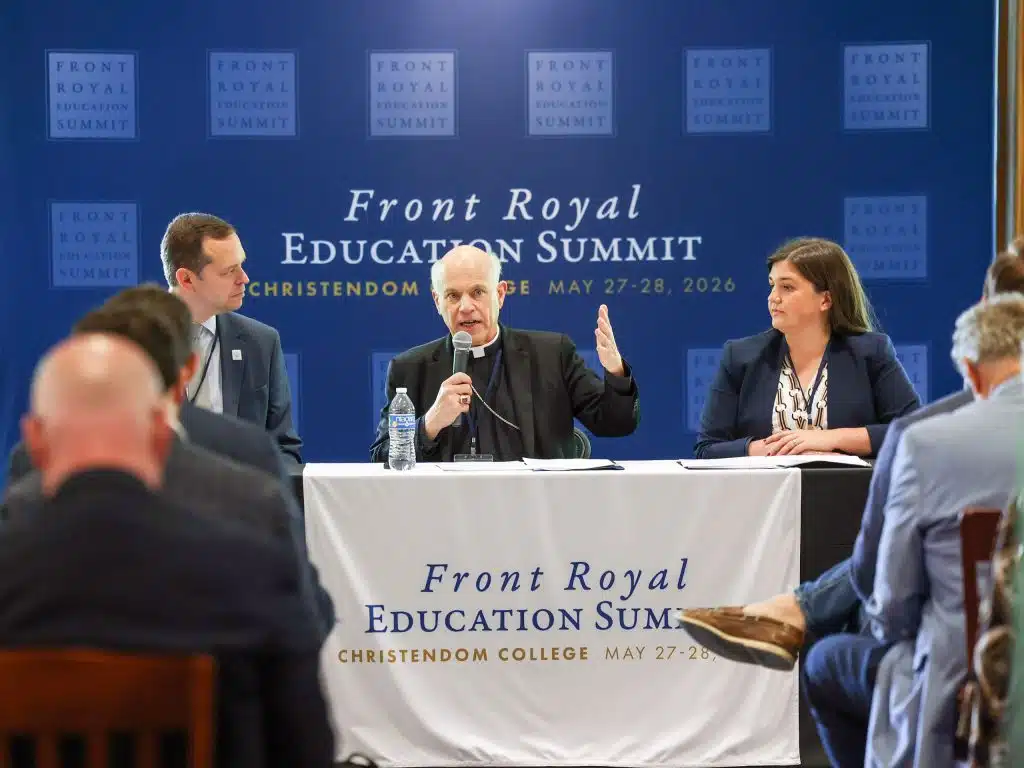
So, what does the Catholic Church teach about angels? Father James R. Joseph, parochial vicar of St. Leo the Great Church in Fairfax, and Christendom College theology professor Hugh O’Donnell have some answers.
What is an angel?
An angel is an “immaterial, incorporeal and incorruptible … spirit that’s made in the image of God,” O’Donnell said. The word “angel” “speaks to their office or their function.” According to the Catechism of the Catholic Church, “As purely spiritual creatures angels have intelligence and will: they are personal and immortal creatures, surpassing in perfection all visible creatures, as the splendor of their glory bears witness.” (CCC 330)
Since angels exist outside of time, they experience reality differently from humans, according to Father Joseph. They “forever look on the face of God” and have “infused knowledge” that God granted them at the moment of their existence, meaning “they don’t have to learn it over time.”
The only way humans know about the angels is through divine revelation in Scripture, according to Father Joseph.
Can angels interact with people?
While they are pure spirits, “angels can interact with the world,” O’Donnell said. “It’s the exercise of angelic power in a certain place.”
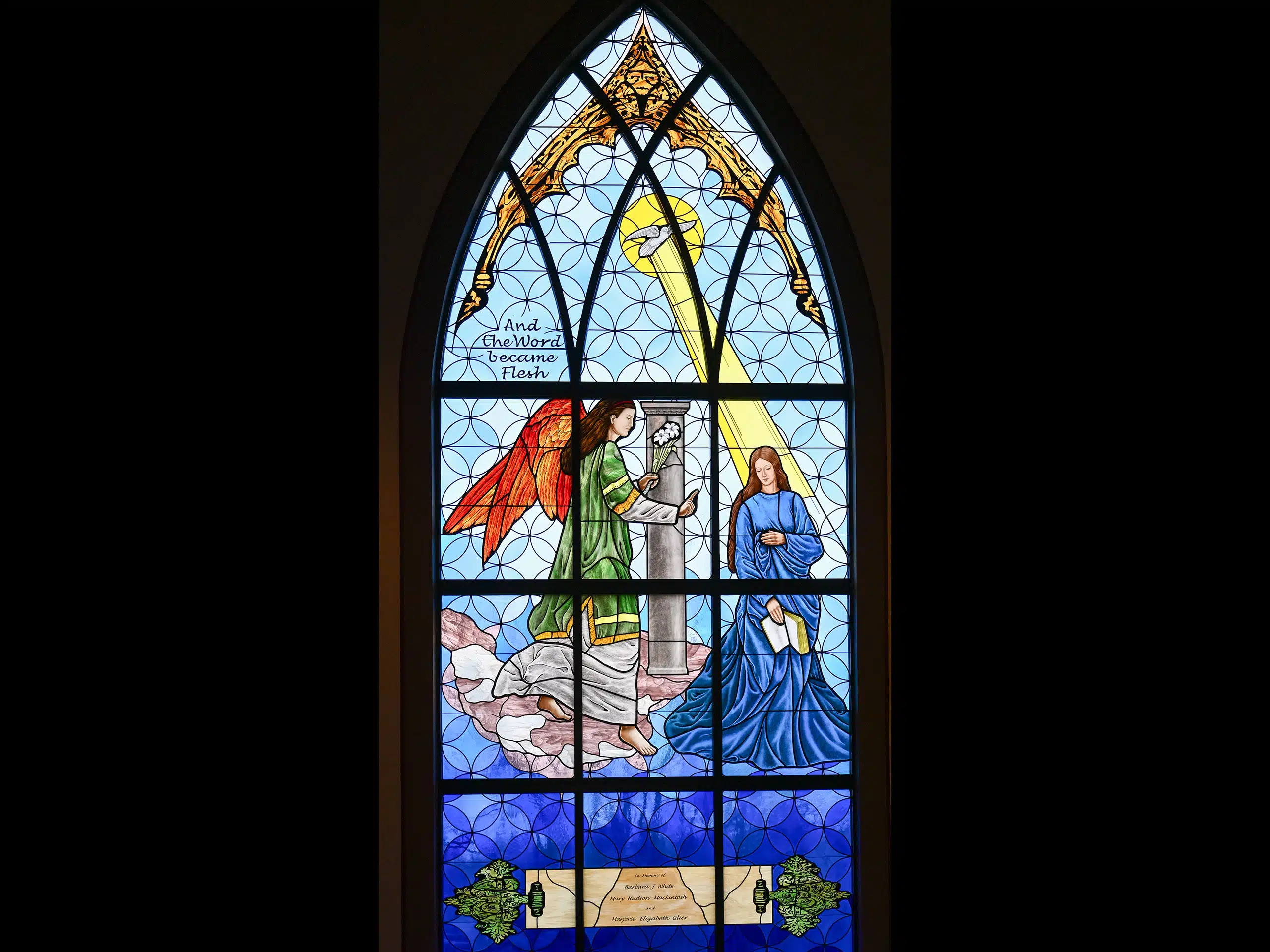
Angelic appearances occur throughout the Bible. In the New Testament, the archangel Gabriel appears to Mary in Luke’s Gospel, and two angels greet Mary Magdalene at the tomb in John 20. Angels in the Old Testament include the archangel Rafael, who guides Tobit on a journey, and even the archangels Gabriel and Michael in Daniel 10, Father Joseph said.
How can angels appear to humans if they are pure spirits? “Angels don’t have natural bodies, but they do have what are called ‘assumed bodies,’ ” O’Donnell said. While the angel may appear to have a body, the body lacks vital human functions such as eating.
What are the different types of angels?
Writers throughout church history — including Sts. Irenaeus, Ambrose and Cyril of Jerusalem — have long pointed to nine names of angels in sacred Scripture. It wasn’t until the sixth century when a writer under the pen name Dionysius organized the nine choirs of angels into three categories: contemplative, governing, and ministering spirits.
Contemplative angels “are the ones who are very close to God,” O’Donnell said. The contemplative choirs include the seraphim, the cherubim and thrones. Governing spirits “run the cosmos,” and include dominions, who receive orders; virtues, who carry out the orders; and the powers, who fight “any demonic interference with God’s plans for the cosmos.” The third hierarchy is the ministering spirits, “the ones that are closest to humanity.” Of the angels within the ministering spirits, principalities govern cities and nations, archangels relay revelations from God to humans, and guardian angels protect each human being.
“It’s not definitive doctrine that there are nine choirs,” O’Donnell said. Rather, the hierarchy is “something that’s been taken up in the theological tradition.”
What are some misconceptions about angels?
Perhaps to the dismay of some, angels do not have wings. “If you tell kids that angels don’t have wings, they get really upset,” O’Donnell said. “They don’t have wings, they don’t have long, flowing, golden hair,” Father Joseph added. And don’t even think about the Renaissance cherubs. “They’re powerful, intelligent creatures,” he said.
Another misinterpretation is taking Biblical descriptions of angels too literally. “Another big mistake, though — and you find this on the internet — is depicting angels as they’re described in Revelation, like angels as animals with wings or a wheel with eyes,” O’Donnell said. “Don’t take this at face value.” Instead, Scriptural depictions of angels are meant to describe angels’ attributes.
One beloved Christmas film spreads a common misconception. “Around Christmastime, we watch ‘It’s a Wonderful Life,’ as we should,” Father Joseph said. “But one of the unfortunate side effects of ‘It’s a Wonderful Life,’ is that people now think that when you die, you become an angel, which of course, you don’t.”
Can I name my guardian angel?
You should never name your guardian angel or ask your guardian angel to reveal its name. “Angels will always point you toward God, not toward themselves,” Father Joseph said.
Asking a guardian angel to reveal its name could inadvertently open a person to spiritual dangers. “If you go after that knowledge, then you’re liable to make contact with a demon, because the demon is the only one who is going to be interested in you knowing their name,” he said.
You should always foster a close relationship with your angel, O’Donnell said. “We are supposed to have a kind of intimate relationship with our guardian angel and speak with our guardian angel and let him know exactly what’s going on in our lives.”
Prayer is essential to maintaining this relationship, since angels cannot read our thoughts. “You have to, by your own free will, let your angel see and know what it is you are thinking,” Father Joseph said. Making a general examination of conscience and then asking your guardian angel for protection from temptation is a great way to start.
What are demons?
Demons, also known as “fallen angels” or “dark angels,” are angels who, through their free will, rejected God at the beginning of time. Catholic tradition holds that the fallen angels chose to follow Lucifer, who was once the highest of the angels but fell because of the sin of pride and envy, according to O’Donnell.
Two passages from Scripture refer to the fall of Lucifer, including Isaiah 14 and Ezekiel 28. “The demons are in hell, not because it’s their kingdom … but they went there by choice, because they don’t want to be close to God,” Father Joseph said.
Demons still have their powers of natural knowledge and some knowledge of revelation, but they have ultimately been deprived of the gifts of supernatural light, virtue and grace. Since they cannot harm God or the angels, they instead tempt humanity. But do not blame demons for every evil thought, word or deed, according to Father Joseph. “It’s not always a demon causing people to do bad things. It’s not always a demon causing your bad thoughts or bad actions. Sometimes, it’s just you,” he said.
While the thought of demons can be frightening, we have a powerful protector at our sides, according to O’Donnell: “We have a guardian angel who’s there to help us.”