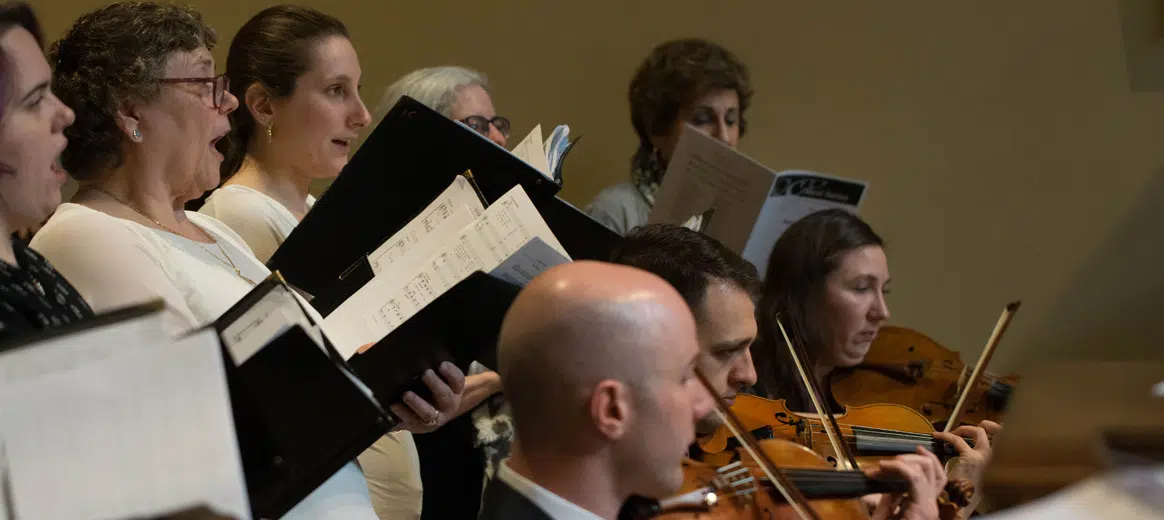
‘Tis the season of endless “Christmas music” — on the radio, in elevators and over loudspeakers at grocery stores and shopping malls. But not all Christmas music is sacred music — the kind that will be featured at a concert of sacred music for Advent and Christmas Dec. 4 at the Cathedral of St. Thomas More in Arlington.
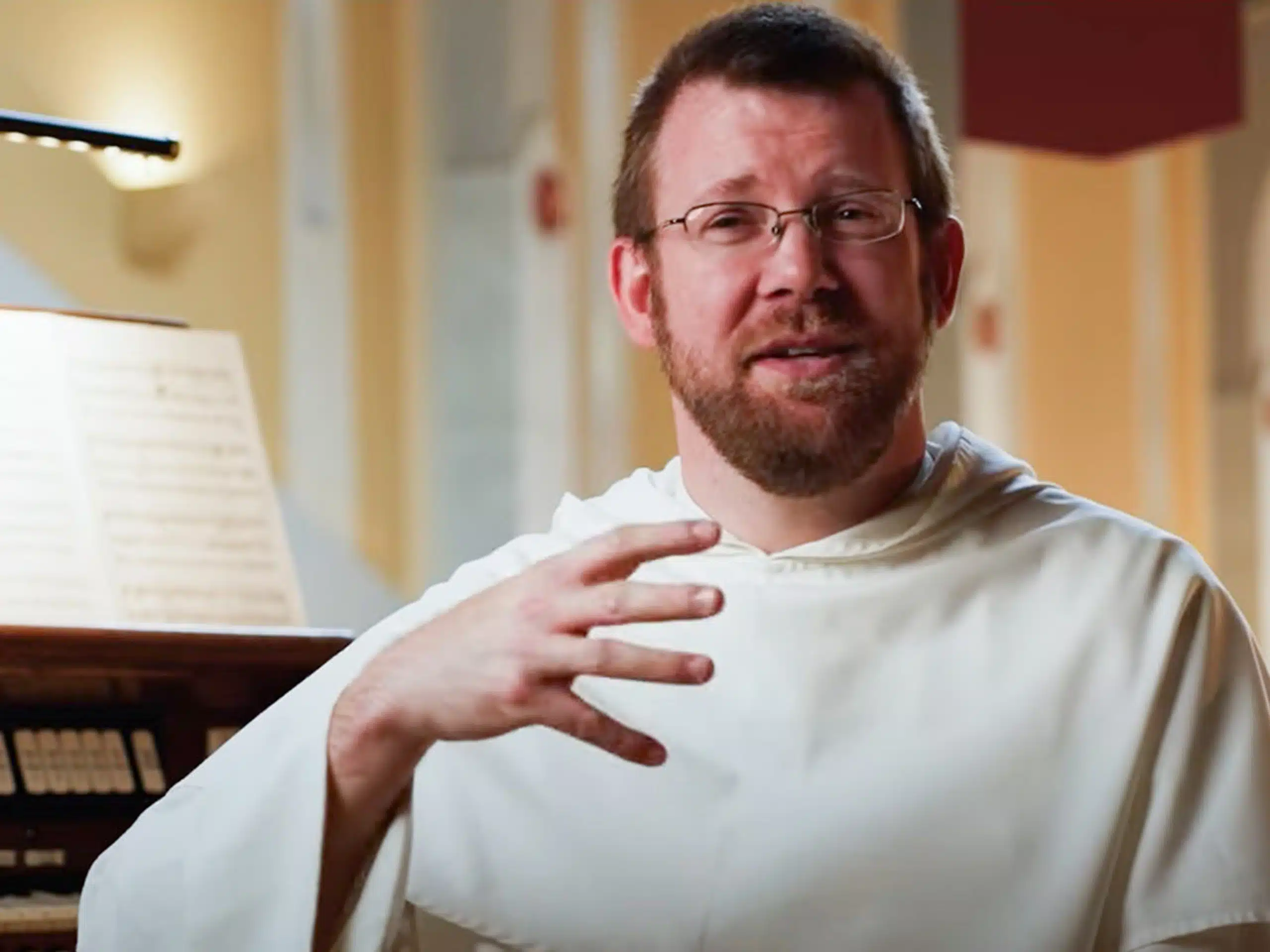
In the past, the cathedral, like most parishes, has offered Lessons and Carols during Advent, with hymns interspersed with Scripture readings. But this year, the program will be all singing, said Father Vincent Ferrar Bagan, a Dominican priest and the new music director for the Cathedral and the diocese. The focus will be on Advent, but since it’s a concert rather than a liturgy, some Christmas music will be included as well.
“We avoid doing Christmas music in liturgy until Christmas itself,” he said. For Catholics, that’s when Advent concludes and the Christmas season begins. Christmas music continues in church until Jan. 9, the feast of the Baptism of the Lord. “The secular world is all Christmased out by Dec. 25,” he said.
So what separates the music you hear in the pew from what’s playing in your dentist’s office?
The term sacred music refers primarily to music set apart for use in the liturgy of the church. But what sets it apart from other Christmas music is a variety of overlapping factors, “like the circles of a Venn diagram,” he said. “It’s not so much an absolute distinction as a matter of degree.”
The first difference between sacred music and secular holiday fare, he said, is the words or text of the songs. In sacred music, the words “are about God and sacred things.” But the musical style also is a factor; it should not call to mind the secular. If the text is taken from Scripture, for example, a piece can be “more sacred because of its text, but if it’s musically more like a Broadway musical, then that’s a strike against it,” he said. The style of liturgical music typically “has a certain sobriety,” he added.
The origin of the music also is important. For example, “there is something musically about Gregorian chant, with voices in unison singing a sacred text,” that makes it “eminently fitting for the liturgy,” he said. “There is a unity of the sound, and it doesn’t have a regular beat, so it seems to be ethereal. It lifts our minds up,” he said. “A regular beat wouldn’t be associated as churchy.” Also, chant was developed for liturgy and has a long history of use in worship. “You wouldn’t associate it with anything other than the liturgy,” he said.
He also makes a distinction between sacred music and other religious music, such as some original Christmas songs by popular Christian artists. The songs might be prayerful and deeply religious, but emphasize individual devotion, rather than the worship of a church community. “Music for liturgy tends to be more corporate and theological in its expression,” he said. Sacred music is intended to “bring the emotions along so the whole person can be united in worshipping God, because music has that effect of connecting emotions and the sacred text.”
He points to the Second Vatican Council’s Constitution on the Sacred Liturgy, “Sacrosanctum Concilium,” which notes that sacred music “is to be considered the more holy in proportion as it is more closely connected with the liturgical action, whether it adds delight to prayer, fosters unity of minds, or confers greater solemnity upon the sacred rites. But the (Catholic) Church approves of all forms of true art having the needed qualities, and admits them into divine worship.”
Father Bagan said everything planned for the Cathedral concert would be appropriate for use in liturgy — but not all the pieces are ancient church music. Some are by contemporary artists, such as “In Silent Night,” by Mitchell B. Southall, a contemporary African American composer. “The chords are a little jazzier, but it is very legato in its rhythm, slow and smooth, and still works well in a sacred context. There is nothing that would cause you to think you‘re in a jazz club,” he said.
Other parish music directors around the diocese agree that sacred music needs to remain distinct from secular music, especially at this time of year, when secular Christmas music abounds, with both seasonal and religious themes.
“It’s not just about religious feelings,” said David Elliott, director of music at the Basilica of St. Mary in Alexandria. “The word sacred means ‘to be set apart’ — set apart for the worship of God,” he said. The basilica plans a Lessons and Carols service Dec. 18 at 7 p.m., which also will include the work of a contemporary artist, the Estonian composer Arvo Pärt. “One of the incredible things about being part of the Catholic tradition is the vast repertoire of music there is to draw from,” Elliott said.
Elisabeth Turco, music director at St. Raymond of Peñafort Church in Springfield, agrees that sacred music is intended to “ignite prayer and spirituality, and the text has to be proper, not touching on the commercial part of Christmas.”
But she doesn’t want to discount the role of popular Christmas music as an important part of the season’s overall mood and atmosphere.
“We should not deny the value of ‘Jingle Bells’ as part of a loving, beautiful season,” she said. “Sacred music is for churches and liturgies, but the rest is a lovely part of Christmas as well. It’s about love and family and giving gifts — it’s all positive.”
Find out more
The free concert of sacred music for Advent and Christmas will be Dec. 4 at 4 p.m. at the Cathedral of St. Thomas More in Arlington.