


“Remember that you are dust, and to dust you shall return.” Each Ash Wednesday, priests pray these words while tracing the sign of the cross with palm ashes on Catholics’ foreheads. But just how we return to dust may vary.
Modern technology has developed new methods of treating human remains, many of which are incompatible with church teaching, such as “human composting” or alkaline hydrolysis, also known as water cremation. But why is the method of burial so important? The Catechism of the Catholic Church emphasizes a respect for the dignity of the human body, even after death: “In death, the separation of the soul from the body, the human body decays and the soul goes to meet God, while awaiting its reunion with its glorified body.” (CCC 997)
“What’s essential to keep in mind is that the body will rise on the last day,” said Father Paul D. Scalia, episcopal vicar for clergy. “Even in death, the body maintains a dignity that we want to be conscious of, which is why, although the church permits cremation, the scattering of ashes is not permitted.”
The Catholic Church permits cremation while expressing a preference for a traditional burial. In 21st-century America, cremation is presented as a more affordable option compared to a casket burial, which typically involves extensive preparation of the body, a lined wooden and metal casket, and a concrete vault. If the deceased has chosen cremation, the church encourages that cremation take place after the funeral Mass. The church forbids the scattering of ashes or preserving ashes in jewelry or other mementos.
As cremation becomes more common, parishes are constructing or expanding columbariums to house the cremated remains of parishioners. Several include St. Mark Church in Vienna, St. Mary of Sorrows Church in Fairfax, the Basilica of St. Mary in Alexandria, and St. Anthony of Padua Church in Falls Church. Larger cemeteries commonly used by diocesan Catholics include Fairfax Memorial Park, Blessed Trinity Cemetery in King George, the Basilica of St. Mary Cemetery, St. Mary of Sorrows Cemetery and Sacred Heart Cemetery in Winchester.
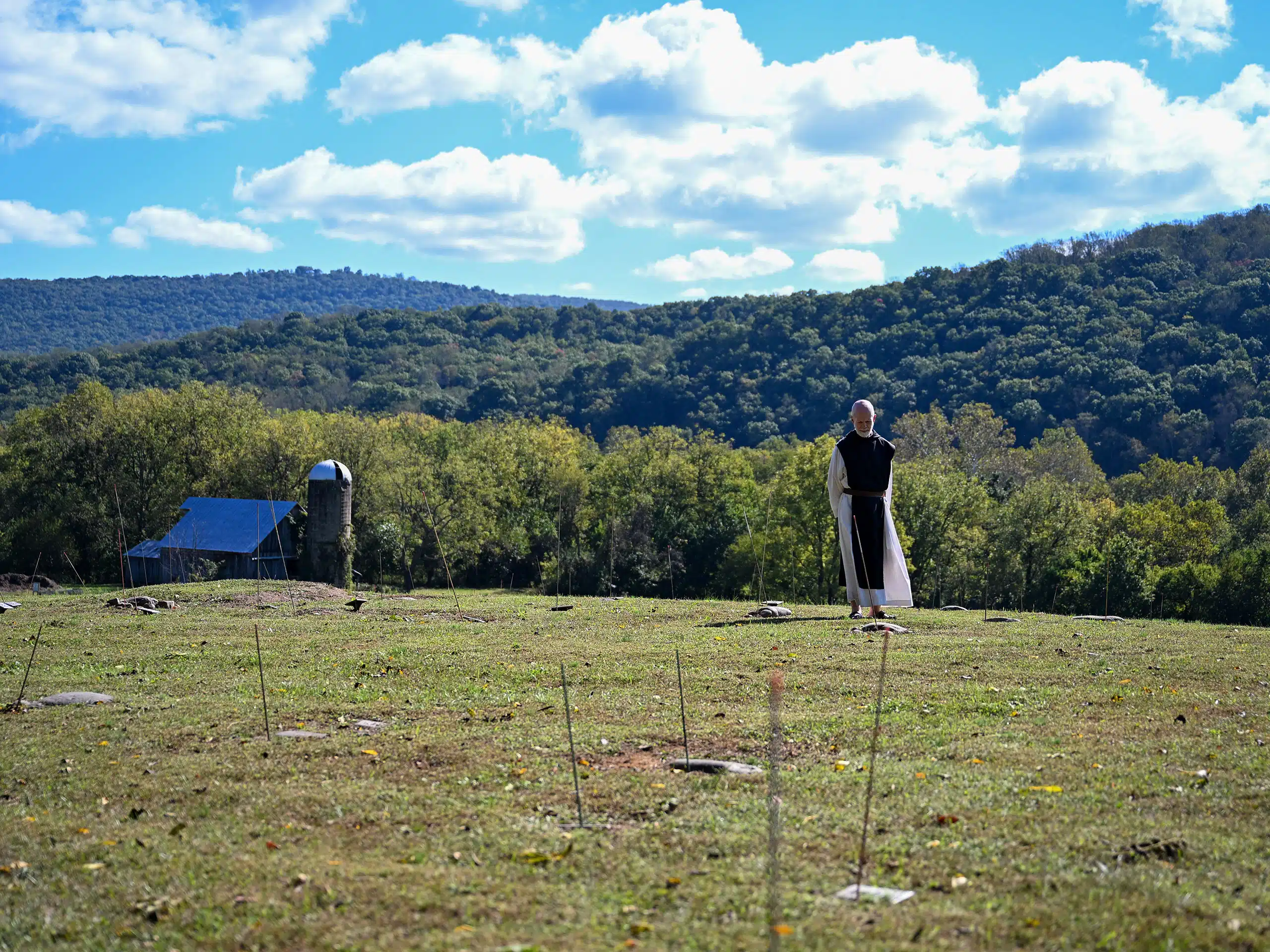
For a more eco-friendly method of burial, the Trappist monks at Holy Cross Abbey in Berryville practice the traditional form of “natural burial” at the abbey’s Cool Spring Natural Cemetery. Natural burial is “an attempt to minimize the impact of burials on the environment,” in which the body is buried in a simple wooden coffin, according to Abbot Joseph Wittstock.
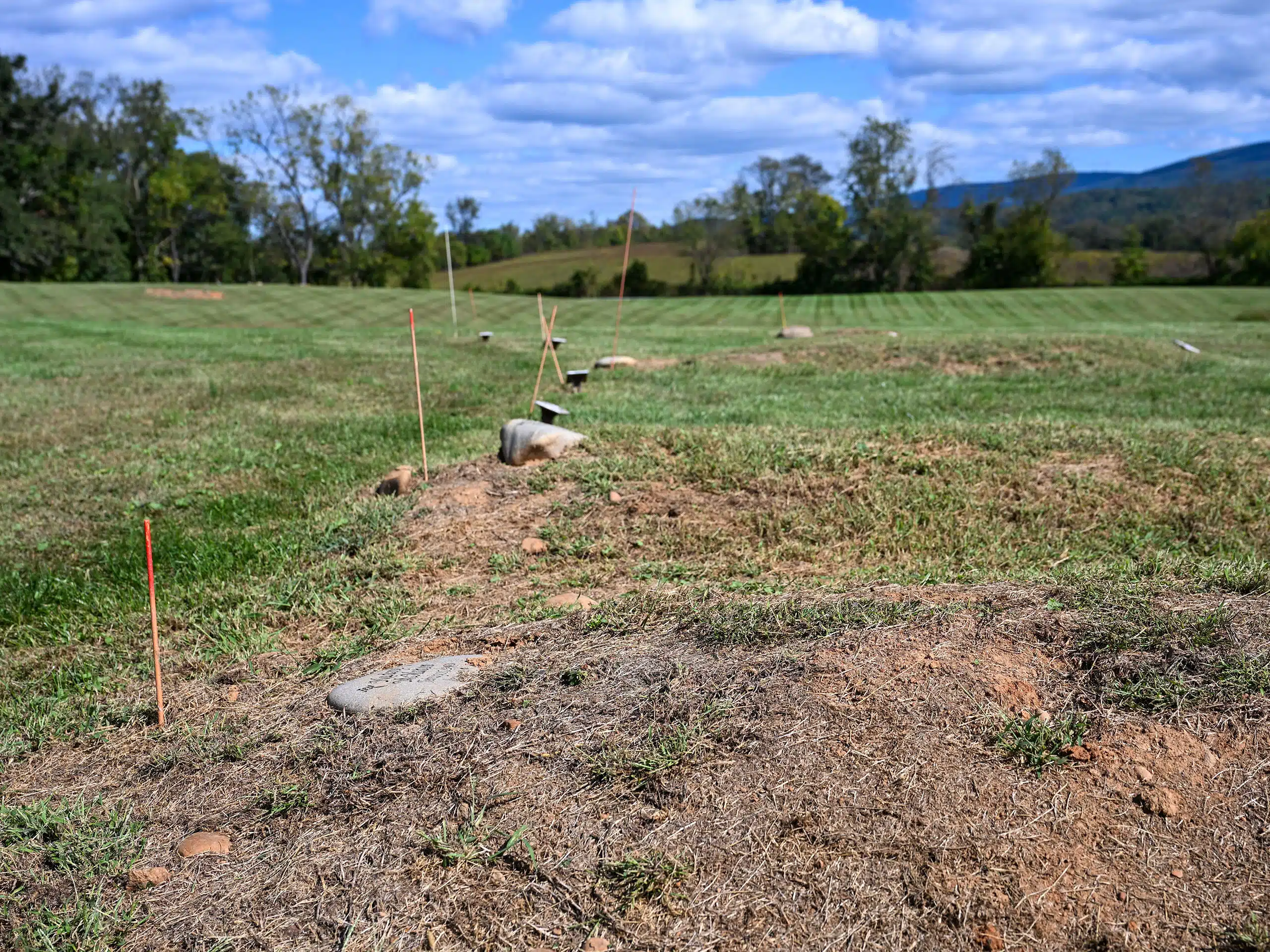
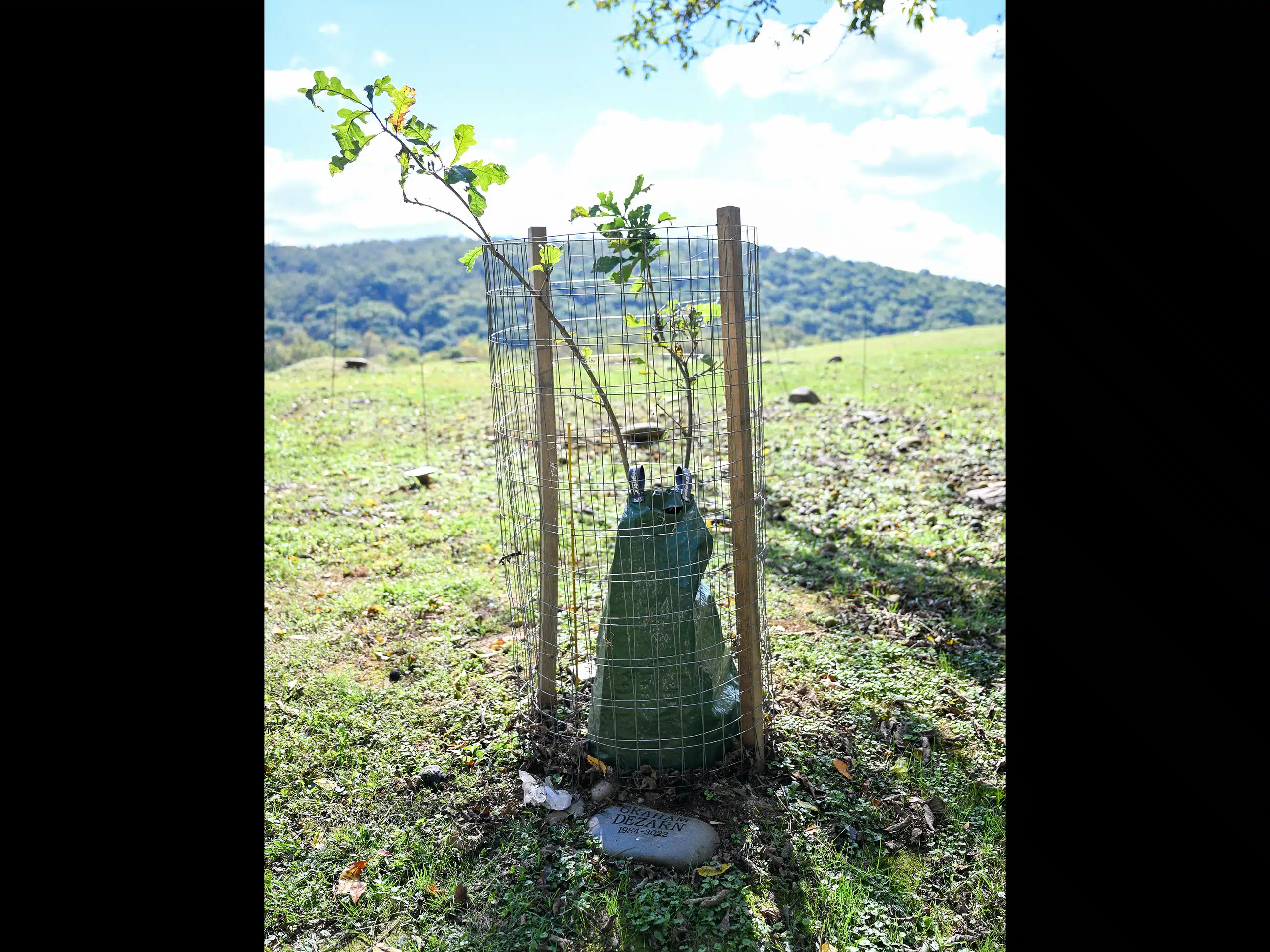
Natural burial at Cool Spring requires several rules. The body may not be embalmed, and the casket must be made of a natural material, such as pine or wicker, with no metal parts. The deceased may also be wrapped in a simple shroud. If the deceased has chosen cremation, the cremated remains may be buried in a smaller plot. Natural burial does not involve a concrete vault, Abbot Wittstock said: “The ground is simply the ground.”
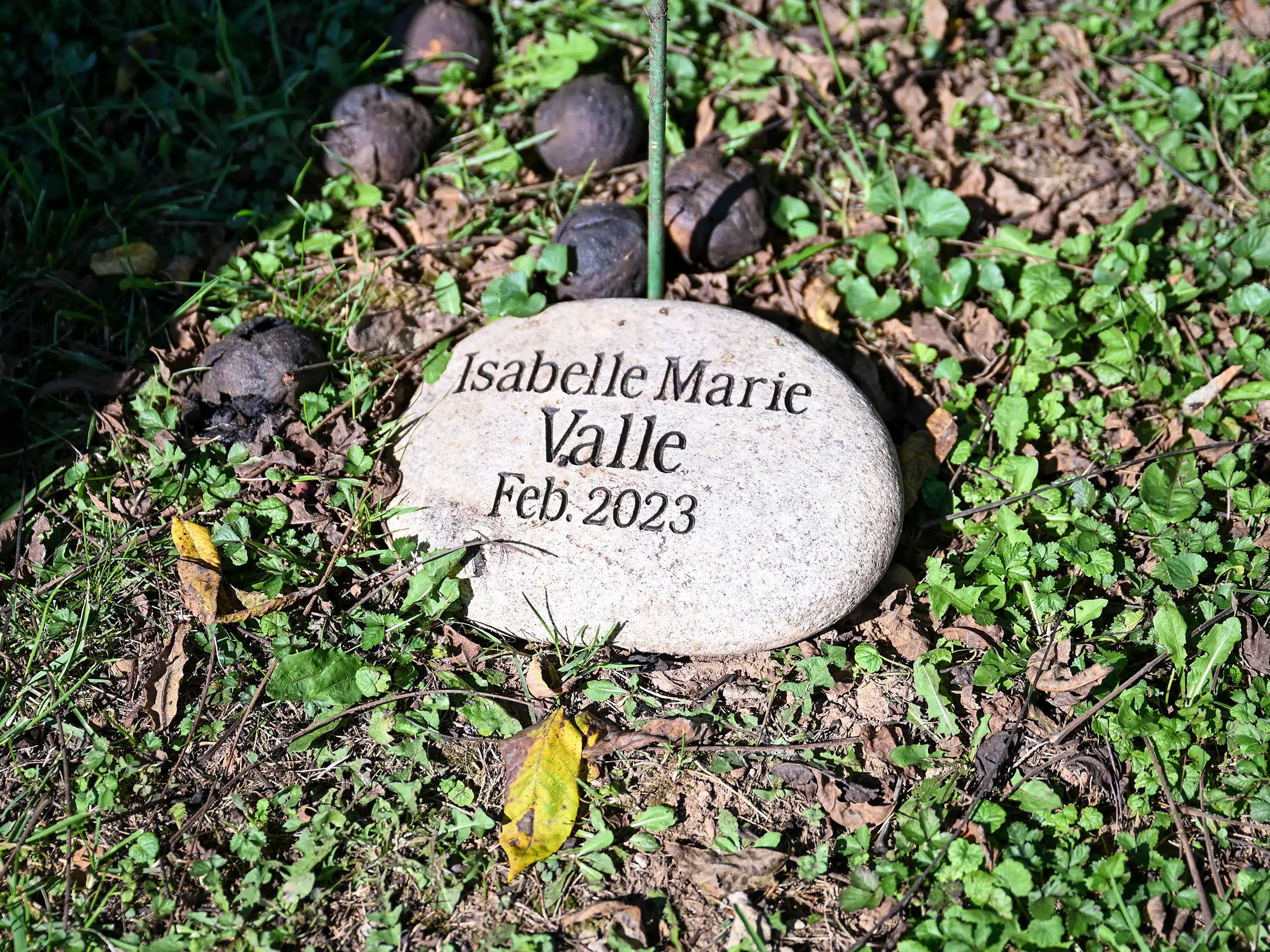
Instead of an elaborate headstone, the deceased may choose to have a simple river stone engraved with their name, birth and death date. These stones are harvested straight from the neighboring Shenandoah River or the surrounding woods. Decorating the headstones with flags, flowers or other objects is prohibited.
Abbot Wittstock notes that the simple headstones blend with the rolling hills and woodland: “The cemetery doesn’t look like your typical one.” At the cemetery, a peaceful silence envelops the hills, broken only by the distant abbey bell tolling the hour, the Shenandoah River babbling nearby, and blue jays calling from the woods. “People are just struck by the peace of the place, not just the environment, but I suspect also because of the monastic setting,” Abbot Wittstock said.
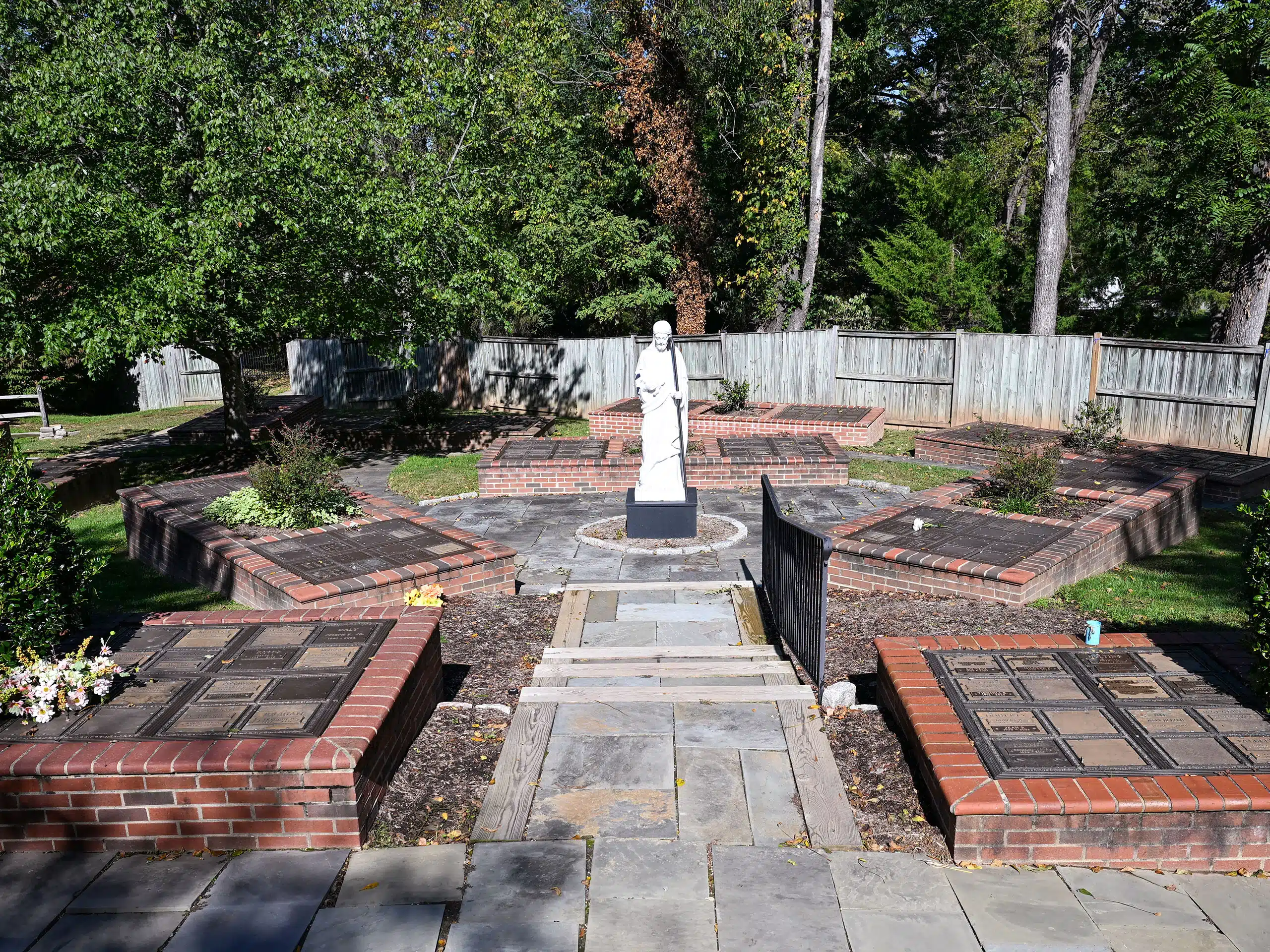
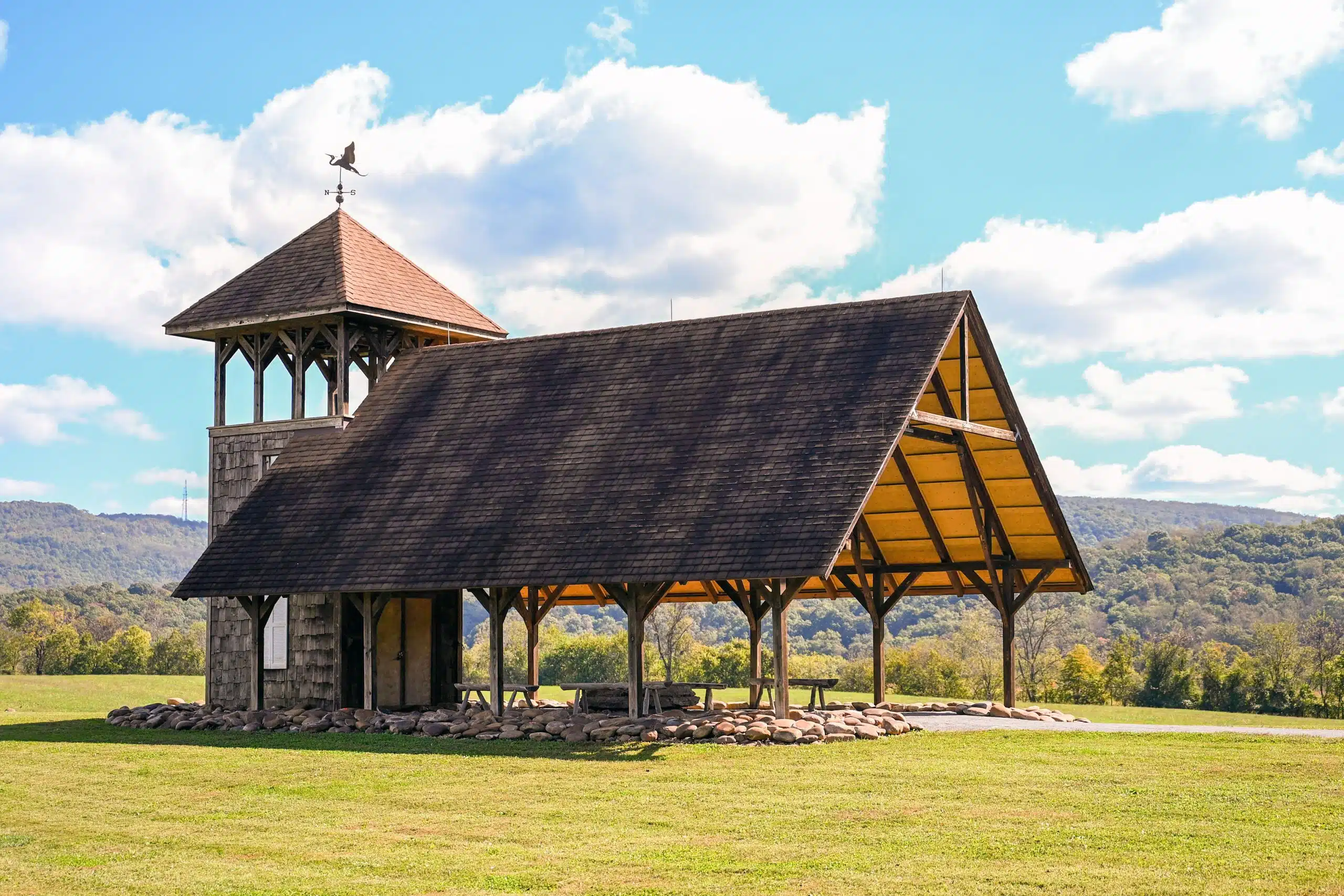
Established in 2012, the Cool Spring Natural Cemetery occupies 44 acres at the abbey and features three burial sites: the Circle of Silence by a pavilion chapel, the shady and secluded Woodland Rest, and the Blue Ridge Meadow adjacent to the river. A small corner of the woods by the meadow even serves as a section for deceased babies and children. Some 570 deceased have been buried in the cemetery, with dozens of other burial sites already selected by the living. While people of all faiths may be buried in the cemetery, the majority are Catholic.
Abbot Wittstock described natural burial as “countercultural” because of its simplicity. “The other dimension of it that is countercultural, not intended, is that those who come, especially young people, are less resistant to facing the reality of death.
“St. Benedict says, ‘Have death before you every day,’ ” he added. “It’s approaching this reality that we all have to face in a way that’s perhaps not the way normal culture looks at it.”
Find out more
For more information on Cool Spring Natural Cemetery, go to virginiatrappists.org/cemetery.
For a list of parish cemeteries and columbariums, go to bit.ly/4nTCAev.