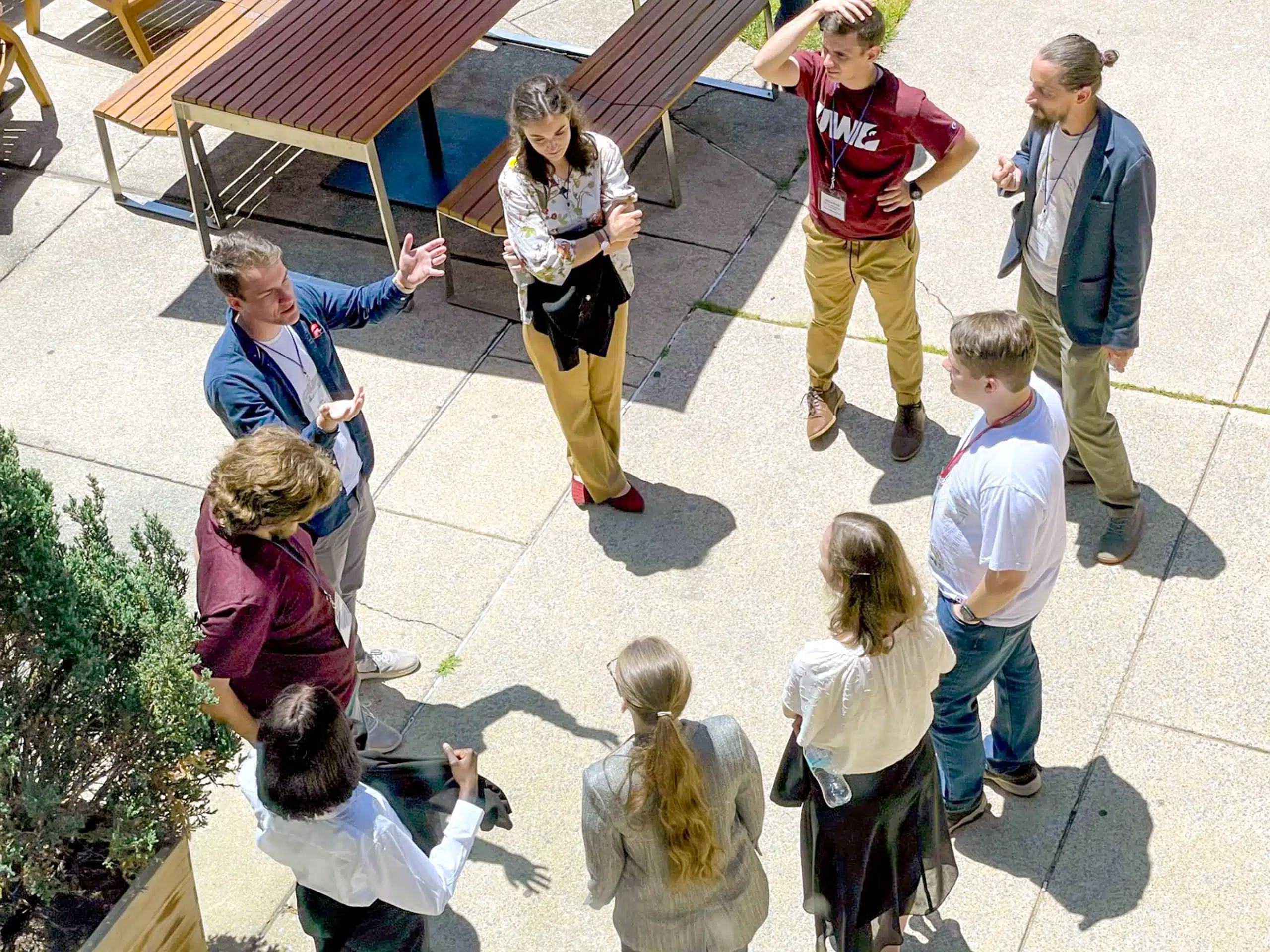

More than 160 Catholic scientists, students, and religious gathered June 6–8 at The Catholic University of America in Washington, for the annual meeting of the Society of Catholic Scientists.
The conference offered a space to explore the unity of faith and reason by bringing together those who see their work in science and technology fields as deeply compatible with their Catholic faith.
This year’s program featured talks on neuroscience, evolutionary biology, astrophysics, and even the scientific investigation of Eucharistic miracles. Many participants also presented posters focused on their own scientific work.
One highlight was a lecture by Sr. Małgorzata Pagacz of Cardinal Stefan Wyszyński University in Poland, who explored how the papacies of St. John Paul II and Benedict XVI understood the scientific vocation. She emphasized that Catholic scientists are called to transcend themselves in the pursuit of truth, serving thought itself through intellectual love and mercy.
“We don’t check our Catholicism at the lab door,” she said. Both popes, she noted, called for a new evangelization in which scientists are called to be witnesses to the harmony of faith and reason.
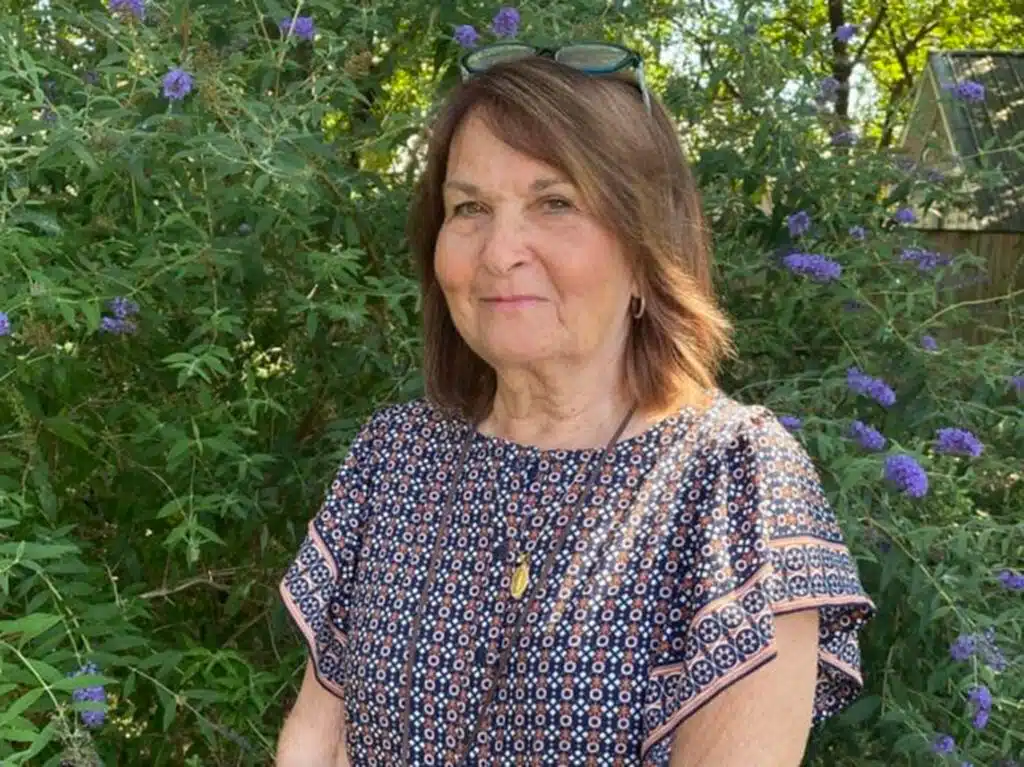
That message resonated with Francine Fernandes, a rising sophomore at Catholic U. studying biology and pre-med. Active in campus service and outreach programs such as the Global Medical Brigades, she described the conference as “giving me the ability to express my faith without limits.” Though initially nervous to present a poster at the conference, Fernandes found the environment welcoming and uplifting. “My spirituality has grown due to the sense of community I’ve felt,” she said, adding that she was especially moved and inspired by the idea that science itself can be an act of “intellectual mercy.”
Three scholars — Kenneth Kemp, a professor emeritus of philosophy at the University of St. Thomas in St. Paul, Minn.; Daniel Kuebler, a professor of biology at Franciscan University in Steubenville, Ohio; and Chris Baglow, a professor of theology at the University of Notre Dame in Indiana — gave talks on the compatibility of evolution and Catholic Church teachings.
Organizers expressed hope that future gatherings will draw broader participation from Northern Virginia’s vibrant academic and professional science communities as word spreads and the Society of Catholic Scientists continues to grow. The Arlington diocese is home to Marymount University in Arlington; Christendom College in Front Royal; and active Catholic Campus Ministries at George Mason University in Fairfax, the University of Mary Washington in Fredericksburg, and Shenandoah University in Winchester. Many Catholic scientists working in federal agencies and technology firms also call Virginia home.
In a world where confusion and misunderstanding often cloud perceptions of the church’s relationship with science, the conference offered a different picture: a church alive in the minds and hearts of scientists working to serve the truth, both discovered in the lab and revealed by their faith.
Chirico holds a doctorate of philosophy, geography and environmental sciences, and is a parishioner of Our Lady of Good Counsel Church in Vienna. He can be reached at [email protected]. Catholic News Agency contributed to this story.
Find out more
Founded in 2016, the Society of Catholic Scientists has more than 2,500 members worldwide and fosters fellowship among Catholic scientists and students and to demonstrate the harmony between scientific inquiry and the Catholic intellectual tradition. To learn more visit catholicscientists.org.