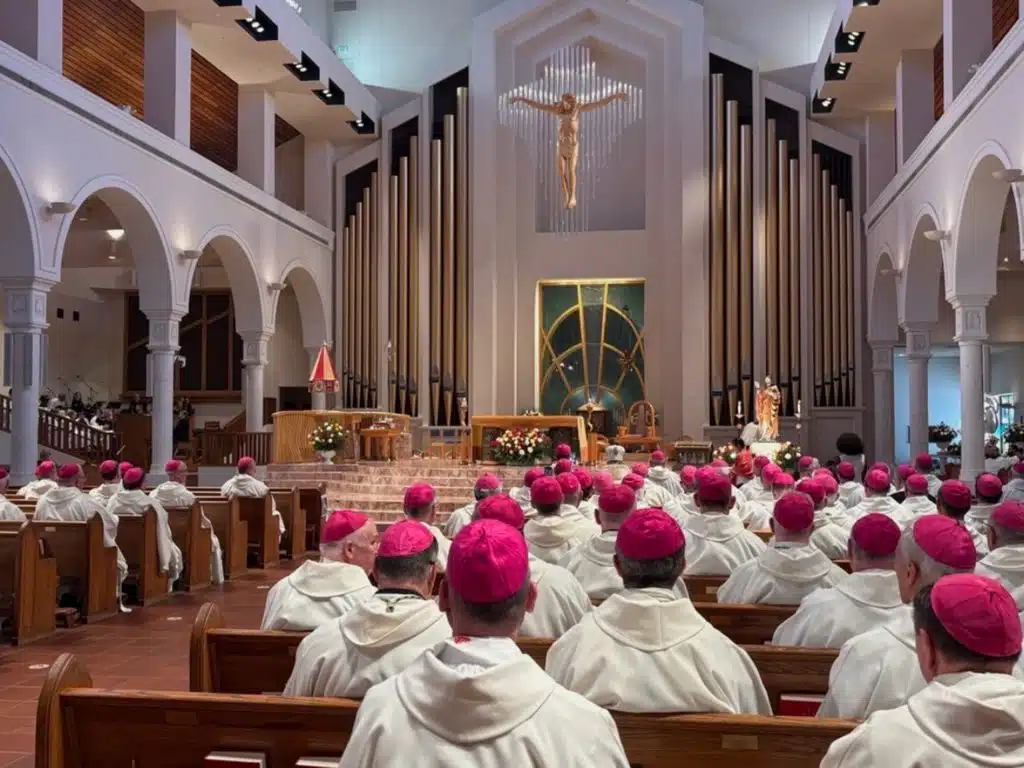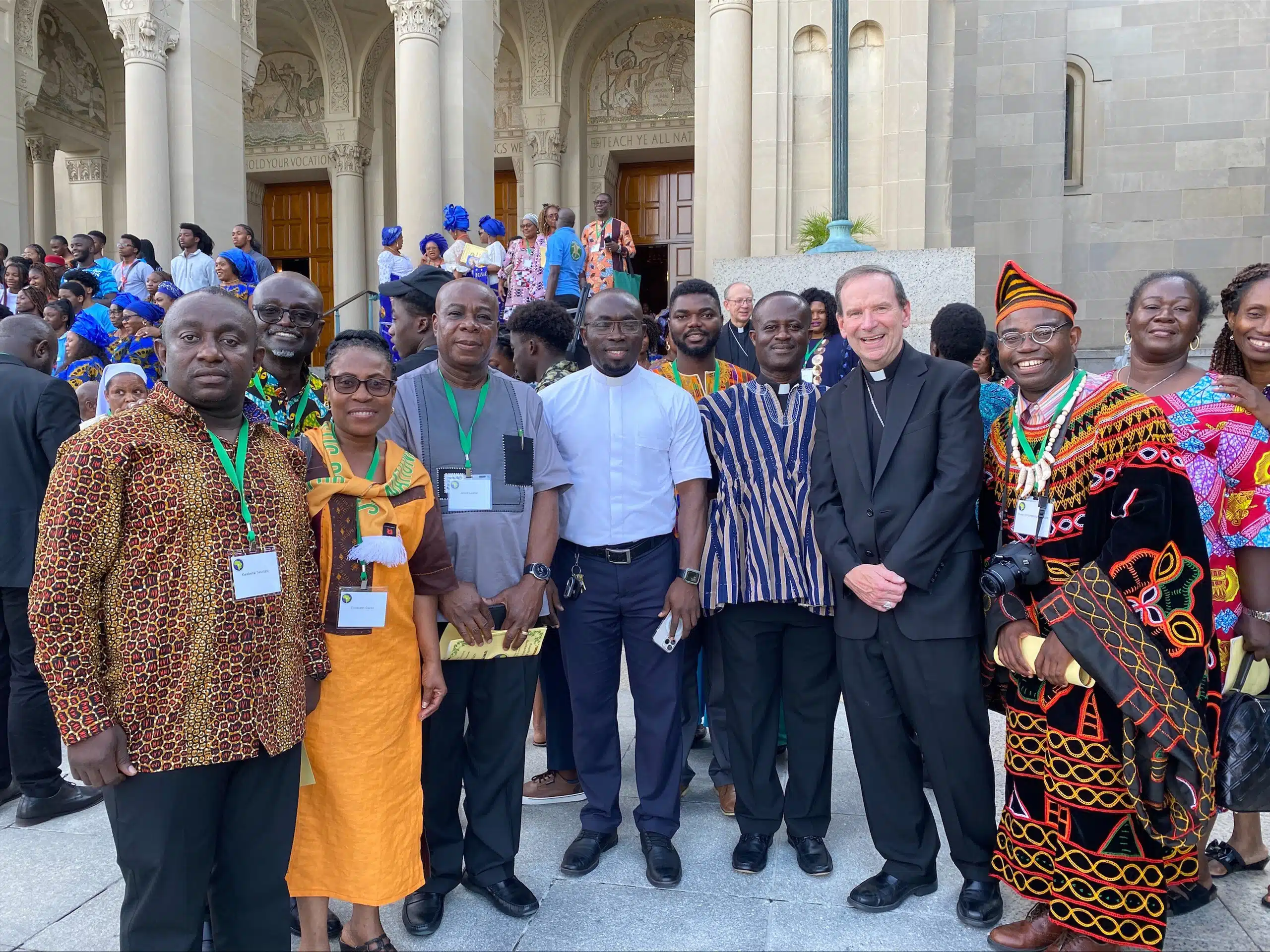
Washington Cardinal Wilton D. Gregory urged Catholics to work for justice, to care for others and to protect the environment, during his homily at the Mass for the Fourth African National Eucharistic Congress at the Basilica of the National Shrine of the Immaculate Conception in Washington July 22.
“You have come … to honor the Eucharistic Lord, which in turn will help you learn how to advocate for those people living on the margins of society more effectively, collaboratively and perhaps even more courageously,” Cardinal Gregory said. “The presence of Christ in the Eucharist today must also include a care and a concern for the natural world that we inhabit.”
Cardinal Gregory was principal celebrant of the Mass that was offered as part of the July 21-23 African National Eucharistic Congress held on the campus of The Catholic University of America in Washington.
“It is my fondest prayer and hope that you will find new and life-giving ways to invite and to inspire others in your own local communities to hear and to respond to the demands of Gospel justice,” the cardinal told those at the Mass.
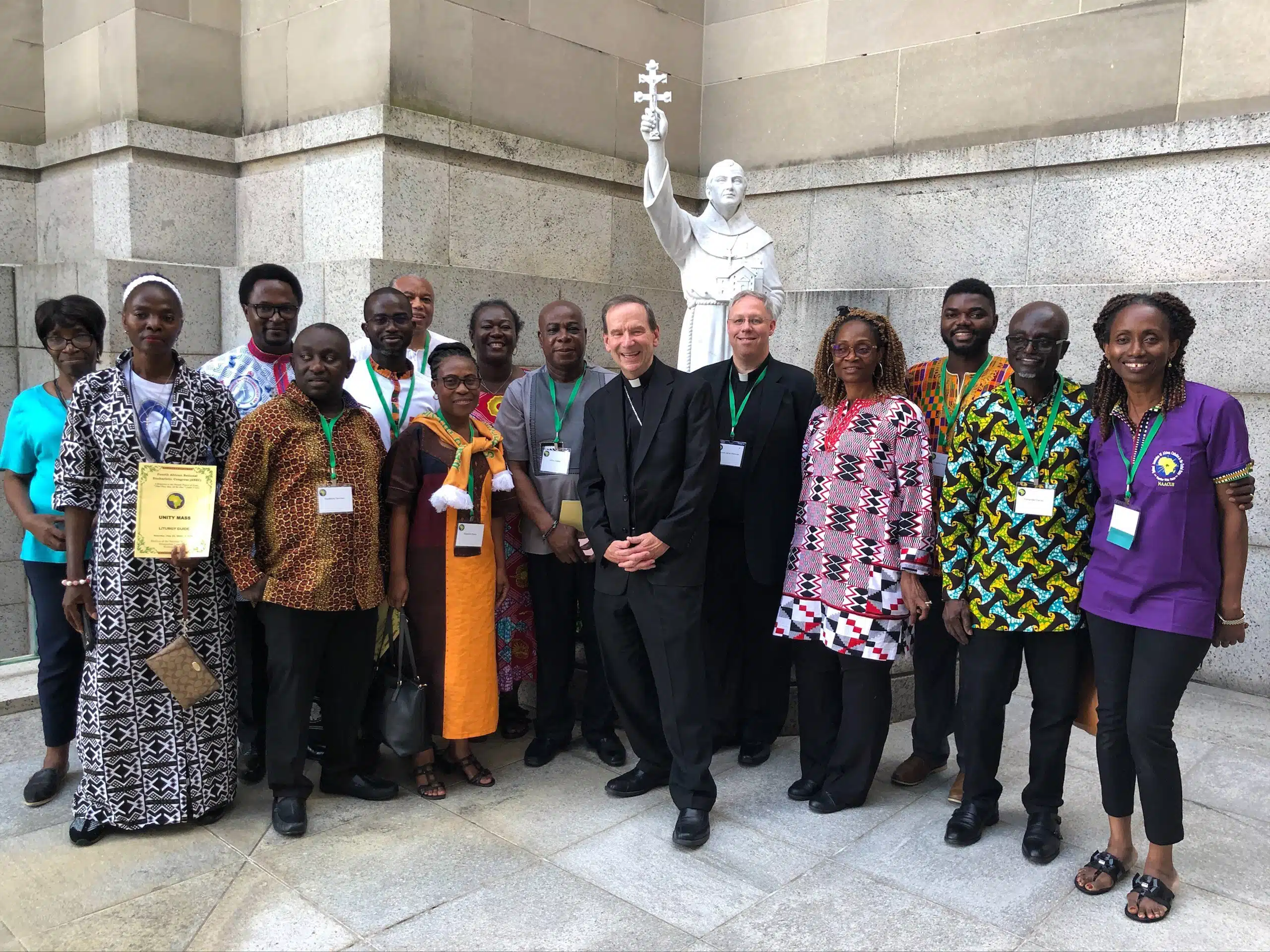
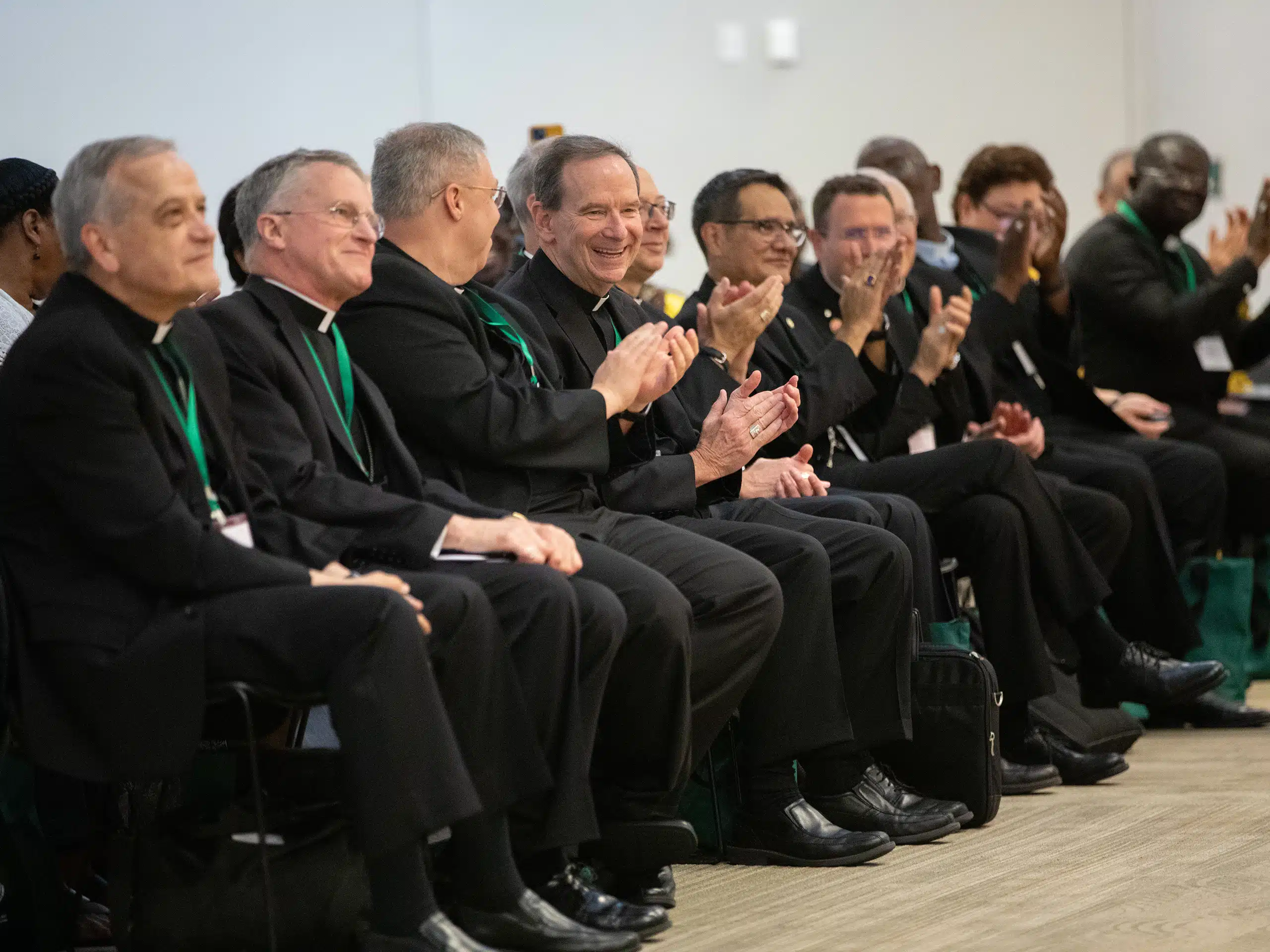
Bishop Michael F. Burbidge was among more than a dozen bishops and 100-plus priests, including Father Jamie R. Workman, diocesan vicar general, who concelebrated the two-hour Mass, which was attended by nearly 1,000 people, many in traditional African garb. The liturgy featured songs and prayers in several languages, including Swahili, Zulu, Igbo, Latin, French, Congolese and Arabic.
In his homily, Cardinal Gregory referenced the readings for the Mass in which Jesus spoke in parables and noted that “the parables of Jesus continue to inspire and to shape us to reverence his enduring presence in the life of the church.”
“No one who truly listens to the parables of Jesus and then shares in that Banquet of Life, which is the Eucharist, can fail to take to heart the mission of justice that flows from God’s Word and the Sacrificial Meal that we share,” he said.
In encouraging the faithful to care for the environment, Cardinal Gregory noted that such a concern “might not have been viewed as vital or a part of the church’s Eucharistic devotions only a generation ago — yet, it has become increasingly important within our own time.”
“The nations of the great lands of Africa hold vast natural riches which must be preserved,” Cardinal Gregory said. “We are summoned to see the environment as a common treasure and a joint inheritance that we must protect for those generations that will follow us.”
He said that in working for social justice and care for the environment, the faithful “are not mere social workers or secular environmentalists, but people of deep faith (who) routinely begin our responsibilities by listening to the words of Scripture and then sharing in the Bread of Life and the Cup of Salvation.”
“We go about our service to the poor and the neglected based upon our acceptance of Christ’s commandments and then we are nurtured by his own body and blood — using those gifts of the earth which have become the sacramental food of everlasting life,” Cardinal Gregory said.
He told those at the Mass that the African National Eucharistic Congress in which they were participating is “an important link to the Eucharistic Revival initiative of Catholics throughout the United States.” The U.S. bishops in 2022 called for a three-year Eucharistic Revival that place renewed emphasis on recognizing true presence of Jesus Christ in the Most Blessed Sacrament. It concludes next year with a National Eucharistic Congress in Indianapolis.
“Your deep faith and wondrous cultural traditions honor and inspire us as we share that One Bread that unites us in Him,” Cardinal Gregory said.
During the Mass, Cardinal Gregory also prayed that God would bless the congress’ efforts “to highlight the central importance of the Eucharist and your work always and everywhere in behalf of his kingdom.”
Many of the Eucharistic congress participants were Nigerian. One of them, Nma Rose Nnoga, arrived in the United States 44 years ago to reunite with her husband, who had come to the states to continue his studies. Having settled in Camden, N.J., to raise her family, Nnoga said she wanted to return from the congress with “peace, peace of mind, to be more open to the love of God — the love of God in the Eucharist. And, when I receive the Eucharist, to be more open that I have to share” God’s love.”
Prior to the Mass, Crookston, Minn., Bishop Andrew Cozzens — chairman of the United States Conference of Catholic Bishops’ Committee on Evangelization and Catechesis, which is spearheading the National Eucharistic Revival — led a Eucharistic procession. Congress participants carried flags, sang and prayed as they followed the Eucharist in procession from a building on the Catholic U. campus to the shrine.
Before leading the faithful, Bishop Cozzens praised participants at the congress for their “deep Eucharistic devotion,” and invited them to attend the 2024 National Eucharistic Congress in Indianapolis and encouraged them to get others to attend.
“Invite people to encounter Jesus in the Eucharist,” the bishop said, “because when they encounter Jesus in the Eucharist, they will be healed, they will be formed, they will be unified.”
Noting that many people carry pain in their hearts, Bishop Cozzens stressed that “Jesus has a human heart and He knows that pain.”
“The Eucharist is the place where we come with all our needs and burdens — the Eucharist is Jesus’s self-emptying love poured out for you,” he said.
Reprinted from the Catholic Standard in Washington with permission.