The challenge of writing a column during Coronatide is that one is never quite sure what life will look like two weeks hence. Will we still be “quarantined”? At this writing, we have been safe at home for 50 days. That means that technically we are 10 days past a quarantine. I’m quite certain no one was counting on using the strict definition of the word. What I do know as I write this morning is, no matter what, we will not have returned to “normal” when this column is published.

Captain’s log: Day 53 of the 2020 spring COVID-19 quarantine. Forty-two states still have active stay-at-home orders. The run on cleaning supplies and toilet tissue continues. Schools are teaching through e-learning; youth ministries are conducting their outreach via Zoom, Instagram Live and Facebook Live; and families and friends are keeping up on their relationships by way of various apps. Social media for the win.

In his book, “Strangers in a Strange Land: Living the Catholic Faith in a Post-Christian World,” Archbishop Charles J. Chaput cites a 2015 New York Times article by philosophy professor Justin McBrayer. His second-grade son had a homework assignment in which he had to decide whether a statement was opinion or fact, for example, “Copying homework assignments is wrong,” “Cursing in school is inappropriate behavior,” and “All men are created equal.”

Well, I’m not in Poland.
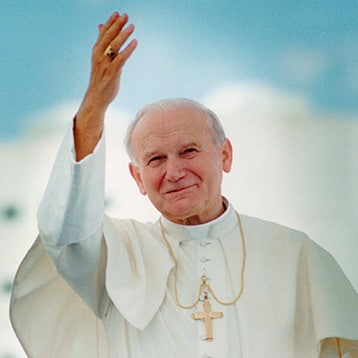
As you may recall, last winter I told you I was leading a pilgrimage to celebrate St. John Paul II’s 100th birthday in Poland. I was really excited about it. I love him, and I couldn’t imagine a better way to celebrate his centenary than to visit his homeland, walk in his footsteps and bask in everything about his life.

We live in such difficult times. For more than a century the world has not seen a global health crisis of this magnitude. So many are sick, and some don’t even know they are sick, many are in the hospital and so many have died — often alone, without family members to comfort them. The future is so uncertain. When, if ever, will things get back to normal or, as they say, “the new normal” — whatever that means.

Security. Safety. Safekeeping. The human craving for protection against harm is universal and reaches its anxiety-ridden peak in the face of an invasive threat like the coronavirus. Intensive media coverage heightens the sense of impending doom. Granting that, however, some responses to the desire for security strike me as attempts to exploit the public mood.

In my line of work, I go to a lot of restaurants, and the company often looks to me to choose something from the wine list. This is a mistake. I can't tell red from white with my eyes closed. But I look on this as a blessing, because I do like a glass of wine with dinner, and I can be satisfied with a $4 bottle.

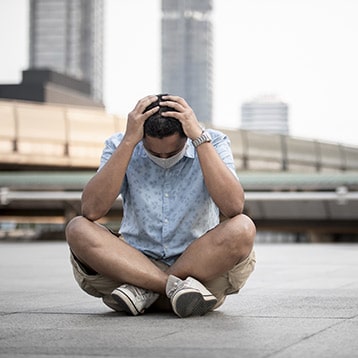
During times of great stress and crisis, such as the current COVID-19 pandemic, people can experience an increase of fear and despair. In some cases, unfortunately, the person loses a sense of hope and believes that death is preferable to continuing to live through the present hardship and tragedy. This point was sadly brought home recently when Dr. Lorna Breen, a New York doctor who had been working to save people infected with COVID-19 as the medical director of the emergency department of New York-Presbyterian Allen Hospital, took her own life while staying with family in Charlottesville.

This is a time “to choose what matters and what passes away,” we heard Pope Francis say March 27 as we gathered around a laptop in our kitchen. St. Peter’s Square was emblematic of our lives — usually so packed but now eerily quiet.


Constant presence
Trying to understand the feast of the Ascension and its importance in our lives of faith can be difficult. Today we see Christ return to heaven, out of our sight. Having finished his earthly mission, he promises he will be with us to the end of the age, and that’s that. It can seem like too neat an ending. Christ promises he’ll be in our hearts, and now it’s our job to be good Christians. Yet, if we understand the Ascension as the ancient Christians did, we find riches of meaning.