

Search Results
Is anyone else wondering how we got here? Or, more accurately, got back here? It’s like I woke up one morning and somebody had turned the clock back to 1968. Racial unrest, riots in the streets. Have we made so little progress in all this time?
Abraham Lincoln’s second inaugural address is one of the most remarkable documents in American history — a serious theological meditation by a president as well as a work of great literary art. Speaking March 4, 1865, to a deeply moved crowd just weeks before his death, Lincoln suggested that “this terrible war,” the Civil War, was God’s punishment of America for the sin of slavery.
This month we observe Religious Freedom Week, which begins every year on June 22, the memorial of Sts. John Fisher and Thomas More. Thomas More, the patron saint of our diocese, was a lawyer and governmental official who fought for the freedom of the church and for freedom of conscience. While he was a dedicated civil servant, he remained “God’s servant first.”
Not many weeks ago, the church celebrated the Ascension of Our Lord. This event might strike us as a sort of postscript to Our Lord’s earthly life: Hasn’t he accomplished our salvation through the cross and resurrection? In this article, let’s consider three ways the Ascension is significant, and let’s refer to these three ways as the salvific, the ecclesial and the eschatological significances.
Disciples of the Hearts of Jesus and Mary leave Alexandria for Woodbridge.
Bishop Bubidge blesses a newer area of Columbia Gardens Cemetery in Arlington June 12.
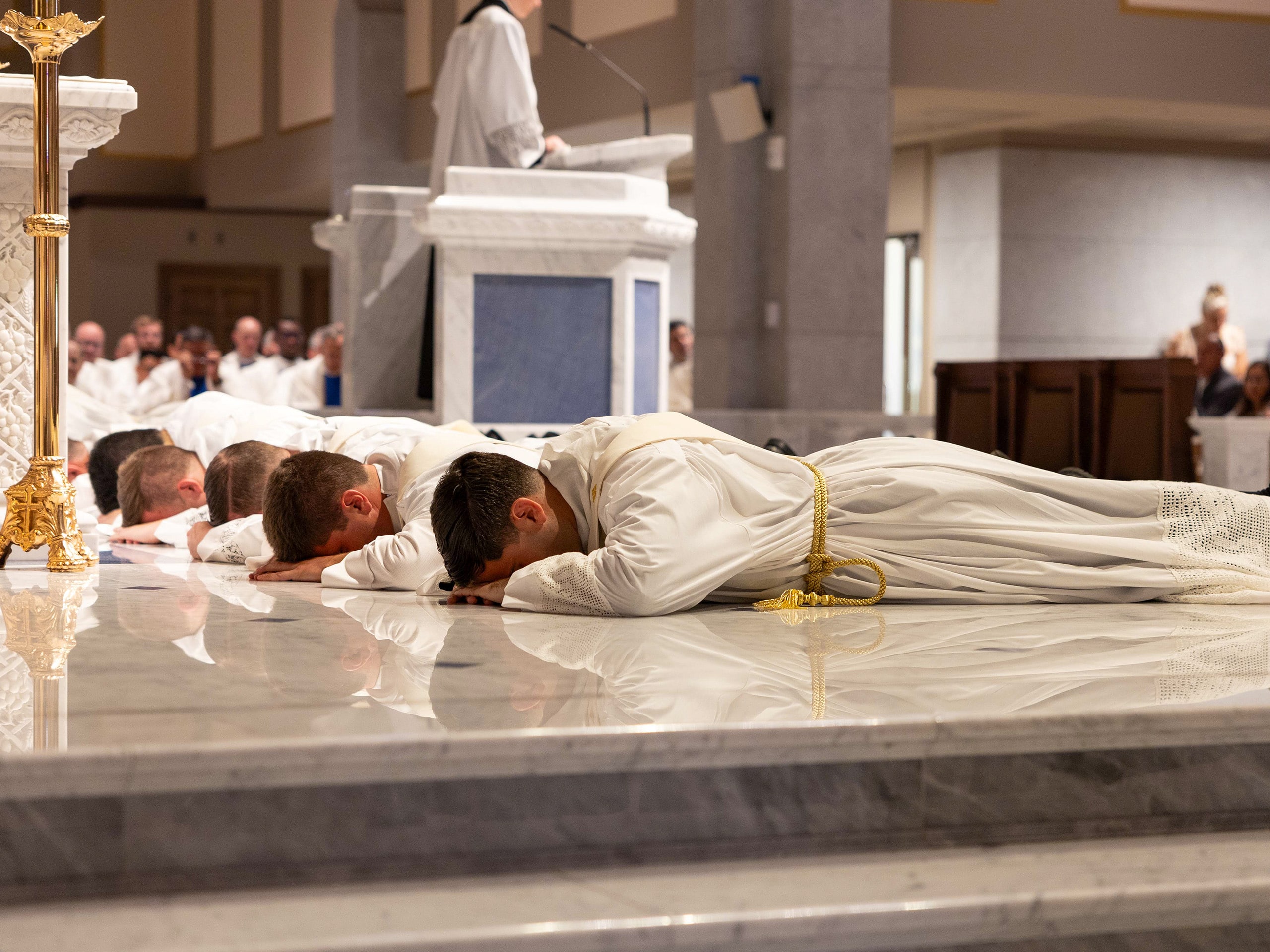
Several priests in the Diocese of Arlington are celebrating ordination jubilees.
In our Catholic tradition, we express in many ways our belief in the dignity of the human person, the sacredness of the body, the resurrection of the dead, and the importance of remembering the dead. Among the most powerful expressions are the care we give in preparing the body of a deceased person for burial, the prayers we raise up during the act of burial, and the continued respect and prayers we offer for the deceased.
The weeklong youth service camp continues from the comfort of home parishes.
A cup of water
Today, the church celebrates the 13th Sunday in ordinary time. I am not a big fan of the use of the word “ordinary” to describe this moment in the church’s liturgical year. At a minimum, it informs us that we are not in the Advent, Christmas, Lent or Easter seasons. However, during “ordinary time,” we strive to allow the profound mysteries and abundant graces of Christ which we celebrate during Christmas and Easter seasons to penetrate the depths of our hearts, heal our brokenness and empower us to live Christlike lives. There is nothing ordinary about that reality.