
What is synod? Directly translated, it means “walking with.”
Synodality is something that needs to be experienced to make sense. Glimpses of headlines on the Synod on Synodality might lead the average Catholic to believe the church is becoming a democracy with no respect for tradition. It is neither of those things. It is a major step toward the main objective of the church: to love every person in the unique way they need to be loved just as Jesus did and God the father fulfills in his omnipresence.
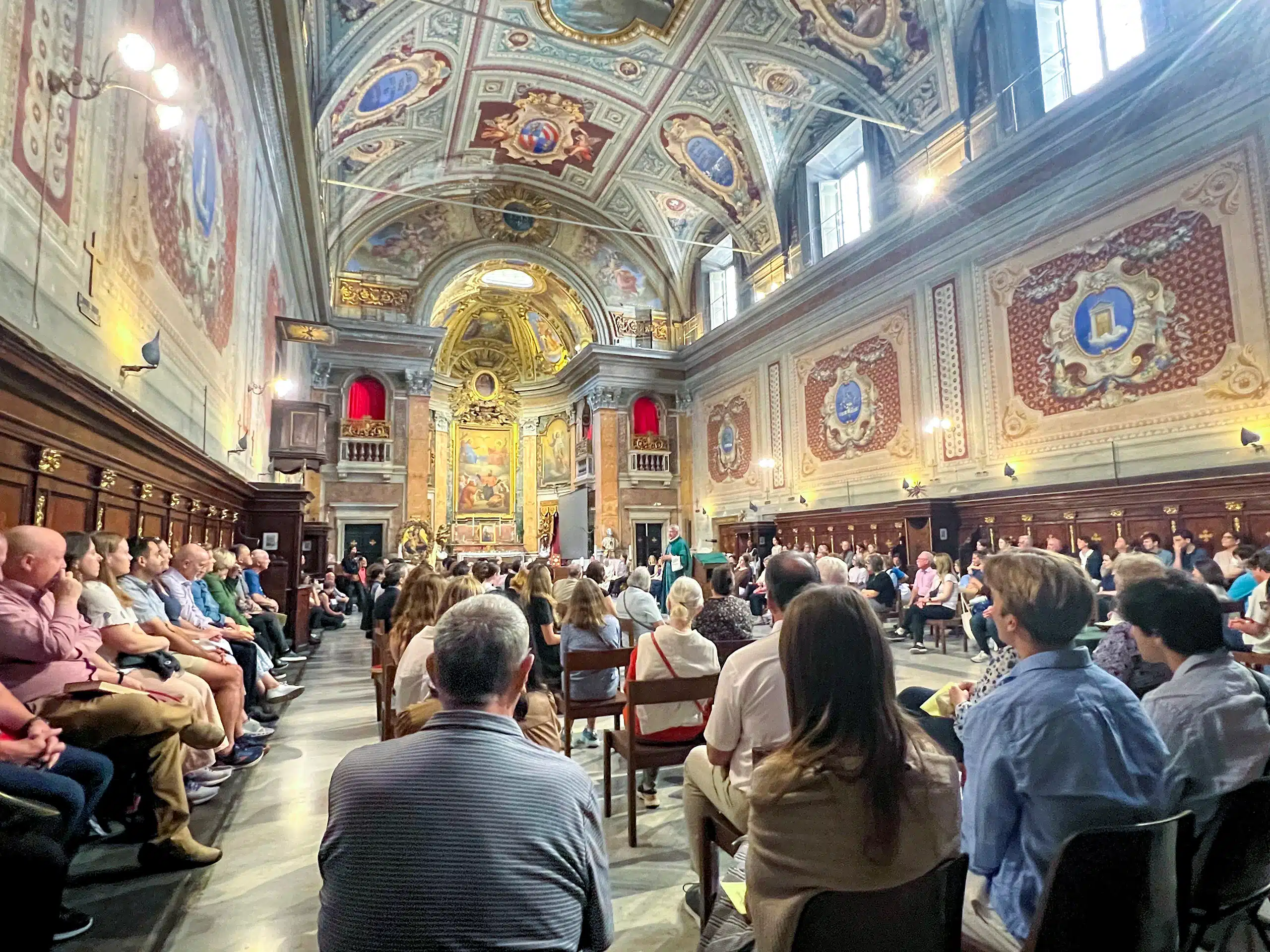
I traveled to Rome with 10 student peers and three faculty members from the University of Dayton in mid-October to learn about the synod. Half of us were sent by the theology department to support the curriculum of an ecclesiology class, and the other, my half, was commissioned by campus ministry to “encounter,” as Pope Francis says, synodality, so that we could come back and spread our experience to the masses. Fourteen other Catholic colleges in the U.S. calling themselves CENTERS — Catholic Education Network to Encounter Rome and Synodality — worked together to create a synodal pilgrimage, bringing 130 students and 20 staff and faculty to the frontlines of synodality.
The CENTERS group gave us several opportunities to participate in “Conversation in the Spirit,” the method of deep listening guided by the Holy Spirit used by synod delegates. I had a wonderful conversation in the Spirit with students from Georgetown University in Washington and Villanova University near Philadelphia covering the spiritual needs of those who feel especially polarized by the church. Out of these conversations that covered polarization, interfaith engagement, climate change and women’s leadership, among other topics, we created questions to ask the secretaries of the synod, the people who worked to bring Pope Francis’ vision of the church into reality.
I talked with and heard perspectives on synodality from cardinals, bishops, priests, men and women religious, theologians, a Methodist priest, a rabbi professor from the Pontifical Institute, lay people, and fellow college students. Pope Francis pushes synodality for a reason: It strives to make members of the church feel as if they are a part of one body of Christ.
Because I was granted press credentials through the Holy See, I gained special access to events restricted to delegates in the synod and media, which allowed me to brush past Swiss guards with the flash of a badge. In addition to attending several press conferences, I received the Eucharist along with bishops, archbishops and cardinals, and hand-picked synod delegates. My experience with God is equally as important and necessary as that of a cardinal.
Synodality makes sense. If the church wants to address the spiritual needs of all God’s children, it needs many perspectives to tailor love to every person, just as God works in each one of us. In order to listen to God, we must first listen to others’ experiences of God. We must submit ourselves to the Holy Spirit to carry out God’s mission on earth.
Jesus picked a diverse group to be his closest friends and the leaders of the church so that when he left, they could experience him in unique ways and come to the goodness of truth through conversation guided by the Holy Spirit.
Pope Francis is the vicar of Christ. He enacts God’s will through the church. Be joyful that the church is trying to reach out to find and love those in need of Christ’s love.
Hennessy, a parishioner of St. James Church in Falls Church and an alumnus of Bishop O’Connell High School in Arlington, is a theology and communications student at the University of Dayton.