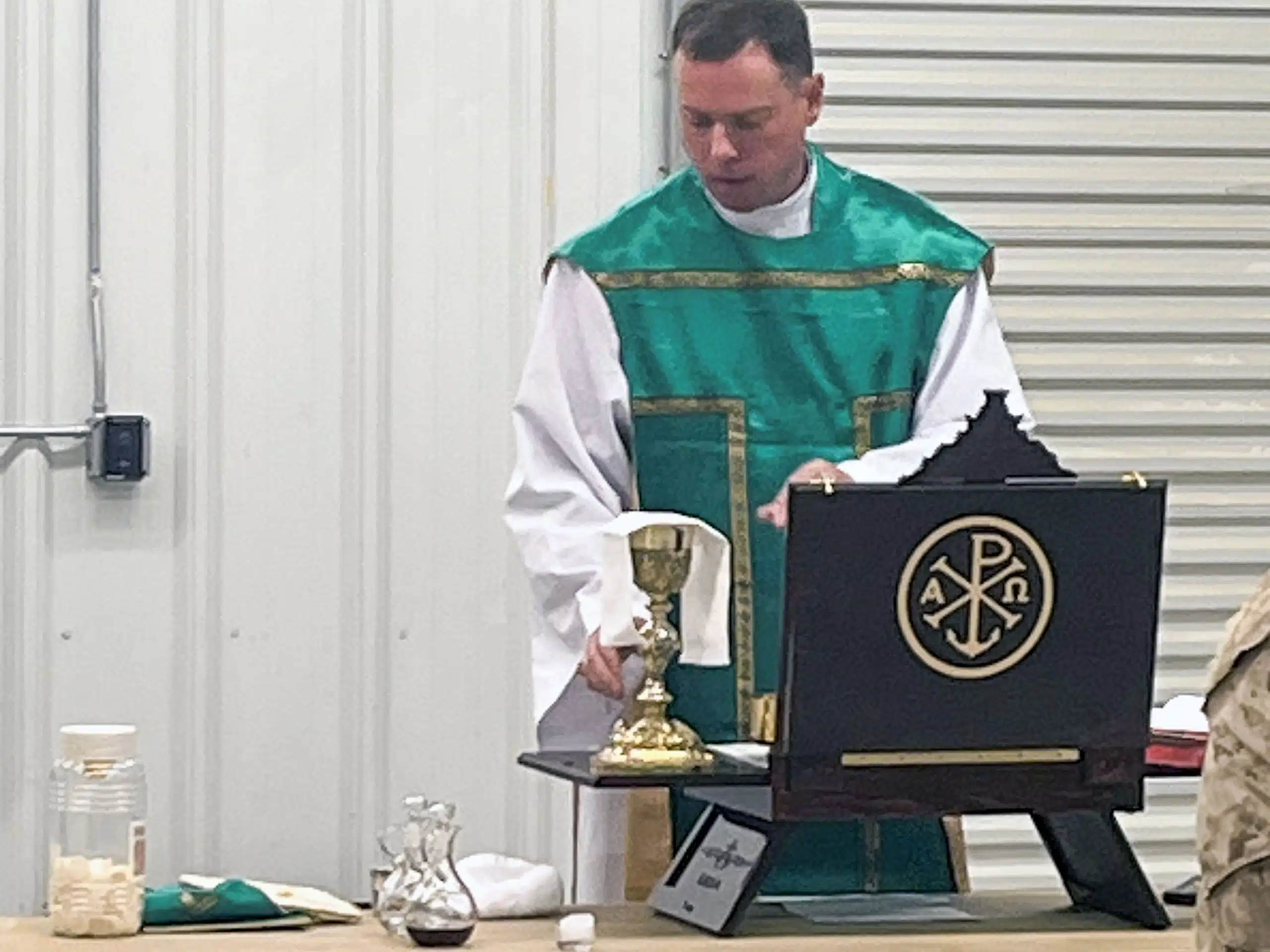
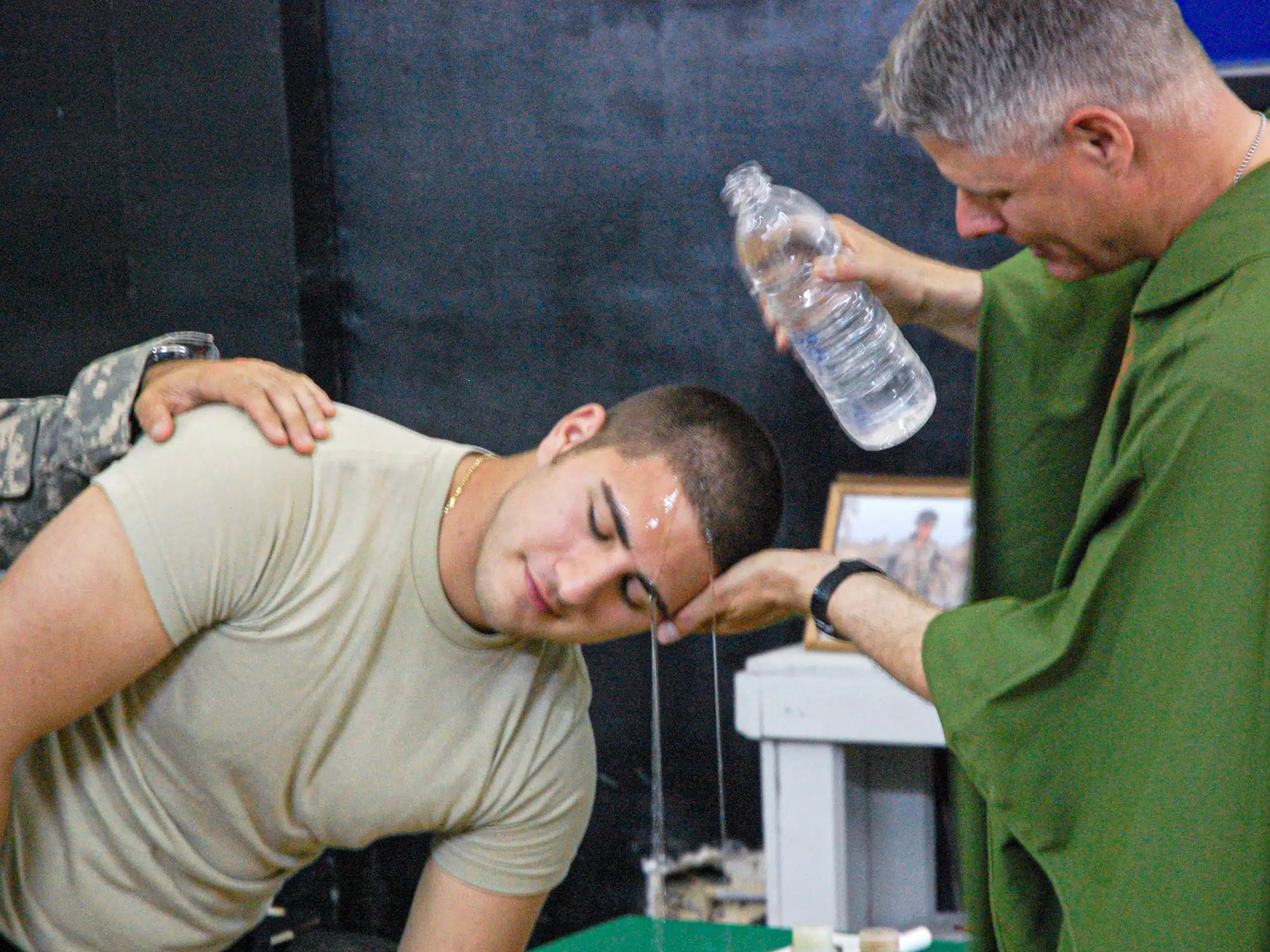
Catholic chaplains in the U.S. military date back to the founding of the nation.
The only officially recognized members of the U.S. Army chaplain corps, established by George Washington in 1775, were Protestants. But Father Louis E. Lotbinere of the diocese of Quebec provided pastoral care to soldiers fighting in the Revolutionary War, beginning a continuous line of Catholic priests who have served with distinction for 250 years, according to the U.S. Army Chaplain Corps Museum in Fort Jackson, S.C.
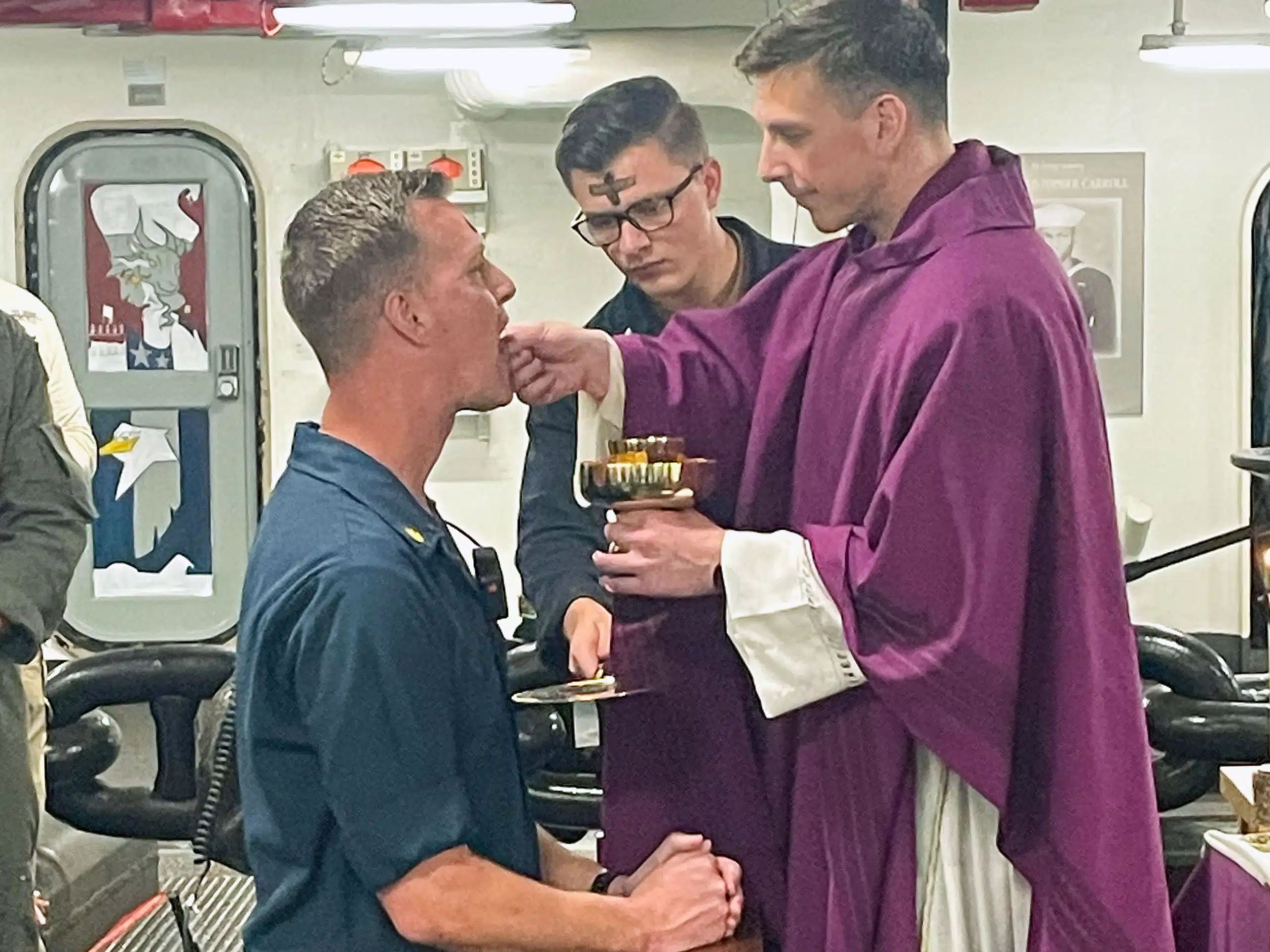
Today, eight military chaplains are incardinated in the Arlington diocese, the most of any diocese in the country. “To wear this uniform is to take my place, however briefly, in that long line,” said Father Sean T. Koehr, U.S. Navy lieutenant and chaplain at the Navy’s only boot camp, located in Great Lakes, Ill. “It is a personal privilege and a blessing.”
Father Koehr’s Navy lineage runs deep. His grandfather was an admiral and his grandmother was in the Navy Nurse Corps. They met at daily Mass at Oak Knoll Naval Hospital in Oakland, Calif., where a chaplain celebrated Mass. “My family’s story is, in a real sense, a chaplain’s story,” he said. “I would not be here without one. The young men and women who raise their right hand and swear to defend the Constitution don’t surrender their faith at the door. The Navy sends a chaplain with them precisely so they don’t have to.”
Of the nine chaplains awarded the Medal of Honor, the nation’s highest military honor, five are Catholic including Father Vincent Capodanno, who was killed in Vietnam in 1967 while administering last rites. His story is told in “The Grunt Padre,” by Father Daniel L. Mode, diocesan Navy captain and chaplain.
“On that day in 1967, he saved a number of Marines’ lives,” said Father Mode in a speech at Seton School in Manassas in March. “The church is now considering him for sainthood. He’s a servant of God and the next step would be venerable. He’s inspired countless others and I want us all to pray that his cause may be forwarded and that he may be canonized.”
Like all military chaplains, Father Capodanno provided spiritual care to anyone in need, highlighting the unique missionary aspect of the chaplaincy. “You have to become a missionary and if you don’t do that as a chaplain, it’s gonna be hard for you,” said Father Mode. “When you’re a priest, people come to you but as a missionary or chaplain, you go to them.”
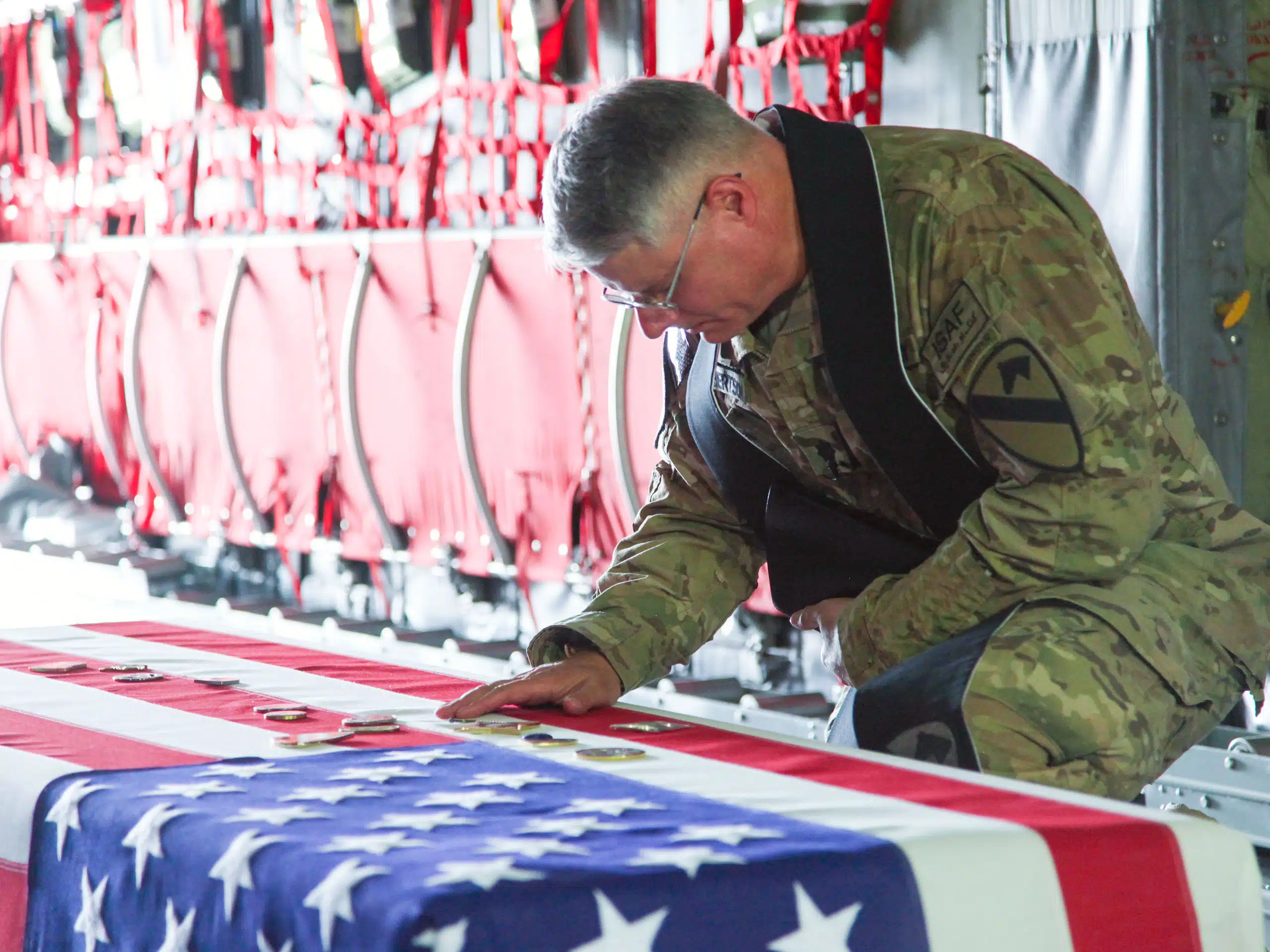
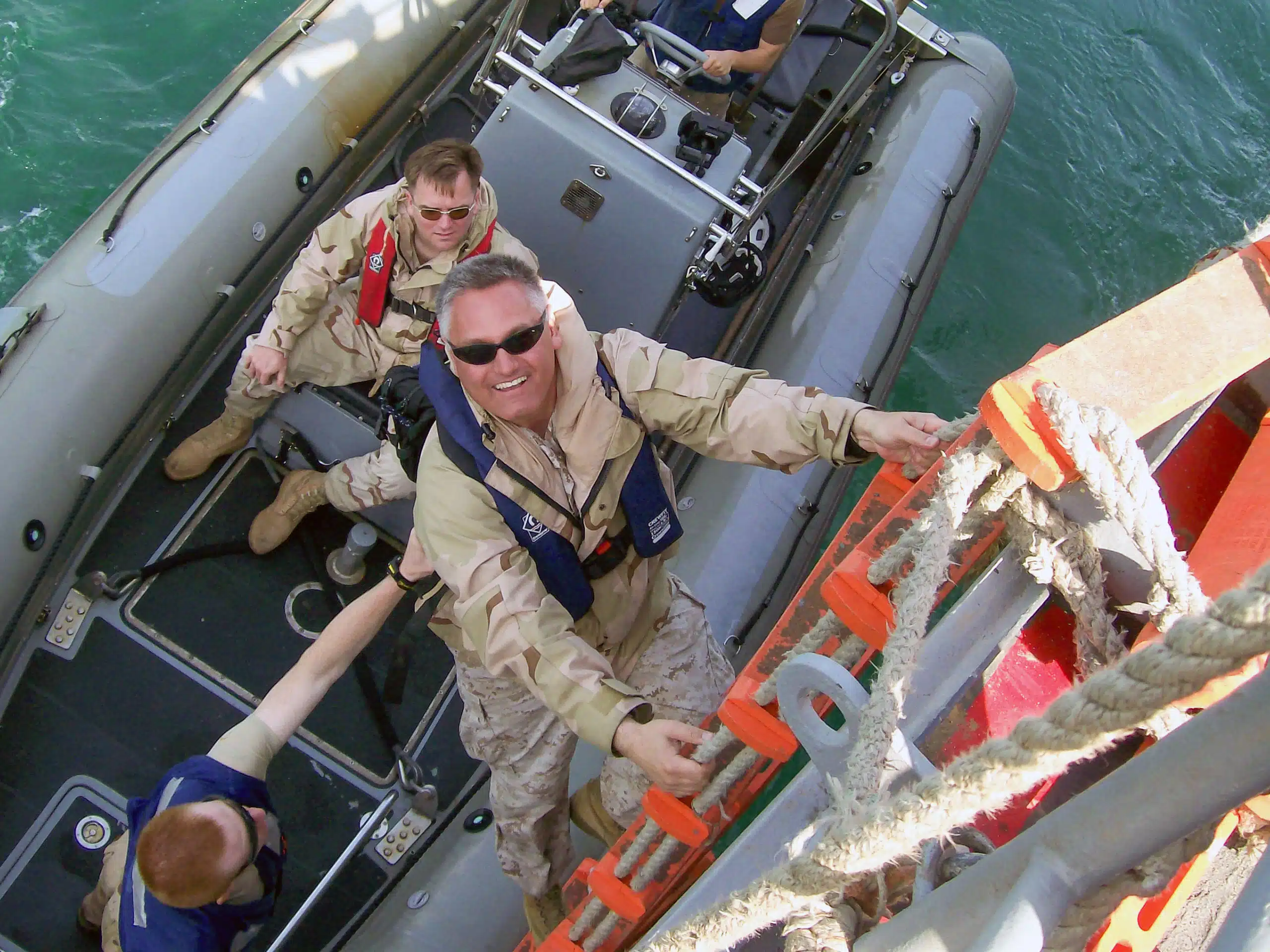
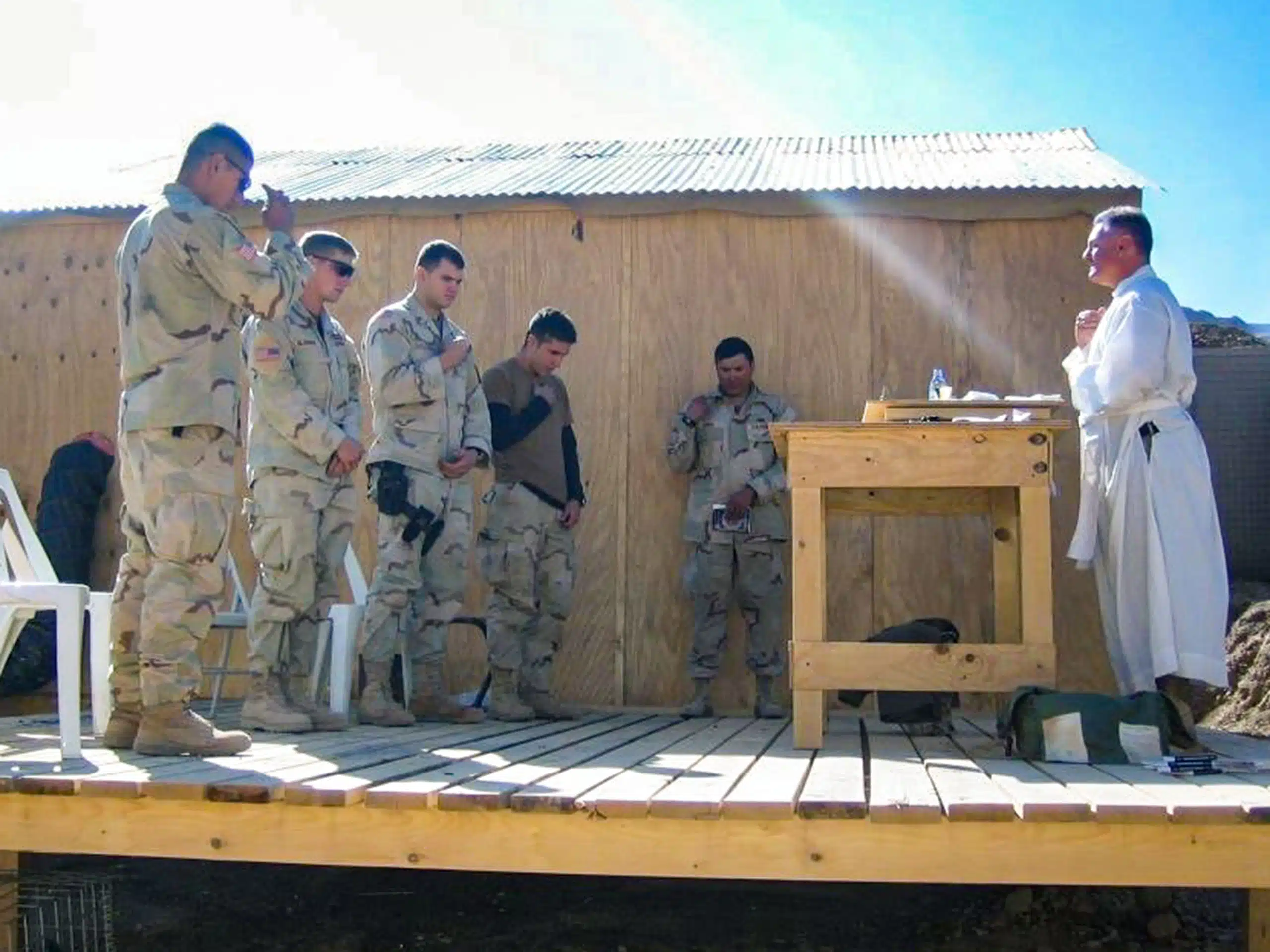
U.S. Army Col. Father Eric J. Albertson, who has been a chaplain for 33 years, noted the closeness that chaplains have with the troops. “Not just our Catholic congregation, but those of other faith groups as well, even atheists,” he said. “It is a fascinating experience, as the military is diverse and global, and its operations are as interesting as they are complex. Unique to this missionary work, however, is that the mission is also inherently dangerous. The willingness to enter into harm’s way to provide needed sacramental care ultimately bonds the chaplain to the force, making you one of them, and brings with it some of the most powerful and rewarding pastoral experiences I believe a priest can have.”
Father Koehr regards his ministry as almost entirely missionary in nature. “Boot camp is one of the most disorienting stretches of their young lives, and they come looking for peace, meaning and purpose,” he said. “The Navy sends me where the sailors are. The church sends me to bring Christ there.
“The harvest is abundant,” he said. “I cannot express how powerful it is to proclaim the Gospel to people who have never heard it before, to read them the parable of the prodigal son, the woman at the well, the healing of the man born blind, and to watch their faces as God speaks to them.”
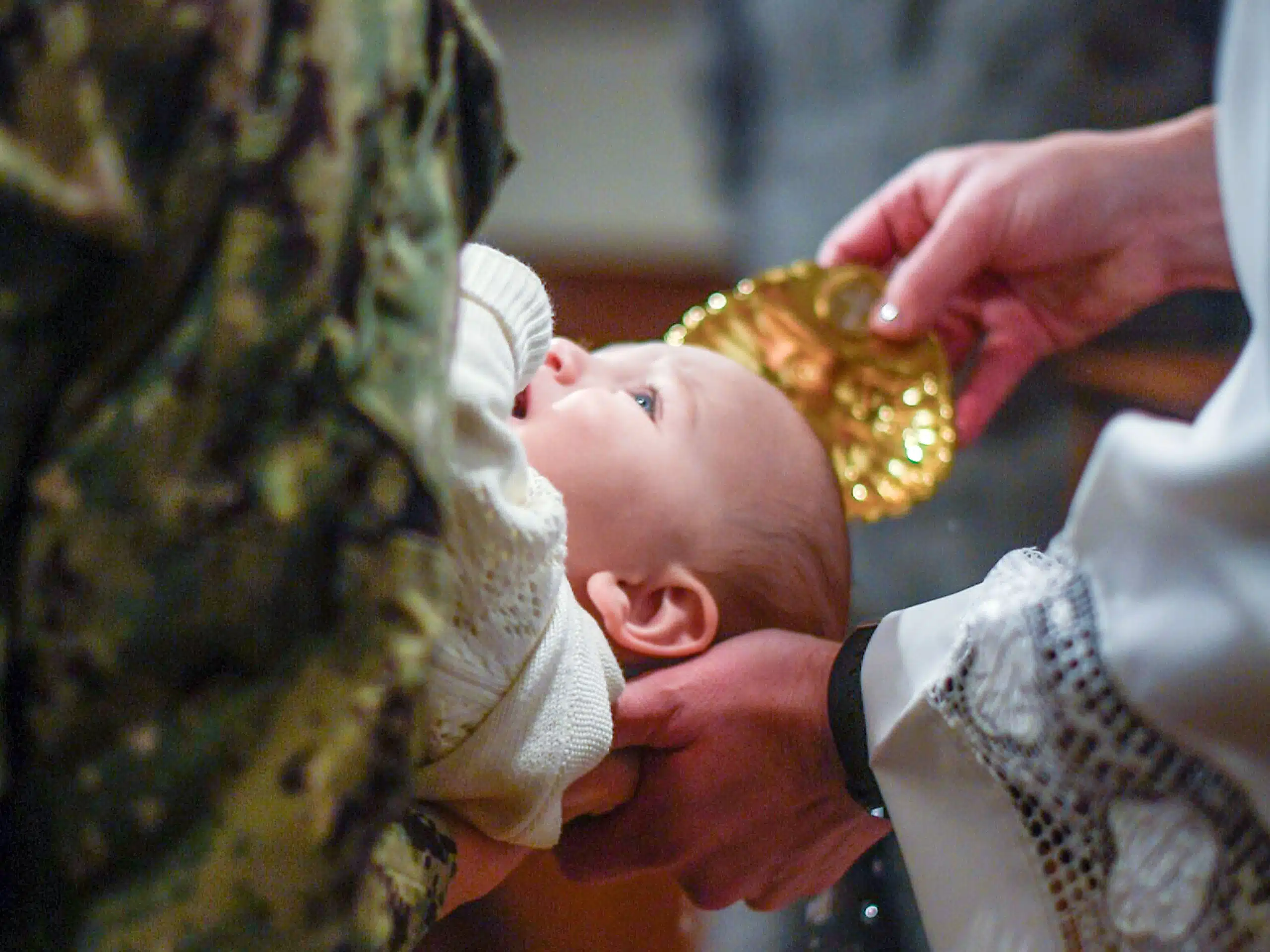
Father James C. Hinkle is a U.S. Navy lieutenant commander serving with Marine Aircraft Group Thirteen (MAG-13) in Yuma, Ariz. “I encountered a recruit sobbing in the back of the chapel as I processed out following Mass. I grabbed him by the shoulder and brought him back to the sacristy for impromptu counseling,” he said. “I asked him what was troubling him. He responded that he grew up in rural Alabama, that he had never been to a Catholic Mass before, and that he wanted to become Catholic right now.”
Another Marine who had heard Father Hinkle speak to his squadron had “resolved not to listen to what some Catholic priest had to say. After a couple of encounters, he entered OCIA (formerly RCIA), received the sacraments of initiation, and now discerns his own vocation,” said Father Hinkle. “All that simply because of the presence of a priest in the missionary activity and work of the Holy Spirit.”
Catholic chaplains are borrowed from a diocese and are co-sponsored by the Archdiocese for the Military Services, with each covering half of the cost of formation. “So, they officially are Arlington priests and are incardinated in the Diocese of Arlington, but then after a certain amount of time of service in the diocese, they’ll be released for military service,” explained Father Noah C. Morey, diocesan vocations director. “From the bishop’s perspective, it’s hard to release men but we recognize that there are men and women serving in uniform that need that pastoral care and there’s a deep need for chaplains.”
Other diocesan chaplains on active duty include: Fathers Jason C. Burchell (U.S. Navy lieutenant commander), Luke R. Dundon (U.S. Navy lieutenant commander), Peter J. St. George (U.S. Navy lieutenant), and Steven R. Walker (U.S. Navy lieutenant).
Catholic chaplains have served in every armed conflict in the nation’s 250-year history and remain ready to serve anywhere they are called.
Citing words from the Eucharistic Prayer III — “From the rising of the sun to its setting, a pure sacrifice may be offered to your name” — one memory is forever etched in Father Koehr’s mind. “I celebrated a sunrise Mass on the flight deck of the USS Theodore Roosevelt while transiting the San Bernardino Strait in the Philippines,” he said. “Watching sailors on a warship kneel on the deck at the elevation of the host, with the sun rising over the water, was a powerful moment.”