Anne Giaccio was a medical student in her native Ireland when
she first learned about sickle cell anemia, an inherited
blood disorder that affects predominantly those of African
descent. At that time, “there were virtually no blacks in
Ireland,” said Anne. She remembers thinking, “Why are they
teaching us this? I’ll never see this condition.”
Fast-forward several years. Married to her husband, Greg, and
living in Northern Virginia, the couple received a call from
Arlington diocesan Catholic Charities’ Center for Adoption
and Pregnancy Services. After a long wait, there was news
about a possible addition to the family: a 3-week-old
African-American boy with sickle cell anemia.
Sickle cell symptoms can include fatigue, episodes of severe
pain, frequent infections and delayed growth. Average life
expectancy is about 45 years.
The couple had just one day to decide if they wanted to take
on such potential challenges.
They packed in as much reflection and as many prayers as they
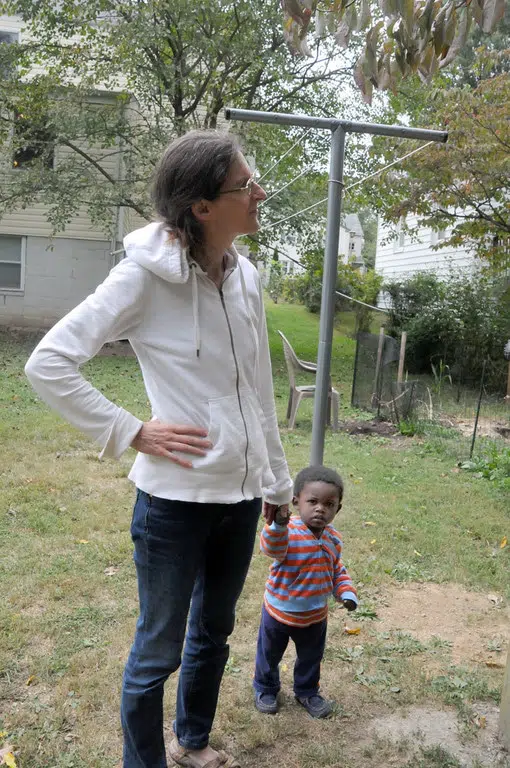
could, took a deep breath, and said yes to the baby. Elijah
became the family’s fourth child and the second adopted
through Catholic Charities.
And they can’t imagine life without him.
‘It’s what we do’
Finding parents like Anne and Greg for babies like Elijah is
common for the Center for Adoption and Pregnancy Services.
The agency, founded in 1947, has a reputation for obtaining
homes for locally born children with a range of physical and
mental health challenges, including Down syndrome, birth
mothers who are HIV positive, physical deformities and a
family history of severe mental illness.
Director Kimberly Harrell has been with the center for nine
years and said working with these children is inherent to
their mission.
“It’s who we are, and it’s what we do,” she said. “There was
never a conversation about whether or not we would do this;
we just do it. We believe every life is a gift from God.”
There are three other domestic adoption agencies in the
region. On average, about 29 percent of the children they
find homes for are considered harder to place. At the center,
it’s around 40-50 percent, according to Harrell.
“We have a reputation with hospitals and with birth parents,”
Harrell said. “Just recently, a birth parent came asking for
help with a child who will be born with Down syndrome. And
the hospital calls us because they know that we’ll take the
child and find a home for the child.
“We will find a home for everyone,” she said. “Life is
precious, no matter the circumstances. We don’t ever want a
birth mother to think her child is worth less than another.”
Harrell said that not all families have the capacity to take
on children with difficulties, but those who do are never
sorry.
“These children are beautiful creations of God, and having
the opportunity to love and raise them is a gift,” said
Harrell.
Anne and Greg embraced the opportunity twice. The
parishioners of St. James Church in Falls Church always had
planned to adopt. They married later in life and knew their
age would prevent them from having many biological children.
So, after Francis Xavier was born, they began working with
the center.
During an adoption home study – a process that evaluates,
educates and prepares a potential adoptive family – couples
are asked what kind of mental or physical challenges they are
open to in a child. While not comfortable with all medical
and emotional complications, Anne and Greg said they were
open to harder-to-adopt children.
Down syndrome children are a sizable part of the
difficult-to-adopt population. Stephanie Thompson,
co-director of the National Down Syndrome Adoption Network,
estimates that about 45 percent of families with Down
syndrome children place them with adoptive families.
Due to “the extra costs incurred by the adoptive parent
during the lifetime of a child,” said Harrell, many adoption
agencies “don’t want to touch” Down syndrome adoptions.
Catholic Charities lowers the fees for the adoption of
children with Down syndrome to help families bear the
financial burden. “Agencies don’t want to get involved
because they believe it’s harder to find families, and they
know they will have to charge a lesser adoption fee, and they
don’t want to do that.”
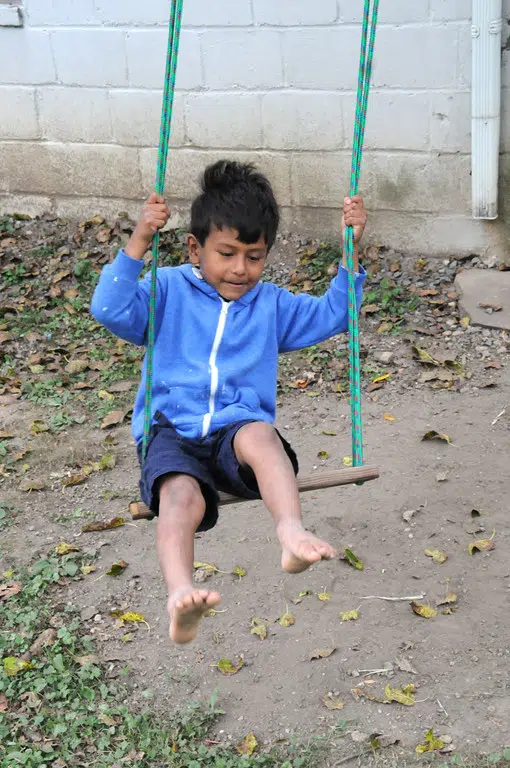
The Giaccios’ first adopted child was 2-year-old Christopher,
a Peruvian-American. Christopher, like Elijah, was considered
hard to place because he was not an infant and has an open
adoption, meaning he has limited visits with his birth
mother.
The first week with the toddler was stressful, said Anne.
Christopher was chaotic because his early life had been
chaotic. Attempting to adjust to unfamiliar surroundings, “he
was just all over the place,” she said. “Then somewhere along
the line, this child was just in – like he’d been here the
whole time.”
God’s helping hand
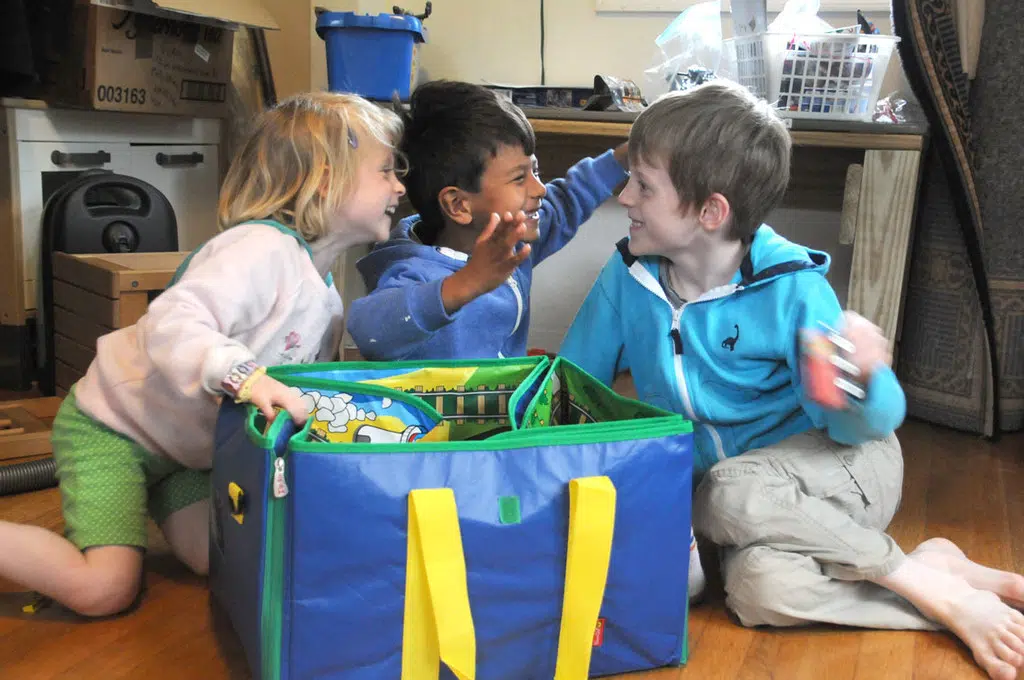
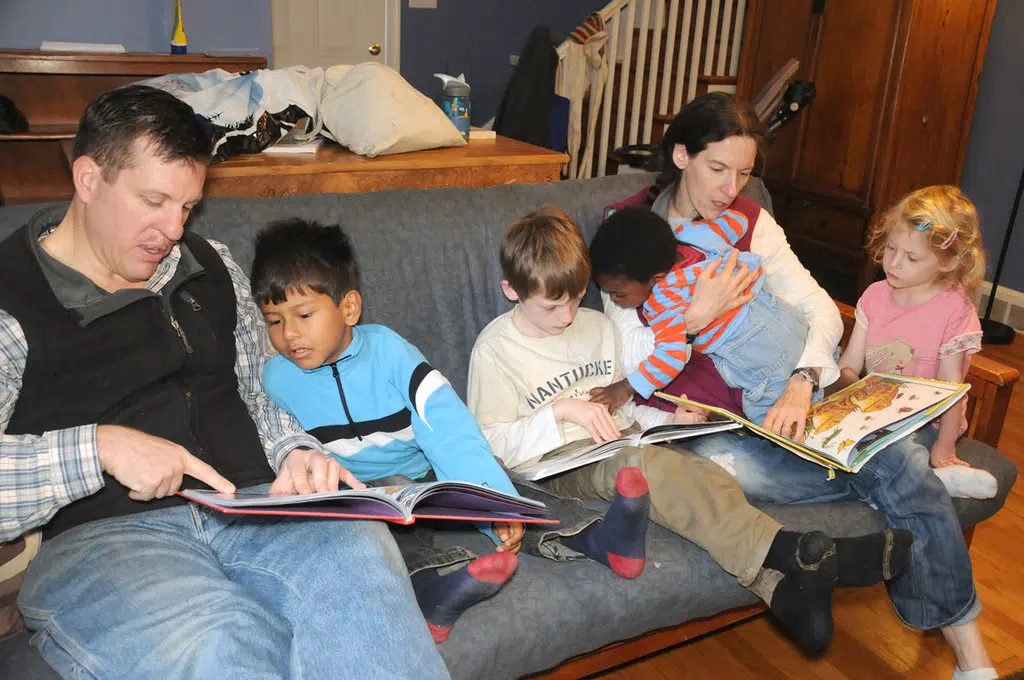
Now with a family of six, Anne home-schools and passes along
the Catholic faith to her diverse and lively brood.
Every so-called hard-to-adopt child has “so much to offer,”
she said. “There’s a place, a home, for everybody.”
Her children, now ranging from 16 months to 8 years old,
played on the family’s backyard tree fort last week,
laughing, squabbling and chatting.
Standing atop the wooden platform, Christopher pointed to
Elijah, who is doing well, with medical advances offering new
hope for those with sickle cell.
“He didn’t come out of Mommy’s tummy – just like me,” said
Christopher. Later, with an ear-to-ear smile, he added, “They
got me.”
Harrell and her colleagues at the center want to help as many
children as possible know what it’s like to be “got” by
families who cherish them.
She knows from experience they are not alone in their
efforts.
There’s a “miraculous nature of every placement,” said
Harrell. “It’s not a question that God is involved. I never
worry if we will find a placement, because I know God is
orchestrating this. So it’s not a stretch for me to take a
child who is harder to place – I know we will always find a
family for them.”
Find out more
Go to the Center for Adoption and Pregnancy Services website.