The sound of pickaxes and shovels chipping a red grave into
the dry earth is broken by the happy yells of children
playing. In the distance a spinning funnel of dust marks
their location.
“Whirlwind,” said one gravedigger as he turns back to the
brittle, sunbaked pit.
For as far as the eye can see, the hillside cemetery is
studded with mounds of dirt marking small graves topped with
tiny teddy bears, plastic flowers or other offerings. Many of
the children interred here were, like this one, residents of
St. Anthony’s Children’ s Village in Ndola, Zambia.
The St. Peter Claver Society of St. John the Beloved Church
in McLean, is a longtime supporter of St. Anthony, and
recently has focused its fundraising efforts on expanding the
special needs capabilities there. This year marks the 10th
anniversary of the parish group’s work.
Taking care of children is what the caretakers of St.
Anthony’s Village have been doing since May 2003, when it
opened at the height of the AIDS crisis in southern Africa.
“Back then, we had four or five deaths a week, the majority
from AIDS,” said Dominican Sister Philomena Schwegmann, who
was instrumental in St. Anthony’s establishment. “The
pandemic shattered the traditional extended family structure
in Zambia,” she said.
“We didn’t know where the children were coming from, only
where they were going – to the cemetery,” Sister Lucia
Mucherenje, administrator. “But by 2009, things started to
change.”
By then, free anti-retroviral treatment became available, and
while not a cure, it has extended the lives of HIV-infected
people. Effective new drugs virtually ended mother-to-child
HIV transmission.
Now, only two orphans at St. Anthony are HIV-positive, and
more and more are being reunited with their extended families
as traditional society recovers its footing.
Yet the orphan problem in Zambia remains monumental. Out of a
total population of 14 million, more than a million children
have lost one or both parents.
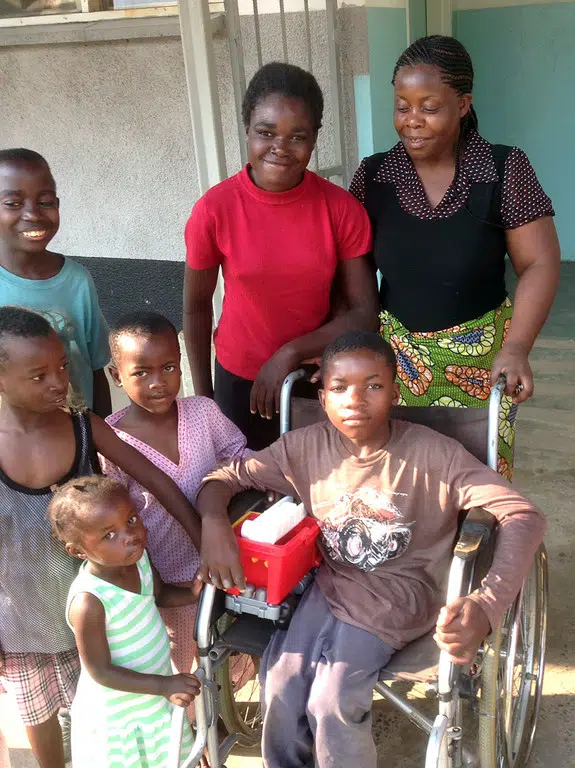
Most of the children at St. Anthony now are mentally or
physically challenged, with more than 30 with cerebral palsy.
Burials at this hillside cemetery are now relatively rare for
the St. Anthony caretakers; only seven children died last
year.
But recently, the wails of a young mother pierce through the
hymn of an elderly African priest singing bareheaded in the
fierce midday sun as the tiny coffin was lowered into the
earth.
Bukata was a two-and-a-half-year-old baby girl afflicted with
Down syndrome. When her mother, a student, could no longer
care for her, Bukata was brought to live at St. Anthony’s
special needs care unit where she died of complications.
The sisters plan to open another special needs care unit for
the growing numbers of handicapped children and may open a
community school on the grounds.
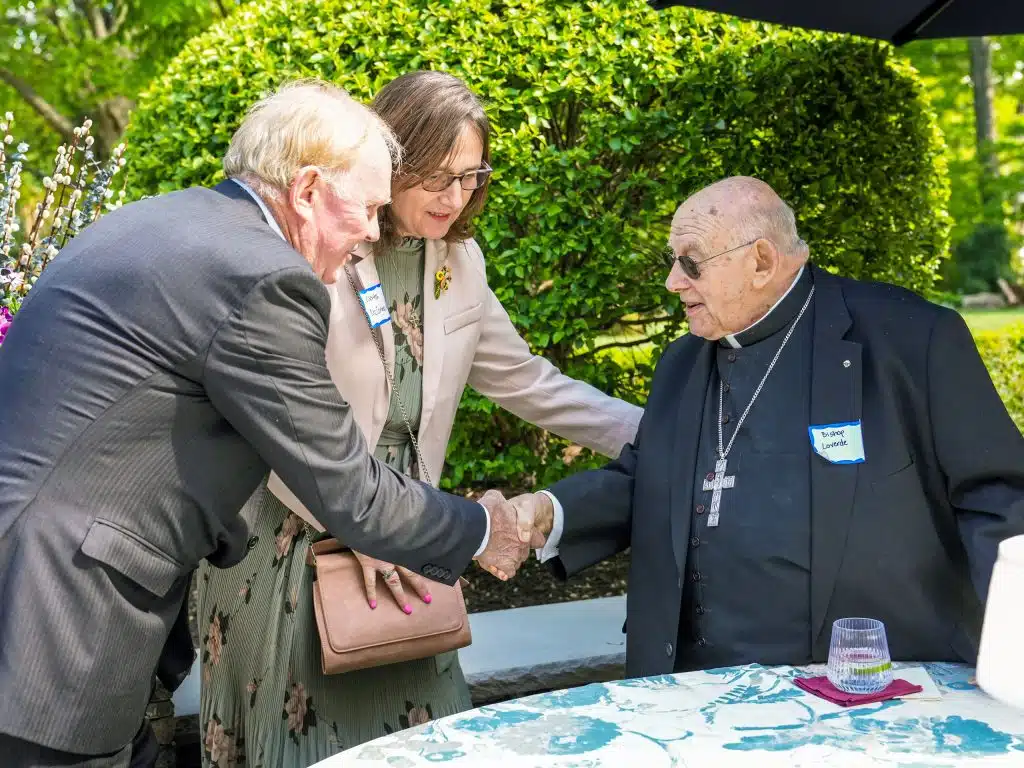
Lusaka Archbishop Telesphore George Mpundu said that
addressing the orphan problem in Zambia all “boils down to
resources,” both human and financial.
“Universal education in Zambia is a pipe dream,” Archbishop
Mpundu said. Families must pay for public schools. So for
orphans with no families, education is unattainable, save for
schools and training centers funded by religious
organizations and aid agencies.
One example is Mulele Mwana (“Take Care of the Child”) Youth
Skills Training Center at the St. Charles Lwanga Catholic
School in Lusaka that provides training in a range of
vocational skills from auto repair to carpentry. The St.
Peter Claver Society has supported the tailoring initiative
at Mulele Mwane. Young people are trained to sew, and
assistance is given to help set them up in business. Now
several graduates run their own shops and employ others in
the program.
St. Peter Claver Society recently became involved with
another program in the Lusaka Archdiocese. It contributed a
new piggery at a rural farm in the Rufunsa district where 40
orphans live and learn agricultural skills. The farm is the
brainchild of the late Cardinal Medardo Joseph Mazombwe, the
first Zambian cardinal and bears his name.
Archbishop Mpundu says the challenges presented by disabled
children are especially difficult in Zambia, where 80 percent
of the population lives in poverty.
“It requires a number of teachers who are properly trained to
look after these children. And then financial resources, you
have to have institutions where these children are given
special care which they need,” said Archbishop Mpundu.
“I know there is an idea of not discriminating against these
children but unfortunately in most of the schools, there are
not facilities that cater toward these young people.”
Jay LaMonica and Gabe LaMonica are broadcast journalists and
members of the St. Peter Claver Society. They have just
returned from Zambia.
How to help
Celebrate the 10th anniversary of the St. Peter Claver
Society’s support of African orphans, Oct. 18, beginning at
6:30 p.m., at St. John the Beloved Church in McLean
Special invited guest: Archbishop Telesphore Mpunda of
Lusaka.
Honored guests: Frs. Edward C. Hathaway and Paul D. Scalia
Catered dinner, including African cuisine, wine, beer, sodas
and juice.
African music and dancing, silent and live auctions.
Advance tickets are on sale through eventbrite.com (enter
“St. Peter Claver Society” in the search box).