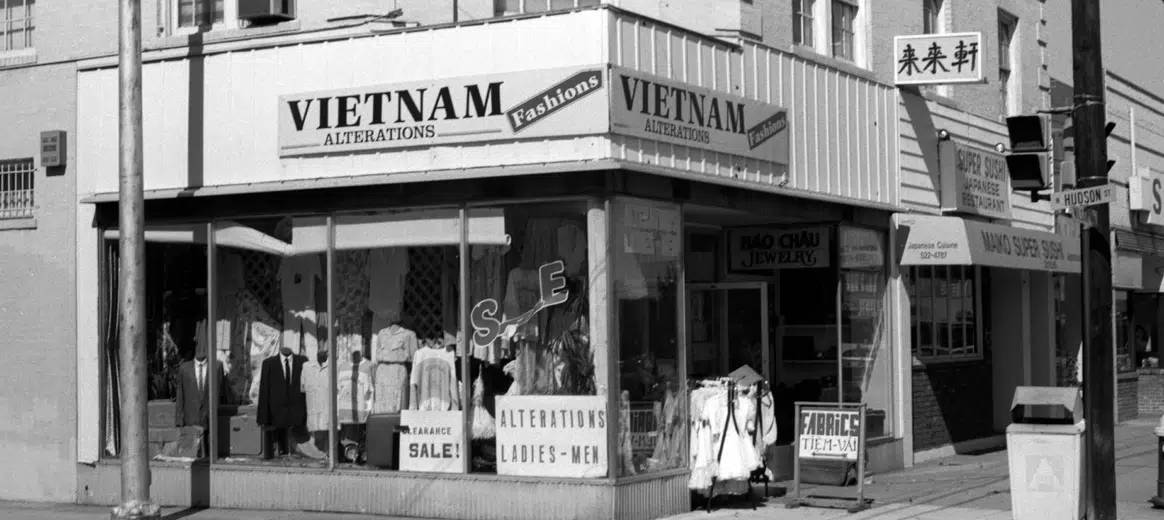
Before it became a stop on the Orange Line and the center of
Arlington’s vibrant nightlife, Clarendon was known as Little Saigon. In the
years following the Vietnam War, thousands of Vietnamese refugees settled in
the Washington metropolitan area.
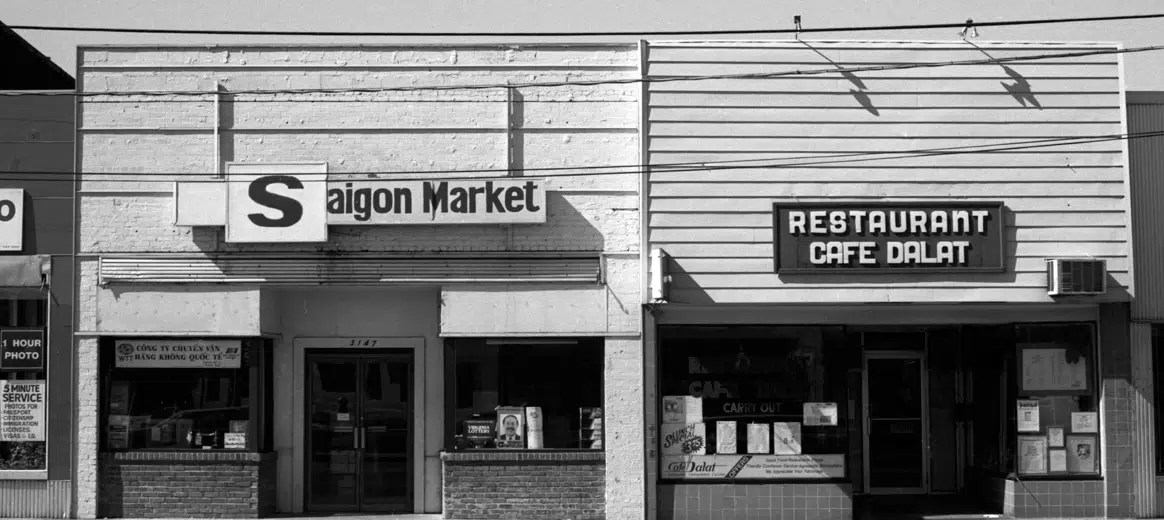
Cheap rent drew them to Clarendon, where they opened restaurants,
a grocery store, a jewelry shop, a furniture store and other businesses. For
many, it became a home away from home in the midst of a tumultuous transition.
Virginia Tech Urban Affairs and Planning graduate students wanted
to preserve the legacy of Little Saigon, now forgotten by many Arlingtonians.
So the students collected old photos and interviewed those who
remember Little Saigon, compiling the memories into videos for the Echoes of
Little Saigon website, produced by student Judd Ullom. In the Clarendon bars
and restaurants that once housed the Vietnamese businesses, QR codes on the
windows link passersby to videos featuring the city’s past.
When people think of Arlington’s history, Robert E. Lee’s house comes to mind, said Elizabeth Morton, the professor who oversaw the project. “Arlington has such a rich history underneath all of that.”
Escape from Vietnam
The first wave of Vietnamese refugees came after the fall of
Saigon, now Ho Chi Minh City, in April of 1975. Thu Bui, a longtime parishioner
of Holy Martyrs of Vietnam Church in Arlington, arrived in the U.S. two years
earlier to go to graduate school at American University in Washington. His wife
and children got out just days before the fall.
For years afterward, refugees from Vietnam traveled by boat to other
Asian countries and later to countries such as the United States. In the
Washington area, the Vietnamese population grew, in part aided by Catholics who
sponsored the incoming refugees. By 1977, the Diocese of Arlington under Bishop
Thomas J. Welsh had welcomed 2,300 refugees, more than any other diocese in the
U.S. with the exception of the Archdiocese of Los Angeles. In 1979, (then) Blessed
Martyrs of Vietnam became the first Vietnamese Catholic church in the country.
Little Saigon grew as well. Bui remembers going to Queen Bee, one
of the more popular and long-standing Vietnamese restaurants, but it was just
one of many in Little Saigon.
“There was one store called Saigon Market and that store was standing
in 1975,” said Thuy Dihn, who was interviewed for the video project. “That’s
where we got our fish sauce and all the spices and things that we needed to
cook. We could only afford like one bottle of fish sauce, so my grandfather
would say, ‘Make sure you don’t eat this fish sauce every day.’”
“When I first came here, I think that’s the only place you could
go and shop for Vietnamese food,” said Toa Do, another man interviewed for the
project. “There was a coffee shop that (sold) iced coffee with the condensed
milk. If you sit there and listen to the Vietnamese music and drink the coffee,
you feel like you’re back in Saigon again, if you close your eyes.”
The Eden Center
With the arrival of the Orange Line Metro stop in 1979, rent in
Clarendon began to rise. Gradually, many of the Vietnamese businesses couldn’t
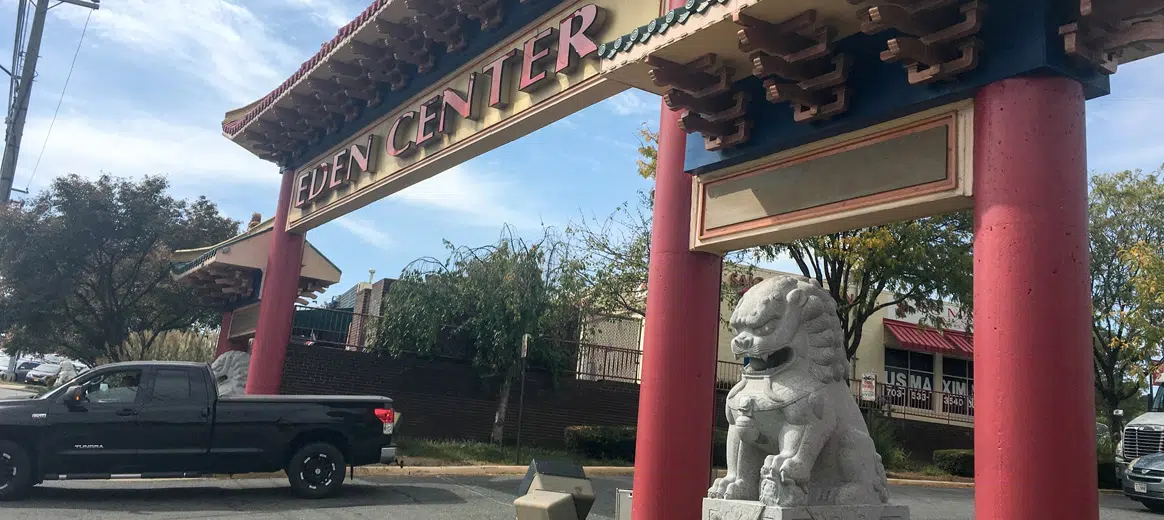
afford to stay. But they didn’t all permanently close. Many moved to the Eden
Center in Falls Church, just across the county line.
“It’s not the typical urban redevelopment story,” said Morton of
the relocation. “(The Vietnamese community) had a landing spot in the Eden
Center.” The shopping center now has 120 stores and boasts of being “the heart
and soul of the Vietnamese American community for the entire East Coast.”
Many Vietnamese people also began to move further into the
suburbs. In 2006, Vietnamese Catholics established another community called Our
Lady of La Vang, and celebrated Mass at St. Thomas à Becket Church in Reston,
then St. Veronica Church in Chantilly. In September, Arlington Bishop Michael
F. Burbidge named Our Lady of La Vang a mission parish of Holy Martyrs of
Vietnam. The mission has 422 registered families.
The yellow-and-red striped flag of South Vietnam flies in the middle
of the Eden Center, which resonates with many of the Vietnamese customers who
fled the country to escape communism. “It’s very special for people like me who
are associated with the old regime; we don’t like to see the communist side,”
said Bui, who served in the South Vietnamese Navy.
Now in his 80s, Bui and his wife, Mai, prefer eating out to
cooking, and often get food such as banh cuon and cha gio from the Eden Center.
“When we go to eat and everything is in Vietnamese, we feel at
home,” he said.
Learn more
To watch the videos or share your own story of Little
Saigon, go to littlesaigonclarendon.com.