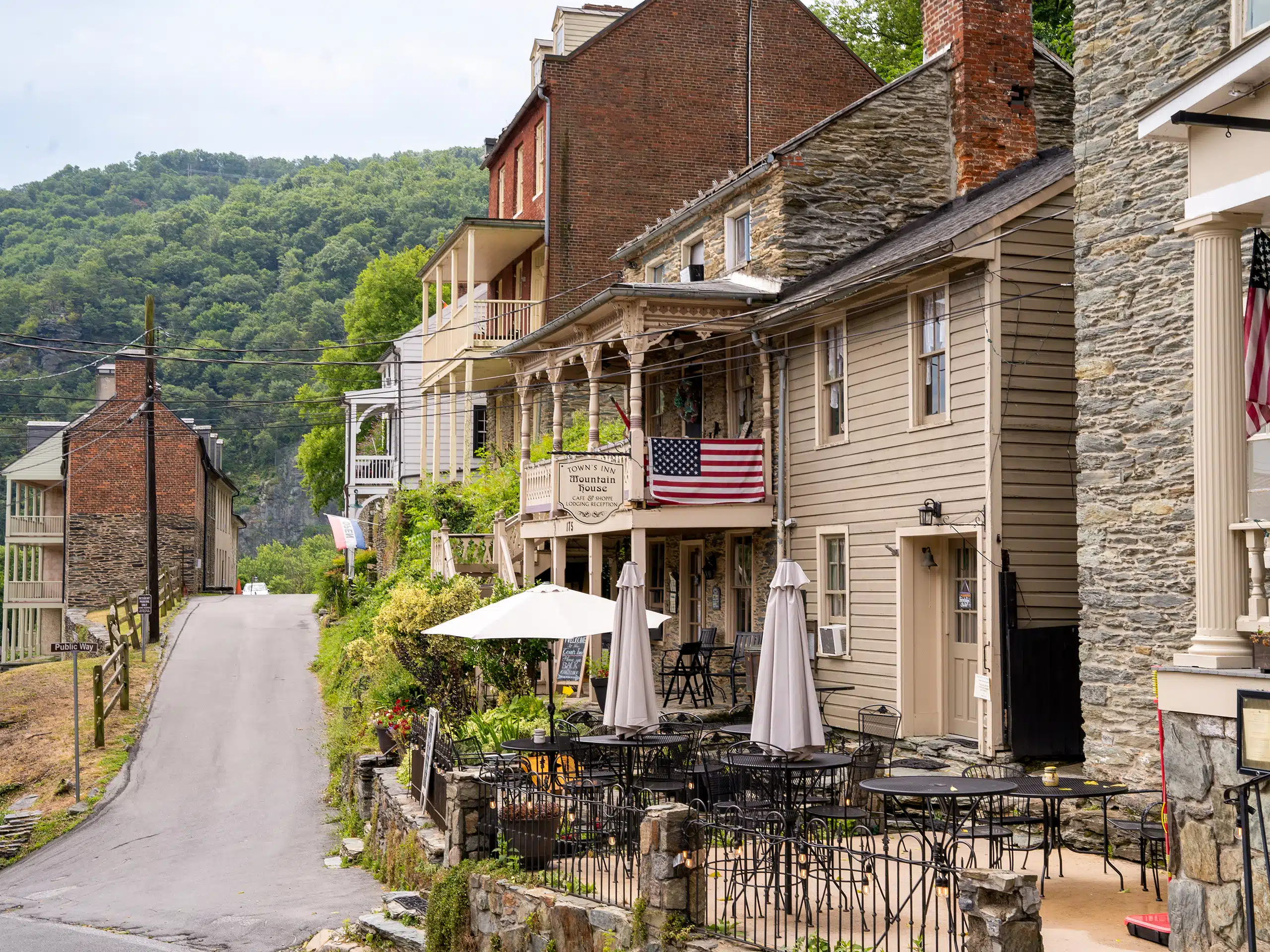
The national treasure that is the Chapel of St. Peter in Harpers Ferry, W.Va., lies just below the spot that Thomas Jefferson made famous.
In his “Notes on the State of Virginia” in 1781, Jefferson described the view overlooking the confluence of the Shenandoah and Potomac rivers: “In the moment of their junction they rush together against the mountain, rend it asunder, and pass off to the sea. This scene is worthy of a voyage across the Atlantic.” Known as “Jefferson’s Rock,” the popular tourist location is a short but steep walk above the chapel.
St. Peter’s Catholic Church, as it was known originally, was constructed in 1830 in the Archdiocese of Baltimore to serve Irish immigrants working on the nearby C&O Canal. It remained a fully operating parish until 1995, when it was designated a chapel. It is within the Harpers Ferry National Park and is open for tours on Saturdays and Sundays and Federal Holidays from Memorial Day through October, from 11 a.m. to 2 p.m., and Sunday Mass at 9:30 a.m.
“It was the first Catholic church in the wilderness of Virginia,” said Patricia Cowan, docent and parishioner of St. James Church in Charles Town, W.Va., which oversees the chapel, now in the diocese of Charleston-Wheeling. “Catholics were able to establish themselves here, and after getting a foothold, were able to expand.”
Churches in the Arlington diocese initially established as missions of St. Peter’s include Sacred Heart of Jesus in Winchester and St. John the Apostle in Leesburg.
The story of St. Peter’s as a mother church might never have happened without the efforts of Father Michael Costello during the Civil War. Harpers Ferry changed hands between the North and South 14 times, and most buildings and homes were destroyed or badly damaged. But St. Peter’s remained open and intact throughout the war thanks to the ingenuity of the young Irish priest.
“Father nailed a British flag to the steeple,” said Cowan. “The Union didn’t want to give the British any reason to side with the South, and the South wanted British recognition. By the grace of God, the Catholic Church was the only building in town that didn’t suffer any damage. Not even a window was broken.”
Just months after arriving in Harper’s Ferry from Ireland in 1859, Father Costello played a role in one of the most dramatic events in American history, in what became known as John Brown’s raid, leading to the Civil War. Two U.S. Marines under the command of Col. Robert E. Lee were wounded in the attempt to dislodge Brown and his abolitionist insurgents after their attempt to seize the federal arsenal, as described by Father Costello in a letter he wrote to another priest in 1860.
“As both were Catholics, I was summoned to attend them,” wrote Father Costello. “As Private Luke Quin fell, pierced through with a ball, his first exclamation was to Major Russell, of the United States Marines, who seeing him fall, went up to him. In pitiful accents he cried out, ‘Oh Major, I am gone, for the love of God will you send for the priest?’ I administered to him the holy rites of the Church. He died that day and was buried with military honors in the Catholic graveyard at this place.”
Father Costello met with Brown in jail and later witnessed his hanging, explaining in his letter that Brown refused “the services of any minister” for his execution.
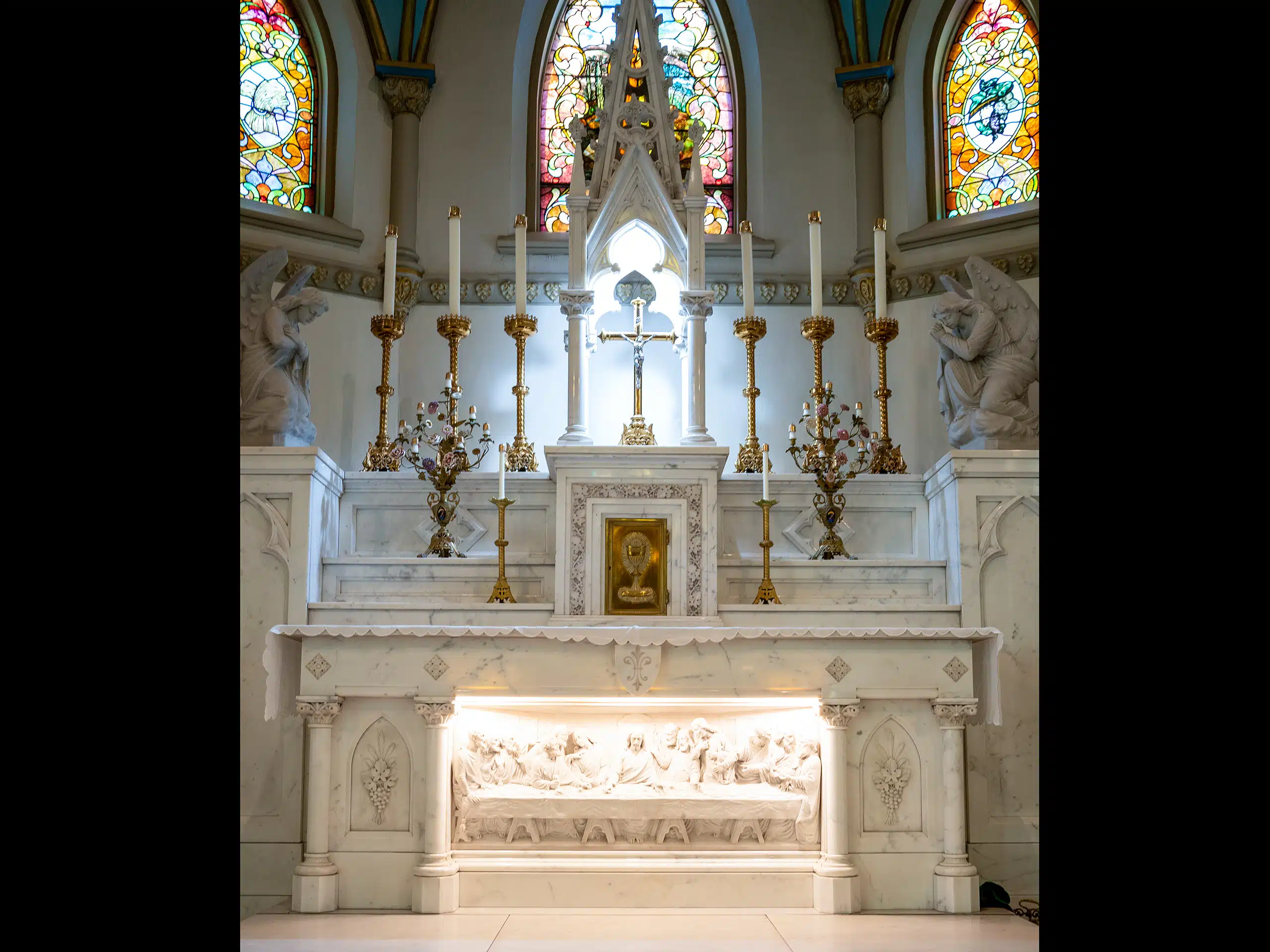
The natural beauty of Harpers Ferry, and the grandeur of the sandstone and granite chapel inspires awe and reverence. Visitors are struck by the “Gothic Fantasy” ceiling — a common Victorian Era design with pillar-less columns — and the altar, made of Carrara marble taken from the same quarry used by Michelangelo.
“This church is important because it maintains the history of the Catholic church and the history of our faith in America,” said Chris George, who was on vacation with his family from Indiana. “It shows the depth of our religion and embodies what it means to be Catholic.”
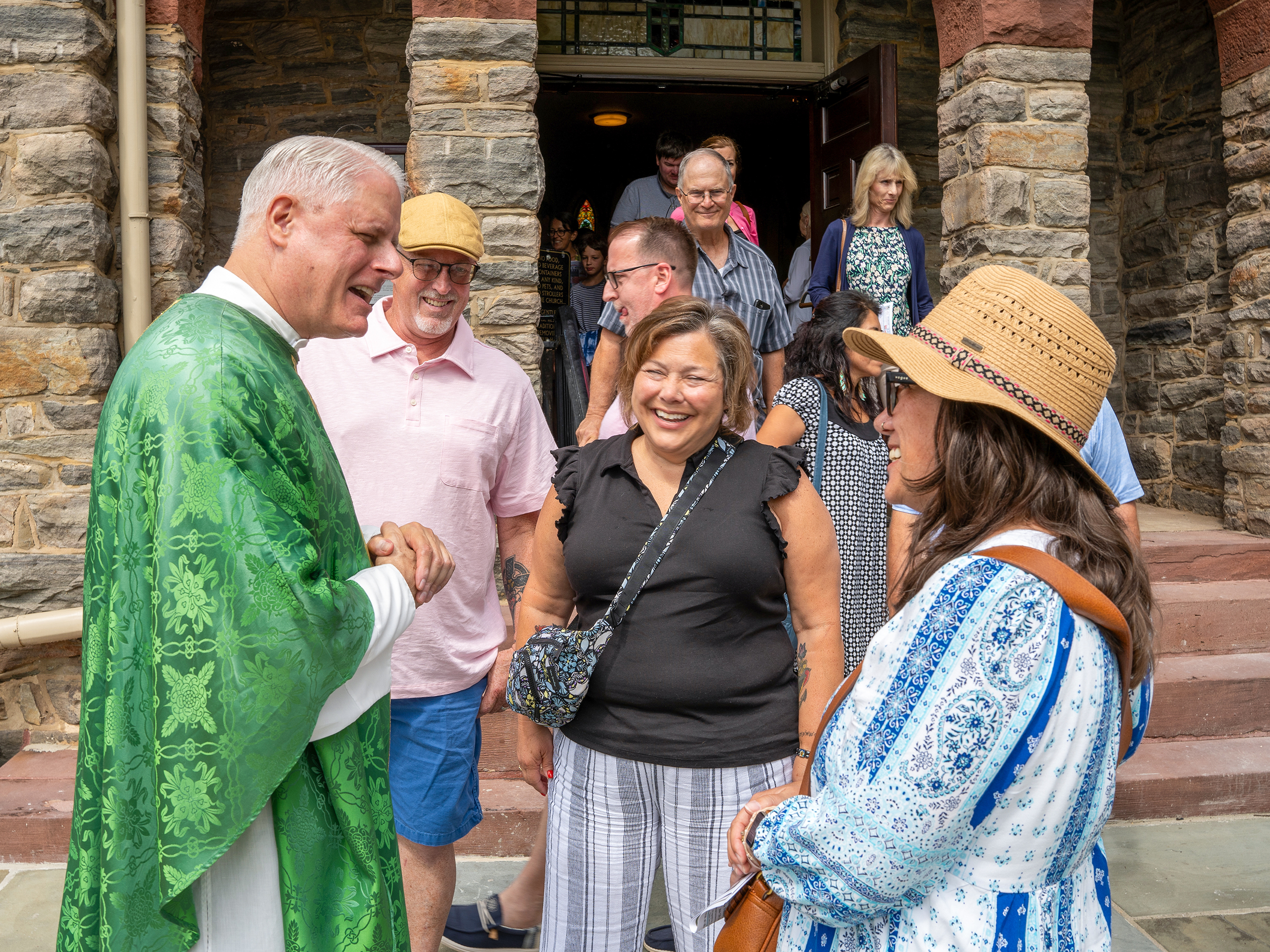
Father Eric J. Albertson, U.S. Army colonel and Arlington diocesan priest, celebrated one of his first Masses at St. Peter’s in 1986, and was overjoyed to return June 30 to offer Mass again as a visiting priest.
“It’s hard to put into words what this means,” said Father Albertson. “To celebrate Mass in a historic church that goes back to the early years of our country is very moving. The church has been very well maintained so it’s much the same as when it was built. You’re going back into history when you go into this church. You ponder how many holy souls have come through here.”
“The church depicts the glory of God,” said Deb Miles, docent and parishioner of St. James in Charles Town. “When you walk in and look up to the ceiling, you get the sense that there is something greater than just us going on here. And it is all for the salvation of souls.”