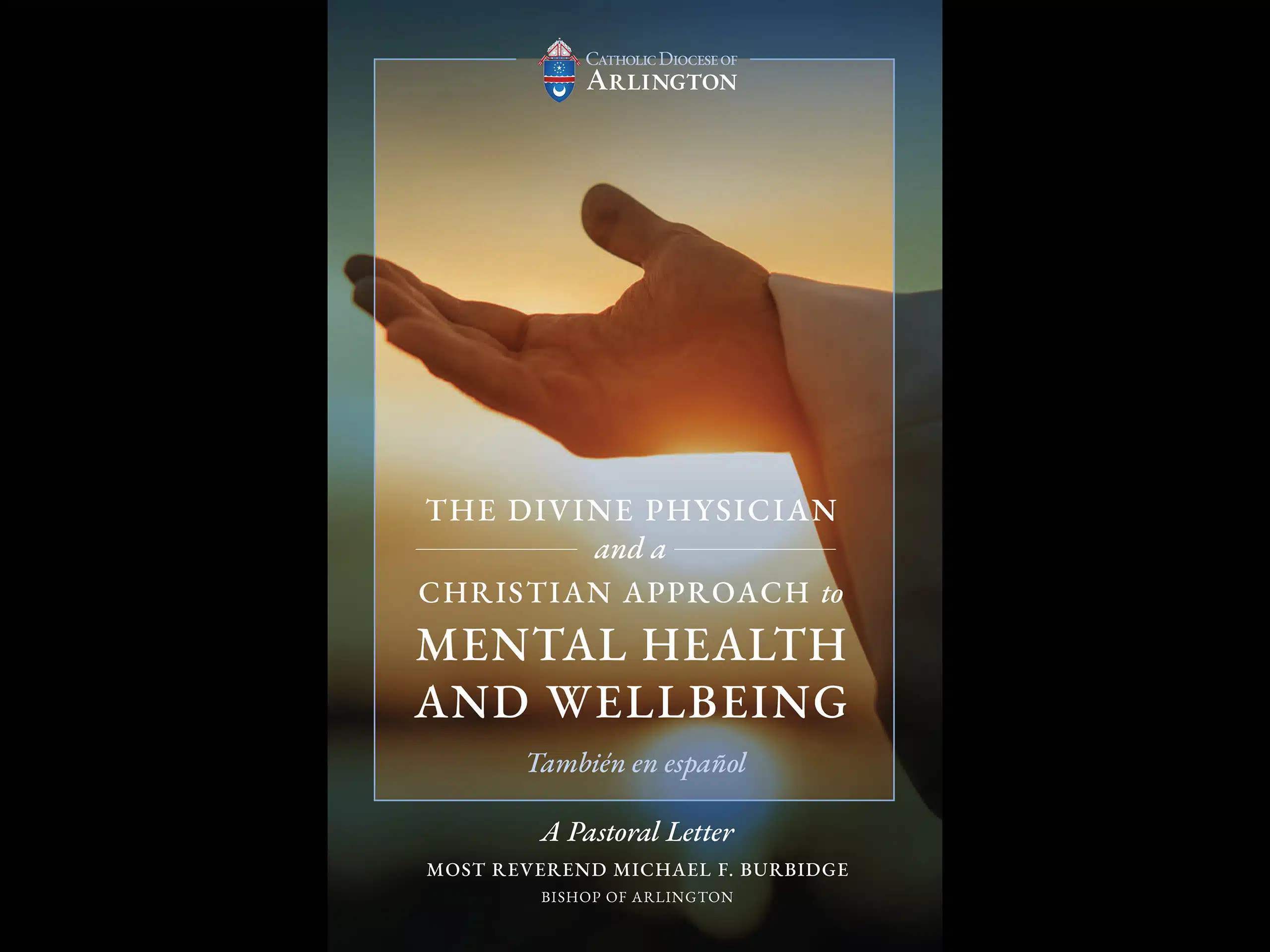
Citing a “staggering” number of Americans affected by mental health problems, Bishop Michael F. Burbidge is voicing his “increasing pastoral concern” with a pastoral letter, “The Divine Physician and a Christian Approach to Mental Health and Well-being.”
“According to the National Alliance on Mental Illness, one in five American adults experience mental health challenges each year,” wrote Bishop Burbidge. “Troublingly, mental health issues have become so common that depression is now the leading cause of disability worldwide.”
While noting that less than half of those suffering from mental health issues receive treatment, the bishop’s letter expressed his intent “to offer encouragement and guidance, in light of the teachings of Christ and the Gospel, to all who wish to confront and overcome the modern world’s challenges to mental health and well-being.”
To address the crisis, Bishop Burbidge used his pastoral to announce the formation of a diocesan Mental Health Council, “to assist in providing guidance and resources to support those experiencing significant mental health challenges as well as their loved ones,” he wrote. “We are also committed to providing training opportunities for mental health counselors so that they are better able to provide life-transforming services grounded in a Catholic anthropology that emphasizes the sacredness of all human life and the dignity of every person.”
The pastoral is an urgent call for the suffering to seek counseling that is “rightly anchored in a Christian theological anthropology,” he wrote. “Counseling should help us accept and embrace challenges in our lives with the confidence that comes from a preeminent relationship with God and the healing offered through relationship with his Son, the divine physician. Such counseling can assist in our healing and recovery and help us to regain our freedom of action in our daily lives.”
Bishop Burbidge pointed to an alarming increase in mental illness among young people due to increasing isolation and lack of connection, resulting in a “sense of drifting and meaninglessness.”
The bishop’s pastoral drew attention to a recent report showing 58% of young adults who reported feeling “little or no purpose or meaning in their lives over the previous month.” Unsurprisingly, half of the young adults surveyed reported that their lack of clear purpose in their lives negatively affected their mental health,” wrote Bishop Burbidge, adding that hopelessness and despair is now the “fifth leading cause of death in our nation.”
The letter emphasized that connection with others is vital to pursuing “Christian happiness and mental health in a world full of sorrows,” he wrote. “We are made for community and find purpose when given the chance to cultivate authentic relationships with others and practice virtues like compassion. All things that are devotional and holy are also healthy for the human psyche, including the sacrament of reconciliation on a regular basis.”
The bishop acknowledged that not all who experience mental health difficulties require counseling, but, “whether due to anxiety, depression, or trauma, the notion of pursuing fulfilling relationships and engaging in positive connections may appear overwhelming. In such cases, it is essential to seek professional counseling.”
Bishop Burbidge reminded those who are wounded by emotional and mental pain to take comfort in what the church teaches about the difference between suffering and despair.
“If suffering is a hardship that allows us to see beyond ourselves, moving closer toward Christ and others, despair on the other hand lacks that other-focused quality,” he wrote. “Despair is a pain that isolates us from others, keeps us focused on our own struggles, and blinds us to any larger meaning and purpose. Although suffering may be redemptive for the Christian, despair has no positive purpose. God may allow suffering in our lives, but he forbids despair. Any person experiencing recurrent or unrelenting despair should seek assistance and support.”
Above all, Bishop Burbidge wants those who are hurting to know that they are never alone.
“It is my sincere hope that these efforts will be a beacon to those crying out for help in the dark, so that they are able to find the assistance they need and come to experience Christian happiness and full flourishing now and forever.”
Find out more
To read the pastoral letter, go to bit.ly/the-divine-physician
For help, the following resources are recommended:
CatholicTherapist.com catholictherapists.com
Catholic Psychotherapy Association catholicpsychotherapy.org
Divine Mercy University divinemercy.edu
National Catholic Mental Health Campaign usccb.org/mental-health