
From in vitro fertilization to human cloning, Catholics today
are faced with challenging bioethical questions that are
multiplying at an alarming pace. A Jan. 10 conference held at
St. Charles Borromeo Church in Arlington attempted to bring
some clarity to the discussion.
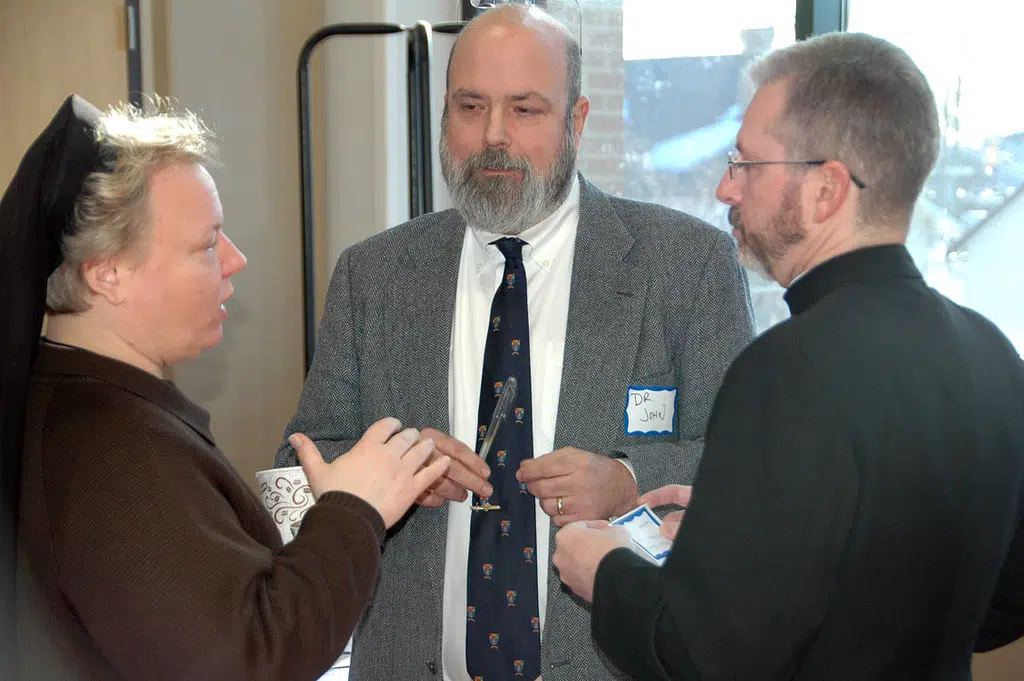
Dr. John Bruchalski, founder of the Tepeyac Family Center in
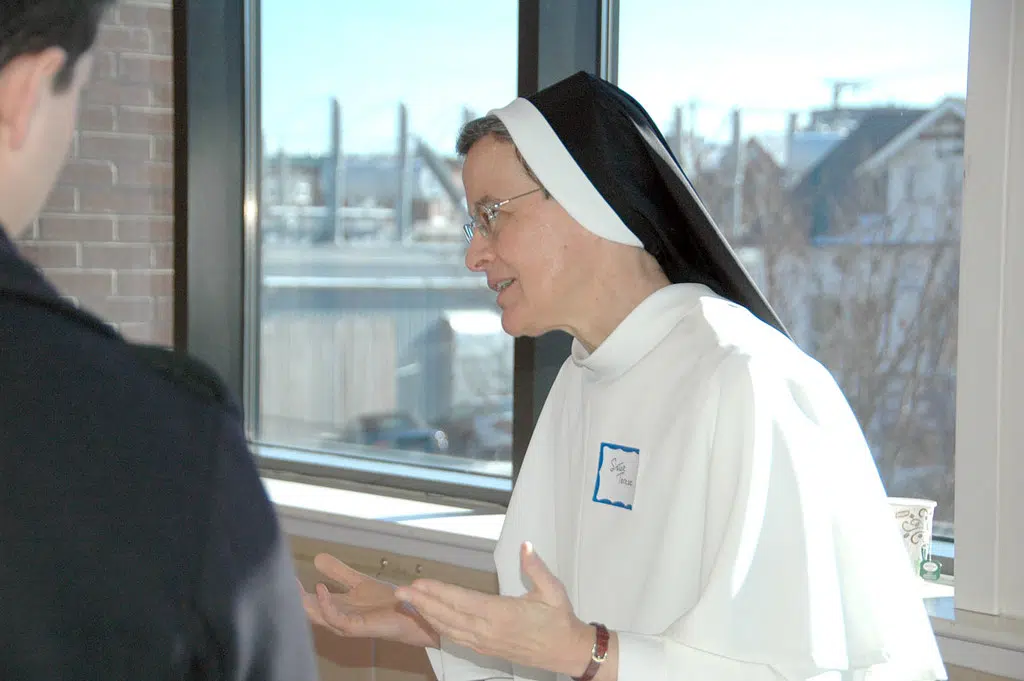
Fairfax, and Dominican Sister of Nashville Terese Auer,
bioethics chair at Saint John Paul the Great Catholic High
School in Dumfries, were the keynote speakers at the
conference, which was co-sponsored by the St. Charles
Borromeo Respect Life Team and the diocesan Respect Life
Office.
Bruchalski’s “conversion” story is well-known to many in the
local pro-life community. He completed his residency in
obstetrics and gynecology at the Eastern Virginia Medical
Center and the Jones Institute for Reproductive Medicine in
Norfolk in 1991.
“I had a change of heart on the issue of fertility in the
middle of my residency,” he said.
He turned away from a career of providing a full-range of
reproductive services to women, including abortion, to open
the Tepeyac Family Center in 1994. The center’s mission is to
combine the best of modern medicine with the healing presence
of Jesus Christ.
As a clinician, Bruchalski said he tries not to be judgmental
when seeing patients “who suffer with the challenges of
society.”
The subject of his talk was “Brave New World: I Make All
Things News,” which was taken from the title of the 1932 book
by Aldous Huxley.
“We’ve come a long way in reproductive health” since Huxley
published his book, Bruchalski said.
“The church has been helpful in trying to keep up with
reproductive changes,” he said, “but how do we speak to a new
generation?”
We need to be “revolutionary” in our thinking, he said.
In his practice, Bruchalski said he tries to move people from
fear to trust.
When a woman comes to him who has been involved with in vitro
fertilization, Bruchalski asks her two questions: Are the
embryos they make in the lab your children or your property?
Do you love them or do you own them?
“Those are the questions that have opened the door for so
many patients,” he said.
At Divine Mercy Care, the umbrella organization for Tepeyac,
“we believe that health is based on sacrificial relationships
found in community,” Bruchalski said.
“Medicine is an act of mercy. We hate the disease, but love
the person.”
Bruchalski said the center is guided by the principles of
service, inspiration, unity and mercy. He called Tepeyac a
“hybrid practice” that combines social justice with the
Gospel of Life. He takes care of patients with and without
insurance. No one is turned away.
“We try to be a sign of contradiction to the Affordable Care
Act,” he said, by transforming hearts through healthcare.
A bioethics curriculum
In her keynote talk, Sister Terese said “we owe a debt of
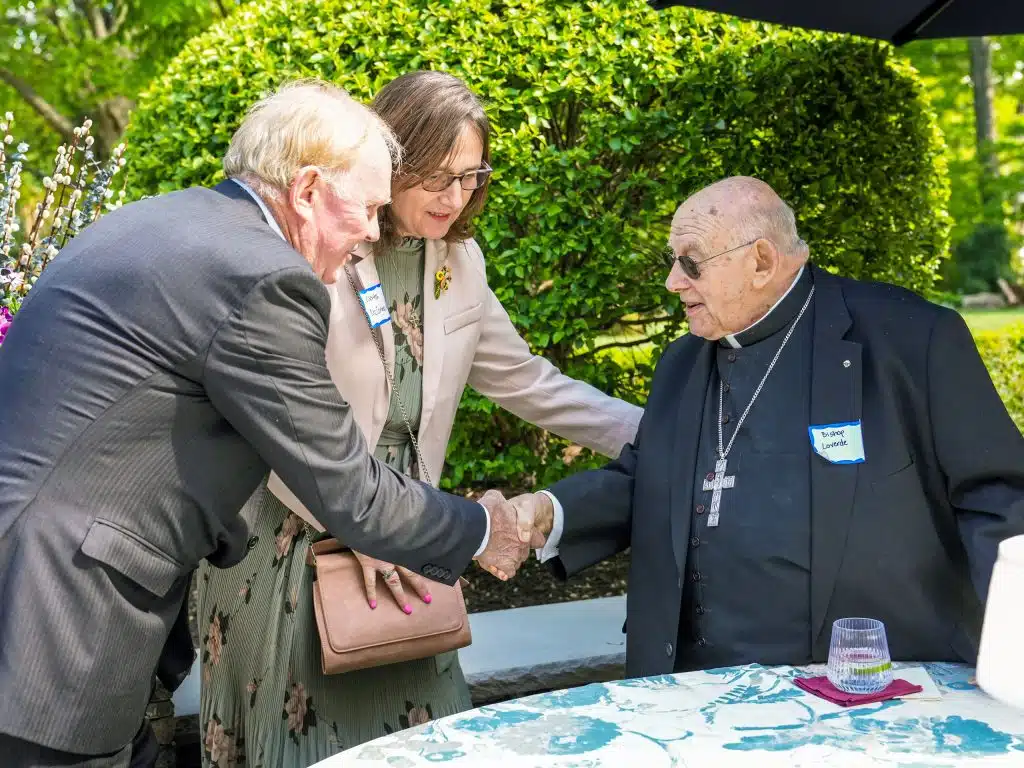
gratitude” to Arlington Bishop Paul S. Loverde for being the
inspiration for developing the bioethics curriculum at Saint
John Paul the Great High School. It is believed to be the
only four-year program of its kind offered at a Catholic high
school in the United States.
Every student is required to take four semesters of bioethics
classes. “We want the students to know why something like in
vitro fertilization is right or wrong,” she said.
“The person who is created would not be a person if God did
not infuse them with a spiritual and immortal soul,” Sister
Terese said. “We must never lose sight of their dignity.”
Sister Terese described the different stages in the life of a
human being – from zygote to embryo to fetus – before
recognizing the milestones in the history of artificial
reproduction.
In 1949, Pope Pius XII condemned the fertilization of eggs
outside the womb. The world’s first “test tube” baby, Louise
Brown, was born in 1978 in the United Kingdom, while the
first American test tube baby was born in 1981.
The Vatican’s 1987 document “Donum Vitae” condemned in
vitro fertilization.
Sister Terese said IVF clinics often seek egg donors on
college campuses and pay a higher rate to students at Ivy
League colleges.
The annual number of IVF births is increasing at a rapid
rate. According to published reports, an estimated 5 million
babies have been born through IVF during the past 35 years,
but only 7.5 percent of fertilized embryos will result in
live births, Sister Terese said.
Sister Terese said there are several reasons why artificial
insemination is ethically wrong: it violates the marital
bond; masturbation is used to collect the semen; extra
embryos are frozen or used for medical research; and it
replaces the sexual act within marriage.
“A good end does not justify an evil means,” she said. “A
child is a gift, not a right and no one has the right to have
a child. The dignity of all human life must be respected.”