For months, Melquisedec Revolorio has been living safely with a relative in his new Manassas home. But mentally, the 18-year-old is still haunted by the gang that harassed him in his native Guatemala. During the day, he works in construction to pay $3,000 to the gang that threatens to kill his family back home. At night, everything he’s been through often keeps him awake.
When Revolorio was 16 years old, a gang known for kidnappings and extortion began to harass him on his way home from school. At one point, they beat him with a bat. He didn’t report it to the police; he didn’t trust the police to take action. Despite their efforts to coerce him, Revolorio would not join the gang. So, after talking it over with his parents, Revolorio, at age 17, traveled with a few others from his city by bus, taxi and hitchhiking to reach the U.S. border. He carried three outfits, a jacket, a bed sheet, and his and his parents’ IDs. When he arrived, he was placed in a shelter with other minors.
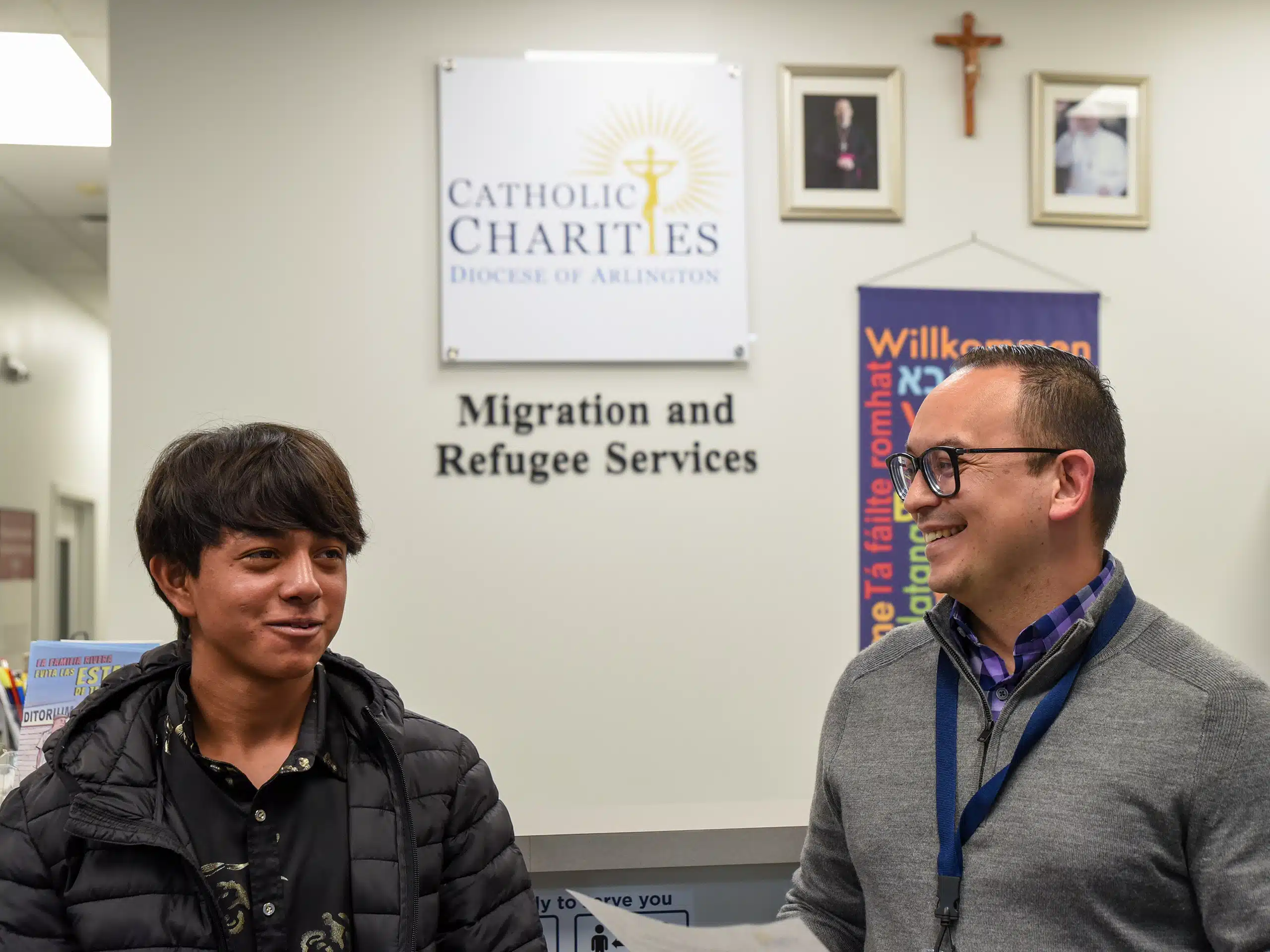
Revolorio was one of the 300 youths served by diocesan Catholic Charities Family Reunification Program last year. The program can’t fix the strife that causes the youths to flee their home countries, nor can they stop the violence that still threatens loved ones back home. But they can help the children and teens connect with relatives in the U.S.
“A lot of the kids that we see who are crossing the border, come for varied reasons — including being forced into a gang,” said Jessica Estrada, director of Newcomer Services. “They’re told, either you join the gang or we’ll kill your family, or you pay this money. They’re left with no viable choice.”
This year, every child released from border shelters will be connected with an entity such as Catholic Charities. “In the past, maybe 25 to 30 percent (of kids) would receive services,” said Estrada. “That means right now, all affiliates are increasing services up in terms of people being served.”
Depending on that minor’s situation, Catholic Charities can help unaccompanied kids access legal services, clothing and hygiene supplies, as well as health, mental and dental care. They help the child enroll in school and tell them what to expect at their upcoming immigration court date. Most importantly, they help the child connect with a relative in the U.S., and make sure that relative can provide a safe environment for the child to thrive. They conduct a home study, background checks and fingerprinting for the adults who will be living with the child.
“Our case managers interview every member, whether it’s a relative or not,” said Estrada. “The family has to show that they have a place for that child to sleep, that they have a safety and supervision plan. All of that is established before the child can be placed there.”
Catholic Charities hopes these minors heal from the tragic circumstances that brought them to the U.S. and works with them to provide a fresh start. “For whatever reason, their previous home environment did not provide an adequate healthy upbringing, such as growing up without their biological parent,” said Estrada. “Our work, the reason why this program is called family reunification, is because we’re trying to get kids with their family. We just want people to be in a loving family situation.”
Find out more
To donate needed items to unaccompanied children served by Catholic Charities, go to Amazon.