Who is Mary?
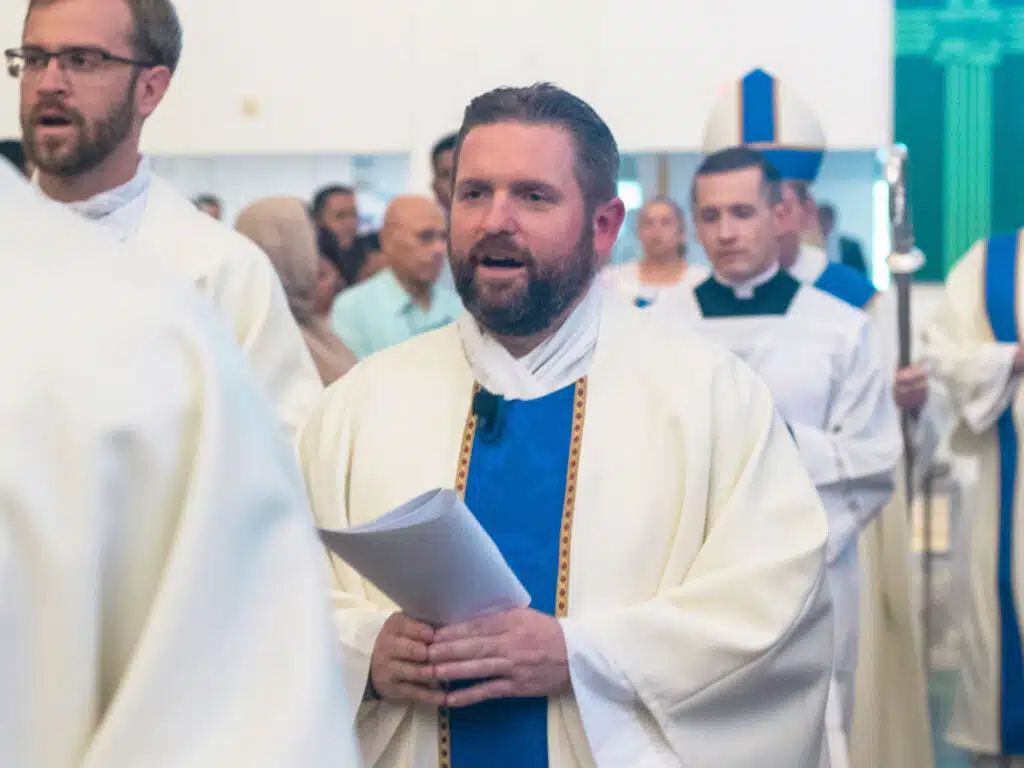
During the Marian-themed second year of preparation for the 2024 Diocesan Golden Jubilee, the diocese has released videos exploring the life of Mary through interviews with Bishop Michael F. Burbidge, local priests, women religious, and others devoted to Our Lady.
Read below to see what they shared and what the church teaches about Mary. In the words of Father Joseph M. Rampino, a student at The Catholic University of America in Washington, “Whenever we teach something about Our Lady, we’re also learning something about Jesus Christ, and we’re learning something about our own salvation.”
Why do we call Mary the mother of God?
The church teaches that Christ is fully God and fully man. He is one person with two natures — human and divine. Because Christ is one person, Mary, as the mother of that one person, necessarily is the mother of God.
In the fifth century, a bishop called Nestorius of Constantinople taught that Mary was the mother of Christ but not the mother of God. “In order to respond to that error, the church defined the doctrine of the ‘theotokos’ or Mary’s motherhood of God,” said R.J. Matava, a professor at Christendom College in Front Royal. “No Christian of whatever stripe should want to deny or really call into question whether Mary is the mother of God, because the cost of doing that is to deny the divinity of Jesus, or to deny the unity of Jesus and to treat the human Jesus as somehow separate from the eternal Son of the Father.”
What is the immaculate conception?
The immaculate conception is the belief that from the moment of her conception, Mary was not stained by original sin. The rest of humanity is born with original sin, which baptism removes.
In 1854, Pope Pius IX proclaimed, “The most Blessed Virgin Mary was, from the first moment of her conception, by a singular grace and privilege of almighty God and by virtue of the merits of Jesus Christ, Savior of the human race, preserved immune from all stain of original sin.”
In the Gospel of Luke, the angel Gabriel refers to Mary as “full of grace.” But the word itself in Greek is “kakeirotomene,” meaning the one who has already received grace, said Matthew Tsakanikas, a professor at Christendom College.
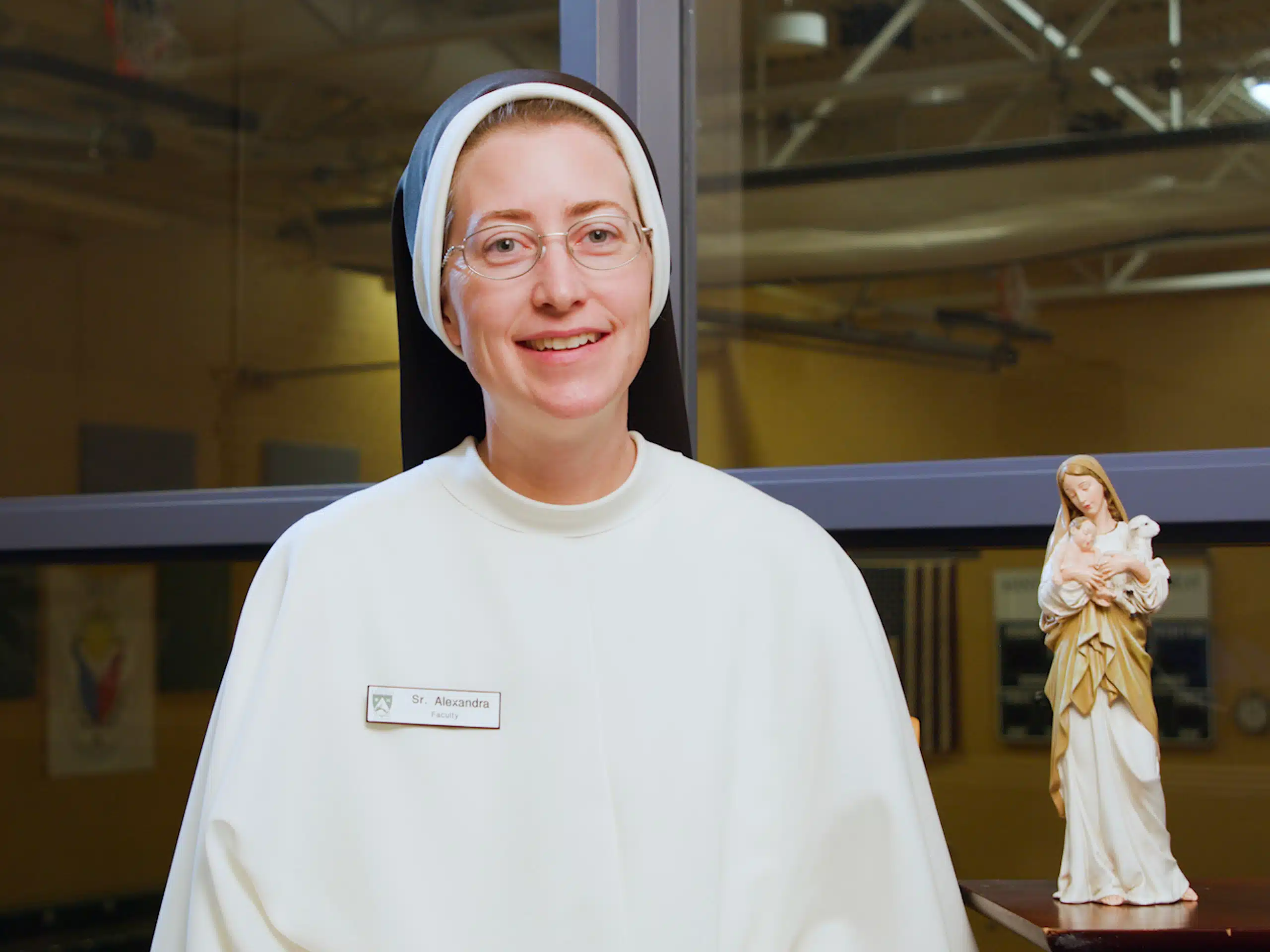
“What the Lord does for Mary is (make) her the most fitting vessel to carry God himself,” said Dominican Sister Alexandra Prosser, chair of the religion department at Saint John Paul the Great Catholic High School in Potomac Shores. “And so, she receives a unique grace to do that. It’s not that she doesn’t need Christ’s redemption to do that, but that those merits of Christ’s redemption apply to her ahead of time. He redeems her so that she can be prepared for this special role.”
Though Mary was created without sin, she still had freedom to choose to follow God or to sin, said Father Edward C. Hathaway, rector of the Basilica of St. Mary in Alexandria. “So her great glory is that conformity of her life to God completely — the complete self-gift of her life to God,” he said. “It teaches us to do the same — to bring Christ into the world.”
What is the assumption of Mary?
The assumption is the belief that Mary was assumed both body and soul into heaven either in her sleep or immediately after her death. The catechism says that the assumption of the Blessed Virgin is “a singular participation in her Son’s Resurrection and an anticipation of the resurrection of other Christians.”
“We also understand Mary as the new Eve,” said Father Daniel Hanley of Mount St. Mary’s Seminary in Emmitsburg, Md. “She’s the new Eve of the new creation. So it makes sense that even as Christ himself ascended — which means Christ ascended on his own power as God into heaven — Mary was assumed into heaven following her son as his closest disciple, and really as a model for us of what’s to come in our own life.”
Human beings are a union of body and soul, but after death, our bodies and souls will be reunited only after the second coming of Christ, said Sister Alexandra. “So even when our souls are in heaven, there’s something sort of incomplete, there’s a sense of anticipation that something is yet to come,” she said. “When that resurrection of the body happens, when our Lord comes again in glory, (Mary) shows us (that) this is a joy that we can look forward to and that Our Lord has graced her with in a particular way in advance.”
Why do Catholics believe in Mary’s perpetual virginity?
In the Bible, the angel Gabriel tells Mary that although she is a virgin, through the power of God she will become pregnant and give birth to a son. The church teaches that after she gave birth to Christ, she remained a virgin. An early church father, St. Augustine, writes that Mary “remained a virgin in conceiving her Son, a virgin in giving birth to him, a virgin in carrying him, a virgin in nursing him at her breast, always a virgin.”
“We’re told that when Mary is betrothed to Joseph, the angel Gabriel appears to her and tells her that this is going to happen,” said Father Rampino. “And her response is, ‘How can this be, for I have no relations with a man?’ And that’s a weird response if you think about it. If she really is betrothed to Joseph, why would her response not be, “Oh good, how wonderful, Joseph and I are going to bear this great figure for the people of Israel.’ If she was intending to live a married life with Joseph just as anybody would, then this shouldn’t be too much of a surprise to her.”
The angel Gabriel doesn’t get mad at Mary for questioning his announcement, as he did when Zechariah, the husband of Mary’s cousin Elizabeth, questioned how he and his wife could become parents after years of being barren. “(The angel) kind of likes the question, which is really interesting,” said Father Hanley. “We’ve always seen in that passage evidence of Mary’s desire to be exclusively God’s.”
Some point to references in the Bible of Jesus’ siblings as evidence that Mary had other biological children. “One thing that we have to bear in mind is that the term ‘brothers’ can be used very broadly in that social and linguistic context,” said Matava. “Jesus had a human family, he had a real human nature, he had a real human family tree. And so he had cousins, and I think that’s how the church tells us we should understand that reference to brothers.”
Why do Catholics pray to Mary and honor her?
Across the Potomac River in Washington are two large temples filled with god-like statues of men. But the Jefferson and Lincoln Memorials are not symbols that Americans worship these past presidents, said Father Hanley. “We’re honoring them because they did great things for our country,” he said. “It’s very similar with Mary except we have a more supernatural outlook because we honor Mary as someone we know is still living and who hears us.”
“Our Lady is the highest work of God,” said Father Hathaway. “In her sinlessness, in the role that she plays in the mystery of salvation — bringing Christ to earth and nurturing him and continuing to mother the church. So when we honor her, that’s very pleasing to God.”
God the Father enjoys including those he loves in his works, said Father Rampino. “When we’re asking the Lord for something through the saints, it’s not as though we’re assembling a crew of heavenly lawyers to plead our cause before God who would rather not give us anything that we want but if he’s convinced by his favorite people maybe he’ll do it,” he said.
“Rather we’re giving honor to God by including those whom he has loved, by including those whom he’s outfitted for particular work,” said Father Rampino. “Something similar is happening where Our Lady has been included in God’s greatest plans. So by honoring her in that way we honor his work, we honor the things that he has done, we honor the beauty of his plan.”
Bishop Burbidge asked that Catholics in the diocese have a statue in their home of Mary. “We’re human beings — we need signs, we need reminders,” he said. “We can go directly to God (in prayer). We all know that. But it’s always great to have a friend, a heavenly friend.”
Maraist can be reached at [email protected] or X (formerly Twitter) @zoeymaraistACH.
Find out more
Watch the “Mary, Explained” videos, at arlingtondiocese.org/maryexplained.