Students who don’t excel in school may need more than just help
with their homework — in many cases, they need to learn something even more
basic first.
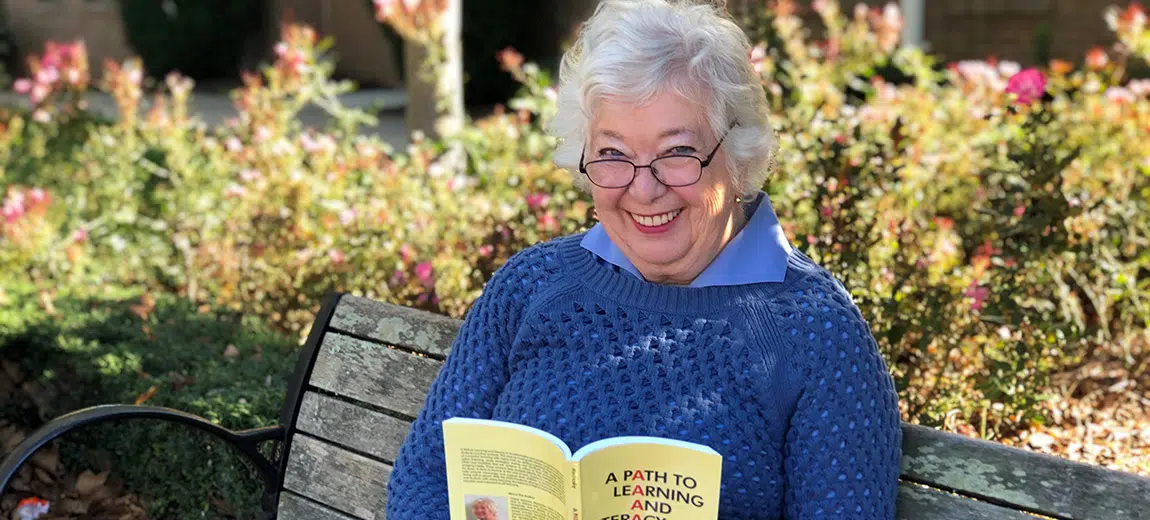
“We never teach kids how to study,” said Claire Johnson Machosky,
a retired teacher, administrator and school consultant who moved to Haymarket
in 2006. She and her son, daughter-in-law and four grandchildren are
parishioners of All Saints Catholic Church in Manassas.
Machosky says that as a teacher in both Catholic and public
schools in Hicksville and Syosset, N.Y., she became aware that when students
got poor grades on assignments or tests, it was frequently because they didn’t
comprehend what they were being asked to do, or misunderstood directions.
So she started to present information in multiple formats for
students with different learning styles and asked the class to rephrase the
content in their own words, so she could assess their level of comprehension.
She taught them how to use study tools such as notes and handout materials and
had students identify the specific topics they needed to study for a test,
practicing the types of questions they might expect. After tests, she
encouraged them to learn from their mistakes, making corrections to earn back
some of the points they lost.
Time and again, Machosky said, she saw students improve and
become excited about learning “because they knew what to do and how to do it.”
But there was no resource that taught these skills directly — so after she
retired, she decided to write one herself.
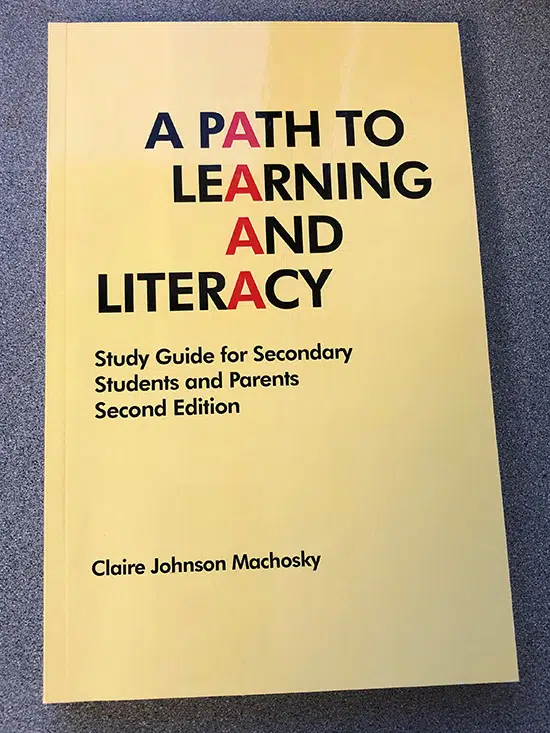
Her book, “A Path to Learning and Literacy,” demystifies the
process of studying by breaking it down into basic steps, starting with simply
getting organized. The need for structure became even more urgent during the
pandemic, when students had to spend more time studying at home.
“Where, when and with what will you work and study?” she asks.
She suggests students establish a regular routine, studying each day at about
the same time and in the same place, where they have all the supplies they need
at hand. She’s seen students “spend 15 minutes looking for a pencil,” she said.
The second step is understanding and identifying what each
assignment requires. Students should be able to explain the assignment in their
own words to another person, such as a parent or another student. If it’s a
group project, everyone should be able to discuss and agree on what needs to be
done.
Next, students must come up with a plan. “Start with the end in
mind,” Machosky said. For long-term assignments, students may need to break
down the tasks required into many steps and use a calendar to schedule reading,
research or preparing a presentation. “This is a time-management skill, and it
is an essential learning strategy,” she said.
The book discusses acquiring new information and how to get the
most out of different learning resources such as handouts, websites and even
textbooks. “I teach them all about their textbooks — many don’t know how to use
the contents, glossary or index sections” to find information they need, she
added.
She also discusses the importance of listening well. “I don’t
think it’s emphasized enough how important that is. Kids need to listen,
parents need to listen, and teachers need to listen to students, to know their
needs and how to meet their needs.” She also includes advice for parents and
frequently asked questions for students.
Studying and learning take discipline and determination, Machosky
said. Students innately understand that this is true in sports, where athletes
know they need to practice to win. In school, “when you want to excel at
something, you’ve also got to practice,” she said.
And when you do, “you have to give yourself credit — your biggest
critic is yourself,” Machosky added. “Stop beating yourself up and start
patting yourself on the back.”
Find out more