Most educators today hesitate to ask one question that could save a life, Jennifer Cotnoir said: “Are you thinking of suicide?”
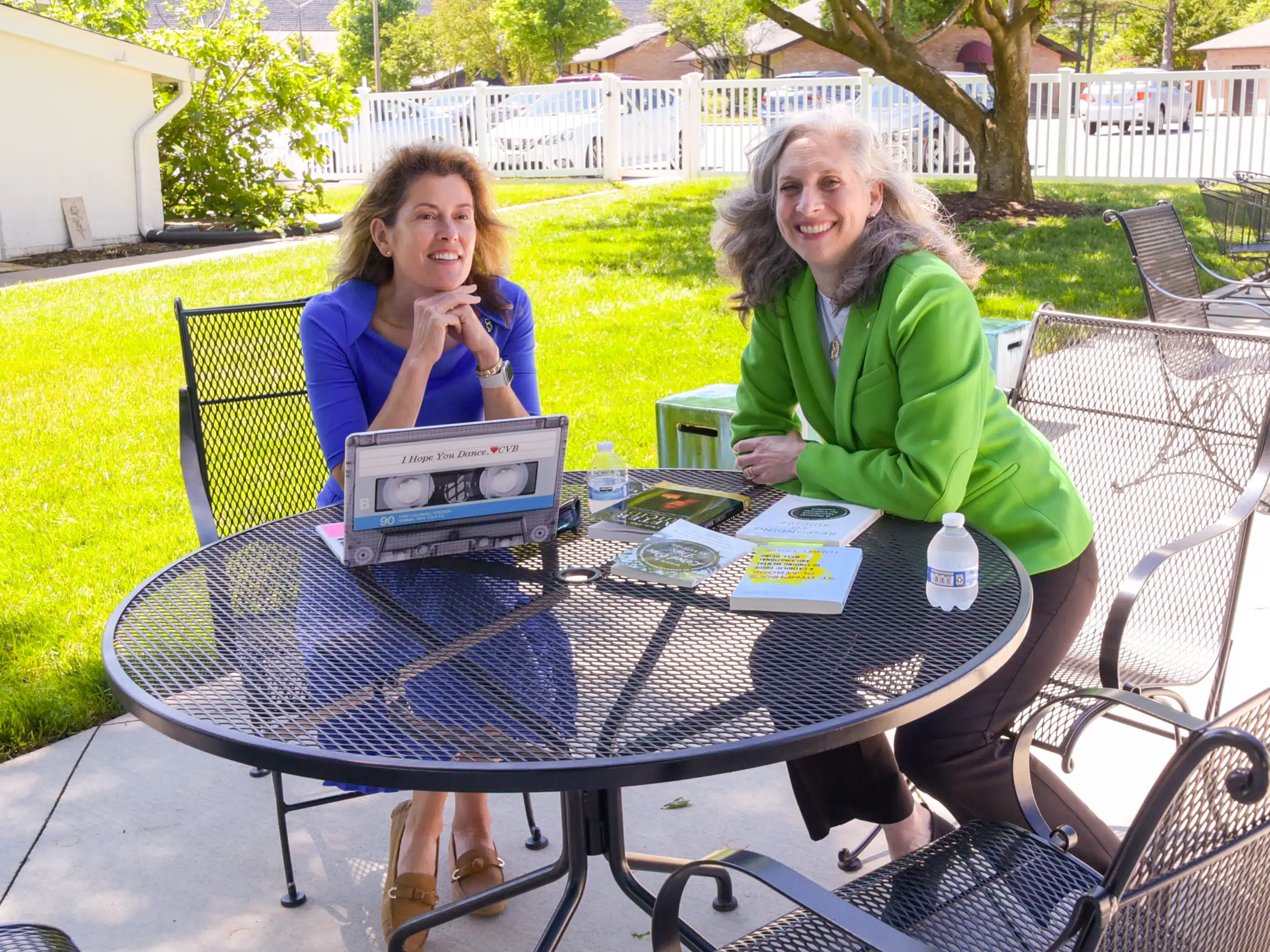
Michele VanBelleghem, a retired teacher at Our Lady of Hope Catholic School in Potomac Falls, and Cotnoir, a counselor at St. Louis Catholic School in Alexandria, teamed up two years ago to launch a series of safeTALK suicide awareness trainings in diocesan schools and parishes.
VanBelleghem felt compelled to spread suicide awareness during her teaching career at Our Lady of Hope after learning about one student’s struggles. She asked students to write down weekly prayer intentions. VanBelleghem stumbled across one disclosing that a student had suicidal thoughts.
VanBelleghem wrote to Beth Bostwick, health and wellness coordinator for diocesan Catholic schools, asking if she could train other diocesan educators with the safeTALK program. Bostwick immediately connected VanBelleghem with Cotnoir, who had contacted her with the same idea.
The safeTALK program is produced by LivingWorks, a Canadian organization that advocates for suicide awareness. After extensive preparation, VanBelleghem and Cotnoir became safeTALK trainers in February 2023, and they now help educators and staff at schools and parishes around the diocese.
Initially, responses to the training varied, Cotnoir said: “Suicide’s a heavy topic.”
“Every school has a different dynamic,” VanBelleghem added.
To accommodate participants’ comfort levels, the three-hour training is designed to slowly educate participants on the topic. “We don’t come in all ‘doom and gloom’ or dressed in black,” VanBelleghem said. Instead, they provide activities for participants before delving into any sensitive content.
In safeTALK, participants learn to identify mental health symptoms that indicate an individual may be contemplating suicide. They then learn conversation starters to engage an at-risk individual in compassionate conversation. After the education portion, participants complete several role-play exercises to practice initiating conversations.
A common concern is that talking about suicide might “normalize” it, VanBelleghem said. “We stress that is not what we’re doing. We’re saying that it’s a normal human thought, (but) suicide is not the solution,” she said.
“What we’re normalizing is that mental health issues, mental illness, mental health disorders are an issue,” Cotnoir said. She added that one way to destigmatize suicide is to replace the phrase “committed suicide” to “died by suicide.” “There’s more dignity in saying that than ‘committing,’ ” she said.
Bostwick said that safeTALK benefits the community by equipping participants to recognize those who may be at risk of suicide. “Through its training, our community members can learn how to recognize the signs of suicidal thoughts, engage in compassionate conversations, and connect those in crisis with appropriate resources. This proactive approach fosters a supportive environment, reduces the stigma associated with discussing mental health issues, and enhances the resilience and well-being of our diocese,” she said.
So far, Cotnoir and VanBelleghem have conducted 16 training sessions with more than 400 participants, including some 40 diocesan priests. Staff from multiple schools often participate in the same training session, Cotnoir said.
Priests who participated in the school training sessions said that the education could pertain to all priests in the diocese, VanBelleghem said. So, the duo petitioned Bishop Michael F. Burbidge to open safeTALK training to all diocesan priests and not just those in diocesan schools. After meeting with and receiving approval from Bishop Burbidge last year, “We booked three trainings right off the bat,” VanBelleghem said.
Cotnoir said that while suicide is a sensitive topic, she feels excited to share this education with others.
“When I walk into a classroom, I’m completely humbled to be invited to share this message and grateful, because it could truly be saving somebody’s life.”
If you or someone you know is in crisis, contact the 988 Suicide and Crisis Lifeline by calling or texting 988 or go to 988lifeline.org.
Find out more
To participate in safeTALK training, email [email protected].
For the suicide and crisis lifeline, call 988 or go to 988lifeline.org.
For mental health counseling services, go to bit.ly/3UWNm6i.