What are the challenges facing Catholic higher education
today? Where is there room to grow and what threats should
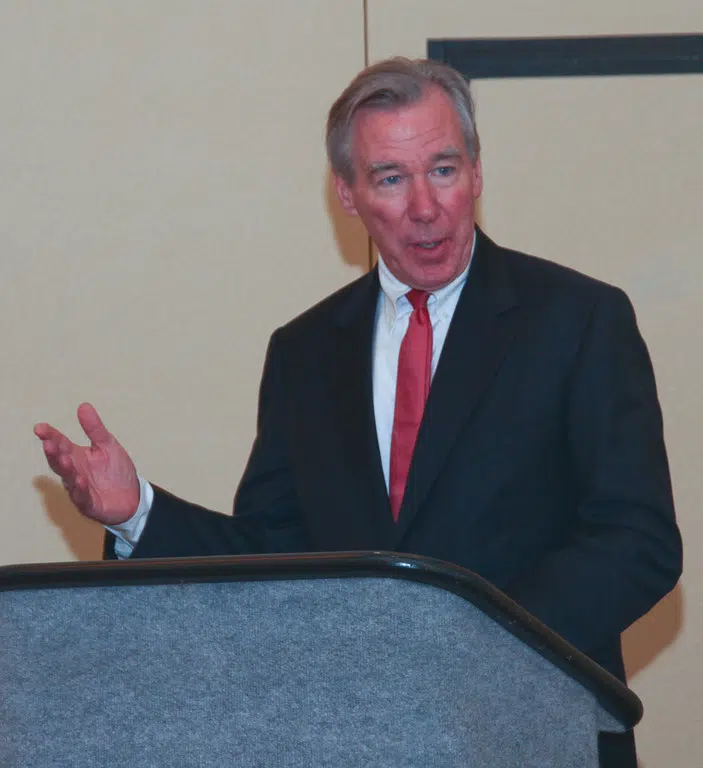
administrators watch for in years to come? John Garvey,
president of Catholic University in Washington, shared his
thoughts on these issues Nov. 7 during the Catholic Press
Association Southern/Eastern Regional Conference in
Alexandria.
Before a room filled with Catholic journalists and media
professionals, Garvey spoke about the cultural,
administrative and political trends he believes could
threaten the future of Catholic colleges and universities.
Although Catholic education has a long history dating back to
the middle ages, he believes such institutions cannot be
taken for granted.
“Catholic education is a gift we will have to work hard to
preserve,” Garvey said. “The past several decades have seen
changes that pose a serious threat to its integrity.”
One of the largest changes facing Catholic higher education
is the rise in secularism in society, which coincides with
the decline of Catholic culture in America. This is a
relatively new problem, something unthinkable when Garvey was
growing up in an Irish Catholic family in a small steel town
in Pennsylvania.
“When I grew up, being Irish and being Catholic were
connected,” he said. “From my father we learned a fervent
devotion to the Blessed Mother. We prayed the rosary often.
… There was a rhythm of life that went with being
raised in an Irish Catholic home.”
Today, fewer people are getting married, more people are
getting divorced and strong Catholic families are
increasingly rare. Attendance has dropped at Catholic
elementary and high schools leaving children less connected
to their faith and less likely to enroll in a Catholic
college or university when they get older.
With the rise in a secular culture that often promotes
materialism and sexual promiscuity, Garvey believes Catholic
colleges and universities offer students a “coherent moral
code.”
“We teach people about the life of virtue and we try to show
them how to live it. We encourage people to believe that love
is real and that commitment to loving others is the true path
to happiness,” Garvey said. “We have found that students are
attracted to what we have to offer.”
Other challenges facing Catholic colleges and universities
result from dwindling vocations. With fewer priests and
religious available to minister to students and lead by
example, it becomes increasingly important to hire staff and
faculty members committed to their Catholic faith.
“Faculty play the central role in forming the minds of
students and in guiding them in the dialogue of faith and
reason,” Garvey said. “How students approach the relationship
of faith to the subjects they study depends on how faculty
members treat that relationship.”
Catholic colleges and universities also face religious
liberty threats from government regulations requiring schools
to provide contraceptives, abortifacients and sterilizations
through health insurance plans.
“Cases like the (Health and Human Services) mandate suggest
an unsettling trend toward the privatization of religion on a
number of fronts,” Garvey said. “Religion can’t be reduced to
worship or to what we do in private. … Our moral and
political opinions are formed by the faith and are
inseparable from it. To say we have to check our faith at the
door is to exclude us from the public sphere.”
Other problems facing Catholic higher education are proposed
policy changes dealing with federal college funding, possible
tax changes surrounding charitable deductions and an
increased dependence on governmental support for institutions
of higher education, charities and other cultural
institutions.
Despite the many challenges facing Catholic universities,
Garvey said there also are hopeful signs for the future,
including passionate and faith-filled students. In the end,
he said, the future of Catholic colleges and universities
“depends more on people who are attending the schools than
the people running them.”
Bahr can be reached on Twitter @KBahrACH.