
As a “Star Trek” fan, the phrase “live long and prosper” resonates
with David Egan. When he was born in 1977, the idea that people with Down
syndrome could have long and prosperous lives was far from mainstream. But his
parents saw him as an individual with his own unique strengths and weaknesses.
Thanks to the support of his parents, his community and his own
resourcefulness, Egan has been able to — to borrow another “Star Trek” saying —
“boldly go where no one has gone before.”
One day when Egan was a teenager, his mother Kathleen was
surprised to find him watching C-SPAN. He told her he enjoyed watching the congressmen
make speeches. Later he would go on to make many speeches himself, including in
the U.S. Senate, testifying on behalf of people with disabilities. Throughout
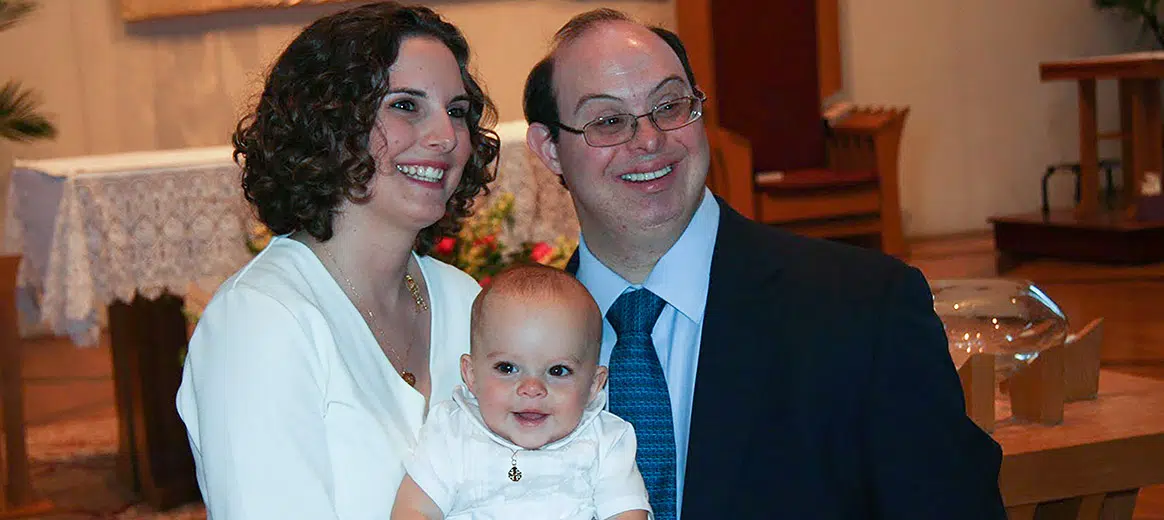
his life, he’s used his leadership abilities in many ways — as a godfather to
his nephew, Mason, as a Special Olympics Global Messenger and as a published
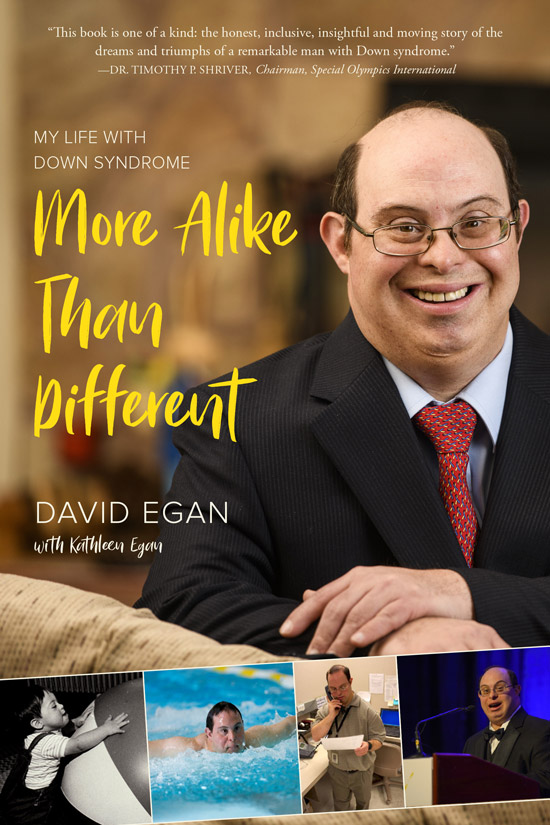
author of the new book, “More Alike Than Different.”
“I think that I was born to be an advocate,” said Egan. “I want
to follow in the road that Jesus took, advocating for those who are
misunderstood and often marginalized in our society.”
Egan, a parishioner and former altar server at St. Mark Church in
Vienna, credits his early experiences in Special Olympics with pushing him
toward his eventual path as an advocate. Basketball and swimming were two of
his favorite sports to play. “It helped me gain self-confidence, discipline,
resilience and an ability to reach a goal,” he said. “I learned about teamwork
and determination. I learned that Special Olympics is more than just medals. It
is about giving it our best.”
But Egan did more than play. In 2000, he
was selected as a delegate to the First Special Olympics Global Athlete
Congress in the Netherlands. In 2010, he participated again in the Global
Athlete Congress, this time in Morocco. From 2014 to 2018, he was chosen to be
one of 12 Special Olympics Sargent Shriver International Global Messengers
selected from the various regions of the world.
“One of the peak moments
for me was standing in front of more than sixty thousand people at the opening
ceremony for the 2015 Special Olympics World Summer Games in Los Angeles,” he
wrote in his autobiography. “I had a message and a hope that the words I spoke
would open unexpected doors in the lives of others. I don’t know if people in
the audience or watching on TV saw me and others with new understanding. But I
think they did.”
When he wasn’t off giving speeches, Egan worked for many years as
a clerk in the Booz Allen Hamilton distribution center in Tysons. Then he got a
unique opportunity — to be an advocate for people with disabilities on Capitol
Hill as the Joseph P. Kennedy Jr. Public
Policy Fellow — the first person with disabilities to hold the position. As a
fellow, he had two roles: working with the Ways and Means Social Security
Subcommittee and with the National Down Syndrome Society.
At first, it was a difficult adjustment. “The staff had never
worked with someone like me and it was hard on all of us at the very
beginning,” said Egan. “I learned a lot about how hectic the pace is. I also
learned that I had to listen more than I had to talk.”
David Egan, a parishioner of St. Mark Church in Vienna,
recently wrote an autobiography about his life as a disabilities advocate. COURTESY
 But he was proud of what he was able to do. “I was involved in
the Down syndrome employment campaign called #DSWORKS and based on my 20 years
of competitive employment, I was tasked with creating a resource guide for
employers. That was my capstone project for the fellowship,” he said. “I am
still involved in that project and extending it to support both employers and
employees.”
In 2017, he continued his advocacy work at SourceAmerica, an
organization that helps people with disabilities find jobs. He works there as a
community relations coordinator, building alliances and advocating for
competitive employment.
In 2019, Egan and his mother worked together to write a book
about his life, which was published in 2020. Friends, family members and
co-workers contributed their thoughts, too. More than a detailed list of Egan’s
accomplishments, it invites readers to see a bit of themselves in him. He hopes
it encourages people to come up to him after Mass and ask about his life.
“We all share in the same humanity regardless of race, culture,
gender, disability or socio-economic status,” he said. “By focusing on
abilities, and what makes us more alike than different, our lives become
richer.”