WASHINGTON – Republicans won the two governor’s races up for
grabs in 2009.
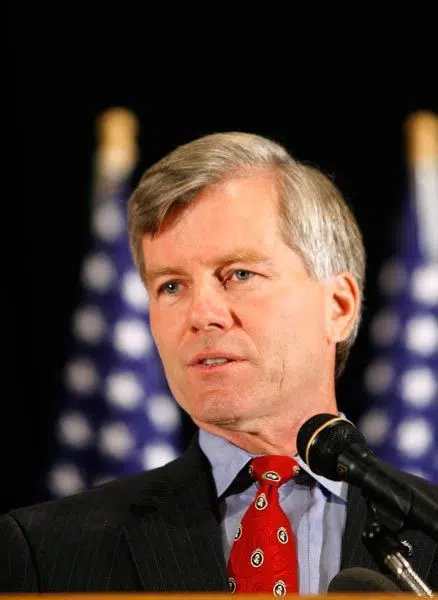
In Virginia, voters elected a governor whose pro-life views
had come under fire from his opponent. Bob McDonnell, a
Catholic who graduated from Bishop Ireton High School in
Alexandria, won with nearly 60 percent of the vote over his
Democratic rival, R. Creigh Deeds.
Deeds had tried to exploit a master’s thesis McDonnell had
written 21 years ago when he was a student at Regent
University, run by the Rev. Pat Robertson, in which he
outlined an political strategy that focused on many
hot-button social issues. McDonnell focused on the state’s
economy, job creation and transportation.
In New Jersey, incumbent Democrat Jon Corzine was ousted in a
three-way race. The Republican, Chris Christie, a Catholic,
won with 49 percent of the vote to Corzine’s 43 percent.
Chris Daggett, an independent, saw his double-digit support
melt away in the campaign’s waning days and wound up with 6
percent.
Maine voters rejected same-sex marriage, overturning a
marriage equality law passed in May.
But in Washington state, it appeared that a referendum to
uphold a law granting same-sex domestic partners the same
rights as married spouses would be narrowly approved, 51
percent to 49 percent. The referendum had been opposed by
Washington’s Catholic bishops.
The bishops also had opposed an initiative that would have
limited government spending growth to inflation plus
population growth, with excess revenue used to reduce
property taxes. Voters, siding with Catholic and other faith
leaders, rejected it by a 5-to-4 margin.
The religious leaders warned the initiative would have cut
human services and made the state’s recession permanent.
In Maine after vote totals were announced on the same-sex
marriage law, Bishop Richard J. Malone, head of the statewide
Portland Diocese, said: “I want to thank the people of Maine
for protecting and reaffirming their support for marriage as
it has been understood for millennia by civilizations and
religions around the world.”
“I am thankful for those who engaged in sincere and civil
discourse on this matter of such serious consequence to our
society,” he said.
“These past few months have served as a teaching opportunity
to explain to parishioners and the wider community about how
and why the church views and values marriage as the union of
one man and one woman,” Bishop Malone added. “I trust that
those who voted for such a radical change did so out of
concern for our gay brothers and sisters. … While the
Catholic Church will continue its commitment to work for the
basic human rights to which all people are entitled, it
remains devoted to preserving and strengthening the precious
gift of marriage.”
The law had been put on hold after the petition drive was
launched to repeal it. Voters have rejected same-sex marriage
in each of the 31 states where it has been on the ballot.
Only five states currently allow same-sex marriages to be
performed: Iowa, Connecticut, Massachusetts, New Hampshire
and Vermont.
In the District of Columbia, the Catholic Church and other
backers of traditional marriage have lobbied the city’s
lawmakers and rallied to urge that citizens be able to vote
on a same-sex marriage bill that is now being considered by
the City Council and expected to be put to a final vote by
members by the end of the year.
The district’s charter forbids popular votes on laws that
could be seen as restricting one’s rights. All district laws
that are passed are subject to review by Congress.
An election to fill a vacant U.S. House seat from upstate New
York turned unexpectedly contentious in the campaign’s final
two weeks. As Republican Dede Scozzafava was trailing in a
three-way race with Democrat Bill Owens and Conservative
Party candidate Doug Hoffman, many national Republicans threw
their support behind Hoffman and urged Scozzafava – who
supported legal abortion and gay rights, to the chagrin of
many in GOP leadership – to bow out of the race.
She did but threw her support behind Owens, who claimed 49
percent of the vote to Hoffman’s 46 percent.
In Ohio, by a 53 percent to 47 percent margin, voters gave
their OK to a state constitutional change authorizing casinos
to be placed in Cincinnati, Cleveland, Columbus and Toledo.
The amendment had been opposed by the state’s Catholic
bishops.
Casino gambling, the bishops said, was “not in the best
moral, social and economic interests” of the state’s
citizens. “More persons and families will be seduced into
financial hardship, rather than helped. More societal
problems will be aggravated, rather than improved,” they
added in a statement before the election.
By a margin of nearly 2 to 1, Ohio voters also passed a
constitutional change to create a livestock care standards
board, which the bishops supported, to regulate the treatment
of farm animals. And by a margin of nearly 3 to 1, voters
approved a $200 million bond issue to pay stipends to about
200,000 veterans of wars in Iraq, Afghanistan and the Persian
Gulf. The Ohio bishops did not oppose the veteran stipend
measure.
New York City Mayor Michael Bloomberg, a former Republican
who has since become an independent, won a third term, with
51 percent of the vote compared to 46 percent garnered by his
opponent, William C. Thompson Jr.
The diocesan newspaper in Brooklyn, N.Y., The Tablet, sparked
reaction by running a full-page, color Bloomberg campaign ad
that showed Brooklyn Bishop Nicholas DiMarzio with the mayor
in Yankee Stadium, both wearing Yankees garb. The ad said:
“Mike Bloomberg: Protecting NYC’s Catholic Schools. Fighting
for Us.”
In a column for The Tablet’s Nov. 7 issue, diocesan spokesman
Msgr. Kieran Harrington wrote that reaction to the
newspaper’s decision to once again accept political ads has
been “intense.”
Over the years, the paper’s refusal to run political ads and
parishes’ decision to refrain from holding candidate forums
has “led to an increasing marginalization of the Catholic
voice in the public square,” the priest wrote. Now the paper
must accept ads from all candidates, he added.
Regarding the Bloomberg ad, Msgr. Harrington said the diocese
was grateful for the mayor’s assistance with regard to
education but at the same time the bishop “profoundly”
disagrees with the mayor’s support for legal abortion and
same-sex marriage.
“The bishop doesn’t endorse candidates or political parties
but he does seek to engage elected officials to promote the
Catholic worldview and the interests of our community in
Brooklyn and Queens,” the priest added.