In 1970, about 60 percent of adult African-Americans were
married. Today, that number has fallen to about 25 percent. Additionally, 63
percent of all African-American children are born to single mothers, according
to Soul Mates: Religion, Sex, Love and Marriage among African-Americans and
Latinos by Nicholas H. Wolfinger and W. Bradford Wilcox.
The diocesan Black Catholic Ministry tackled the issue of getting
married and staying married during the annual Day of Reflection Nov. 19 at Our
Lady of Good Counsel Church in Vienna.
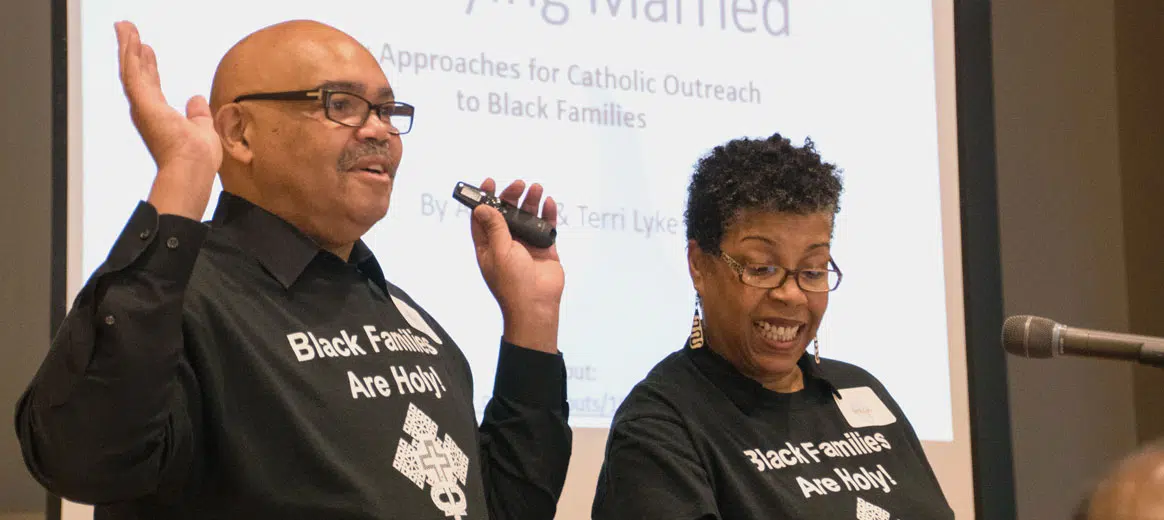
Keynote speakers Andrew and Terri Lyke first became involved in
marriage ministry after realizing their local couples’ retreats were not
ministering adequately to African-Americans. So they began the Arusi Network,
an organization to encourage and strengthen African-American marriages.
In their work, the Lykes found that many parishes have no
ministry for married couples. “We treat marriage like everybody else does, even
though we say it’s a sacrament,” said Andrew.
The culture today believes marriage should be about ease, not
effort, and happiness, not God’s will, said Terri. Yet it is a sacrament of
service with three rings, Andrew joked — the engagement ring, the wedding ring
and the suffering.
“(But) if we are faithful to the cross, there’s an Easter in us,”
he said, a joy.
This pre-Cana video from the Diocese of Richmond features Andrew and Terri Lyke, keynote speakers at the Black Catholic Day of Reflection.
For marriages to succeed, everyone from the best man to family
and friends in the pews have to act as accountability stakeholders in the
marriages of their loved ones and even fellow parishioners, said Andrew. “You’re
here to serve the community — not just your spouse, not just your family,” said
Terri.
“How will your marriage advance the mission of the church?” asked
Andrew.
In the Catholic African-American community, that means couples
must witness to single-parent families and children of divorce. “We believe
that every child deserves a marriage, and in our community where marriage is
scarcer, that means that we who are married have double duty, if not triple
duty,” said Andrew.
The Lykes encouraged Catholics to reach out to cohabiting
couples. “Our approach is not to lead by judgment, but in compassion and
mercy,” said Andrew, referring to the radical hospitality Jesus preached in the
parable of the prodigal son.
“Then when that inevitable holy longing hits them, they come back
home,” he said.
Parishes can foster holy marriages in a number of ways, such as
having married couples in leadership positions, providing adult education
classes and relationship skills resources. Having celebrations for wedding anniversaries
and involving both parents in baptism preparation can also encourage marriage,
they said.
Speakers Deacon Al and Jane Turner shared their story of
perseverance in marriage. Deacon Al was a widower with five children and Jane
had left an abusive marriage when the couple began to date. They married in
1983, and soon realized the work they had to do.
“Little did we know, (we would experience) the ‘for better or for
worse’ in spades. We had to integrate ourselves into each other’s lives,” said
Deacon Al. “We had to learn how to trust each other and learn how to
communicate honestly.”
Family counseling and their faith kept them together during those
difficult years. “God’s love for us and our mustard seed of faith were the
only things that stopped us from throwing in the towel,” he said.
“Once we decided that marriage was more important than what was
going on with my job, with the children, with the in-laws, things started to
fall together,” said Deacon Al. “We became best friends.”