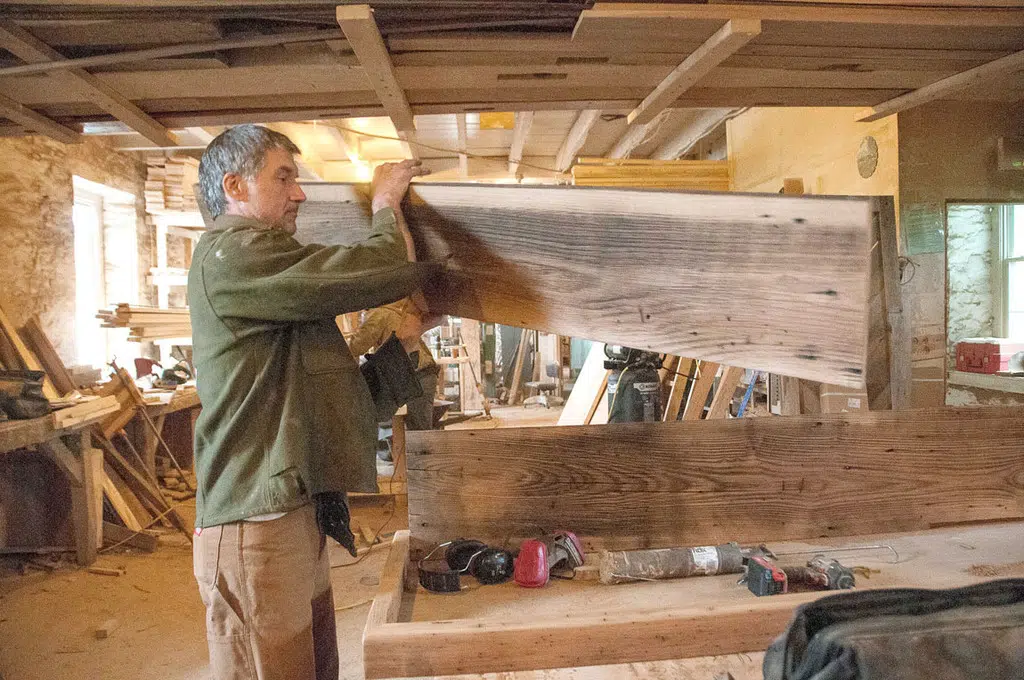

Above the hum of the table saw, one story was told, then
another. As the dark chestnut boards were fixed together,
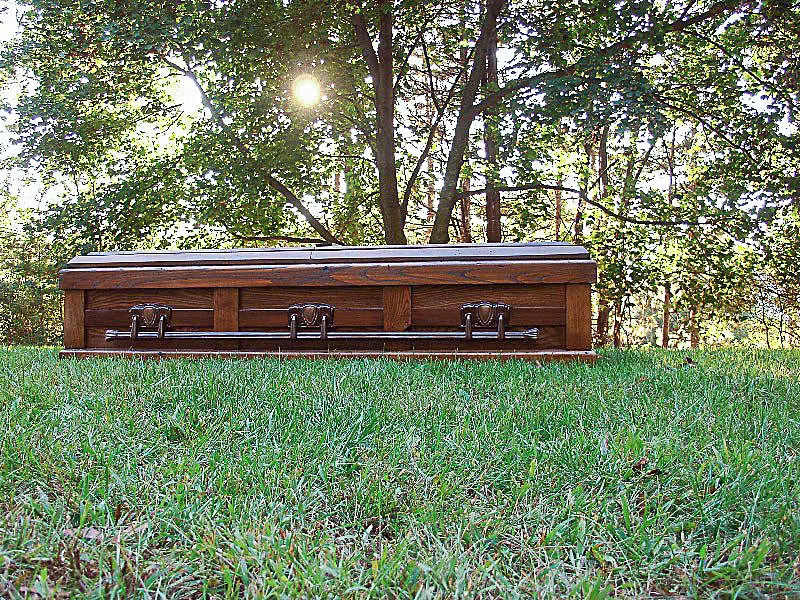
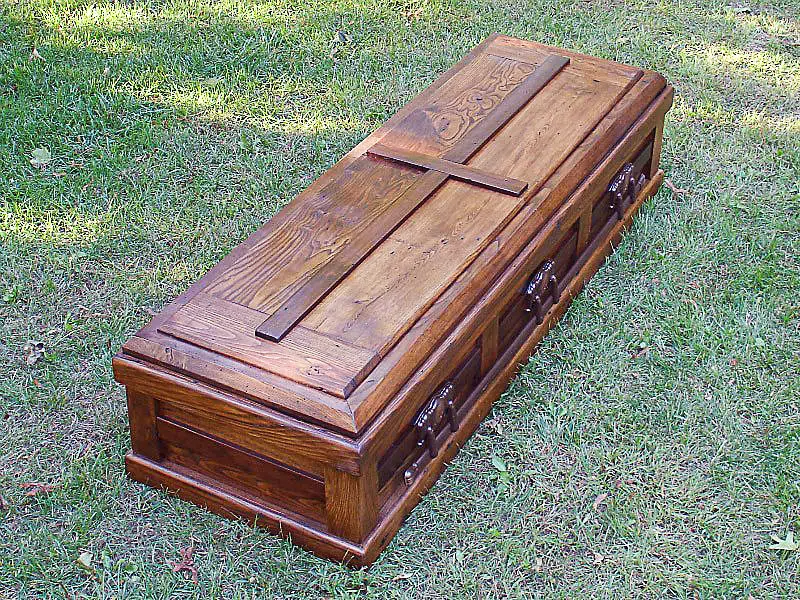
gradually taking shape as a sturdy rectangular box, three
brothers pieced together memories of a life.
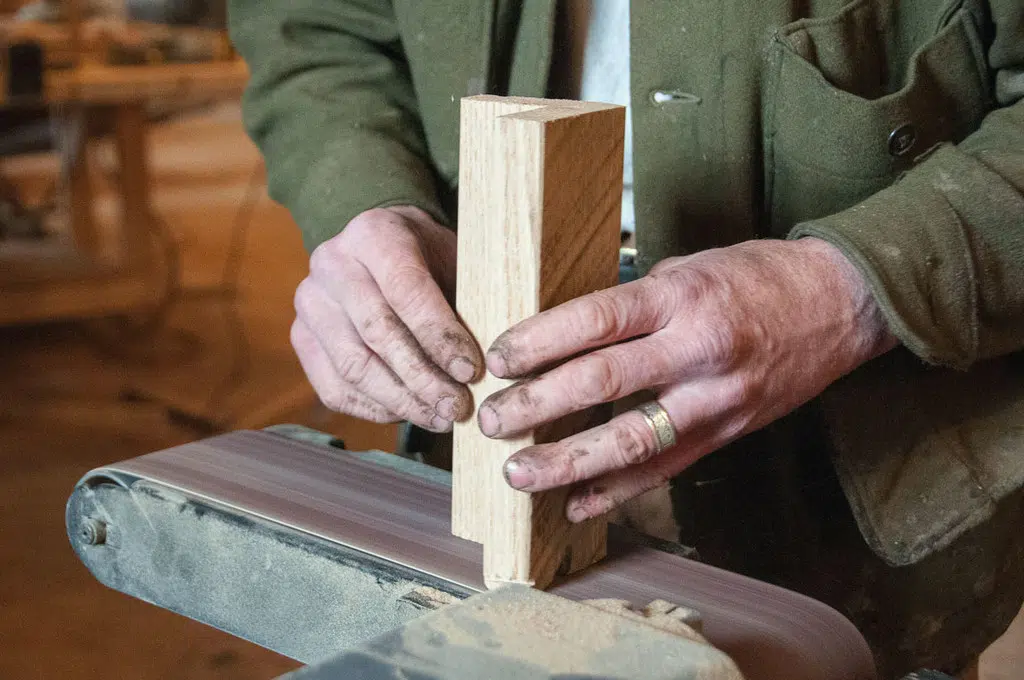
“Something rich and beautiful happens when your hands are
occupied but your mind is free,” said Michael Schmiedicke, a
web-developer-turned-woodworker with a unique side ministry:
casket-making. At times he helps clients build a casket for
their loved one.
The ministry was born about six years ago amid sawdust and
tears, when Schmiedicke and two of his younger brothers made
a casket for their grandmother.
“My understanding of death up to that point was tied to a
certain sense of passivity and helplessness; I was a
spectator to it,” said Schmiedicke, sitting in his Front
Royal workshop filled with wood of every shape and size and
the smell of freshly cut lumber. He said making the casket
allowed him to connect with his brothers and his grandmother,
to process grief by facing the reality of death, and “to do
one last act of service for somebody that we cared for.”
“It was a turning point in my relationship with faith, with
death and what comes after,” said Schmiedicke, a parishioner
of St. John the Baptist Church in Front Royal. Making that
first casket “took away a lot of that feeling of helplessness
and gave me a new perspective.”
The old made new
Schmiedicke’s small woodworking business is, in many ways, an
embodiment of new perspectives – on the past, on the old and
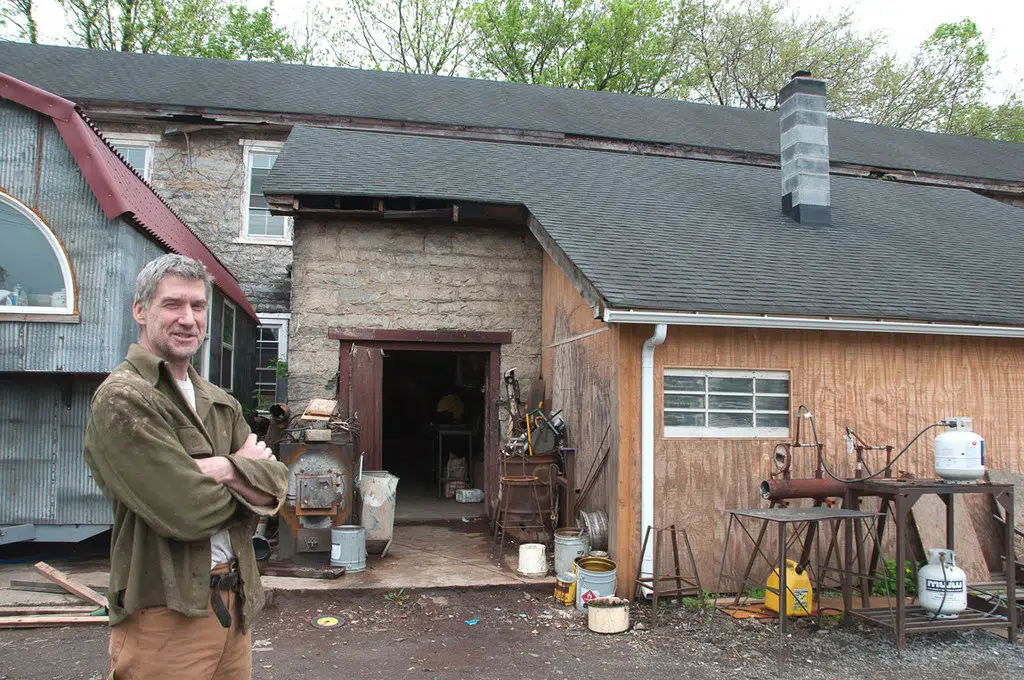
on the discarded. Located down a gravely road near the
Shenandoah River, his Strong Oaks Woodshop was a onetime
poorhouse and railway depot, and during World War II the
building was a warehouse for airplane parts. Foreshadowing
the current work between its walls, it first served as a
furniture manufacturing facility after the Civil War.
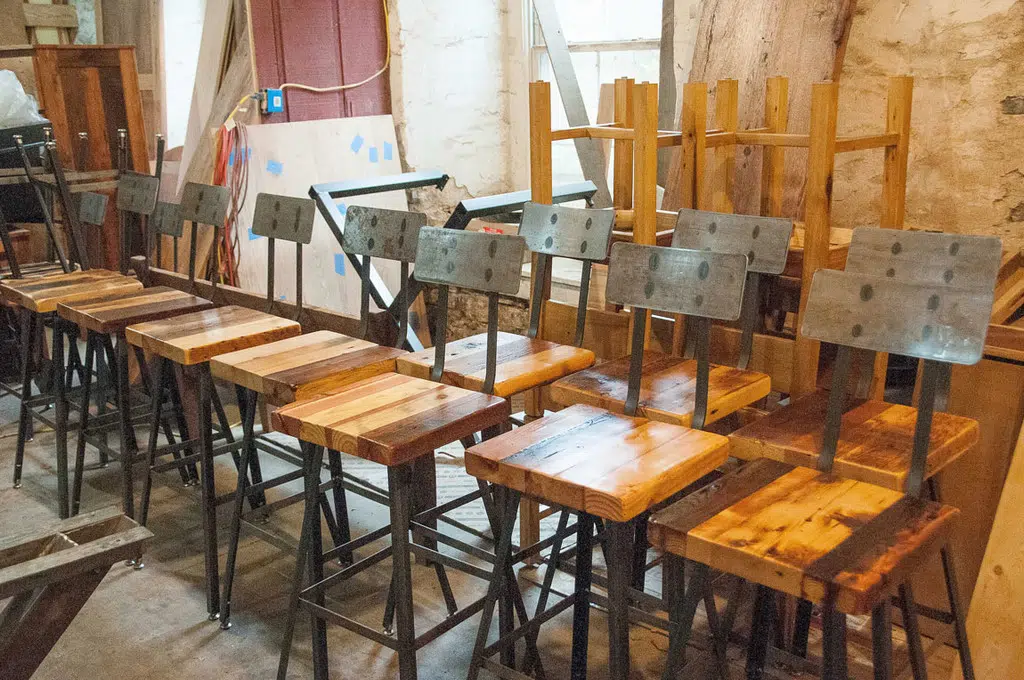
Strong Oaks employs around 10 people, who with Schmiedicke
create by hand everything from bedframes and chairs to bar
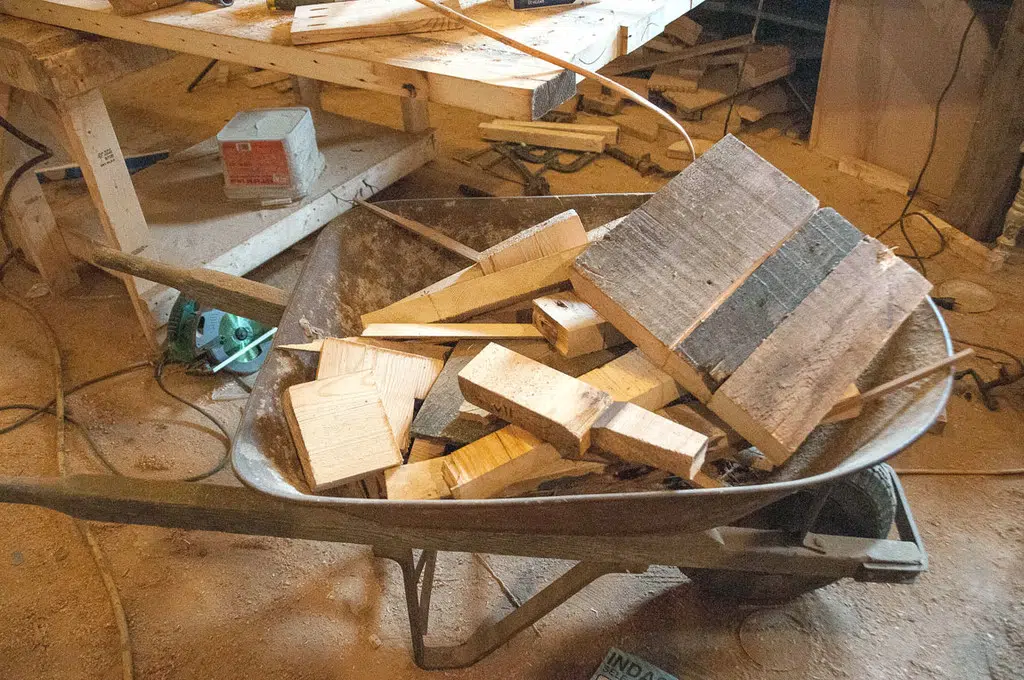
stools and kitchen tables from reclaimed wood. The company
dismantles wood from old houses, barns, warehouses and other
abandoned structures slated for demolition. Primarily
salvaging lumber from the Shenandoah Valley, Schmiedicke has
traveled as far as New York and Michigan to rescue buildings
that otherwise would be bulldozed or burned.
“We live in a relatively materialistic society, where
national trends say new is better,” Schmiedicke said. Echoing
Pope Francis’ words in the environmental encyclical “Laudato
Si,'” he added that it’s “often wrong to throw something away
when it could be saved and used.”
Most of the buildings Strong Oaks dismantles date back more
than 100 years. In the Shenandoah, the old buildings were
made from red and white oak, heart pine and wormy chestnut.
Sometimes hickory, red elm and maple were used.
“You don’t see wood like this any longer,” said Schmiedicke.
In some instances, the trees have become so rare that their
wood has nearly vanished from the commercial market. A blight
before the turn of the century crippled the American
chestnut, also known as wormy chestnut, and carbon monoxide
pollution affects the growth of a variety of species, said
Schmiedicke. “You have the same species, but they aren’t the
same as those used in the old structures,” he said.
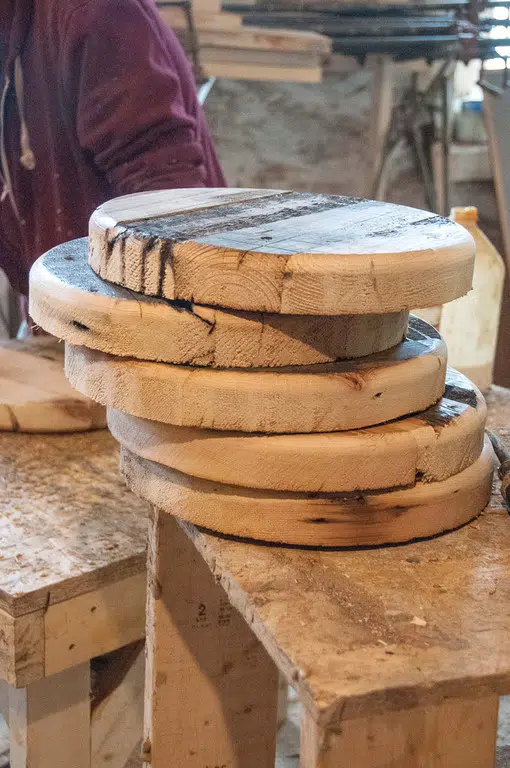
The reclaimed wood receives part of its character from “being
outside and sustaining nature’s work for 100 years,” said
Schmiedicke. “The color, the richness, the depth is a
cooperative venture of wood and elements that creates
something new and beautiful. It’s a kind of beauty that comes
with age and can’t be faked.”
A ministry takes root
Schmiedicke inherited his love for woodworking from his
German grandfather and great-grandfather, and after teaching
himself the craft it regularly served as his “therapy hour”
after work and on weekends.
With a master’s in library and information science,
Schmiedicke has worked as a government contractor; a research
librarian for Human Life International, a Catholic pro-life
advocacy organization in Front Royal; and most recently as a
web developer.
As he started spending additional hours tinkering with wooden
creations for friends and family, including his four
children, he grew “less motivated to maintain interest in the
next web development language,” he said.
It took several years juggling both web development and
woodworking, but eventually he was able to commit to his
passion full time.
Amidst Strong Oaks’ growing success, Schmiedicke’s mother
asked if he’d be willing to make a casket for his
grandmother.
“I was deeply moved by the request,” he said. And, though
he’d never made a casket before, he and his brothers set to
work building one.
While they worked, Schmiedicke, the eldest of 11, shared
memories of the crazy adventures he’d had growing up with
uncles and cousins in his grandmother’s house. His brothers
told stories about what it was like caring for their
grandmother as she grew older and her Alzheimer’s progressed.
“It was time that we had with each other, time honoring her
life,” said Schmiedicke. “I knew I wanted to share that
experience with as many people as I could.”
Thus began the small side endeavor of his Strong Oaks
business – offering families the opportunity to make a casket
with his help. Or if they desire, he builds one on his own
according to a family’s specifications, including special
details such as a Celtic cross or inscription.
Schmiedicke now makes around a half-dozen caskets a year, but
he hopes to increase that amount in the future.
“The bar stools pay the bills, but if I can slip out from
work now and then to make a casket, … that’s what I’d
like to do. It’s personally very meaningful work to me,” he
said, adding that he sees the work as a ministry.
Tom Furtado, a fellow parishioner of St. John, helped build a
casket out of reclaimed wood for his mother about a year and
a half ago. His mother was born and raised in Hawaii, so he
upholstered the interior of her oak casket with her favorite
muumuu, a dress with Hawaiian origins.
For Furtado, the handmade casket was an antidote to the
“assembly line, commercial” approach to burial he’d
encountered previously.
Within the funeral industry are “good people doing a needed
service,” said Furtado, “but you have people selling you
either a high-end glitzy and gaudy casket or the cheap metal
one.”
John Cuddeback, chairman of the philosophy department at
Christendom College in Front Royal, wasn’t able to help build
his father’s casket, but he said Schmiedicke’s casket for his
dad was a reminder of many powerful connections. The planks
used for the casket “connect us with the trees, the earth,
the past, with death,” he said. “We try to hide from death or
dress it up to be something other than it is,” Cuddeback
said. “A lovingly made casket is a way of observing death and
acknowledging it for what it is – the end of something,
saying goodbye.
“While we all know it will happen to us, that people die
remains one of the most shocking realities,” said Cuddeback.
But “to go through grief, you need to enter it,” he said, and
“mourning properly leads to peace and the joy we have in the
Resurrection.”
“Death to me is not the difficult, distant and confusing
thing of my childhood,” said Schmiedicke, reflecting on his
ministry. “It need not be feared but can be embraced as part
of our existence as a transition into the next life.”
Fashioned from nature’s handiwork and the remnants of man’s,
the caskets are indeed a fitting final transport of a body to
earth after its soul has departed.
Find out more
Go to strongoakswoodshop.com
or call 1-888-712-4184.